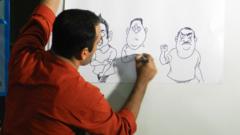
印度的漫画家们在网上积累了受众——如今他们的帖子正受到限制萨蒂什·阿查里亚(Satish Acharya)是近期作品受到Meta限制的印度漫画家之一。
尼基塔·亚达夫(Nikita Yadav),BBC新闻,德里,4小时前在三周内,印度漫画家萨蒂什·阿查里亚第二次发现自己在Instagram上实际上处于“隐身”状态,而这发生在他的祖国。
India's cartoonists built an audience online - now their posts are being restricted Satish Acharya Satish Acharya is among Indian cartoonists whose work has been restricted by Meta recently Nikita Yadav BBC News, Delhi 4 hours ago For the second time in three weeks, Indian cartoonist Satish Acharya found himself effectively invisible on Instagram in his own country.
这位55岁的漫画家周二发现,他的账号在印度再次被短暂封锁,据称该平台未给出任何解释。
The 55-year-old discovered on Tuesday that his account had once again been briefly blocked in India, allegedly with no explanation from the platform.
就在几周前,另一位漫画家曼朱尔(Manjul)也发现,Instagram限制了他的一篇帖子,该帖子批评了印度选举委员会对其选民名册进行的有争议的修订。他的个人资料当时仍可访问。
Just a few weeks ago, another cartoonist, Manjul, had found that Instagram had restricted a post criticising India's election commission over its controversial revision of voter rolls. His profile remained accessible.
这些案例引发了人们对利用法律命令限制印度政治讽刺作品的担忧,漫画家们表示,他们的作品为何被封锁,往往得不到多少解释。
The cases have raised concerns about the use of legal orders to restrict political satire in India, with cartoonists saying they are often given little explanation for why their work has been blocked.
阿查里亚的账号首次被限制是在9月28日至10月6日期间,当时印度的用户既无法通过搜索找到他的个人资料,也无法通过网页链接访问。
Acharaya's account was first restricted from 28 September to 6 October, when users in India could neither find his profile through search nor access it through a web link.
任何试图访问他个人资料的人都会看到一条消息,称该内容根据印度的《信息技术规则》不可用。这些规则允许当局和法院下令社交媒体平台删除或限制内容。
Anyone trying to access his profile saw a message saying it was unavailable under India's Information Technology Rules. The rules allow authorities and courts to order social media platforms to remove or restrict content.
政府表示,这些规则有助于处理非法材料,但艺术家和言论自由倡导者警告称,它们可能会扼杀印度丰富的政治讽刺传统。
The government says they help tackle unlawful material, but artists and free-speech advocates warn they can stifle India's rich tradition of political satire.
“Meta旗下的平台几年来一直在限制我漫画的传播范围,”阿查里亚告诉BBC。“但当我的整个个人资料在印度被限制时,我感到有些难过。”他曾致信Instagram的母公司Meta,但没有收到回复。他说,他正准备诉诸法律,结果他的账号在10月初恢复了访问,但本周早些时候又再次被封锁了三天。
"Meta platforms have been restricting the reach of my cartoons for some years," Acharya told the BBC. "But when my entire profile was restricted in India, I was a little sad." He wrote to Meta, Instagram's parent company, but received no reply. He says he was preparing to go to court when his account became accessible again in early October, only to be blocked again earlier this week for three days.
Meta在一份声明中告诉英国广播公司(BBC),该公司可能会为了遵守印度的信息技术规则而暂时限制账户,但并未解释限制阿查里亚(Acharya)账户或曼朱尔(Manjul)帖子的具体原因。
In a statement, Meta told the BBC that may temporarily restrict accounts to comply with India's IT Rules but did not explain the specific reasons for restricting Acharya's account or Manjul's post.
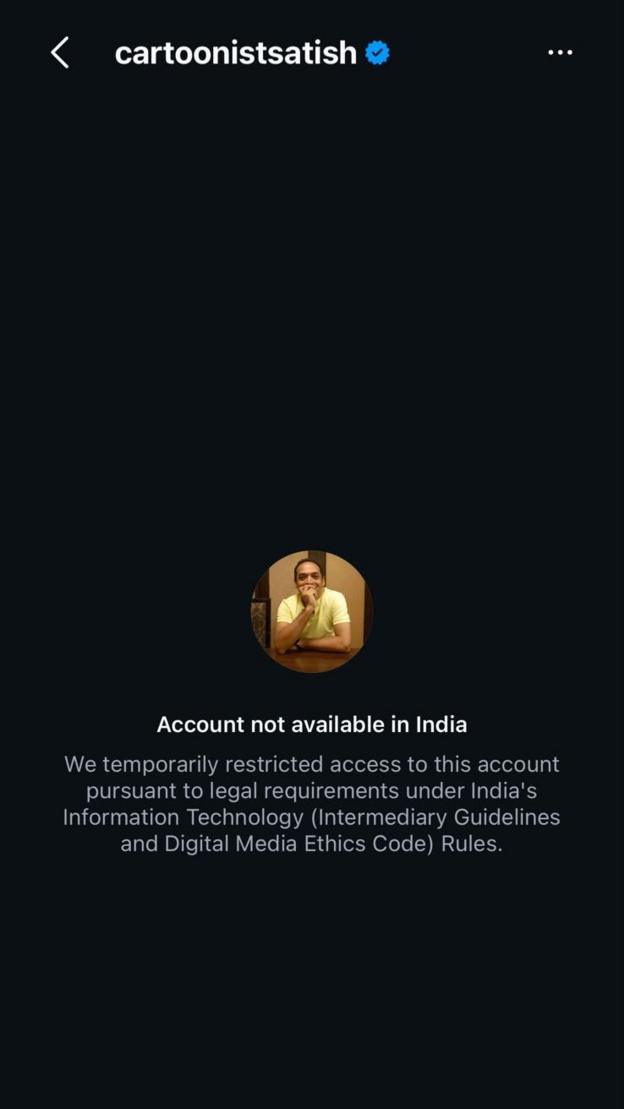
萨蒂什·阿查里亚(Satish Acharya)的个人资料在10月20日至22日期间最后一次被封锁时显示了相关信息。批评人士称,这些限制措施出台之际,幽默和讽刺在印度的政治异见中发挥着日益显著的作用,尤其是在年轻人中间。
The message on Satish Acharya's profile when it was last blocked between 20-22 October Critics say the restrictions come as humour and satire play an increasingly visible role in political dissent in India, particularly among younger people.
迷因(Memes)和Z世代的幽默感助推了7月份关于教育和就业的抗议活动,并导致印度教育部长辞职。围绕一份删除了1.3亿个名字的争议性选民名册修订案,在线辩论也愈演愈烈。
Memes and Gen-Z humour helped fuel protests over education and jobs in July, which led to the resignation of India's education minister. Online debate has also intensified over a controversial revision of voter rolls that removed 130 million names.
政府并未忽视社交媒体的政治重要性。总理纳伦德拉·莫迪(Narendra Modi)所在的印度人民党(BJP)已敦促部长们加强其在线影响力,并与更年轻的受众建立联系。
The political significance of social media has not been lost on the government. Prime Minister Narendra Modi's Bharatiya Janata Party (BJP) has urged minister s to strengthen their online presence and connect with younger audiences.
与此同时,技术政策专家普拉蒂克·瓦格雷(Prateek Waghre)表示,政府正越来越多地利用法律命令来监管在线内容。
At the same time, technology policy expert Prateek Waghre says the government is increasingly using legal orders to regulate online content.
据《印度快报》报道,政府机构在3月至7月期间,通过联邦政府的“Sahyog”门户网站,向Instagram、Facebook和YouTube等平台发送了近19.5万份封锁和内容限制令。
The Indian Express reported that government agencies sent nearly 195,000 blocking and content-restriction orders to platforms including Instagram, Facebook and YouTube between March and July through the federal government's Sahyog portal.
这些通过知情权请求获得的数据并未显示最终有多少帖子被限制或删除。BBC尚未看到原始回复。
The figures, obtained through a right-to-information request, do not show how many posts were ultimately restricted or removed. The BBC has not seen the original response.
瓦格雷表示,一些平台,尤其是Meta,“似乎更愿意遵守(规定)”,而X(前身为推特)似乎更愿意进行抵制。但有限的公开数据使得比较变得困难。Meta拒绝就他的评估发表评论。据报道,政府还寻求加强对社交媒体平台如何推荐内容的审查。
Waghre says that some platforms, particularly Meta, "seem more willing to comply", he says, while X appears more willing to push back. But limited public data makes comparisons difficult. Meta declined to comment on his assessment. The government has also reportedly sought greater scrutiny of how social media platforms recommend content.
本周早些时候,多家媒体报道称,当局已要求Meta确保其系统不会引导用户偏向“单一或有限的叙事”,并加强对可能“引发公共骚乱或煽动暴力”的内容的审查。
Earlier this week, several media outlets that authorities had asked Meta to ensure its systems did not steer users towards "a single or limited set of narratives" and strengthen checks on content that could "cause public disorder or incite violence".
英国广播公司(BBC)已就这些限制措施及据称向Meta下达的指令向印度信息技术部寻求置评,但尚未收到回复。
The BBC has sought comment from India's IT ministry on the restrictions and reported instructions to Meta but has not received a response.
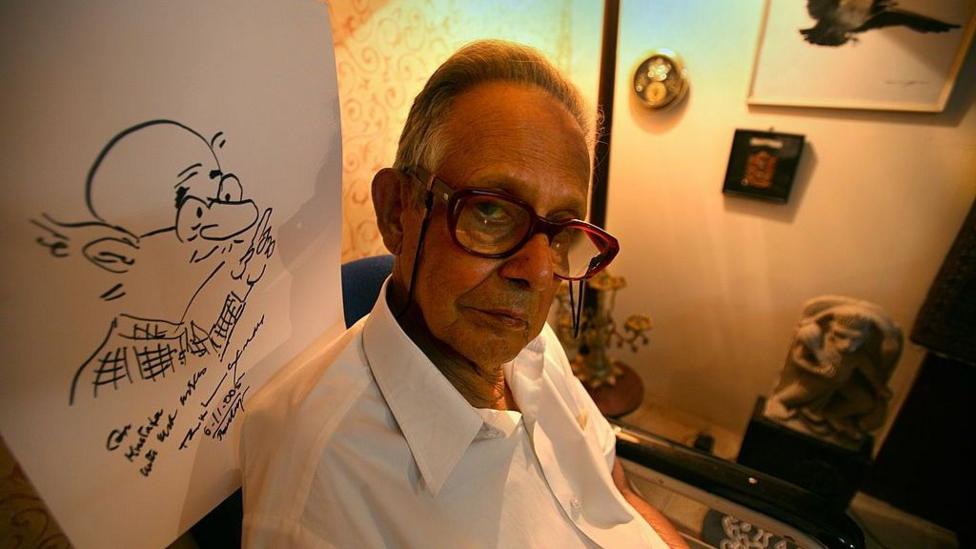
印度今日集团(India Today Group)通过盖蒂图片社(Getty Images)提供的图片显示,RK·拉克斯曼(RK Laxman)是印度最广为人知的政治漫画家之一。当然,政治讽刺在印度有着悠久的历史,试图遏制它的行为也同样如此。
India Today Group via Getty Images RK Laxman is among the most recognisable political cartoonists in India Of course, political satire has a long history in India - as do attempts to curb it.
自印度独立以来,漫画一直是印度新闻业的固定栏目,RK·拉克斯曼笔下的“普通人”(Common Man)也成为了该国最具辨识度的角色之一。
Cartoons have been a fixture of Indian journalism since independence, with RK Laxman 's Common Man becoming one of its most recognisable characters.
但漫画家们也面临过审查。在20世纪70年代的“紧急状态”期间,公民自由被暂停,新闻界受到严格管控,阿布·亚伯拉罕(Abu Abraham)依然坚持创作,尽管他有数十幅漫画被盖上了“审查未通过”的印章。
But cartoonists have also faced censorship. During the Emergency in the 1970s, when civil liberties were suspended and the press was tightly controlled, Abu Abraham continued drawing, even as dozens of his cartoons were stamped "not passed by censors".
2012年,漫画家阿西姆·特里维迪(Aseem Trivedi)因其被指嘲弄印度宪法的漫画而以煽动叛乱罪被捕。这些指控后来被撤销。
In 2012, cartoonist Aseem Trived i was arrested on sedition charges over cartoons allegedly mocking the Indian constitution. The charges were later dropped.
如今,对政治表达受限的担忧已不仅限于漫画家。在无国界记者组织(Reporters Without Borders)的“世界新闻自由指数”中,印度排名第157位,批评人士指责政府对独立媒体施加了越来越大的压力。政府否认了这些批评,称印度的媒体依然自由且充满活力。喜剧演员也因政治讽刺而面临争议。
Today, concerns about restrictions on political expression extend beyond cartoonists. India ranks 157th in Reporters Without Borders' World Press Freedom Index, while critics accuse the government of putting growing pressure on independent media. The government rejects the criticism, saying India's media remains free and vibrant. Comedians have also faced controversy over political satire.
以调侃总理纳伦德拉·莫迪(Narendra Modi)及其政党而闻名的库纳尔·卡姆拉(Kunal Kamra)曾面临威胁、演出被取消以及法律诉讼。然而,对于漫画家来说,挑战当权者是他们工作的核心。
Kunal Kamra known for his jokes about Prime Minister Narendra Modi and his party, has faced threats, cancelled shows and legal action. For cartoonists, however, challenging those in power is central to their work.
“我们属于默认的反对派,”印度一家主要报纸的漫画家桑迪普·阿德瓦里尤(Sandeep Adhwaryu)说。
"We are among the default opposition," says Sandeep Adhwaryu, a cartoonist at a leading Indian newspaper.
“这一行业的本质就是反对,”他表示,并补充说,漫画家和记者一样,必须质疑任何掌握权力的人。
"The nature of the craft is to oppose," he says, adding that cartoonists, like journalists, must question whoever holds power.
阿查里亚(Acharya)表示,他在整个职业生涯中都遵循这一原则。2014年之前,他的许多漫画都以国大党领导的政府为目标,并被印度人民党(BJP)领导人分享。
Acharya says he has followed that principle throughout his career. Before 2014, many of his cartoons targeted the Congress-led government and were shared by BJP leaders.
“在历届政府任内,我的漫画从未面临过官方限制,尽管偶尔会有一些网络骚扰,”他说。
"I never faced official restrictions on my cartoons during the previous governments, though there would be some trolling occasionally," he says.
如今,随着印度人民党执政,他的许多讽刺作品都指向了莫迪政府。
Now, with the BJP in power, much of his satire is directed at Modi's government.
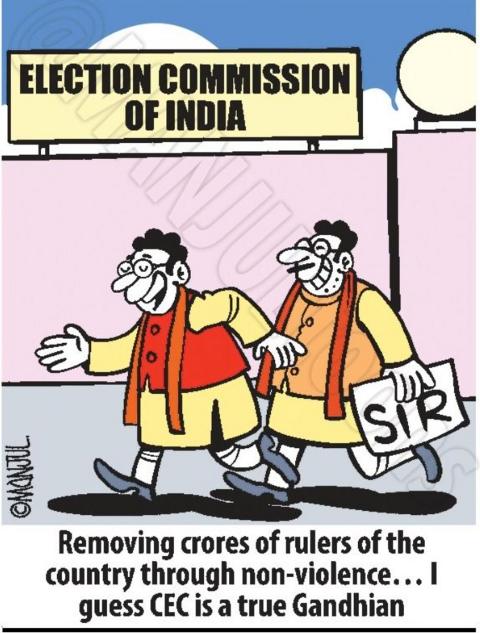
曼朱尔(Manjul)的一幅漫画批评了极具争议的选民名册修订,该修订导致1.3亿个名字从选民名册中被删除。社交媒体使像阿查里亚这样的独立漫画家能够在不依赖报纸或其他传统媒体的情况下接触到受众。
Manjul One of Manjul's cartoons which criticised the controversial voter roll revision that has resulted in the removal of 130 million names from the electoral rolls Social media has allowed independent cartoonists like Acharya to reach audiences without relying on newspapers or other traditional outlets.
“我们不隶属于报纸或任何主流媒体。这就是我们能够进行创作的原因,”曼朱尔说。
"We are not associated with newspapers or any mainstream media. That's why we can draw," says Manjul.
但这种自由也伴随着一种新的脆弱性——即依赖于那些可以限制其作品或切断其受众访问权限的平台。
But that freedom comes with a new vulnerability - dependence on platforms that can restrict their work or cut off access to their audiences.
没有人比拉奇塔·塔内贾(Rachita Taneja)更清楚这一点,她是广受欢迎的Instagram漫画《Sanitary Panels》的创作者。
No one knows this better than Rachita Taneja, the creator of the hugely popular Instagram comic Sanitary Panels.
“没有互联网,我的职业生涯就不会存在,”她告诉英国广播公司(BBC)。然而,她将社交媒体描述为一把双刃剑。“归根结底,这是一种对广告商负责的营利性事业,”她说。
"My career would not have existed without the internet," she told the BBC. Yet she describes social media as a double-edged sword. "At the end of the day it's a for-profit endeavour that answers to advertisers," she says.
塔内贾表示,Meta公司对印度政府要求的配合反映了该公司的商业优先事项,而非对用户权利的关注。Meta公司拒绝置评。
Taneja says that Meta's compliance with Indian government requests reflects the company's commercial priorities rather than concern for users' rights. Meta declined to comment.
即使是在传统新闻编辑室工作的漫画家也面临压力。阿德瓦鲁(Adhwaryu)表示,艺术家们可能会软化标题、回避某些主题,或者在提交漫画前三思而后行。他说,随着时间的推移,这种自我审查即使在没有明确指示的情况下也可能变得常态化。尽管如此,漫画家们还是找到了相互支持的方法。
Even cartoonists working in traditional newsrooms face pressure. Adhwaryu says artists may soften captions, avoid certain subjects or think twice before submitting a cartoon. Over time, he says, such self-censorship can become normalised, even without explicit instructions. Still, cartoonists have found ways to support one another.
当阿查里亚(Acharya)的Instagram账号首次受到限制时,塔内贾(Taneja)画了一幅火柴人漫画以示声援。“看到人们在第一线建立社区、进行抗议、开展运动,并不知疲倦地为自己和他人的权利而战,这正是支撑我前进的动力,”她说。
When Acharya's Instagram account was first restricted, Taneja drew a stick-figure cartoon in solidarity. "Seeing people on the front lines creating communities, protesting, running campaigns, tirelessly fighting for their own rights and the rights of others is what keeps me going," she says.
阿德瓦尤(Adhwaryu)认为讽刺艺术将继续适应环境。他将漫画和幽默比作一种“会变形的病毒”。“它会根据环境不断变异,”他说。“它总会找到自己的出路。”
Adhwaryu believes satire will continue to adapt. He compares cartoons and humour to a "shape-shifting virus". "It keeps mutating in response to its environment," he says. "It will find its way."