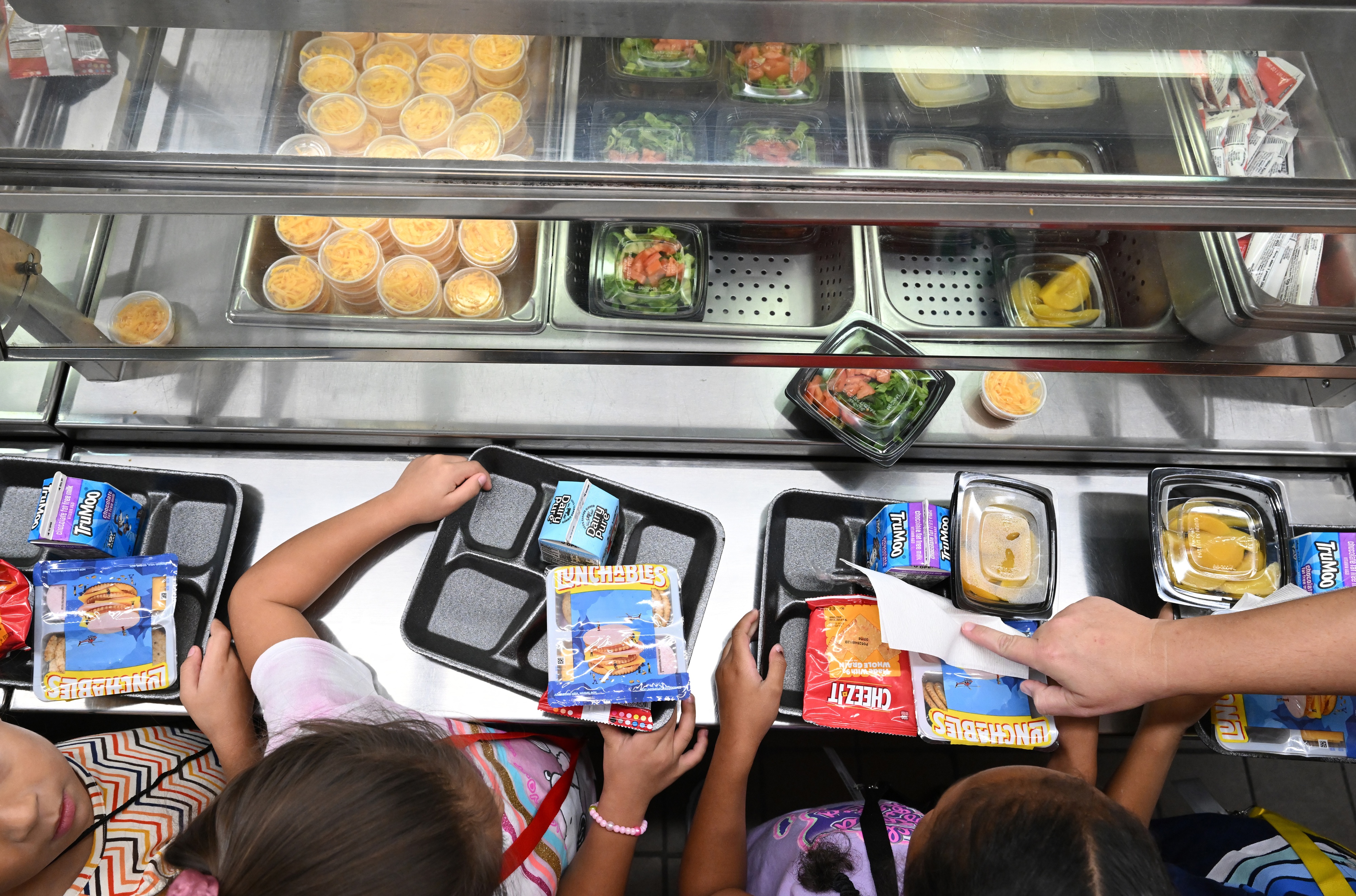
这项努力得到了右翼“让美国再次健康”运动与进步派之间脆弱联盟的支持,双方均因对食品安全的担忧而走到一起。
The effort is backed by an uneasy alliance between the right-wing Make America Healthy Again movement and progressives, both motivated by concerns over food safety.
自特朗普第二任期伊始,食品安全问题引发了一场重大的政治重组,右翼“让美国再次健康”运动与进步派结成脆弱联盟,旨在将超加工零食、甜点、午餐肉及其他产品从国家食品体系中清除。公立学校是他们的首个攻坚目标。
The issue of food safety has prompted a major political realignment since the start of the second Trump administration, with the right-wing Make America Healthy Again movement forming an uneasy alliance with progressives to rid the nation’s food system of ultra-processed snacks, sweets, lunch meats and other products. Public schools are their first target.
据全国性非营利组织“健康饮食研究”追踪,至少32个州的立法者已提出法案,旨在限制或取消校餐中的超加工食品。超加工食品通常以盈利性、便利性以及使用超市里买不到的配料为特征。
According to tracking by Healthy Eating Research, a national nonprofit, lawmakers in at least 32 states have introduced legislation to limit or eliminate ultra-processed foods in school meals. UPFs are typically characterized by profitability, convenience and use of ingredients never found in a supermarket.
在加利福尼亚州和亚利桑那州,相关法案已成法。亚利桑那州的法规对超加工食品的定义相当狭窄,仅点名了11种配料。但加利福尼亚州的定义非常宽泛,几乎涵盖任何含有实验室制造或分离出的配料的食品——从非天然着色添加剂到稳定剂再到风味增强剂。
In California and Arizona, the bills have already become law. Arizona’s statute defines UPFs fairly narrowly, calling out just 11 ingredients. But California’s is very broad, including almost any food item with an ingredient created or separated in a lab — from nonnatural coloring additives to stabilizers to flavor enhancers.
这可能使这个全美人口最多的州,成为未来学生餐食标准的测试案例。
That could make the country’s most populous state the test case for what future students are served.
加利福尼亚州给该法的实施留出了相当长的过渡期。到2029年7月1日,该州所有公立学校必须开始逐步淘汰超加工食品;到2032年7月1日,这些食品将被全面禁止。根据一些加利福尼亚学校自主决定实施这一变革的经验来看,这一缓冲期是必要的。
California is allowing its law a fairly long implementation. By July 1, 2029, all public schools there must begin to phase out UPFs; by July 1, 2032, those foods will be banned entirely. Based on the experience of some California schools that have, of their own accord, already decided to make this change, it’s a needed runway.
圣安娜联合学区为橙县约3.6万名学生提供餐食,该学区于2021年从其一所高中开始推行新做法。五年后,第八所校园终于开始跟进。该学区并未专门着手消除超加工食品。
The Santa Ana Unified School District, which serves some 36,000 students in Orange County, started in 2021 by rolling out its new approach at one of its high schools. Five years later, the eighthcampus is finallyg on. The district didn’t set about trying to eliminate UPFs, per se.
家长们开始询问学校餐食的营养成分,Goddard——15岁起就在餐饮服务行业工作——决定最好的做法是不再采购预制餐及其不透明的配料表,转而利用真实食材、在校内厨房为学生现做饭菜。
Parents were asking about the nutritional contents of school meals, and Goddard — who has worked in the food services industry since he was 15 — decided the best thing to do was to divest from prepared meals and their opaque ingredient lists and move toward actually cooking food for students, from real ingredients, in on-site kitchens.
“我们从未真正把这看作加工与非加工的对立,”他说,“我们只是想多做一些从生食材、从零开始制作的菜品,这与这项新法律、这股禁止超加工食品的新推动不谋而合、相得益彰。”圣安娜面临的最大挑战,正是专家预测未来几年全美学区都将面临的难题:负担能力和产能。
“We never really thought of this or treated this as processed versus unprocessed,” he said. “We simply wanted to cook more things from raw, from scratch, and that dovetails or complements this new law, this new push to ban ultra-processed foods.”The biggest challenges that Santa Ana faced are the same ones that experts say school districts across the country will grapple with in the coming years: affordability and capacity.
在这方面,圣安娜算是幸运的。在加利福尼亚州,公立学校每供应一餐可获得6美元补助——且能利用全美最大的农业产业。由于州补贴在联邦资金基础上叠加,这比国内大多数其他地区的学区拥有的资源都要多。
Santa Ana is pretty lucky in this regard. In California, public schools get $6 per meal served — and have access to the country’s largest agricultural industry. Because of state subsidies that compound on top of federal funds, that’s more than what is available to school districts in most other parts of the country.
“我们采购生鲜蛋白、生鲜谷物、生面粉,”Goddard说,“我们目前从14家小型本地家庭农场采购鲜活农产品,涵盖柑橘、核果、蔬菜等。我们预算的主要来源是联邦和州的报销款。在加州,我们条件优越,但仍面临艰难的挑战。”然后是产能问题。
“We’re bringing in raw proteins, we’re bringing in raw grains, raw flour,” Goddard said. “We currently buy from 14 small local family farms for fresh produce, everything from citrus to stone fruits, vegetables, stuff like that. The primary source of our budget is the federal and state reimbursement. In California, we are spoiled, and we still have an uphill battle.”
“理想情况下,你希望学校转向更多的现做烹饪。然而,许多学校不一定具备厨房条件。它们可能缺乏人员,也可能缺乏设备,”Taillie说。
Then there is capacity. “Ideally, you want schools to shift to more scratch cooking. However, a lot of schools don’t necessarily have the kitchen. They might not have the staff. They might not have the equipment,” Taillie said.
确实,戈达德表示,让长期习惯用微波炉加热预制餐的员工适应炖煮豆类和切配蔬菜,需要一个培训适应的过程。但他表示,“我们有厨房,还有极具才干、极具积极性的人。”
Indeed, Goddard said there was a training curve to get employees who’d long been microwaving prepared meals used to simmering beans and chopping veggies. But, he said, “we had kitchens and highly talented, highly motivated people.”
在关于超加工食品的全国性讨论中,一些声音最响亮的参与者颇具争议。
Some of the strongest voices in the national conversation about UPFs are controversial.
其中有特朗普政府的卫生部长小罗伯特·F·肯尼迪,他过去曾声称,国家的食品供应被允许对儿童进行“大规模投毒”。他领导的部门几个月来一直在权衡一些行动,这些行动可能会推动行业重新配制部分酒加工食品。
There’s the Trump administration’s health secretary, Robert F. Kennedy Jr., who in the past has claimed that the nation’s food supply has been allowed to “mass poison” children. The department he leads has for months been weighing actions that could push the industry to reformulate some ultra-processed foods.
其他声音来自政府之外。作家杰西卡·里德·克劳斯、保守派评论员亚历克斯·克拉克和博主瓦尼·哈里,他们帮助将这一问题变成了肯尼迪议程的核心原则,在社交媒体公共舆论场和华盛顿国会山都极具影响力。和他一样,她们也有告诉追随者疫苗比其旨在预防的疾病更危险的历史——这一立场在科学研究中毫无依据。
Other voices have come from outside of government. Author Jessica Reed Kraus, conservative commentator Alex Clark and blogger Vani Hari, who helped make the issue a central tenet in Kennedy’s agenda, are hugely influential both in the public sphere on social media and on Capitol Hill in Washington. Like him, they also have a history of telling their followers that vaccines are more dangerous than the diseases they aim to prevent — a position with no basis in scientific research.
但塔利表示,“大量研究”确实支持人们对超加工食品的诸多担忧。“超加工食品正在导致即时的健康危害,但同时也让[儿童]养成一种饮食模式,这种模式会延续到未来生活中,并在成年后造成更高的慢性病风险。”事实证明,孩子们也更喜欢现做食品。最近,在对圣安娜塞德尔巴克高中的一次走访中,学区膳食计划的一名成员正在听取学生们对食堂无超加工食品餐食的评价。“我们不想错过午餐,”一名学生告诉他。原因?“伙计,这儿的饭太棒了。”
But a “plethora of studies” does support the many concerns about ultra-processed foods, Taillie said. “Ultra-processed foods are leading to immediate health harms, but then also setting [children] up for a pattern of eating that will track into later in life and create higher chronic disease risk in adulthood as well.”As it turns out, kids also like made-from-scratch food better. At a recent visit to Saddleback High School in Santa Ana, a member of the district’s food program was listening to what the students had to say about their cafeteria’s UPF-free meals. “We don’t want to miss lunch,” one told him. The reason? “Dude, the food here is amazing.”