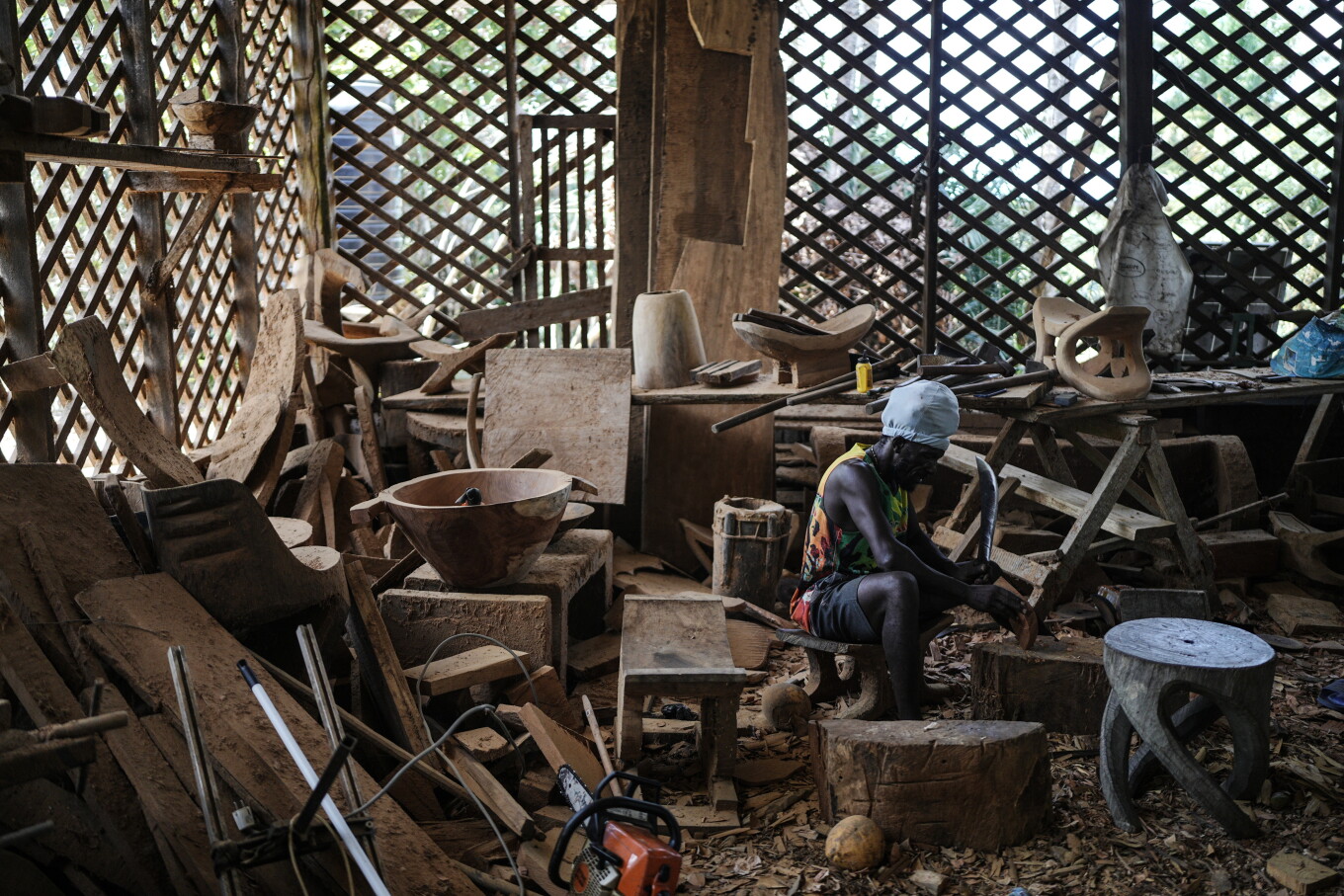
苏里南皮基塞伊——63岁的阿林戈·杜库站在一块巨大的木头上,弯下腰,挥动一把传统镐头,熟练地凿下木屑。一点一点地,一块用于“阿吉博托”的木板逐渐成形。阿吉博托是一种源自西非的传统萨马卡游戏。
STEVEN GRATTAN PIKI SEEI, Suriname — Standing atop a giant block of wood, 63-year-old Alingo Doekoe bent over and swung a traditional pick, skillfully chiseling away shards of timber. Bit by bit, a board for Adji-boto, a traditional Saamaka game with roots in West Africa, was taking shape.
在皮基塞伊——这是该村的萨马卡语名称,荷兰语官方名称为皮金塞莱——滕贝,即萨马卡人的木雕和装饰艺术传统,长期以来一直是日常生活的一部分。
Here in Piki Seei — the Saamaka name for the village officially known in Dutch as Pikin Slee — tembe, the Saamaka tradition of woodcarving and decorative art, has long been part of everyday life.
萨马卡人是苏里南六个部落民族之一,他们的祖先在荷兰殖民统治时期逃离了奴隶制,三个多世纪前在该国森林覆盖的内陆地区建立了独立社区。
The Saamaka are one of six tribal peoples in Suriname whose ancestors escaped slavery during Dutch colonial rule, building independent communities in the country’s forested interior more than three centuries ago.
滕贝主要由男性从事,由父亲和长辈传给年轻一代,从长凳、船桨和船只到梳子、门以及沿河社区排列的木屋,随处可见。周围的森林几个世纪以来一直维系着萨马卡社区,提供食物、建筑材料和其文化传统所必需资源。但不断扩张的金矿开采和伐木正日益给环境带来压力,同时吸引男性离开村庄和传统手工艺。对于留下来的雕刻者来说,这种转变不仅仅是失去一种艺术形式。
Mostly practiced by men and passed from fathers and elders to younger generations, tembe can be seen in everything from benches, paddles and boats to combs, doors and the wooden houses that line communities along the river. The surrounding forest has sustained Saamaka communities for centuries, providing food, building materials and resources central to their cultural traditions. But expanding gold mining and logging are putting increasing pressure on the environment, while drawing men away from their villages and traditional crafts. For the carvers who remain, that shift is about more than the loss of an art form.
“木雕是我们身份的一部分,”皮基塞伊50岁的雕刻者何萨萨特·利夫德说。“这是萨马卡的传统,将继续传承下去。”滕贝的几何图案可以承载含义和故事,而这项手工艺将木材变成日常生活中使用的物品。
“Woodcarving is part of who we are,” Josasath Liefde, 50, a carver in Piki Seei, said. “It is a Saamaka tradition that will continue to live on.”Tembe geometric designs can carry meanings and stories, while the craft turns wood into objects used in daily life.
杜库数十年来一直从事木雕并致力于保护萨马卡传统。他参与了托通博蒂,这是皮基塞伊的一个集体,汇集了雕刻者,并致力于将文化知识传给年轻一代。
Doekoe has spent decades carving wood and working to preserve Saamaka traditions. He is involved with Totomboti, a collective in Piki Seei that brings together carvers and works to pass cultural knowledge to younger generations.
Totomboti 的几位雕刻师是拉斯塔法里教徒,他们信奉一种源于 20 世纪 30 年代牙买加的精神运动,该运动强调非洲身份认同和与自然的联系。虽然并非所有萨马卡人都信奉拉斯塔法里教,但该信仰在皮基塞伊有着特别强的影响力。杜库说,他和村里的其他男性之所以接受这一信仰,是因为他们发现它与自己的精神传统和自然知识有相似之处。
Several of the carvers at Totomboti are Rastafarians, followers of a spiritual movement that originated in Jamaica in the 1930s and emphasizes African identity and a connection to nature. While Rastafari is not practiced by all Saamaka, the faith has a particularly strong presence in Piki Seei. Doekoe said he and other men in the village embraced it after recognizing similarities with their own spiritual traditions and knowledge of the natural world.
在他们的工作坊里,木块和木屑铺满地面,雕刻师们正在制作处于不同完成阶段的作品。杜库说,他们尽可能使用倒下的树木,偶尔也会砍伐其他树木,但会注意限制对森林的影响。据 Totomboti 集体介绍,其木工每年仅使用一两根原木,有选择地采伐适合其工艺的硬木树种。
At their workshop, blocks of wood and shavings covered the ground as carvers worked on pieces in various stages of completion. Doekoe said they use fallen trees when possible and occasionally cut down others, taking care to limit their impact on the forest. According to the Totomboti collective, its woodworkers use just one or two logs a year, selectively harvesting hardwood trees suited to their craft.
但对杜库来说,木雕不仅关乎他们制作的物品。萨马卡人的音乐、语言和艺术保留了其祖先非洲文化的元素,这些祖先在跨大西洋奴隶贸易期间被强行运往苏里南。“我们的艺术中蕴藏着知识,”他说。
But for Doekoe, woodcarving is about more than the objects they produce. Saamaka music, language and art preserve elements of the African cultures of their ancestors, who were forcibly transported to Suriname during the trans-Atlantic slave trade. “There is knowledge hidden within our art,” he said.
利夫德从父亲那里学会了如何将树木变成家庭和社区所需的物品。他制作长凳和桨,并建造长达 15 米(49 英尺)的船只。
Liefde learned from his father how to turn trees into objects his family and community needed. He makes benches and paddles and builds boats as long as 15 meters (49 feet).
“如果你必须离开这个地方,你需要一艘船,而造船的木材就来自这片森林,”他说。“所以,这是我们的生计。”杜库有时两个月卖不出任何东西。他说,年轻男性看到同龄人从金矿带着钱回来,能买汽车和其他东西,这使得采矿成为比雕刻更有吸引力的选择。
“If you have to leave this place, you need a boat, and the wood used to make that boat comes from this forest,” he said. “So, this is our livelihood.”Doekoe sometimes goes two months without selling anything. He said younger men can see others their age return from the gold fields with money to buy cars and other things, making mining an attractive alternative to carving.
合法与非法的金矿开采和伐木活动已扩展至苏里南森林腹地,虽提供了收入可能,却带来巨大风险和环境破坏。一名萨马卡金矿工人因担心遭雇主报复,以匿名身份接受采访,称他深知这些风险。
Gold mining and logging, both legal and illegal, have expanded across Suriname’s forested interior, offering the possibility of income but bringing significant risks and environmental damage. One Saamaka gold miner, who spoke on condition of anonymity for fear of reprisals from his employers, said he knows those risks intimately.
2016年,他在金矿作业时被一台挖掘机压碎手臂。他失去了手臂,但最终又回到了矿区。
In 2016, an excavator crushed his arm while he was working in a gold mine. He lost the arm, but eventually went back.
“我回到这份工作,是因为我有一个想实现的目标,我相信能通过这种方式达成,”他在一座以防水布为顶的简易棚下躲避烈日时告诉美联社记者。
“I came back to this work because I have a goal I want to achieve, and I believe I can achieve it this way,” he told The Associated Press from beneath a makeshift shelter with a tarp roof shielding workers from the intense sun.
这名矿工供养两名成年人和五名儿童,认为几乎没有其他替代途径能提供他所需的资金。他希望最终能靠采矿赚够钱,扩建他已拥有土地上的养鸡场。
The miner supports two adults and five children and sees few alternatives capable of providing the money he needs. He hopes eventually to earn enough from mining to expand a chicken farm on land he already owns.
失去手臂前,这名男子还制作传统木梳。他说,他过去使用的许多树木已被砍伐,迫使人们必须走更远的路才能找到合适的木材。他仍懂得制作木梳,但身体已无法胜任。
Before losing his arm, the man also carved traditional wooden hair combs. Many of the trees he used have since been cut down, he said, forcing people to travel farther to find suitable wood. He still knows how to make the combs but is no longer physically able to do so.
他的经历反映出一些萨马卡男性面临的复杂经济抉择。即使认清危险,采矿仍能为需要现金的目标提供途径。
His experience illustrates the complicated economic choices facing some Saamaka men. Mining can offer a way to pursue goals that require cash, even when the people doing it recognize its dangers.
“年轻男性肯定面临去淘金的压力,”他说。“你得自己闯出一条路。”利夫德对年轻男性外出务工持不同看法。他说曾警告自己的孩子不要去金矿工作。他说,一些离村外出的年轻人已经死亡。
“There is definitely pressure on young men to go into gold mining,” he said. “You have to make your own way in life.”Liefde sees the departure of young men differently. He said he has warned his own children against working in the gold fields. He said some young men who left the village for work have died.
“离开的人可能视其为个人机遇,”利夫德说。“我视其为村庄的损失。”在皮基塞伊,一些雕刻师正努力确保下一代仍有另一种选择。
“The person who leaves may see it as an opportunity for himself,” Liefde said. “I see it as a loss for the village.”In Piki Seei, some carvers are trying to make sure the next generation still has another choice.
与托通博蒂有关的雕刻师们与当地儿童合作,安排在课外时间上课,孩子们在那里学习测量和塑造木材,并亲手制作物品。
Carvers associated with Totomboti have worked with local children, arranging lessons outside school hours where they learn to measure and shape wood and make objects themselves.
村里的萨马卡博物馆提供了一个展示和出售雕刻作品的场所,而来自社区外部的游客则提供了另一个市场。居住或在别处工作的雕刻师也会返回村庄练习技艺。
The Saamaka Museum in the village provides a place where carvings can be displayed and sold, while visitors from outside the community provide another market. Carvers who live or work elsewhere also return to the village to practice their skills.
杜库说,旅游业和向外国游客的销售能给艺术家留在社区的激励。但保护这门手艺不仅仅是寻找买家。
Doekoe said tourism and sales to foreign visitors can give artists an incentive to remain in their communities. But preserving the craft is about more than finding buyers.
他描述了在托通博蒂工作坊的日子,那时男人们会刻意放下工具。他们不雕刻,而是坐在一起,交流想法,讲述祖先传下来的故事。
He described days at the Totomboti workshop when the men deliberately put down their tools. Instead of carving, they sit together, exchange ideas and tell stories handed down by their ancestors.
“这是精神层面的,也是生活本身,”杜库说。“它活在我们的故事里。”年轻人仍然来找他想学习。他可能会让初学者从一小块木头开始,教他如何标记并将其塑造成一把发梳,然后可以送给朋友。但传承这些技艺也取决于保护为他们的工作提供材料和灵感的森林。
“It is spiritual, and it is life,” Doekoe said. “It lives in our stories.”Young people still come to him wanting to learn. He might start a beginner with a small piece of wood, showing him how to mark and shape it into a hair comb that could then be given to a friend. But passing on those skills also depends on protecting the forest that provides the materials and inspiration for their work.
杜库警告说,金矿开采和伐木留下了他认为无法逆转的破坏,改变了水道,并破坏了让森林再生的条件。
Doekoe warned that gold mining and logging are leaving damage he believes cannot be reversed, transforming waterways and destroying the conditions that allow forests to regenerate.
“森林不再是原来的样子,它永远无法恢复到上帝创造时的模样,”他说。而他担心,承担后果的将是下一代。
“The forest is no longer the same, and it will never recover to what God created,” he said. And it is the next generation, he fears, that will bear the consequences.
“当本该生长的树木种子无法再生长时,在这里长大的孩子们将无法体验如今的森林,”他说。___
“When the seeds of the trees that should grow can no longer grow, the children who grow up here will not experience the forest as it is today,” he said. ___