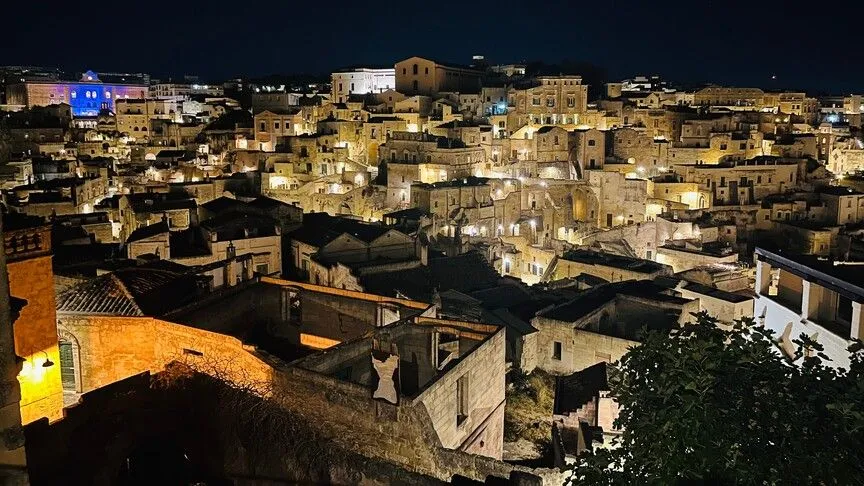
作为2026年“地中海文化与对话之都”,意大利南部城市马泰拉通过展览、音乐和艺术驻留项目,促进这个饱受冲突与分裂困扰地区的对话 吉亚达·赞帕诺 马泰拉,意大利 来自多个地中海国家的艺术家通过创意项目探索共同历史、移民与文化认同 组织者表示,文化外交有助于克服分歧、挑战成见、增进理解,在常规外交难以奏效的地方发挥作用 从马泰拉古老的洞穴居所望去,不见大海踪影。从“萨西”石窟区眺望,这座意大利南部城市面前是一片苍白的岩石、灌木丛和峡谷,远离地中海海岸。
As Mediterranean Capital of Culture and Dialogue 2026, Italy’s southern city of Matera uses exhibitions, music and artistic residencies to foster dialogue across region marked by conflict and division Giada Zampano MATERA, Italy Artists from several Mediterranean countries explore shared histories, migration and cultural identities through creative projects Organizers say cultural diplomacy can help overcome differences, challenge preconceptions and build understanding where conventional diplomacy struggles There is no sea in sight from Matera’s ancient cave dwellings. From the Sassi, the southern Italian city looks out over a landscape of pale rock, scrub and ravines, far from the Mediterranean coast.
然而,今年大海无处不在马泰拉——通过艺术、音乐、古老语言和数百年的移民史被唤起,因为这座城市正担任2026年“地中海文化与对话之都”。
Yet the sea is everywhere in Matera this year, evoked through art, music, ancient languages and centuries of migration as the city serves as Mediterranean Capital of Culture and Dialogue 2026.
在展览、音乐会和艺术驻留项目背后,蕴藏着一个雄心勃勃的主张:文化能在一个日益与战争、移民和政治分裂联系在一起的地中海地区,打开沟通渠道。“广袤的液态大陆”“地中海正如我喜欢称呼的那样,是一个‘广袤的液态大陆’,承载着千百年的历史与文化,”马泰拉巴西利卡塔2019基金会总干事丽塔·奥兰多说。
Behind the exhibitions, concerts and artistic residencies lies an ambitious proposition: that culture can open channels of communication across a Mediterranean increasingly associated with war, migration and political division. A ‘vast liquid continent’“The Mediterranean is, as I like to call it, a vast liquid continent that carries with it millennia of history and culture,” said Rita Orlando, general director of the Matera Basilicata 2019 Foundation.
对奥兰多而言,这一倡议是一场文化外交的实践,建立在这样一种信念之上:艺术家、音乐家和社区之间的相遇能增进理解,在常规外交难以奏效的地方发挥作用。
For Orlando, the initiative is an exercise in cultural diplomacy, grounded in the belief that encounters among artists, musicians and communities can foster understanding where conventional diplomacy struggles.
“把人们聚集在一起的文化外交,真正可以成为促进民族间理解、从而为和平世界做出贡献的体系、工具,”她说。这一理念贯穿全年的文化项目。
“Cultural diplomacy that brings people together can truly be the system, the tool, to facilitate understanding between peoples and thus contribute to a world of peace,” she said. The idea runs through the year’s cultural program.
在米开朗基罗·皮斯托莱托的作品《爱之差异》中,一张镜面桌呈地中海形状,装置于马泰拉凿岩而成的圣母美德与希腊人圣尼古拉岩石建筑群内。
In Michelangelo Pistoletto’s “Love Difference,” installed in Matera’s rock-hewn Complesso Rupestre Madonna delle Virtu e San Nicola dei Greci, a mirrored table takes the shape of the Mediterranean.
象征环海各文化的椅子环绕其周,将一幅熟悉的地缘政治版图转化为相遇的共享空间。
Chairs representing the cultures surrounding the sea are arranged around it, transforming a familiar geopolitical map into a shared space for encounter.
相遇的语言 在保留差异的同时寻找共同空间的理念,也通过语言浮现。
A language of encounter The idea of finding a common space while preserving differences also emerges through language.
音乐家兼作曲家斯特法诺·萨莱蒂的驻留创作重访萨比尔语,这种曾在各地中海港口通行的通用语融合了意大利语、法语、西班牙语、阿拉伯语及地区方言要素。
Musician and composer Stefano Saletti’s residency revisits Sabir, the lingua franca once spoken in Mediterranean ports, drawing on elements of Italian, French, Spanish, Arabic and regional dialects.
“它是地中海内部可能相遇的语言,”萨莱蒂说道,并描述了一个将音乐与关于马泰拉及其历史的戏剧文本相结合的项目。
“It was the language of possible encounter within the Mediterranean,” Saletti said, describing a project that combines music with a dramaturgical text about Matera and its history.
该项目汇聚了当地艺术家、演员及其他居民,组成了萨莱蒂所谓的“地中海的各种配料”。另一个项目则追溯几个世纪前移民如何将这些配料带入意大利南部。
The work has brought together local artists, actors and other residents, assembling what Saletti called “the various ingredients of the Mediterranean.”Another project traces how migration carried those ingredients into southern Italy centuries ago.
在马泰拉工作的阿尔巴尼亚视觉艺术家兼电影导演德赞特·泽内利,一直在研究巴西利卡塔大区阿尔贝雷谢社区保存下来的传统歌曲,这些社区的祖先几个世纪前从亚得里亚海对岸而来。
Driant Zeneli, an Albanian visual artist and film director working in Matera, has been researching traditional songs preserved by the Arbereshe communities of Basilicata, whose ancestors arrived from across the Adriatic centuries ago.
圣科斯蒂蒂诺阿尔巴内塞的一首复调歌曲以女性、小麦和季节更替为中心。
One polyphonic song from San Costantino Albanese centers on women, wheat and the changing seasons.
这首歌正通过一个视频装置被重新诠释,探讨移民如何跨代传递记忆与文化,在最初的旅程结束很久之后,依然连接着对岸的社区。
It is being reinterpreted through a video installation that explores how migration carries memory and culture across generations, connecting communities on opposite shores long after the original journey.
想象共享的地中海 地点、记忆与历史的相互交织,也塑造了“大海比你看到的更近”这一全城展览,该展于10月3日开幕,将持续至12月8日,分布于马泰拉的四个展场。
Imagining a shared Mediterranean The interplay of place, memory and history also shapes “The Sea Is Closer Than You See,” a citywide exhibition that opened on Oct. 3 and runs through Dec. 8 across four venues in Matera.
其前提契合一座远离海岸的地中海首府:临海并非属于其文化世界的先决条件。
Its premise suits a Mediterranean capital far from the coast: proximity to the sea is not a prerequisite for belonging to its cultural world.
展览并未将该地区呈现为单一、统一的文化,而是探索通过流动、记忆与共同实践所锻造的联系。
Rather than presenting the region as a single, uniform culture, the exhibition explores connections forged through movement, memory and shared practices.
在马泰拉当代雕塑博物馆(MUSMA),Studio Azzurro 的作品《手势的颜色·地中海交响曲》(Il Colore dei gesti. Sinfonia Mediterraneo)汲取渔夫、陶工、制琴师、织工及其他工匠的手势,唤起一种跨越文化界限的劳作与知识词汇。
At MUSMA, Matera’s Museum of Contemporary Sculpture, Studio Azzurro’s “Il Colore dei gesti. Sinfonia Mediterraneo” draws on the gestures of fishermen, potters, luthiers, weavers and other artisans to evoke a vocabulary of work and knowledge that crosses cultural boundaries.
另一件作品 TEMET 则源自对阿尔及利亚塔西利·纳杰尔(Tassili n’Ajjer)的研究。
Another work, TEMET, emerged from research in Algeria’s Tassili n’Ajjer.
该作品将摄影与技术同图阿雷格(Tuareg)社区的知识相结合,探究史前岩画以及迁徙、贸易与文化交流的历史。马泰拉所构想的地中海由此延伸至海岸线之外,直抵撒哈拉。
Combining photography and technology with the knowledge of Tuareg communities, it explores prehistoric rock art and histories of migration, trade and cultural exchange. The Mediterranean imagined in Matera thus extends beyond the shoreline toward the Sahara.
同一愿景贯穿于 Mimmo Jodice 的《地中海》(Mediterraneo)展览,汇集了来自意大利、希腊、土耳其、突尼斯和约旦的摄影作品。
The same vision informs Mimmo Jodice’s “Mediterraneo,” an exhibition bringing together photographs from Italy, Greece, Türkiye, Tunisia and Jordan.
Jodice 并未将大海呈现为国家间的地缘政治边界,而是将其描绘为共享的文化空间。
Rather than presenting the sea as a geopolitical boundary between nations, Jodice depicts it as a shared cultural space.
来自不同海岸的影像构成了展览所称的“记忆制图学”,使截然不同的地点成为共同的地中海文明的一部分。跨海的音乐 音乐提供了另一交汇点。
Images from different shores form what the exhibition describes as a “cartography of memory,” in which distinct places become part of a common Mediterranean civilization. Music across the sea Music offers another meeting point.
在 10 月 2 日的“地中海之声”(Suoni Mediterranei)音乐会上,来自意大利和摩洛哥的音乐家将意大利弦乐与阿拉伯-安达卢西亚音乐传统融合同台。此次演出是马泰拉与摩洛哥得土安(Tetouan)——其今年的地中海合作伙伴首府——合作项目的一部分。
At the “Suoni Mediterranei” concert on Oct. 2, musicians from Italy and Morocco brought Italian strings together with Arab-Andalusian musical traditions. The performance formed part of a collaboration between Matera and Tetouan, Morocco, its partner Mediterranean capital this year.
然而,马泰拉所呈现的地中海并非一个被剥离了当代危机的理想化大海。
Yet the Mediterranean portrayed in Matera is not an idealized sea stripped of contemporary crises.
黎巴嫩艺术家兼插画师卡伦·凯鲁兹正在马泰拉参加艺术驻留项目,她表示,地中海在她的作品中反复出现,通过水和海洋环境的意象呈现,往往与面临灾难的城市相关联。“地中海始终存在于我的作品中,”凯鲁兹说。
Lebanese artist and illustrator Karen Keyrouz, who is in Matera for an artistic residency, said the Mediterranean repeatedly surfaces in her work through images of water and the marine environment, often in connection with cities facing catastrophe. “The Mediterranean is always in my work,” Keyrouz said.
冲突中的文化 奥兰多表示,文化外交并不意味着对围绕地中海的冲突抱有天真想法,该地区常主要通过战争、绝望、非法贩运和移民的视角来审视。
Culture amid conflict Orlando said cultural diplomacy does not mean being naive about the conflicts surrounding the Mediterranean, a region often viewed primarily through the lenses of war, desperation, illicit trafficking and migration.
她说:“与其将差异视为障碍,不如摒弃成见,倾听,愿意去理解这些差异。”
“Rather than viewing differences as barriers, it means stripping away preconceptions, listening, being willing to understand those differences,” she said.
几个世纪前,地中海社区在萨比尔语中找到了一种跨越语言差异的实用方式,借用不同语言的词汇跨越界限进行交流。
Centuries ago, Mediterranean communities found a practical way to navigate linguistic differences in Sabir, borrowing words from different languages to communicate across boundaries.
马泰拉2026年的实验探索文化能否在一个冲突与分裂往往主导对话的地区,提供一种相遇的语言。
Matera’s experiment in 2026 explores whether culture can offer a language of encounter in a region where conflict and division so often dominate the conversation.