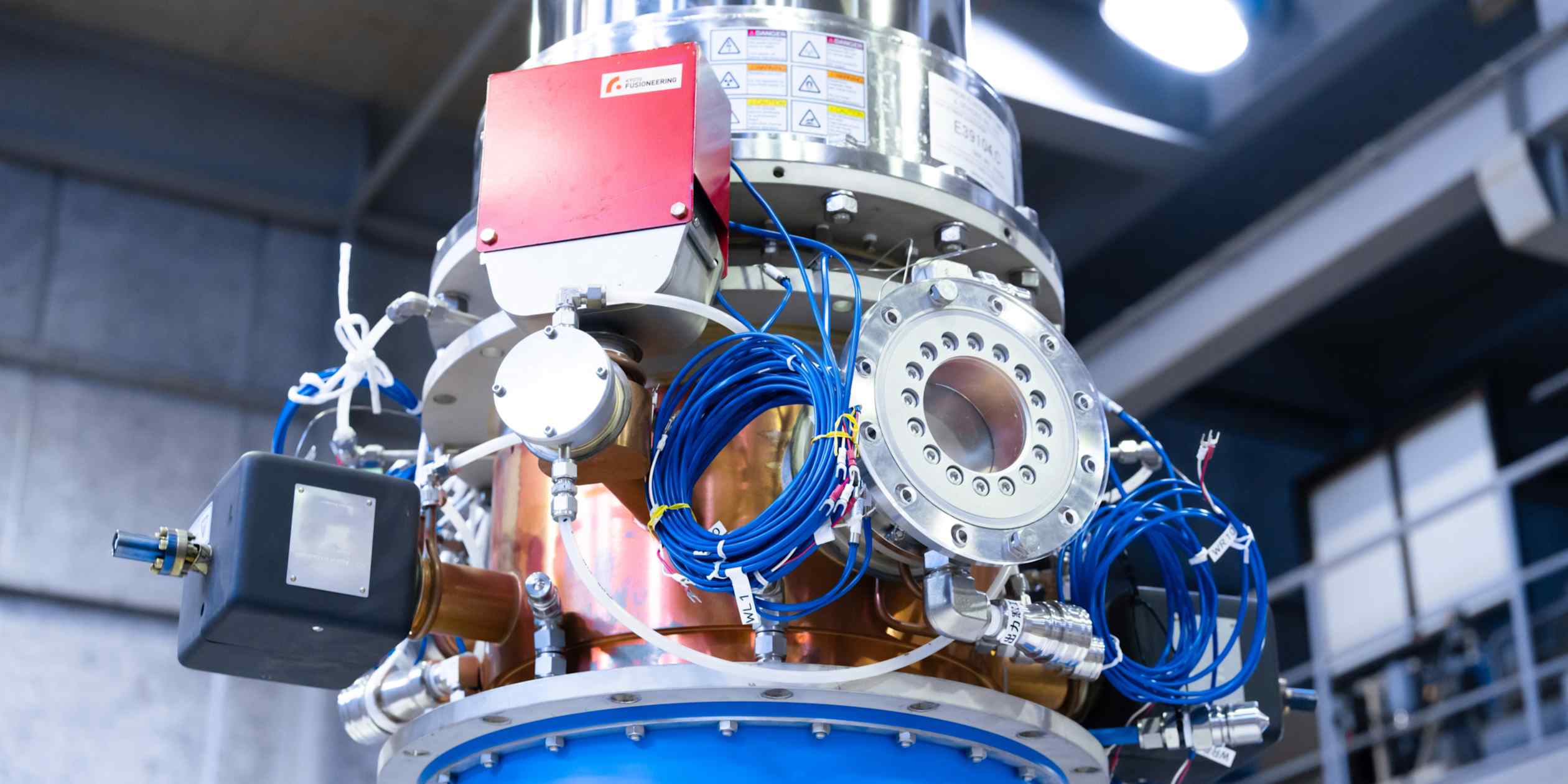
柏林 —— 日本和德国企业计划合作开发核聚变技术,目标是在未来十年内在德国建成一座商用发电厂。
BERLIN -- Japanese and German companies plan to partner on developing nuclear fusion technology, aiming to open a commercial power plant in Germany during the next decade.
总部位于东京的初创企业京都聚变工程将与德国的西门子能源以及投资该初创企业的日本贸易商三井物产携手合作。三方将共同研发将聚变反应堆产生的热量转化为电力的核心技术。
Tokyo-based startup Kyoto Fusioneering will team up with Germany's Siemens Energy and Mitsui & Co., the Japanese trading house that invests in the startup. The three will work on core technology that converts heat generated from fusion reactors into electricity.
京都聚变工程还将与德国初创企业Proxima Fusion合作,开发燃料循环技术和回旋管,后者是将聚变反应堆加热至超高温的核心部件。
Kyoto Fusioneering also will partner with German startup Proxima Fusion to develop fuel cycle technology and gyrotrons, a core component for bringing fusion reactors to ultrahigh temperatures.
这些协议将在德国总理弗里德里希·默茨于周三开始访日之际达成。
The agreements will be reached when German Chancellor Friedrich Merz visits Japan starting Wednesday.
作为一家在设计和开发发电涡轮机方面拥有成功记录的设备制造商,西门子能源正与日本企业合作,开发利用超临界 —— 即加热并加压 —— 二氧化碳而非传统蒸汽来驱动涡轮机的技术。预计这种方法将提高发电效率,并使发电设备实现小型化。
Siemens Energy, an equipment maker with a track record in designing and developing power generation turbines, is teaming with the Japanese companies to develop technology that uses supercritical -- heated and pressurized -- carbon dioxide to move turbines instead of conventional steam. This approach is expected to improve power generating efficiency and allow for miniaturization of generation equipment.
由谷歌等知名投资者支持的Proxima Fusion计划在2030年代于德国建设一座商业上可行的聚变电厂。在回旋管领域实力雄厚的京都聚变工程将通过联合开发核心设备参与该项目。
Proxima Fusion, which is backed by Google and other big-name investors, plans to build a commercially viable fusion plant in Germany during the 2030s. Kyoto Fusioneering, which is strong in gyrotrons, will participate in the project by jointly developing core equipment.
美国和中国在聚变技术投资方面处于领先地位。美国初创企业Commonwealth Fusion Systems已筹集40亿美元,并计划于2027年前展示其发电技术。中国计划于同年完成一座实验反应堆。
The U.S. and China have led the way on investing in fusion technology. American startup Commonwealth Fusion Systems has raised $4 billion and looks to demonstrate its power generation tech by 2027. China plans to complete an experimental reactor by the same year.
德国总理弗里德里希·默茨将于10月28日开始访问日本,并有德国企业界人士随行。
German Chancellor Friedrich Merz visits Japan starting Oct. 28, accompanied by German businesses.
与此同时,德国计划到2029年向聚变技术投资20亿欧元(约合22.3亿美元)。日本的目标是到2040财年通过公私合作投资3.1万亿日元(约合196亿美元)。最初,从本财年开始的三年内将向致力于进行聚变发电示范的初创企业投资600亿日元。
Meanwhile, Germany looks to invest 2 billion euros ($2.23 billion) in fusion technology by 2029. Japan targets investing 3.1 trillion yen ($19.6 billion) through public-private partnerships through fiscal 2040. Initially, 60 billion yen will be invested over three years starting this fiscal year in startups aiming to conduct fusion power demonstrations.
默茨访问日本期间,预计将与首相高市早苗讨论先进技术、防务合作以及网络安全和人工智能等经济安全问题。
During his visit to Japan, Merz and Prime Minister Sanae Takaichi are expected to discuss advanced technology, defense cooperation and economic security issues such as cybersecurity and artificial intelligence.
约30家德国企业将随默茨出访,探索在能源、无人机和航空航天等领域与日本企业开展合作。从经济安全的角度出发,这两个制造业强国寻求促进联合技术创新和供应链整合。
About 30 German businesses will accompany Merz on his trip, exploring collaboration with Japanese companies in fields including energy, drones and aerospace. From an economic security standpoint, the two manufacturing powers seek to promote joint technological innovation and the integration of supply chains.
核聚变很可能成为日德合作的基石,因为两国都严重依赖外部能源资源。
Nuclear fusion likely will become a cornerstone of Japan-Germany cooperation, as both countries rely heavily on external energy resources.
德国于2023年关闭了所有核电站,并正在扩大太阳能和风能发电。但该国在确保稳定电力供应方面面临挑战,默茨政府已将聚变列为战略公共投资目标的六大高科技领域之一。
Germany shut all nuclear plants in 2023 and is expanding solar and wind power generation. But the country faces challenges in ensuring a stable power supply, and Merz's government has designated fusion as one of six high-tech areas targeted for strategic public investments.
日本的电网主要由液化天然气和其他化石燃料能源供电。聚变被视为一种无碳的电力来源。
Japan's electrical grid is powered largely by liquefied natural gas and other fossil fuel energy sources. Fusion is seen as a carbon-free source of power.