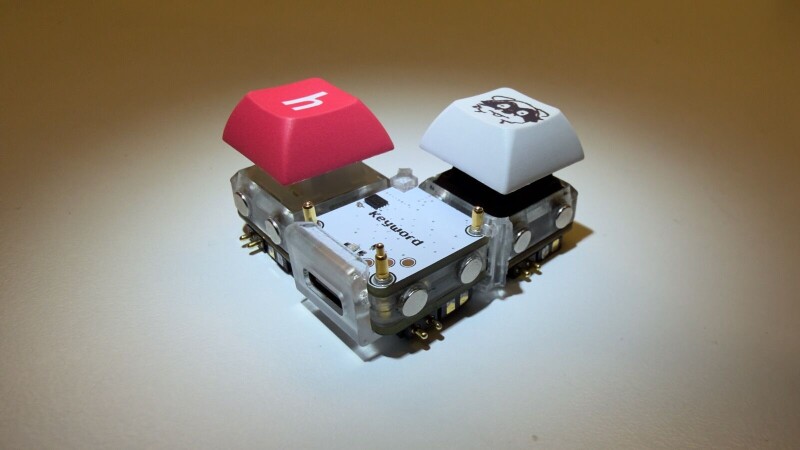
世界上键盘布局种类繁多,但如果你想要一款完全定制、甚至精确到每个按键的键盘,现在有一个新的开源项目,它利用磁铁将可互换的部件固定在一起。Keybytes 是一个开源项目,允许任何有雄心的制作者打造一款完全模块化的键盘——这里的“完全模块化”当真名副其实。每个按键都内置自己的 RISC-V 微控制器,并在四侧设有弹簧针,为相邻模块之间提供电源和 I2C 连接,以便用户将按键重新排列成不同的布局。
The world is full of different keyboard layouts, but if you want one that's completely customized, down to the individual key, there's a new open source project that uses magnets to hold interchangeable pieces together. Keybytes is an open source project that allows any ambitious builder to create a fully modular keyboard - and we’re talking FULLY modular here. Each key contains its own RISC-V microcontroller and pogo pins on all four sides, providing power and I2C connections between adjacent modules so users can rearrange the keys into different layouts.
唯一需要的额外组件是一个控制器模块,它负责协调各个按键并处理与主机电脑的通信。好消息是:尽管由两块叠层电路板组成,它的占地面积与连接在其上的单键模块完全相同。
The only extra component needed is a controller module, which coordinates the individual keys and handles communication with the host computer. And good news: Despite consisting of two stacked circuit boards, it has the same footprint as the single-key modules that attach to it.
整个项目由麻省理工学院(MIT)大一新生 Nathan Alspaugh 设计,他主修航空航天工程。Alspaugh 一直想设计自己的键盘,还有谁比 MIT 学生更适合去打造一款最复杂、最“过度设计”、超乎想象的版本呢?他在项目日志的第一篇条目中写道(该日志始于今年 3 月):“我一直想做一个键盘,但不想被锁定在单一设计中,所以我想做成可以随时重新排列的。我在网上搜索过,找不到这种东西,所以决定自己做。”
The entire thing was designed by a Massachusetts Institute of Technology freshman named Nathan Alspaugh, who is studying aerospace engineering. Alspaugh has always wanted to design his own keyboard, and who better than an MIT student to go over the top in building the most intricate, overengineered version imaginable? “I had always wanted to make a keyboard but I didn't want to be locked into just one design so I wanna make it so that I can rearrange it at any time,” Alspaugh said in the first entry of his project journal, which he’s been keeping since March of this year.
GitHub 项目的主 README 文件并不十分详细,主要只是为愿意尝试的人描述项目包含的内容(定制印制电路板、Cherry MX 轴体、3D 打印外壳,以及大量微小的焊接元件)。真正展现他工作深度的是 Alspaugh 的日记,其中详细记录了一切,而且他确实付出了大量工作。
“I searched online and couldn't find it anywhere so I decided to make it myself.”The main readme in the GitHub project isn’t super detailed, instead mostly describing what the project entails for anyone willing to give it a shot (custom printed circuit boards, Cherry MX switches, 3D-printed cases, and a whole lot of tiny soldered components).
从零开始设计一款单键模块化键盘绝非易事,Alspaugh 的开发日志记录了他面临的诸多挫折:磁铁固定不住、不得不做设计妥协,当然还有大量的电路板错误——好在他在设计阶段就发现了这些问题,避免了在订购定制元件上花冤枉钱。Alspaugh 还得学会使用光固化 3D 打印机,并经过多轮迭代和大量手工修改,才让所有部件能正确组装在一起。
It’s Alspaugh’s journal where the depth of the work he did is laid bare for all to see, and boy did he do a lot of work. Designing a single-key modular keyboard from scratch is no easy task, and the journal details a number of setbacks that Alspaugh faced, like magnets that wouldn’t stay put, design compromises, and - of course - plenty of board errors that he luckily was able to catch in the design phase before spending a bunch of cash ordering custom components.
Alspaugh 告诉 The,他至今已在该项目上投入约 100 小时。成本方面同样不菲:那些微小的定制电路板价格不便宜。根据他日志中附带的购物清单,Keybit(单个按键控制板)每块只需几美元,但 Keyword(主控板)每块要价 30 美元。Alspaugh 选择让制造商全程组装电路板,这占据了大头成本:Keybit 组装花费 69 美元,Keyword 组装花费 203 美元。
Alspaugh also had to learn to use a resin 3D printer for the project, and of course multiple iterations and a bunch of manual modifications had to be made to get everything to properly fit together. Alspaugh told The he’s spent around 100 hours on the project so far. And then there’s the cost: All those tiny custom boards don’t come cheap. According to a shopping cart for the board designs included in his journal, the Keybits (the individual key control boards) cost only a couple of bucks apiece, but the Keywords (controller boards) cost $30 a pop.
Alspaugh 表示,一把全尺寸键盘最终成本约 900 美元,性价比极低。“如果我真做全尺寸版,我会分别买板子自己焊接,”他在日志中写道。Alspaugh 还告诉我们,没有理由止步于全尺寸键盘,只要有资源,任何想打造“怪兽键盘”的人都能做到。他鼓励想自制的人大胆尝试,称只要备齐元件,任何人大概几天就能组装完成(不含 PCB 寄送时间)。
Alspaugh opted to have the manufacturer fully assemble the boards, which is where a good deal of the cost came from: Keybit assembly cost him $69, while Keyword assembly cost him $203. Alspaugh said that a full-sized keyboard would end up costing around $900, making it pretty cost prohibitive. “If I ever make a full one I’ll buy them separately and solder them myself,” he noted in his journal. Alspaugh did tell us that there’s no reason to stop at a full-sized keyboard, explaining that anyone with the desire to build a monsterboard could do so if they had the resources.
当然也可以再等等。“一旦设计改进并最终定型,我未来考虑出售成品,”Alspaugh 告诉我们,并补充说他想先做一系列改动和硬件升级,再增加一些新功能。
Alspaugh encourages anyone who wants to build their own to go for it, telling us that anyone who has the components could probably build their own in a few days, not counting delivery for the PCBs. You could wait, though.
“我大概会制作更多关键品种,比如带有指纹传感器的。”有兴趣的制作者如果想找个万圣节“弗兰肯键盘”项目,可以在 GitHub 上找到所有必要文件。® 更正:因编辑疏忽,本文原版误将“Lego”的复数写作“Legos”。我们清楚该怎么写。
“I am thinking about selling them in the future once the designs are improved and finalized,” Alspaugh told us, adding that he wants to make a bunch of changes and hardware updates first, plus add some new functionalities. “I’d probably make more key varieties, like ones that have a fingerprint sensor.”Interested makers seeking a Halloween frankenboard project can find all the necessary files on GitHub. ® Correction: Due to an editing error, the original version of this article mistakenly referred to the plural of "Lego" as "Legos." We know better.