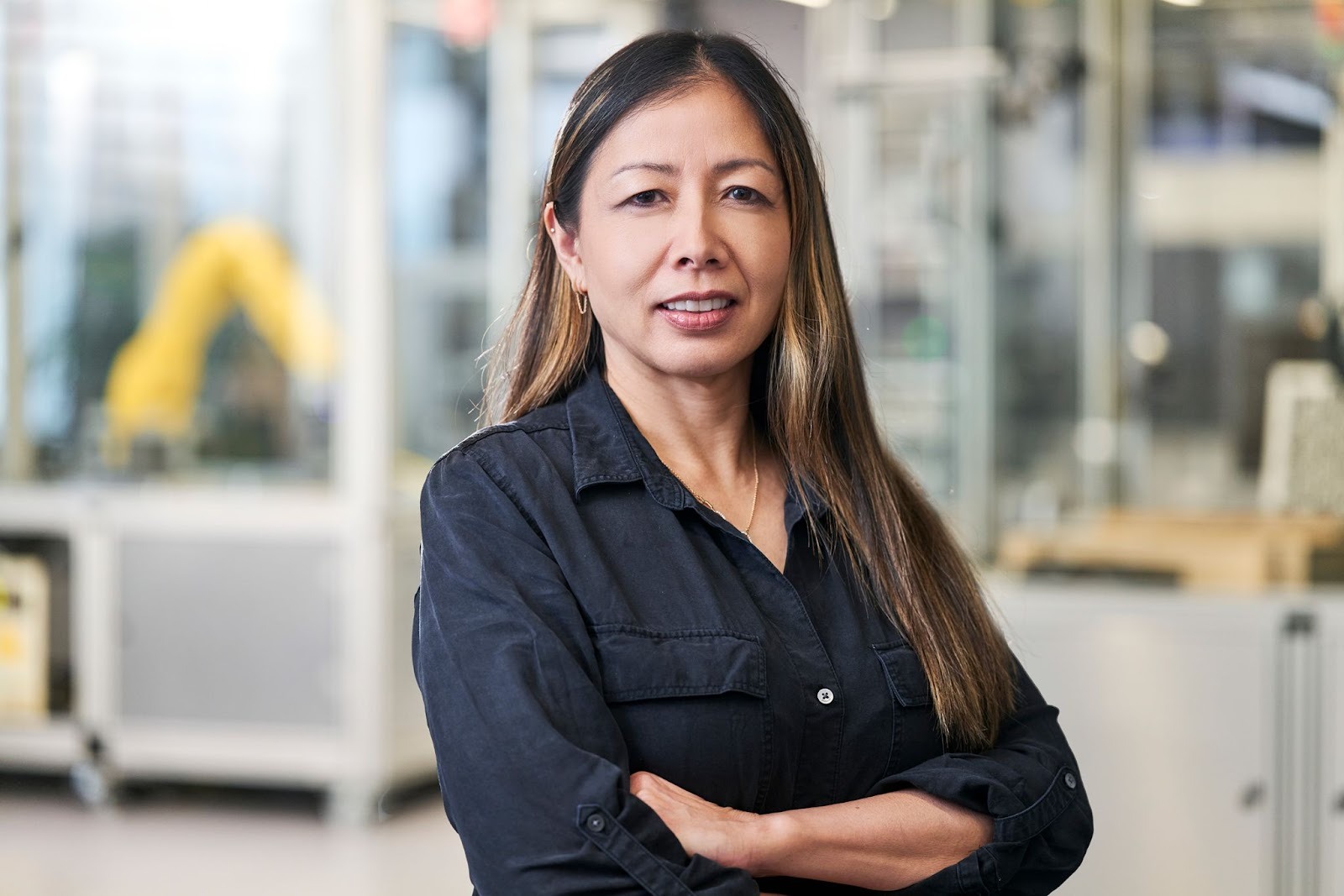
Wendy Tan White 领导着机器人软件与 AI 公司 Intrinsic,该公司专注于让工业机器人更易于使用和训练。Intrinsic 最初位于 Google 之外,隶属于 Alphabet 的“其他押注”集团,该集团旗下还包括 Waymo 等业务。但今年 2 月,Intrinsic 被纳入 Google,作为一个独立实体运作,与 DeepMind 紧密合作,并使用 Google 的 Gemini 模型和云服务。
Wendy Tan White leads robotics software and AI company Intrinsic, which is focused on making industrial robots easier to use and train. Intrinsic initially sat outside of Google at Alphabet, as part of its “Other Bets” group, which includes businesses such as Waymo. But in February this year, Intrinsic was brought into Google as a separate entity, working closely with DeepMind and using Google’s Gemini models and cloud services.
9 月,Intrinsic 宣布将其基础软件——即构建和运行工业机器人所需的软件——免费提供,即开源。其目标是让中小制造商无需在定制技术上投入巨资,也能使用机器人。从长远来看,Google 和 Intrinsic 希望成为为基于该软件构建的各类应用提供底层平台的供应商。Tan White 将其视为“机器人和 AI 领域的 Android”。
In September, Intrinsic announced that it would be making its basic software—needed to build and operate industrial robots—freely available, or open source. The aim is to give smaller manufacturers the ability to use robots without having to spend vast sums on custom technology. In the longer term, Google and Intrinsic hope to become the providers of the platform that powers what gets built on top of that software. Tan White sees this as the “Android for robotics and AI.”
Tan White 拥有创业者、投资人和运营者的经验。她共同创立了英国建站平台 Moonfruit,后来成为英国成长基金 25 亿英镑成长资本基金的合伙人,以及全球科技人才投资机构 Entrepreneur First 的普通合伙人,该机构投资 AI、机器人和生物技术领域。随后,Tan White 被招募担任 Alphabet “登月工厂”X 的副总裁,并于 2021 年推出了从 X 分拆出来的 Intrinsic。
Tan White has experience as an entrepreneur, investor and operator. She co-founded U.K. website-building platform Moonfruit, later becoming a partner at the British Growth Fund’s £2.5 billion growth capital fund, and general partner at Entrepreneur First, a global tech talent investor in AI, robotics and biotech. Tan White was then recruited as a vice president at Alphabet’s X, the moonshot factory, and in 2021 launched Intrinsic, which spun out of She spoke with TIME about how she sees robotics helping small manufacturers, Intrinsic’s relationship with Google, and what skills young people need in the AI age.
她接受《时代周刊》采访,谈及她如何看待机器人技术助力中小制造商、Intrinsic 与 Google 的关系,以及年轻人在 AI 时代需要具备哪些技能。本次访谈为求简明,已进行压缩和编辑。请讲讲 Intrinsic 的发展历程。
This interview has been condensed and edited for clarity. Tell me about the history of Intrinsic.
制造工艺多年来[自工业革命和亨利·福特模式出现以来]并没有真正发生太大变化。其问题在于,必须使其具有成本效益。这要求大批量生产,且产品必须高度相似。因此,从客户角度来看,并不总能以可承受的价格买到高度定制化的产品。从生产角度来看,生产线非常脆弱且高度标准化。我们在探讨的一点是,如果引入机器人技术,一个机器人单元能否执行多项任务?
The manufacturing process hasn't really changed much for many years [since the Industrial Revolution and the advent of the Henry Ford model]. And the problem with it is, you’ve got to make it cost effective. It has to be high volume, and it has to be very similar in product. And so, from a customer's point of view, you can't always have something very specific customized to you at a price point you can afford. And also, from a production point of view, the lines are very brittle and very standardized. One of the things we were looking at is if you brought in robotics, could one let's say robot cell do more than one task?
能否让一个更智能的机器人单元在同一条线上生产手机和服务器?目前还没达到那么复杂的程度,但也许未来能在一条线上生产完全不同类型的产品。能否实现定制化,且只生产少量产品?这之所以重要,是因为你不浪费库存;你真正生产所需的东西。工厂实际上可以变得更加灵活。这样做的另一个优势可能在于,流水线生产中人类从事的某些任务,其实是他们不该做的。
Could you get a robot cell that's more intelligent to make a phone and a server and it's not it's not as sophisticated as this yet, but maybe a whole other type of product in one line. Could you customize it, and could you only actually build a few items? The reason that's important is you don't waste inventory; you actually build what you really need. And a factory can actually effectively be much more flexible. The other advantage to something like that might be there are certain tasks that humans do in these line production, things that actually they shouldn't do.
存在危险任务。受新冠疫情影响,许多制造业熟练工人退休,因为他们不愿再做那些工作。在食品生产中,有人必须坐在那里给鸡去骨。这不是人类该做的工作,还有很多类似的危险、肮脏且高度重复的工作。
There are dangerous tasks. Through COVID, a lot of skilled labor workers in manufacturing retired because they don't want to do those jobs. In food production, there are some people who have to sit there deboning chicken. It's not a job humans should be doing, and there are just lots of dangerous and dirty and very repetitive jobs like that.
所以,我认为机器人和人工智能带来的是更灵活、更智能的制造和生产能力,而这实际上正是我团队大多数人真正关心的。你如何让这类技术和工具的使用民主化,使小企业和大企业都能用得上?你如何确保人类不必再从事那些工作?但同时,你又如何能把一部分制造业更多地迁回本地,因为否则我们做的另一件事就是:把大量原材料运到中国,因为那里成本更低而在那里生产,然后再运回来。
So, I think with robotics and AI, what that brings is the ability to have much more flexible making and production more intelligently, so actually that's really what most of my team cared about. How can you democratize access to that type of technology and tooling so that both small and big businesses can have access to it? How do you make sure humans don't have to do those sorts of jobs? But also how could you bring some of this manufacturing back more locally as well, because otherwise, what we also do is we ship a load of raw materials to China, build it there because it's cheaper, and bring it back again.
从经济和气候两个角度来看,这似乎都是真正的浪费,而且,依赖这样的供应链本身也很疯狂。所以基于这一认识,我们实际上证明了,我们可以用人工智能来做细胞和机器人,使其更灵活,也可以是一个更小的单元,甚至放在一个小镇或一个小仓库里,但也能以模块化的方式用于更大的工厂。这就是那个洞见。我们做了一个原型,然后Alphabet表示支持,说:“其实,我们认为你准备好了。”
That seems like a real waste from both an economic and climate point of view, but also, it's a crazy supply chain to be relying on. So at that insight, actually, we proved that we could do cell and robotics with AI that could be more flexible and also could be a smaller unit or even in a small town or a small warehouse, but also could be used in a modular way in larger factories too. So that was the insight. We did a prototype, and then Alphabet got behind and said, "Actually, we think you're ready.”
我认为谷歌的看法是,这就像是机器人和人工智能领域的安卓。他们在把安卓作为一个平台、让为手机开发应用民主化方面一直做得非常好。所以我想做同样的事。Intrinsic于二月份被并入谷歌。这产生了什么影响?
I think the way Google saw it was, it was like the Android for robotics and AI. They've been very good with innovating Android as a platform to democratize building applications for mobile phones. So I wanted to do the same. Intrinsic was brought into Google in February. What impact has that had?
我们被重新收回的原因是机器人技术和 AI 变得非常核心。到目前为止,主要是生成式 AI 和智能体工具,但仍然主要局限于数字世界。所以是用于视频、图像、语言。下一个堡垒是我们所谓的物理 AI,即:能否将创造智能的同等能力带到视觉、触觉和移动能力上,而这些是我们人类视为理所当然的。这才是机器人技术的真谛。
The reason we were brought back in is that robotics and AI come very front and center. So far, it's been about generative AI and agentic tools, but it's still very much in the digital world only. So it's for video, for images, for language. The next bastion is what we would call physical AI, which is: Can you bring the same ability to create intelligence around vision and touch and mobility, which we take for granted as humans. And that's what robotics really is.
我们现在可以用 AI 做的是给机器人技术增加视觉、触觉和移动能力,并将其民主化、在软件层面使其开放,这是我们已证明能够做到的,而且在某种程度上,鉴于 Gemini 以及 Google 的发展方向,这对他们来说是非常自然的选择。现在将会有一个面向物理世界的 AI 平台,他们认为我们将成为其中非常核心的部分。
What we can do with AI now is add vision, touch, and mobility to robotics, and democratizing that, making it open in a software sense, is something we had proven we could do, and in a way, given Gemini and given where Google is going, it was a very natural way for them to go. There's going to now be a platform for AI into the physical, and they thought we would become a very core part of that.
我们有很多其他合作伙伴,所以最终我们与全球最大的电子制造商富士康成立了合资企业,并与英伟达合作,很多人开始想投资我们,我认为 Alphabet 感到这应该成为我们面向物理 AI 的下一代软件的核心部分,因此将我们收回。这很有帮助,因为我们也与 DeepMind 合作非常紧密。这让我们更有确定性,真正专注于工具的民主化,而不必担心有人想投资我们。
We had a lot of other partners, so we ended up doing a joint venture with Foxconn, the biggest electronics manufacturer in the world, with collaboration with Nvidia, and a lot of people started wanting to invest in us, and I think Alphabet felt this should be a core part of our next generation of software for physical AI, so they brought us back in. It's been helpful because we work very closely with DeepMind as well. It's given us more certainty to really focus on the democratization of the tooling rather than worrying about somebody wanting to invest in us.
到目前为止一切顺利,但显然在心理上是一种变化,我想。这如何改变你们处理日常决策等事务的方式?
So far so good, but it's obviously psychologically a change, I think. How does that change how you approach things like day-to-day decision making?
他们实际上有些不同寻常地将我们与谷歌其他部分分开,所以在某种程度上,我们被纳入的方式有点像谷歌最初收购DeepMind时那样,他们让我继续担任首席执行官。他们保留了我们的品牌Intrinsic。我们拥有两栋不在核心校园内的自有建筑。所以我们有自己的身份,之所以这样做,是因为他们知道我们仍在扩张和孵化中。
They've actually unusually kept us separate, so in a way, we've been brought in a bit more like DeepMind was when it was first acquired, and they've kept me CEO. They've kept our brand as Intrinsic. We've got two buildings of our own that are not in the core campus. So we have our own identity, and the reason they've done that is they know that we're still scaling and incubating.
如果你只是试图把我们挤进去,就会回到创新者困境的问题上。把我们放回谷歌的一个标准产品领域,可能得不到它所需要的曝光,无法喘息并继续创新。现在我们创新的是业务本身,而不仅仅是技术。所以我认为这真的很有帮助。
And if you just try and squeeze us in, it's a back to innovator’s dilemma. You put us back into a standard product area within Google. It may not get the airtime it needs to breathe and to keep innovating. Now we're innovating the business itself, not just the technology. So I think that's been really helpful.
但我们确实拥有的优势是,我们能更直接地接触到高层本身,因此他们了解我们想要做什么,我们也能更快地做出决策,这对我们来说真的很有帮助。负面的一面是,我们现在也必须考虑到,既然我们代表的是谷歌家族的一部分,就不能随心所欲行事了。我们不能只想“哦,我们只是一家初创公司,应该冒险,在这里搞破坏。”我们实际上也必须考虑到这可能带来的影响。我们会首先看到你们的技术被用于哪些初始任务?
But the advantage we do have is we have much more line of sight to the senior level itself, and so they understand what we're trying to do, and we get decisions made faster, and that's been really helpful for us. The flip side is we also have to consider now that if we're representing part of the Google family as such, we can't just run. We can't just think “oh, we're just a startup, we should just take the risk and break something over here.”We actually have to consider the impacts that might have as well. What will be the initial tasks that we will see your technology being used for?
目前,关于人形机器人是否会进入家庭与人们共同生活,外界有很多炒作。机器人和人工智能的关键在于其感知能力的发展,使它们能够在家庭环境中具备适应性和安全性——这方面仍需要创新。因此,我们选择在制造业中做这件事,因为这是一个半受限的环境,而且业界对安全以及如何组织安全已经有了一定理解。所以我们从那里开始。
There's a lot of hype at the moment around [whether it’s] going to be humanoids being at home with you. The thing about robots and AIs is the development of their senses so that they can be adaptive and safe within the home—there's still innovation to go there. So we made a choice to do this within manufacturing because it's a semi-constrained environment, and they've already got some understanding around safety and how to organize that. So we started there.
做一些像制造手机某个零件这类工作的小型机械加工车间,会使用数控机床来完成。通常情况下,它们一直负担不起机器人技术和人工智能这类东西,而我们已经开始与美国的几家不同公司合作,这些机械加工车间实际上需要有人照看他们的机器,因为这对人类来说是一件相当枯燥的工作,但同时其中一些车间现在对电脑等产品的需求如此之大,这些服务器为人工智能芯片提供算力,然后被放入数据中心。
Smaller machine workshops [that] do things like make a part of a phone, they'll use a CNC [computer numeral control] machine to do that. Typically, they haven't been able to afford things like robotics and AI, and we've already started working with a couple of different companies in the U.S., machine shops who effectively need their machines tending because it's a quite a boring job for humans to do, but also some of them have so much demand now for things like computers, the servers that produce the processing for the AI chips, and then they get put into data centers.
因此,越来越多的美国机械加工车间被要求制造这些机器的零部件。他们不再拥有熟练劳动力来做这件事。他们也未必有空间来做这件事。我们为他们提供小型工作单元,这样他们实际上可以在夜间自行多跑一轮生产,而无需那些劳动力。于是突然间他们就能满足那部分需求了。
So increasingly, that some of the machine shops in the U.S. are being asked to build component parts of these machines. They don’t have the skilled labor anymore to do it. They don't necessarily have the space to do it. [We provide] small cells for them, so that they can actually run an extra production run overnight themselves, without that labor. So suddenly they can meet that demand.
但有趣的是,同一个单元可以完成不止一种类型的任务。它可以照看机器,但也能检测(零件)并完成其他任务。因此,对于那样的小型机加工车间来说,获得一种成本效益高且灵活的方案会带来颠覆性改变。它是一个平台,因此同一个单元可以通过软件配置来完成不同的任务,这样你就不必承担实际建造另一个单元的成本。
But what's interesting is the same cell can do more than one type of task. It can tend a machine, but it can also inspect [a part] and do other tasks. So getting something that's cost effective and able to be flexible for a small machine shop like that is a game changer for them. It's a platform, so the same cell can be configured through software to do a different task, and so you don't have the cost of actually building another cell.
我们还发现,我们可以把它们连接起来并统一编排,如果你构建一整套这样的灵活单元,你就拥有了一整座工厂,而这正是我们在富士康所做的。因此,那些进入小型机加工车间的同一批单元,现在也能够凭借相同的平台和相同的结构进入整座工厂,而这正是我们开始实现民主化的地方。所以,我们所谈论的任务类型是机器看护、抛光。
We've also found we can plug them together and orchestrate them, and if you build up a whole set of flexible cells like this, you have a whole factory, and that's what we're doing with Foxconn. So the same cells that are going into small machine shops are now also able to go into whole factories as well, with the same platform and the same sort of structure, and that's really where we're starting to democratize it. So, the sort of task we're talking about is machine tending, polishing.
我们可以考虑检测。我们正在研究的一些更具创新性的内容是装配之类的事情。因此,机器人 and AI 迄今为止传统上一直无法做到的事情是灵巧任务。这正是我们人类擅长的,比如把东西插接在一起、插入东西、拧螺丝。所有这些类型的任务现在借助 AI 都更有可能实现,因此我们也在把这一点加入其中。你能多告诉我一些关于与英伟达合作的情况吗?
We can look at inspecting. Some of the more innovative stuff we're looking at is things like assembly. So the thing that robots and AI haven't traditionally been able to do so far today is dexterous tasks. It's what we're good at, humans, like plugging things together, inserting things, screwing things. All those sorts of tasks are now more possible with AI, and so we're adding that in too Can you tell me more about the Nvidia partnership?
在英伟达方面,他们在名为Omniverse的网站上开展大量工作,该网站是一个模拟平台。我们正与他们合作,研究如何在工厂中对我刚才提到的那些单元进行更多编排。他们还有一些我们称之为具体功能的东西,比如如何抓取某个物体。Gemini团队也拥有类似功能。我们是一个中立平台。所以我们有点像乐高。我们可以把所有东西都封装成一个技能。
With Nvidia, they do a lot of work in their site called Omniverse, which is simulation. So we're working with them and looking at how we do more of the orchestration of the cells I was talking about in factory. They also have some what we would call specific things like how do you grasp something? The Gemini team also have some of those. We are an agnostic platform. So we're a bit like Lego. We can wrap everything into a skill.
我们可以从英伟达获取一个抓取技能,或者从Gemini获取一个抓取技能,或者我们自己也有一些。目前我们拥有一个世界级的视觉模型,你可以基本上通过它很快地看到东西,观察一个新零件,知道它在哪里,然后把它抓起来。过去这种事情是不可能的。我们可以把这些封装成技能并添加到平台上,让人们实际上可以组装技能。
So we can take a grasping skill from Nvidia or a grasping skill from Gemini, or we have some ourselves. So we have a world-class vision model at the moment that you can basically see with it very quickly, can look at a new part, see where it is, and pick it up. That sort of thing wasn't possible in the past. We can wrap those in skills and add them to a platform, so that people effectively can assemble skills.
比如,你能把这个拿起来吗?你能把它移到这里吗?你能把它插在一起吗?所有这些都变成了我们平台上的乐高积木,我们可以在不同类型的硬件上使用它。所以,我们现在正与多家合作伙伴合作,包括英伟达,还有我们自己的团队、Gemini,以及许多现在做这些不同模型的初创公司。我们也可以像这样封装不同的硬件部件。
Like, can you pick this up? Can you move it here? Can you plug it together? All those become like Lego bricks within our platform, and we can use it on different types of hardware. So, we're working with several partners now. Nvidia, but also our own team, Gemini, and many other startups now doing these different models. We can also wrap different pieces of hardware like that too.
所以,我们与美国最大的机器人制造商——总部位于日本的FANUC——建立了重大合作伙伴关系。我们能够为他们的机器人添加软件和AI功能,包括视觉和触觉能力,从而开始进行诸如插装配之类他们以前从未做过的事情。所以,从某种意义上说,我们是一个巨大的推动者。我们希望让许多不同类型的人都能访问这个平台,我们还有一个用户界面层,让更像操作员的人更容易使用我们的工具。
So we've got a big partnership with the biggest robot manufacturer in the U.S., called FANUC [headquartered] in Japan. We've been able to add software and AI capability to their robots, which is the vision, touch ability to start to do things like insertion assembly that they've never been able to do before. So, in a way, we're a massive enabler. We wanted to make this open to many different types of people to access, and we also have a user interface layer that makes it easier for people who are more like operators to be able to use our tooling.
这同样是民主化的观点。如果你能让工厂或机加工坊里的普通操作员真正使用我们的工具,那有点像在手机上使用应用程序。
This was again the democratization point. If you can get a standard operator within a factory or a machine shop to really use our tooling, it's a bit like using apps on phones.
他们也能做以前从未能做的事情。你给他们使用这项技术的机会,所以我们目前也在努力提供这种机会。
They can do things they've never been able to do before either. You give them access to that technology, so we're trying to provide that too at the moment.
你们是否有具体的规则或护栏,规定产品不能或不应用于哪些领域,比如国防?
Do you have any specific rules or guardrails around what your products can't or shouldn’t be used for, like defense?
我们一直对我们能在哪里产生最大影响持有相当坚定的观点,我认为当我介入时,主要是有兴趣帮助小型供应商群体。他们究竟如何才能获得这些技术?
We've always taken quite a strong view on where we can make the biggest difference and I think when I'm in the way, I'm mostly interested in helping the land of smaller suppliers. How can they actually have access to this?
无论是美国、德国还是日本,我们都以这种方式在不同国家开展工作。以德国经济为例,其大部分由“中小企业”驱动,也就是处于中间环节的那整个供应链机床车间群体,但我们也在努力了解大型工厂端的需求。这就是为什么我们与富士康建立了合作伙伴关系。但我们目前只是在美国的工厂里与他们合作,以学习如何做到这一点。
Whether it's U.S., Germany, Japan, we work in different countries in that way. If you take Germany’s economy, most of it is driven by the Mittelstand, which is that whole supply chain machine shop group in the middle suppliers, but we're also trying to understand what is needed at the bigger factory end as well. That's why we've got a partnership with Foxconn. But we just work in the factories right now in the U.S. with that to learn how to do that.
我认为我们之所以停留在那里,是因为生产端的需求足够大。我认为人们忘记了满足需求有多难。在美国,53%的熟练劳动力岗位已无法填补,年轻人不愿进入这一行,老一辈已经退休。我们做的很多工作更多是在教育领域。有趣的是,如果下一代认为工具更复杂、更像应用程序或拥有AI,他们会回归。在夫妻店身上尤为明显,因为它们通常是家族企业,发现如果看起来太老旧,就无法让孩子回归;而一旦引入更多技术,孩子们就会回来,所以说实话,我们更专注于这一端。
I think we've stayed there because there's enough of a need around production. I think people forget just how hard it is to meet demand. In the U.S. 53% of skilled labor jobs are not fillable anymore, and the young are not coming into it, and the old have retired. A lot of what we do is more in that educational space. What's interesting is the next gen will come back in if they believe the tooling is more sophisticated, more like an application or it's got AI, and you get that a lot with the mom and pop shops because often they're family-owned businesses and they're finding they can't get their kids back in it [if] it looks really old-fashioned. Whereas, as soon as you bring a bit more technology in again, they'll come back in, so we're focusing more at that end of it, to be honest.
关于AI将如何影响劳动力市场,特别是入门级岗位,以及人们应该学习什么技能,一直有很多讨论。你会如何建议一位年轻人?
There's been a lot of conversation around how AI is going to impact the labor market, particularly at the entry level, and what skills people should be learning. How would you advise a young person?
我儿子其实已经21岁了。他是一名工业设计师,说实话,这是个很好的选择,因为他会编程,也是个优秀的工程师,之所以选工业设计,是因为他想亲手创造实体产品。设计思维过程其实关乎你对问题解决或产品设计的独特见解。实际上,我认为在AI能帮你写代码的世界里,设计思维过程、编辑和策展将作为某种方向变得更加重要。
My son's actually 21. He's an industrial designer, which, if I'm honest, is a great place to go, because he can code, he's a good engineer too, and he chose industrial design because he wanted to make, physically. And the design thinking process is really about your unique take on a problem solve or a product design. And actually, I think in a world where [AI can do] the coding for you, the design thinking process and the editing and the curation is going to become more important as the direction, to some extent.
我觉得这对所有下一代都很关键。如果这些工具都触手可及,你独特的品味和驾驭它们的能力将变得更重要。你是否懂得在脑海中如何进行这种权衡考量?我认为这将发生在每个行业。我觉得品味塑造将成为真正需要磨练的能力。我女儿的情况是,她选了神经科学。道理一样。她本可以选纯编程,我和丈夫鼓励她走更偏创意的路线,也是因为她走的是科学创意路线,关键在于如何实现突破性思维。
I think that matters for all the next gen. If that tooling is available to you, your unique taste and ability to direct it is going to become more important. And do you know that process of how to make that consideration in your own mind? I think that's going to happen to every industry. I think taste-making is going to become the thing to really hone. In my daughter's case, she's gone for neuroscience. So, same thing. She could have gone blank coding, and my husband and I encouraged her to go more down a creative route, again, because she's gone down a more science creative route, which is, how do you do the breakthrough thinking?
所以我会说,对所有下一代而言,更多的是关于你热爱什么、擅长什么,因为在某种程度上那将成为唯一超级有价值的东西。那是让我们成为人的东西,而且我觉得我们是在为其他人类造东西。这是人们容易忽略的另一点。其他人类如果对购买——东西或体验——感兴趣,是因为那些东西能引起他们的共鸣,是别人为他们设计的。那就是建立连接的所在。近来有讨论说女性在AI采用方面落后。你怎么看这个话题?
So I would say for all the next gen, it's more about what do you love and are you great at, is what's going to become super valuable because that's all there's going to be, in some ways. It's what makes us human, and I think we're building things for other humans. That's the other thing people forget. What other humans that are interested in buying—things [or] having experiences—that resonate for them, that somebody else has designed. So that's what makes the connection. There's been discussion about women lagging behind in terms of AI adoption. What do you make of that conversation?
我整个职业生涯都在科技行业。我在伦敦帝国理工学院读计算机科学时,我们课程120人里只有7名女性——现在情况好多了。不过,我认为这个新世界理应适合女性,这一点很重要。我不想过度概括,但我们的技能非常多元混合,通常的情况是,我们更善于把事物整合在一起。比如编程或纯技术往往相当聚焦,而我团队里的女性有时觉得那太底层,或者她们倾向于做更广泛的工作,所以她们能成为出色的产品经理。
I've been in tech my whole career. When I did computer science, [it was] with seven women on our course at Imperial College London, out of 120—it's got better. It is important, though, that I actually think this new world should suit women. I don't want to overgeneralize but we are very multi-hybrid in our skills, and often what happens is that we put and integrate things better together. Coding, for example, or pure technology is often quite focused, and sometimes the women on my team find that either too low level or they tend to like to do broader [work], so they make great product managers.
我认为我们在真正对外推广方面存在媒体营销问题。我真心认为女性会非常擅长使用这些工具。
I think we've got a media marketing problem in really putting it out there. I genuinely think women are going to be very good at using the tooling.
我现在使用它的方式,几乎就像是一个协作者。所以它就像一个人。我倾向于通过与人交谈、互动来解决问题。所以我现在会用一个智能体之类的东西直接跟它对话。我也会测试它,就像对待另一个人一样——我知道另一个人有自己的视角,我觉得你是个有趣的人,我知道你掌握这些信息,但我不一定认为你无所不知、你一定是对的。
The way I tend to use it now is, it's almost like a collaborator. So it's somebody. I tend to solve problems by talking to people, interacting. So what I'll do now is use an agent or something to actually just talk to it. And I test it too, like another person—I know another person has a perspective, I think you're an interesting person, I know you've got this information, I don't necessarily think you know everything, and that you're right.
所以我想要的是一种辩论。因此,我认为我们可以有更好的工具,实现更具协作性的互动。我觉得我们都会从中获益更多,然后普及率也会更高。我认为用户体验这一侧将变得至关重要。否则就不会有人采用,但我认为这一天正在到来。有没有什么是你绝对不会用AI来做的事?
So what I want is a sort of debate. So, I think we can have better tools where it's more collaborative interaction. I think we'll all get more out of it, and I think then there'd be better adoption. I think the user experience side of it is going to become critical. The adoption won't be there otherwise, but I think it's coming. Is there anything that you definitely wouldn't use AI for?
我绝不会把它当作确定的答案。我知道现在关于批判性思维有很多争论,但即便是我和我的某位导师——一个真人——交谈时,我也会把得到的信息拿来,仍然试着结合我自己的处境去思考:这真的相关吗?真的成立吗?这里也是一样。不要以为它就是确定的答案。我觉得你需要运用自己的智慧、头脑和直觉来判断这到底行不行。
I'd never use it as a definitive answer. I know there's a lot of debate about critical thinking at the moment, but, even when I talk to one of my mentors, a human being, I will take the information and still try and think about it within my own context, and is it actually relevant or valid? Same thing here. Don't think it's a definitive answer. I think you need to use your own wisdom and brain and intuition if this is OK or not.
我……我觉得这跟日常生活是一样的。它只是一个工具,对吧?所以,不要用它去做任何你觉得不符合自己道德准则的事。那就别做。我觉得这些事情永远都会带来挑战。那么,用它能做到什么呢?我只会确保你把它当作一个赋能工具,保持创造力,这样才不会让自己的大脑退化。
I. I think it's the same as normal life. It's just a tool, right? So don't do anything with it that you don't feel fits with your moral compass. Just don't do it. I think these things are always going to be challenging. So, what's possible with it? I would just make sure you use it as an enabler, stay creative with it so that you don't sort of atrophy your own brain.
在你的职业生涯中,你扮演过许多角色。关于领导力,你学到的最重要的经验有哪些?
You've worn many hats over the course of your career. What are some of the most important lessons that you've learned about leadership?
我大概在这方面成熟了,因为第一次当CEO时我才28岁,我觉得那时我更有冲劲,这股劲推着我不断前进。但现在我更有耐心,也更善于在做出决定之前尽量全面地掌握信息,不过是在有限的条件下。做过初创公司的一个收获是,你会明白有些决定就像是48比52的概率。你要做出决定,这是你作为领导者的职责,但我在时间有限的情况下,已经大大提高了快速、尽可能拓宽视野的能力,然后再做出选择。
I probably matured in that, because I was a CEO at 28 the first time round, I think I was hungrier then, and it kept me moving. But now I'm more patient, and I'm better at trying to get a full picture of information before I make a decision, but within constraint. So, one of the things about having done startups is you learn that some decisions are like 48:52 probability. You make a decision, that's your job as a leader, but I've got much better at fast trying to really get as wide a purview as I can in the time constraint I have before I make that choice.
而当我做出选择时,我心里清楚自己可能并没有掌握全部信息。所以我也做好了准备:如果后来发现某件事不对,就去适应、去迭代,并且接受自己可能错了,也愿意承认。我觉得很多人在领导力上挣扎,或者不知道如何承担起责任再去迭代,随着时间推移,这可能会造成更大的损害,或者最终实际上会拖慢进度。说到底,这关乎的是:为了结果,你需要学会放下内心的自我。
And then when I make that choice, I make it knowing that I may not have all the information. And so I'm also prepared that if something turns out not to be right later, to adapt to that, iterate on it, and be OK if I'm wrong [and] to admit it. I think a lot of people struggle in leadership or don't know how to own it and then to iterate, and that can cause more damage over time, or it can actually slow down, ultimately. What that's about is, you need to learn to drop your inner ego, for the outcome.