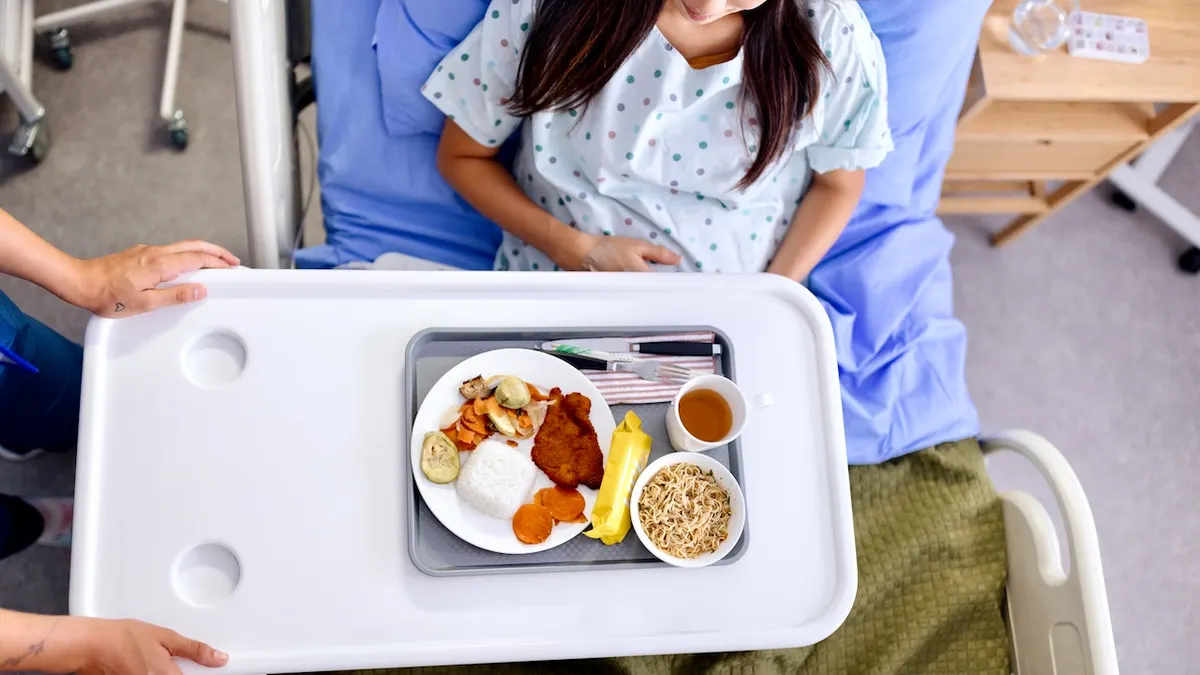
当美国人走进医院时,他们期望获得有助于康复的治疗。他们信任医生、护士和其他医疗专业人员,能够提供最佳的治疗方案,给予他们最大的康复机会。然而,我国医院提供的食物往往与这一使命背道而驰。
When Americans enter a hospital, they expect to receive care that helps them heal. They trust their doctors, nurses, and other healthcare professionals to provide the best possible treatments and give them the greatest chance of recovery. Yet too often, the food our nation’s hospitals serve contradicts that mission.
正在术后康复、患有慢性病或处理严重病情的患者,可能会被供应以高度加工食品、精制碳水化合物、添加糖及其他对康复毫无裨益的成分为主的餐食。
Patients recovering from surgery, living with chronic diseases, or managing serious medical conditions may be served meals in hospitals meals featuring highly processed foods, refined carbohydrates, added sugars, and other ingredients that do little to support their recovery.
这是一个应当引起每一位美国人关注的矛盾。而我们决心改变这一现状。
It’s a contradiction that should concern every American. And it’s one we’re determined to change.
今天,我们宣布全美已有250家医院加入“让医院食物更健康”承诺。这是由卫生与公众服务部(HHS)和医疗保险与医疗补助服务中心(CMS)发起的一项全国性倡议,旨在提升医院为患者和员工提供的餐食营养质量。
Today, we announce that 250 hospitals across the United States have joined the Make Hospital Food Healthier Pledge, a nationwide initiative the Department of Health and Human Services (HHS) and the Centers for Medicare & Medicaid Services (CMS) launched to improve the nutritional quality of meals hospitals serve to patients and staff.
这些承诺反映出美国医疗界领袖日益增强的共识:食物是良医良药的重要组成部分,医院应当通过所供餐食来践行这一理念。
These commitments reflect a growing recognition among America’s healthcare leaders that food is an essential part of good medicine, and that hospitals should demonstrate that through the meals they serve.
在特朗普总统的领导下,“让美国再次健康”运动正在从根本上重新思考营养在美国医疗保健中的作用。
Under President Trump’s leadership, the Make America Healthy Again movement is fundamentally rethinking the role of nutrition in American healthcare.
但要变革美国医疗保健,光改变联邦政策是不够的;还必须改变美国人接受治疗的环境。
But transforming American healthcare requires more than changing federal policies; it requires changing the environments in which Americans receive care.
医院可以帮助改变这些环境。它们照料我们最脆弱的公民,教育数百万患者和家属,并赢得了社区的信任。营养是履行这些责任中的每一项的核心。
Hospitals can help change those environments. They care for our most vulnerable citizens, educate millions of patients and families, and earn their communities’ trust. Nutrition is central to each of these responsibilities.
对于术后康复、抗击感染或管理慢性病的患者而言,适当的营养能够促进伤口愈合、维持肌肉量、增强免疫功能并改善康复情况。相比之下,营养不良与住院时间延长、并发症增多以及医疗成本增加相关。
For patients recovering from surgery, fighting infections, or managing chronic illnesses, proper nutrition can support wound healing, preserve muscle mass, strengthen immune function, and improve recovery. Malnutrition, by contrast, correlates with longer hospital stays, more complications, and greater healthcare costs.
医院也有机会教导患者一些习惯,这些习惯能在患者出院后长期改善其健康状况。
Hospitals also have an opportunity to teach patients habits that can improve their health long after discharge.
试想一名因2型糖尿病并发症入院的患者。该患者可能接受优质的医疗治疗,并得到关于健康饮食重要性的咨询。但如果医院在其住院期间提供的餐食与这些建议相悖,我们究竟在传递什么信息?医院餐食应当强化护理计划,而非削弱它。
Consider a patient who enters the hospital for complications of Type 2 diabetes. That patient may receive excellent medical treatment and counseling about the importance of healthy eating. But if the meals the hospital serves during their stay contradict that advice, what message are we sending? A hospital meal should reinforce the care plan, not undermine it.
美国约有6100家医院,每年合计收治住院患者超过3500万人次。美国更广泛的医疗膳食服务市场代表着每年近200亿美元的经济活动量。这是非凡的采购实力。
There are approximately 6,100 hospitals in the United States, collectively accounting for more than 35 million hospital admissions each year. The broader American healthcare foodservice market represents nearly $20 billion in annual economic activity. That’s extraordinary purchasing power.
医院是大型膳食管理公司、食品分销商和制造商的主要客户之一。它们的采购决策影响着供应商开发哪些产品、如何为这些产品定价,以及其他机构能获得哪些产品。
Hospitals are among the largest customers of major foodservice management companies, food distributors, and manufacturers. Their purchasing decisions influence which products suppliers develop, how suppliers price those products, and what becomes available to other institutions.
试想一下,如果全美各地的医院开始向供应商传递一致的信息:我们想要更多真正的食物。我们想要更健康的蛋白质、水果、蔬菜和最少加工的食材。我们想要更少含添加糖和不必要添加剂的产品。食品行业将拥有强大的激励去做出回应。
Imagine what could happen if hospitals across America began sending a consistent message to their suppliers: We want more real food. We want healthier proteins, fruits, vegetables, and minimally processed ingredients. We want fewer products with added sugars and unnecessary additives. The food industry would have a powerful incentive to respond.
随着需求增长,供应商可以扩大生产、改善分销网络,并投资更健康的产品。更大的采购量和更可预测的需求还能创造规模经济,有可能降低成本,让营养食品更实惠。其他机构也能受益。
As demand grows, suppliers can expand production, improve distribution networks, and invest in healthier product offerings. Larger purchasing volumes and more predictable demand can also create economies of scale, potentially reducing costs and making nutritious food more affordable. Other institutions could also benefit.
为医院供餐的同一批餐饮服务公司,往往也为学校、大学、职场及其他机构供餐。它们产品和供应链的改进,有助于让更健康的食品在整个美国社会更易获得。医院能够改善患者健康,并帮助变革国家的食品体系。
The same foodservice companies supplying hospitals often serve schools, universities, workplaces, and other institutions. Improvements in their product offerings and supply chains could help make healthier food more accessible throughout American society. Hospitals could improve their patients’ health and help transform the nation’s food system.
目前已有250多家医院参与,我们开始展示医疗机构共同能够完成什么。我们认识到,医院面临真实的运营挑战。医院供应链复杂,患者有着多样的医疗和营养需求。这就是“让医院食品更健康”承诺采取自愿和合作方式的原因。
With more than 250 hospitals now participating, we’re beginning to demonstrate what health care institutions can accomplish together. We recognize that hospitals face real operational challenges. Hospital supply chains are complex, and patients have diverse medical and nutritional needs. That’s why the Make Hospital Food Healthier Pledge is voluntary and collaborative.
我们不希望由华盛顿规定医院菜单,或质疑医生和注册营养师的临床判断。医院必须保留灵活性,以满足患者的个体营养需求,包括那些需要专门治疗性饮食或医学营养支持的患者。我们的目标是让全国各地的医院共同提升膳食的营养质量。
We are not interested in Washington dictating hospital menus or second-guessing the clinical judgment of physicians and registered dietitians. Hospitals must retain the flexibility to meet patients’ individual nutritional requirements, including those who need specialized therapeutic diets or medical nutrition support. Our goal is to get hospitals across the country to improve the nutritional quality of their meals together.
我们感谢美国医院协会的合作,以及众多加入这一行动的医疗体系。它们的领导力表明,变革并不总是需要新的强制令、复杂的法规或额外的行政负担。有时,它始于一份共同的承诺。
We are grateful for the partnership of the American Hospital Association and the many healthcare systems that have joined this effort. Their leadership demonstrates that change does not always require new mandates, complicated regulations, or additional administrative burdens. Sometimes, it begins with a shared commitment.
医院应当成为患者体验的每一个方面都支持健康与康复的地方。医院端上患者餐盘的食物,应当服务于这一目标。
Hospitals should be places where every aspect of the patient experience supports health and healing. The food hospitals serve on a patient’s tray should support that goal.
已有250家医院承诺提供更健康的食物。现在,我们呼吁美国其余医院加入它们的行列。
Two hundred and fifty hospitals have already committed to serving healthier food. Now, we’re calling on the rest of America’s hospitals to join them.
梅赫梅特·奥兹(Mehmet Oz)医学博士、工商管理硕士,是医疗保险和医疗补助服务中心(Centers for Medicare and Medicaid Services)的行政长官。
Mehmet Oz, M.D., M.B.A. is the administrator of the Centers for Medicare and Medicaid Services.