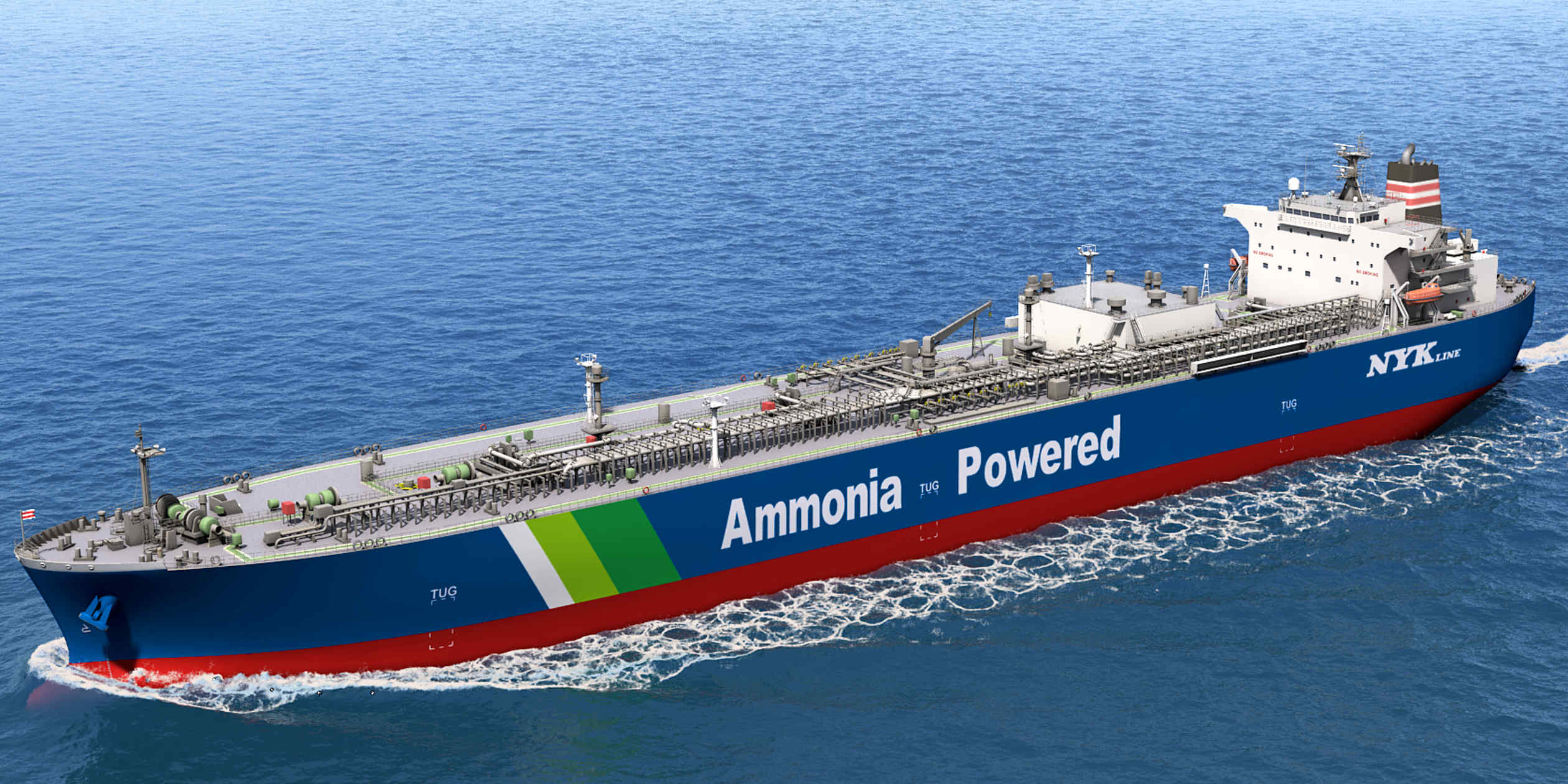
东京 —— 日本大型航运公司日本邮船(NYK Line)、发电企业JERA以及包括造船企业在内的另外五家公司周二宣布,将共同推动氨燃料船舶的应用,旨在实现海运脱碳。
TOKYO -- Major Japanese shipping company NYK Line, power producer JERA and five other corporations including shipbuilders announced on Tuesday that they will work together to promote the adoption of ammonia-fueled vessels, aiming to decarbonize maritime transportation.
“我们看到氨作为下一代燃料主要选项之一的巨大潜力,无论是在大规模生产的潜力还是供应网络的建设方面,”日本邮船社长曾我崇哉周二在记者会上表示。
"We saw significant potential in ammonia as a leading option for next-generation fuels, both in terms of its potential for large-scale production and the development of supply networks," Takaya Soga, NYK Line's president, said at a news conference on Tuesday.
“通过汇聚造船、能源和航运[领域]积累的技术、专业知识和基础设施,我们旨在齐心协力实现氨的实际应用,并建立安全且可持续的商业模式,”他补充道。
"By bringing together the technologies, expertise and infrastructure developed across the shipbuilding, energy and shipping [sectors], we aim to work as one to put ammonia into practical use and establish a safe and sustainable business model," he added.
除日本邮船和JERA外,参与方还包括航运公司川崎汽船,以及大型造船企业新来岛船坞、极洋造船、今治造船及其子公司日本船舶。
Besides NYK Line and JERA, the others involved are shipping company Kawasaki Kisen Kaisha, as well as major shipbuilders Shin Kurushima Dockyard, Kyokuyo Shipyard, Imabari Shipbuilding and its subsidiary Nihon Shipyard.
日本邮船和川崎汽船将向新来岛船坞和日本船舶订造四艘汽车运输船,计划于2030财年完工。JERA将从印度采购氨,经由其碧南火力发电厂,通过极洋造船建造的专用加注船供应给这些汽车运输船。
NYK and Kawasaki Kisen will order four car carriers from Shin Kurushima Dockyard and Nihon Shipyard, which are scheduled to be completed by fiscal 2030. JERA will supply ammonia sourced from India to the car carriers from its Hekinan Thermal Power Station through a dedicated bunkering vessel made by Kyokuyo Shipyard.
重油仍是大型船舶的主要燃料来源,但国际海事组织旨在到2050年实现国际航运二氧化碳净零排放。
Heavy fuel oil remains the primary source for large vessels, but the International Maritime Organization aims to achieve net-zero carbon dioxide emissions in international shipping by 2050.
氨被视为有助于减少二氧化碳排放的下一代船用燃料之一,与氢气和甲醇并列。氨广泛用于化肥生产等工业用途,燃烧时不排放二氧化碳。
Ammonia is seen as one of the next-generation marine fuels that could help reduce CO2 emissions along with hydrogen and methanol. Widely used in fertilizer production and other industrial applications, ammonia does not emit carbon dioxide when burned.
然而,燃料供应链仍是采用下一代燃料船舶的一大障碍。即使船东购买了使用某种替代燃料的船舶,若寄港港口无法提供该燃料,船舶也无法运营。另一项挑战是降低替代燃料成本,目前其价格仍高于重油。
However, the fuel supply chain remains an obstacle to the adoption of next-generation fuel vessels. Even if shipowners purchase vessels that run on a particular alternative fuel, they cannot operate unless the fuel is available at ports of call. Another challenge is bringing down the costs of alternative fuels, which are currently higher than those of heavy fuel oil.
汽车运输船主要运行于连接汽车制造厂附近出口港口与主要出口目的地的航线上。与运输铁矿石、煤炭和谷物的散货船相比,其航线和寄港港口往往更加固定且可预测,因此尽管燃料供应基础设施有限,仍更容易采用下一代燃料动力船舶。
riers primarily operate on routes connecting export ports near automobile manufacturing plants with major export destinations. Compared with those of bulk carriers, which transport iron ore, coal and grain, their routes and ports of call tend to be more fixed and predictable, making it easier to adopt next-generation fuel-powered vessels despite limited fuel supply infrastructure.
对于造船企业而言,接到两家航运公司的合并订单,使其能更高效地建造船舶,因为无需为每个客户单独修改船舶规格和设计。
For shipbuilders, receiving a consolidated order from the two shipping companies allows them to build ships more efficiently as they do not need to modify ship specifications and designs for each client.
JERA正在构建氨供应链,旨在将该化合物用作发电燃料。这家发电企业正在日本最大燃煤电厂——碧南火力发电站建设四座液氨储罐。
JERA is building an ammonia supply chain as it seeks to use the chemical compound as a fuel for power generation. The power producer is constructing four liquid ammonia storage tanks at the Hekinan Thermal Power Station, Japan's largest coal-fired power plant.
该公司计划于2029财年启动商业化煤氨混烧,初期以氨替代20%的煤炭,随后将比例提高至50%,最终目标是彻底淘汰化石燃料。公司预计,氨作为船用燃料的广泛应用有助于降低采购成本。
The company plans to begin commercial coal-ammonia co-firing in fiscal 2029, initially replacing 20% of the coal with ammonia and later raising the share to 50%, with the goal of eventually phasing out the fossil fuel altogether. The company expects wider use of ammonia as a marine fuel could help lower procurement costs.
造船业是首相高市早苗制定的雄心勃勃的增长战略中,列为优先投资的17个行业之一。政府旨在通过公私部门总计约1万亿日元(约合63亿美元)的投资,到2035年将国内造船量翻倍。
Shipbuilding is one of 17 sectors prioritized for investment under the ambitious growth strategy mapped out by Prime Minister Sanae Takaichi. The government aims to double domestic shipbuilding volume by 2035 through public and private sector investments totaling around 1 trillion yen ($6.3 billion).