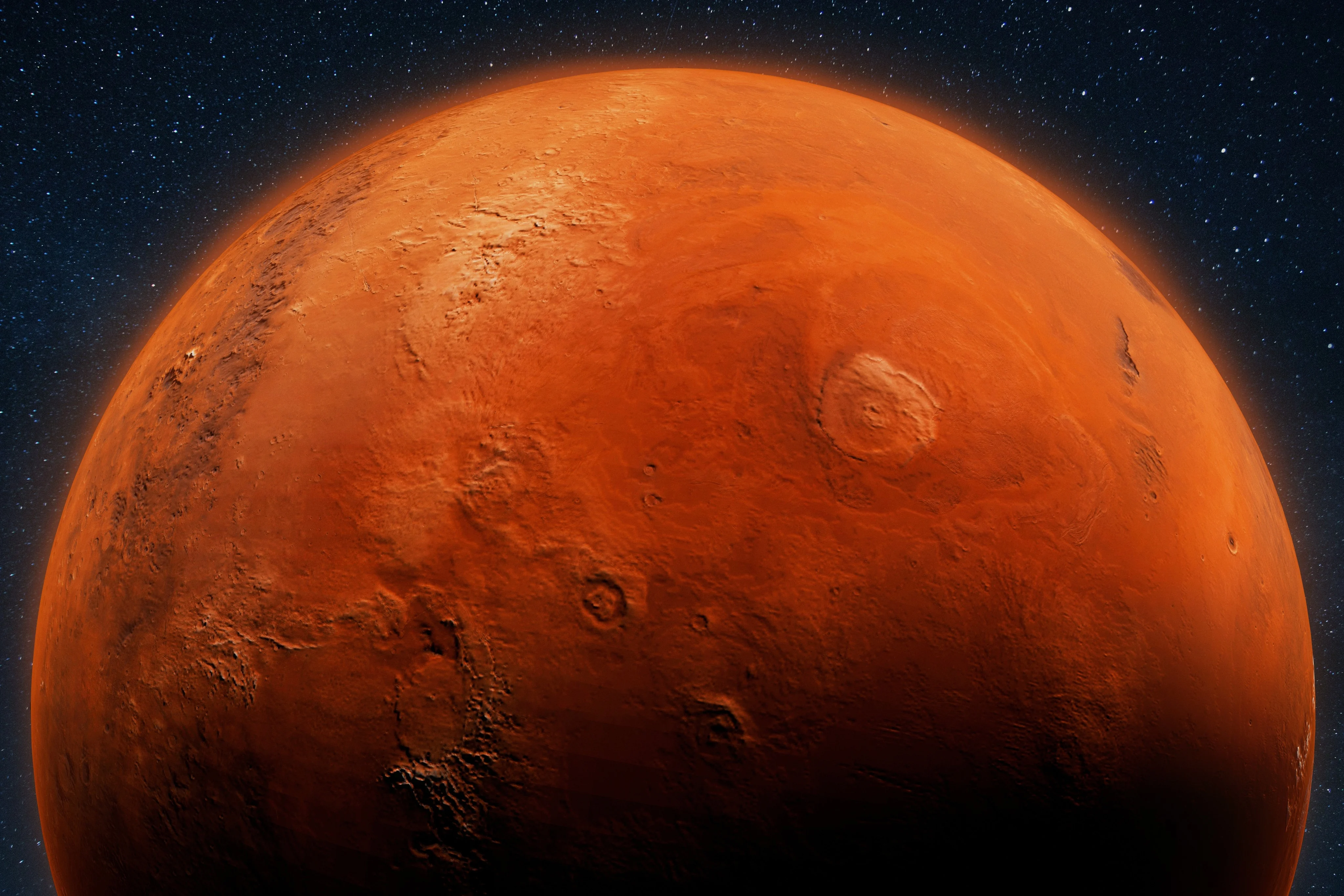
中国空间科学家正在研究未来火星宇航员如何利用稀薄大气自制燃料,这表明北京有意终将人类送上红色星球。
Chinese space scientists are working out how future astronauts on Mars could make their own fuel out of thin air, a sign that Beijing is serious about one day sending people to the red planet.
位于合肥的国家资助机构深空探测实验室的一个团队,研制出一种催化剂,可将二氧化碳——占火星大气95%以上——转化为一种名为甲醇的液体燃料。
A team at the state-funded Deep Space Exploration Laboratory in Hefei has developed a catalyst that turns carbon dioxide – which makes up more than 95 per cent of the Martian atmosphere – into a liquid fuel called methanol.
“甲醇可作为燃料用于发电、供暖和驱动火星车,也可作为化学基础原料制造防冻剂、建筑材料及其他产品,”空间资源科学家张哲及其同事在《深空探测学报》在线发表的论文中写道。
“Methanol can serve as fuel to generate electricity, provide heating and power Mars rovers, and it can also be used as a chemical building block for making antifreeze, building materials and other products,” space resources scientist Zhang Zhe and his colleagues wrote in a paper published online in the Journal of Deep Space Exploration.
研究人员写道,火星被视为未来载人登陆和长期驻留的关键目的地。该星球可能蕴藏可利用的空气、水冰和矿产,在当地生产燃料和基础化工品将大幅减少从地球运输的物资,降低成本,使未来基地更加自主。
Mars is seen as a key destination for future crewed landings and long-term stays, the researchers wrote. The planet may hold usable air, water ice and minerals, and making fuel and basic chemicals there would mean shipping far less from Earth, cutting costs and making a future base more independent, they added.
该催化剂将铜与钠结合在海绵状晶体上,助力二氧化碳与氢气反应生成甲醇,而氢气可由火星水冰制取。在地球实验室测试中,其产甲醇量是单独使用铜的11倍,且减少了不需要的副产物。
The catalyst pairs copper with sodium on a sponge-like crystal and helps carbon dioxide react with hydrogen, which could be made from Martian ice, to form methanol. In lab tests on Earth, it produced 11 times more methanol than copper alone and cut unwanted by-products.
团队写道:“这项工作在一定程度上也表明,利用火星大气中的二氧化碳在当地生产甲醇在技术上是可行的。”
“This work also shows that producing methanol on site from carbon dioxide in the Martian atmosphere is technically feasible to a certain extent,” the team wrote.
美国国家航空航天局(NASA)早已表示希望将宇航员送上火星,但未设定具体日期。该机构安装在“毅力号”火星车上的烤箱大小的“莫克西”(MOXIE)装置,曾在2021至2023年间成功从火星大气中制取氧气。
Nasa has long said it wants to send astronauts to Mars, though without a set date. The agency’s toaster-sized Moxie device, mounted on the Perseverance rover, successfully made oxygen from Martian air between 2021 and 2023.
虽然美国宇航局和SpaceX主要研究将火星二氧化碳转化为甲烷,以给火箭返航提供动力,但中国团队选择了甲醇。甲烷必须保持极低温度,而甲醇在室温下保持液态,更易于储存,用途也更广泛。
While Nasa and SpaceX have mainly looked at turning Martian carbon dioxide into methane to power rockets home, the Chinese team chose methanol instead. Methane has to be kept extremely cold, while methanol stays liquid at room temperature, making it easier to store and more versatile.
在该团队的测试中,钠的表现优于钾和铯,帮助催化剂捕获二氧化碳并将其紧贴铜。每千克催化剂每小时可产生约245克甲醇,并在12小时测试期间持续稳定工作。
In the team’s tests, sodium did better than potassium and caesium, helping the catalyst grab carbon dioxide and hold it close to the copper. Every kilogram of the catalyst made about 245 grams of methanol an hour, and it kept working steadily throughout a 12-hour test.
火星是与地球最相似的行星,长期以来一直是各大航天强国希望未来能派遣人类前往的首要目标。随着天问一号于2021年成功着陆,中国成为继美国之后唯一成功将无人航天器送上火星的国家。
Mars, the planet most like Earth, has long been a prime target for space powers hoping to one day send humans there. With Tianwen-1’s touchdown in 2021, China became the only nation besides the US ever to successfully land an uncrewed spacecraft on Mars.
中国的天问三号任务计划于2028年左右发射,目标是在2031年左右将至少500克火星样本带回地球。该任务总设计师刘继忠表示,预计将实现人类首次火星样本返回。
China’s Tianwen-3 mission is scheduled for launch around 2028, aiming to bring at least 500 grams of Martian samples back to Earth by around 2031. Liu Jizhong, the mission’s chief designer, said it was expected to achieve humanity’s first Mars sample return.
目前,张及其同事表示,还需要更多工作,包括寻找收集和压缩稀薄火星大气的方法。
For now, Zhang and his colleagues said more work was needed, including finding ways to collect and compress the thin Martian air.