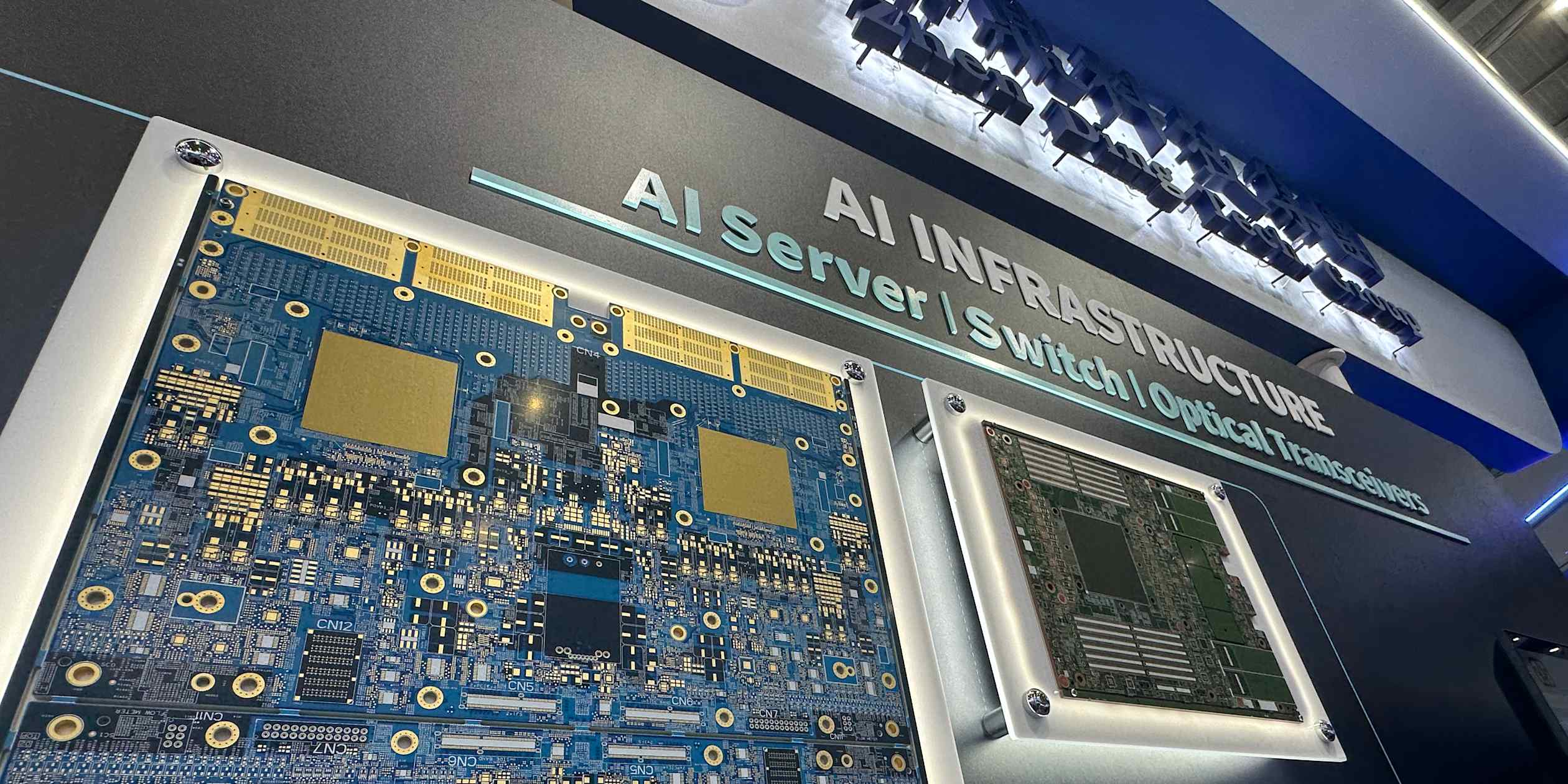
台北 -- 随着惠普和戴尔等个人电脑制造商的高管们着手规划 2027 年的供应需求,一种平凡的组件已意外成为令人担忧的焦点。
TAIPEI -- As executives at PC makers, including HP and Dell, map out their supply needs for 2027, a mundane component has emerged as an unlikely concern.
印刷电路板(PCB)是电子供应链中不起眼但必不可少的一环,据一家美国个人电脑制造商的一位经理透露,“各类印刷电路板已成为我们明年产品规划中的关键瓶颈。”“即使明年个人电脑出货量可能再次下降,我们仍难以获得足够的印刷电路板供应以满足需求,”他告诉《日经亚洲》,并因信息属机密而要求匿名。
Printed circuit boards (PCBs) are an unremarkable but essential part of the electronics supply chain, and according to one manager at an American PC maker, "various types of PCBs have become a critical bottleneck in our product planning for next year." "Even though PC shipments could decline again next year, we are still struggling to secure enough PCB supplies to meet our needs," he told Nikkei Asia, requesting anonymity because the information is confidential.
对多位行业高管和经理的采访显示,随着人工智能计算需求日益蚕食可用产能,印刷电路板和芯片基板已成为智能手机和电脑制造商等消费电子厂商的关键供应制约因素。
Interviews with multiple industry executives and managers identified PCBs and chip substrates as key supply constraints for consumer electronics manufacturers, including smartphone and computer makers, as artificial intelligence computing demand increasingly eats up available production capacity.
顶级 AI 芯片开发商英伟达、博通和 AMD 如今将印刷电路板和芯片基板视为必须确保的战略资源,以支撑其扩张。周四,英伟达宣布与包括日本 Ibiden(伊比电)、韩国 Samsung Electro-Mechanics(三星电机)和台湾 Unimicron(联茂电子)在内的多家主要芯片基板制造商建立合作伙伴关系,目标是在未来三年内将产能提升 2.5 倍。
Top AI chip developers Nvidia, Broadcom and AMD now view PCBs and chip substrates as strategic resources they must secure to support their expansion. On Thursday, Nvidia announced partnerships with several major chip substrate makers, including Japan's Ibiden, South Korea's Samsung Electro-Mechanics and Unimicron of Taiwan, aimed at boosting production capacity by 2.5 times over the next three years.
博通已将先进芯片基板认定为持续存在的供应链瓶颈,并与日本 Toppan(凸版印刷)在新加坡组建合资企业以扩大供应。美国处理器制造商 AMD 的首席执行官苏姿丰今年已多次造访其芯片和印刷电路板供应商,力争争取更多产能。
Broadcom has identified advanced chip substrates as a persistent supply chain bottleneck and has formed a joint venture in Singapore with Japan's Toppan to expand supply. Lisa Su, CEO of U.S. processor maker AMD, has visited its chip and PCB suppliers multiple times this year in a push to secure additional capacity.
与处理器和存储芯片一样,印制电路板(PCB)和芯片基板是几乎所有电子设备——从智能手机、电脑到服务器和汽车——不可或缺的组件,它们作为互连层,让所有组件能够相互通信。然而,它们传统上受到的关注较少,因为它们在设备物料清单(BOM)中所占比重相对较小,且被视为不如芯片制造和封装那样属于高科技领域。
Like processors and memory chips, PCBs and chip substrates are essential components in virtually all electronic devices, from smartphones and computers to servers and cars, functioning as interconnecting layers for all components to communicate with one another. Yet they have traditionally attracted less attention because they account for a relatively small share of a device's bill of materials and are seen as less high-tech compared to chipmaking and packaging.
但随着它们在决定芯片互连效率、芯片间通信速度以及整体计算系统性能提升方面发挥关键作用,其重要性显著上升。
But their importance has grown significantly as they have come to play a critical role in determining how efficiently chips are connected, how quickly they communicate with one another and how the overall performance of computing systems is improved.
“所有人都将产能转向AI相关产品,导致来自消费电子和笔记本电脑的传统PCB需求日益得不到满足,”一位供应英伟达、英特尔、谷歌等厂商的PCB行业经理对《日经亚洲评论》表示。“与此同时,短缺不仅关乎PCB本身,还关乎制造PCB的材料。”作为英伟达、谷歌和博通的关键供应商,华通电脑董事长简世杰表示,AI浪潮不仅要求更多的PCB和芯片基板,还要求板内拥有更多层数、更高密度的互连,以及更高的可靠性和更高标准的材料,以适应日益苛刻的AI和网络芯片。
"Everyone is shifting production capacity toward AI-related products, leaving traditional PCB demand from consumer electronics and notebooks increasingly underserved," a PCB industry manager supplying Nvidia, Intel, Google and others told Nikkei Asia. "Meanwhile, the shortage is not only associated with PCBs but also with materials to build PCBs." S.C. Chien, chairman of Unimicron, a key Nvidia, Google and Broadcom supplier, said the AI wave demanded not only more PCBs and chip substrates but also more layers and a higher density of interconnects inside the boards, along with higher reliability and a higher standard of materials to accommodate ever more demanding AI and networking chips.
“整个PCB和芯片基板供应链都需要提升质量和技术,以满足日益苛刻的要求,”简说。“光是想象一下,生产更大尺寸、更多层数的基板,支持更快的计算速度并改善散热,所面临的挑战就可想而知。”
"The entire PCB and chip substrate supply chain needs to upgrade its quality and technology to meet increasingly demanding requirements," Chien said. "Just imagine the challenges involved in producing larger substrates with more layers, supporting faster computing speeds and improving heat dissipation."
他补充道:“要实现这一点,不仅需要PCB制造商自身的努力,还需要整个供应链进行更紧密的协作与融合。”许多业内高管将这些发展形容为在供应链中蔓延的蝴蝶效应,某一环节的中断会在其他环节引发深远影响。随着制造商越来越多地将重心和产能转向高端材料、用于AI应用的PCB和芯片基板,传统消费电子市场出现了供应缺口,能填补PC和智能手机等产品留下的空白的厂商寥寥无几。
He added, "Achieving this will require not only efforts from PCB makers themselves, but also much closer collaboration and integration across the entire supply chain." Many industry executives described the developments as a butterfly effect rippling across the supply chain, with disruptions in one segment triggering far-reaching consequences in others. As manufacturers increasingly shift their focus and production capacity toward higher-end materials, PCBs and chip substrates for AI applications, supply gaps are emerging in the traditional consumer electronics market, with few players able to fill the void left behind in products such as PCs and smartphones.
与此同时,随着企业竞相扩大先进PCB和芯片基板的产量,制造它们所需的设备和材料也面临前所未有的供应限制,在整个行业形成了另一层瓶颈。
Meanwhile, as companies race to ramp up production of advanced PCBs and chip substrates, the equipment and materials needed to manufacture them are also facing unprecedented supply constraints, creating yet another layer of bottlenecks across the industry.
华通的简表示,获取制造先进芯片基板和PCB所需设备的交货期已拉长。
Unimicron's Chien said lead times for acquiring the equipment needed to make advanced chip substrates and PCBs have lengthened.
他说:“目前约20%的设备交货期较以往翻倍,而部分类型设备的交货期已长达30个月。”简补充道,过去几个月,他的团队连同客户甚至客户的客户,已多次与供应商举行会议和实地走访,以共享更清晰的展望并共同解决供应限制问题。如图所示,日本东洋印刷等供应的基板同样供不应求。
"About 20% of the equipment now has lead times doubling from in the past, while lead times for some types of equipment have stretched to as long as 30 months," he said. His team, along with their customers and even their customers' customers, have held multiple meetings and visits to suppliers over the past few months to share a clearer outlook and together solve supply constraints, Chien added. Substrates such as those supplied by Japan's Toppan, pictured, are also in high demand.
臻鼎科技董事长沈志扬表示,作为苹果和微软的关键印制电路板(PCB)供应商,公司正在大规模扩产以应对激增的需求,但多项上游材料仍面临显著限制。
Charles Shen, chairman of Zhen Ding Technology, a key Apple and Microsoft PCB supplier, said his company was expanding massively to meet surging demand, but significant constraints remained on multiple upstream materials.
“业内一些高管表示,材料限制可能在2027年至2028年左右缓解。然而,我们确实看不到用于制造PCB的材料[限制]会在短期内缓解,”沈志扬说。
"Some industry executives said materials constraints might ease around 2027 through 2028. However, we really don't see materials [constraints] for making PCBs to ease anytime soon," Shen said.
一家台湾电脑公司的高管表示,消费电子行业发现,从现在到明年要获得足够的PCB变得更加困难。
An executive at a Taiwanese PC company said the consumer electronics industry is finding it harder to secure enough PCBs from now through next year.
“不仅PCB供应充满挑战,制造PCB必不可少的铜箔基板(CCL)成本自7月以来已飙涨至少12倍,”该高管告诉《日经亚洲评论》。“内存芯片、CPU(中央处理器),现在又是PCB……我们的头疼问题只会越来越严重。”在本月举行的台湾年度PCB产业展览会上,苹果、高通、惠普的高管和代表以及领先的PCB制造商大量出席,与关键材料和设备供应商会面,希望在短缺日益加剧的情况下争取更多供应。
"Not just the supplies for PCBs are challenging, the costs for CCLs [copper clad laminate] that is essential to make PCBs, have surged at least 12 times since July," the executive told Nikkei Asia. "Memory chips, CPUs (central processing units), and now PCBs ... the headache for us just gets worse." At Taiwan's annual PCB industry trade show this month, executives and representatives from Apple, Qualcomm HP and leading PCB manufacturers were out in force, meeting key materials and equipment suppliers in the hope of securing additional supplies amid mounting shortages.
全球领先的CCL供应商、同时也是制造PCB和芯片基板关键材料的尔必达材料董事长董定宇表示,公司的订单可视性已延伸至2030年。“我们目前正在台湾、中国和马来西亚扩产,仅台湾产能在2028年投产时将增长两倍,”他说。
Dong Ding-yu, chairman of Elite Materials, the world's leading supplier of CCLs, also critical in making PCBs and chip substrates, said the order visibility for his company already extended to 2030. "We are currently expanding in Taiwan, China and Malaysia, and in Taiwan alone the capacity will grow by triple when it goes online in 2028," he said.
景旺电子是AMD、英伟达、博世和大陆集团的供应商。该公司一位销售代表对《日经亚洲》表示:“我们真的无法做出任何承诺,保证能够完成客户的订单。如果今天有新客户想下新订单,我们能为该客户提供的最早交货时间将是2028年底……现在的情况就是这么疯狂。”多位行业高管表示,就连普通消费电子产品所用标准化PCB所需的一层材料——E玻璃纤维,也供应短缺。
"We really can't make any commitment to guarantee we can fulfill customers' orders," a sales representative for Kinwong Electronic, a supplier to AMD, Nvidia, Bosch and Continental, told Nikkei Asia. "If a new customer wants to make a new order today, our soonest delivery time for the customer would be late 2028 ... that's just how crazy it is now." Even E-glass, a layer of materials needed in standardized PCBs for ordinary consumer electronics, is in short supply, several industry executives said.
短缺的部分原因是玻璃纤维布制造商将产能转向更高端的材料,包括低介电常数(low-Dk)和低介电损耗(low-Df)玻璃纤维,这两种材料正越来越多地用于AI服务器和其他先进计算应用。
The shortage stems partly from glass cloth manufacturers shifting production capacity toward higher-end materials, including low-dielectric-constant (low-Dk) and low-dielectric-loss (low-Df) glass, both increasingly used in AI servers and other advanced computing applications.
与此同时,由日本供应商日东纺主导的高端T玻璃纤维市场,长期以来一直是一些最先进芯片基板和PCB的关键瓶颈。日东纺用玻璃纱织造用于先进基板和PCB的玻璃纤维布。
Meanwhile, premium T-glass, a market dominated by Japanese supplier Nitto Boseki, better known as Nittobo has long been a critical bottleneck for some of the most advanced chip substrates and PCBs. Japan's Nittobo spins cloth for advanced substrates and PCBs from glass yarn.
欣兴电子的一位代表对《日经亚洲》表示:“就连中国大型PCB制造商也在寻求向价值链上游移动,将重心转向AI、工业和服务器应用。这让许多消费电子制造商难以获得供应。”
"Even major Chinese PCB makers are looking to move up the value chain, shifting their focus toward AI, industrial and server applications. This is leaving many consumer electronics makers struggling to secure supplies," a Unimicron representative told Nikkei Asia.
PCB热潮还推高了对高技能工程师的需求,抬升了整个行业专业人才的薪资。人力资源顾问和行业消息人士对《日经亚洲》表示,由于AI热潮,PCB行业的薪资平均上涨了约20%至30%。他们表示,拥有AI数据中心服务器印制电路板或芯片基板经验的 professionals,以及服务于AI芯片制造商及其客户的业务开发和销售人员,或从事高端产品质量控制和制造运营的人员,薪资可能接近此前水平的两倍。
The PCB boom has also fueled demand for highly skilled engineers, driving up the salaries of specialized talent across the industry. Human resources consultants and industry sources told Nikkei Asia that, on average, PCB industry salaries have risen by about 20% to 30% due to the AI boom. Professionals with experience in printed circuit boards or chip substrates for AI data center servers, along with business development and sales staff serving AI chipmakers and their customers or in quality control and manufacturing operations for high-end products, could enjoy salaries nearly double their previous levels, they said.
“AI 以及算力需求的加速增长,首次将 PCB 从传统的、类大宗商品的行业,提升到了战略重要且不可或缺的地位,”PCB 及先进芯片封装关键设备制造商群升工业总经理李正工(Lee Jung-Kung)表示。
"I think AI and the accelerating demand for computing power have, for the first time, elevated PCBs from a traditional, commodity-like industry to something strategically important and essential," said Lee Jung-Kung, general manager of Group Up Industries, a key equipment maker for PCBs and advanced chip packaging.
“在我从业的这些年里,这是我第一次看到 PCB 行业内部有如此强烈的自豪感和认同感,”李正工说。“人们越来越意识到,PCB 行业以及制造这些电路板的机械设备,作为 AI 时代的基础构建模块,发挥着关键作用。”
"In all my years in the industry, this is the first time I have seen such a strong sense of pride and recognition within the PCB sector," Lee said. "There is a growing realization that the PCB industry, and the machinery used to manufacture these boards, play a critical role as fundamental building blocks of the AI era."