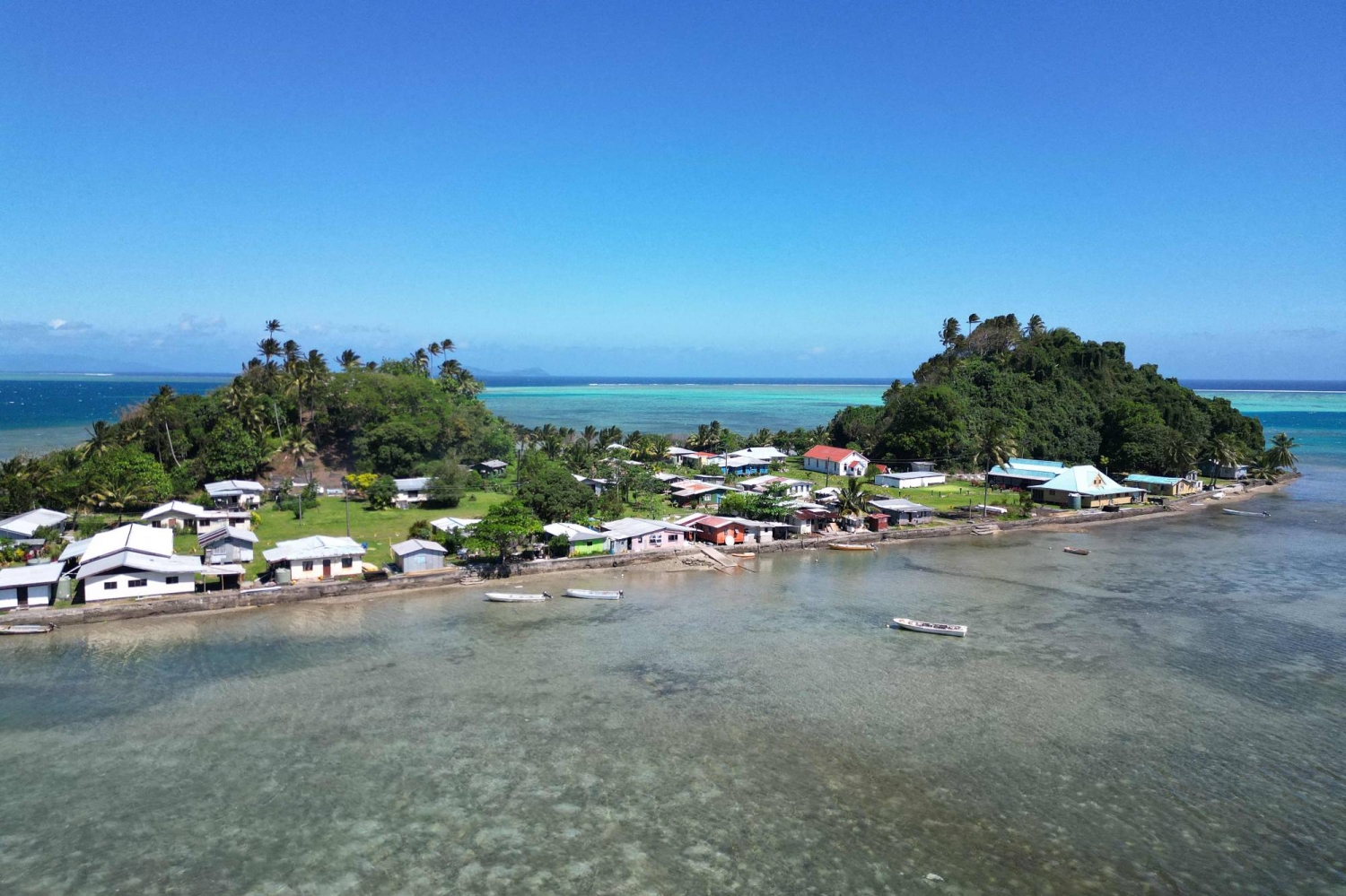
斐济塞鲁阿岛——当夕阳洒向斐济的塞鲁阿小岛,这座面临气候威胁的岛屿居民正沉浸在拒绝搬迁村庄的理由之一中——“价值1亿元的景色”。从大陆眺望,岛屿宛如世外桃源,两座陡峭、覆盖着棕榈树的小山丘夹着低洼的中心地带,四周环绕着珊瑚礁和丰富的渔场。
SERUA ISLAND, FIJI – As the sun sets over Fiji’s tiny Serua Island, its climate-threatened inhabitants soak in one of the reasons they have rejected attempts to relocate their village — the “$100 million views.”The island looks like a utopia from the mainland, two steep palm-covered knolls sandwiching its low-lying center, flanked by coral reefs and rich fishing grounds.
但置身岛上,海平面上升的风险愈发清晰,一座混凝土海堤是抵御已淹没民宅的海浪的唯一防线。
But it is on the island itself that the risk from rising seas becomes clearer, with a concrete sea wall providing the only defense against waves that are already swamping homes.
“气压越强,浪越高。所以海浪冲进村子里,”塞鲁阿岛居民阿韦奈·拉努库说。
“The stronger the air pressure, the higher the waves. So the waves wash through inside the village,” Serua Island resident Avenai Ranuku.
当气旋袭击斐济时,数十座房屋、蔬菜作物和坟墓都处于危险之中。
Dozens of homes are in harm’s way when cyclones hit Fiji, as are vegetable crops and graves.
海水拍打着岛屿东端曾经矗立着房屋和一家医院的混凝土桩基脚下,西侧也有两座房屋被迁走,因为那里的土地已被冲刷殆尽。
Water laps at the feet of concrete piles where homes and a hospital once stood on the island’s eastern end, and two homes were also moved from the western side where land has been washed away.
尽管风险重重,大多数居民表示,他们宁愿加固岛屿防御设施,也不愿放弃祖传家园。
Despite the risks, most residents say they would rather strengthen the island’s defenses than abandon their ancestral home.
拉努库回忆起小时候五级气旋“温斯顿”袭来,全岛人口撤至岛上一座山峰避难。“那晚太可怕了,”拉努库说。
Ranuku remembers when Category 5 Cyclone Winston hit as a child and the island’s population moved up one of the island’s peaks to take shelter. “Terrifying,” Ranuku said of that night.
“村长一提,所有村民都上去。没人掉队。我们互相帮忙,把家里的东西、食物都搬运上去。这就是我们的疏散计划。”
“All of the villagers, when the chief mention it, we go up. No one left behind. We help everyone, carry everything from the house, food. This is our evacuation plan.”
在高地避险时,拉努库能听到“海浪绕着岛转,房顶被冲走”。就在那座山上的避难所,拉努库解释了为什么气旋和海平面上升的威胁无法阻挡人们留在岛上生活。
Safe on higher ground, Ranuku could hear “waves going around, and the roof of the houses being washed away.”From that same haven on the hill, Ranuku explained why the threat of cyclones and sea level rise doesn’t deter people from living on the island.
“我们爱这座岛,你知道吗。空气清新,每天出海捕鱼,这就是他们不想离开的原因。”
“We love this island, you know. Fresh air, go out fishing every day, that’s why they don’t want to leave.
“过去很多人说,他们去山上的那栋房子看日落,那是一亿美金的景色。”2025年,Serua村与“仁人家园”合作制定了一份详细的灾害风险减缓计划,因为大多数村民拒绝了要求他们搬迁的呼吁。相反,居民们希望保护他们的祖传家园以及与之相关的文化。
“Many people used to say, they go to that house on the hill to see the sunset, it’s a $100 million view.”Serua Village worked with Habitat for Humanity in 2025 to write a detailed disaster risk reduction plan, as most of the population rejected calls for it to relocate. Instead, residents wanted to protect their ancestral home and the culture linked to it.
报告发现,岛上近20%的房屋处于危急状况,只有三栋房子足够坚固,能够抵御气旋。
The report found nearly 20% of homes on the island were in critical condition, and just three houses were strong enough to withstand a cyclone.
报告称:“Serua岛在高潮和大潮期间经历更频繁的海堤溢流、影响土壤肥力的盐水入侵,以及降雨后的积水,增加了健康风险。”
“Serua Island experiences more frequent seawall overtopping during high tides and king tides, saline intrusion affecting soil fertility, and standing water after rainfall, elevating health risks,” the report said.
“评估显示,Serua岛缺乏天然的防波形式,时刻受到海平面上升和气旋的威胁。”
“The assessment shows there is a lack of natural form of wave breakers on Serua Island, and it is constantly threatened by sea level rise and cyclones.
“超过50%的房屋地基不稳且屋顶、接头、墙壁和支撑结构薄弱,使这些房屋最容易受到气旋和恶劣天气事件的破坏。”收到报告后,村里毫不拖延地着手增强抵御能力。
“More than 50% of houses have a combination of unstable foundations and roofs, and weak joints, walls, and bracing, making these homes most vulnerable to cyclones and severe weather events.”On receiving the report, the village wasted no time in working to strengthen its resilience.
在10月的一次探访中,数十名工人正在北部海岸线沿线翻修房屋。脆弱的墙壁和波纹铁皮屋顶被拆除,并用船运往大陆。一些房屋已经加高以减轻洪水风险,其他房屋也即将跟进。报告还建议通过修建一条更坚固的道路来改善进出岛屿的通道。
During a visit in October, dozens of workers were renovating homes along the northern coastline. Flimsy walls and corrugated iron roofing were being removed and taken by boat to the mainland. Some homes had already been raised to mitigate flood risk, and others would soon follow. The report also recommended improving access to the island by building a more robust path.
退潮时,可以在电力线的指引下步行750米到达岛屿,这些电力线从海底伸出。
During low tide, it is possible to walk the 750 meters to the island, guided by a string of power lines protruding from the sea floor.
但涨潮时,唯一的交通方式是坐船,即便如此,报告称仍需努力使靠岛更安全、更便捷。这是Ranuku说他的村庄致力于完成的工作。
But at high tide, the only access is by boat, and even then the report said work is needed to make docking on the island safer and easier. It is work Ranuku said his village is committed to.
“我们为什么要离开?”他问道,目光望向斐济的珊瑚海岸对面的水面。“我们拥有一亿美金的景色。”
“Why would we want to leave?” he said, looking across the water to Fiji’s Coral Coast. “We have $100 million views.”