文 / 马丁·艾文斯“吾天朝物产丰盈,无所不有,原不藉外夷货物以通有无。”1793年,乾隆皇帝通过其使节马戛尔尼勋爵向英国国王乔治三世传达了这番话,彻底粉碎了英国希望通过贸易缩减因中国茶叶、丝绸和瓷器需求而造成的贸易逆差(以白银支付)的希望。这番言论的实质,对于今天的西方贸易谈判代表来说将耳熟能详。
By Martin Ivens“Our Celestial Empire possesses all things in prolific abundance and lacks no product within its borders. There is therefore no need to import the manufactures of outside barbarians in exchange for our own produce.”In 1793 the Qianlong emperor’s message to King George III, relayed via his ambassador Lord Macartney, dashed all hope of reducing a British trade deficit caused by the demand for Chinese tea, silk and porcelain — paid for in silver. That refrain’s substance will be familiar to Western trade negotiators today.
中国观察家的主流观点认为,共产党自上而下、投资驱动的增长模式已走到尽头。生产力放缓,三分之一的企业亏损,人口老龄化加剧。然而,这对西方领导人而言毫无安慰可言,他们眼睁睁看着本国大片产业被来自中国的廉价进口商品摧毁。与此同时,他们对华出口正在自由落体式下跌。
The prevailing view among China watchers is that the Communist Party’s top-down, investment-led growth model is coming to the end of the road. Productivity is slowing, a third of its companies are making losses and its population is aging. However, that’s no consolation to Western leaders who are seeing vast swaths of their native industries wiped out by cheap imports from China. Meanwhile, their own exports to China are in free fall.
尽管有关“中国崩溃论”或“中国见顶论”的议论不断,中原王朝去年却录得历史上最大的贸易顺差:1.2万亿美元。它占全球制造业产出的三分之一,加上近五分之一的商品出口量。这一切全靠公平竞争赢得吗?根据经合组织(OECD)的数据,其全球市场份额增长中约60%源于国家补贴。无可争议的是,北京依赖出口拉动增长。在国内,消费需求已被房地产泡沫破裂淹没。
For all the talk of “Broken China” or “Peak China,” the Middle Kingdom last year recorded the largest trade surplus in history: $1.2 trillion. It is responsible for a third of the world’s manufacturing output, plus almost a fifth of goods export volumes. Was this all won by fair competition? Some 60% of its gains in global market share derive from state subsidies, according to the OECD. What isn’t in dispute is that Beijing relies on exports for growth. At home, consumer demand has been drowned by the property bubble’s bursting.
欢迎来到“中国冲击2.0”,这是中国加入全球市场引发的第二次重大经济冲击。唐纳德·特朗普总统的两轮关税可能暂时遏制了对美出口的潮水,但却将中国的出口重新导向欧洲和世界其他地区。过去它供应我们塑料玩具和快时尚,如今其商品正迅速攀升价值链。
Welcome to China Shock 2.0, the second great economic disruption arising from its entry to the global market. Two rounds of President Donald Trump’s tariffs may have temporarily stemmed the tide in the US, but they redirected China’s exports to Europe and the rest of the world. It used to supply us with plastic toys and fast fashion, today its goods are rapidly climbing the value chain.
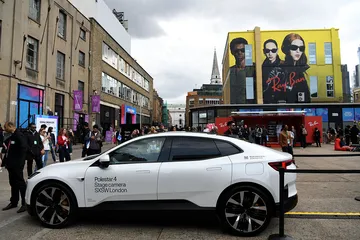
德国曾将中国视为其宝马汽车和高科技产品的利润丰厚的市场,如今却眼睁睁看着出口额暴跌,而比亚迪和捷途的车型却在斯图加特和慕尼黑的展厅里熠熠生辉。连同意大利和波兰,德国——曾经的自由贸易捍卫者——正凝视着深渊,大规模裁员正在抛弃其本土劳动力。法国几乎无需劝说便准备筑起关税壁垒。
Germany, which once saw China as a lucrative market for its BMWs and high-tech goods, has seen the value of its exports plummet while BYDs and Jaecoos gleam in Stuttgart and Munich showrooms. Along with Italy and Poland, Germany — once a free-trade champion — is staring into the abyss as huge layoffs dispense with its native workforce. France needs little persuading to raise tariff walls.
欧盟汽车生产领域有1300万个就业岗位岌岌可危,布鲁塞尔随之推出了《工业加速器法案》,旨在将工业制造业对欧盟国内生产总值的贡献率从2024年的14.3%提高到2035年的20%。本月初,欧盟集团与北京达成了一项临时贸易协议,以管控混合动力汽车关税,但《工业加速器法案》的长远目的在于与中国“脱钩”。
With 13 million jobs at stake in automobile production across the European Union, Brussels has duly obliged with the Industrial Accelerator Act, which aims to increase industrial manufacturing’s contribution to EU gross domestic product from 14.3% in 2024 to 20% by 2035. Earlier this month the bloc struck an interim trade deal with Beijing to manage tariffs on hybrid vehicles, but the IAA’s long-term purpose is to decouple from China.
这让英国——夹在美国、中国和欧盟中间的“中间受气包”——处于何种境地?英国的当务之急与其盟友不同。该国制造业基础较小,拥有以服务业为主导的出口经济。其具有法律约束力的净零排放目标依赖于从中国进口的可再生能源技术。
Where does that leave the UK, the piggie-in-the-middle between the US, China and the EU? Britain’s imperatives are different from its allies. The country has a smaller manufacturing base and a services-led export economy. Its legally binding net-zero targets rely on renewable technologies imported from China.
这届工党政府正小心翼翼地走钢丝。首相安迪·伯纳姆渴望与欧盟走得更近,甚至重新加入欧盟,但如果英国被视为中国商品的“特洛伊木马”,这一雄心可能会落空。美国依然是英国最大的单一国家出口市场,而出口至中国的份额徘徊在3.5%以下。
This Labour government treads a delicate path. Prime Minister Andy Burnham’s ambition to get closer to or even rejoin the EU could be thwarted if the UK is seen as a Trojan Horse for Chinese goods. The US, too, remains the biggest single-country market for British exports, whereas the share going to China hovers below 3.5%.
历届政府都未能制定出一项明确国家利益的战略。无论在保守党还是工党执政时期,英国在对华关系上都忽冷忽热,尽管磕头求和(kowtow)多为首选。有时杠杆掌握在华盛顿手中。第一届特朗普政府以安全为由,施压保守党首相鲍里斯·约翰逊,迫使其将华为设备从所有5G网络中剔除。
Successive governments have failed to put together a strategy that identifies the national interest. Under both the Tories and Labour, the UK has blown hot and cold on relations with China, though the kowtow is mostly favored. Sometimes the levers are pulled from Washington. The first Trump administration bullied Conservative PM Boris Johnson into stripping Huawei’s equipment out of all 5G networks on security grounds.
前工党外交大臣戴维·拉米刻意扼杀了本部门对中国挑战的评估,生怕冒犯北京。他的继任者埃德·米利班德在担任能源大臣的旧职时优先考虑良好关系,因为他需要中国制造的变压器、太阳能电池板和电池来实现能源转型目标。
The previous Labour Foreign Secretary David Lammy deliberately kiboshed his own department’s assessment of the challenge from China for fear that it might offend Beijing. His successor Ed Miliband prioritized good relations in his old job as energy secretary because he needed Chinese-made transformers, solar panels and batteries to meet his energy-transition targets.
政策似乎是临时拼凑的。商业大臣乔纳森·雷诺兹反对筑起关税壁垒,希望保留对中国电动汽车 10% 的标准进口关税。他希望北京许可其汽车在英国生产制造——上个月英国售出的新车中,近四分之一是从中国进口的。财政部也珍视伦敦对自由贸易的历史坚守。政客们喜欢让货架摆满低价商品,让选民吃喝廉价食品。中国——和德国——把制造商和出口放在首位。
Policy is seemingly made ad hoc. Jonathan Reynolds, the business secretary, opposes building tariff walls and wants to keep the standard 10% import duty on Chinese EVs. He hopes Beijing will license the manufacturing of its cars in Britain — nearly a quarter of new cars sold in the UK last month were imported from China. The Treasury also cherishes London’s historic attachment to free trade. Politicians like to keep the shelves stocked with low-priced goodies and the voters stuffed with cheap food and drink. China — and Germany — put manufacturers and exports first.
伯纳姆正被要求选边站队。如果他对中国商品加征推高通胀的关税,随着通胀升至 3.5%、油价战云再起,这对他的生活成本策略意味着什么?如果他不行动,这对他的重振英国工业的狂妄雄心又说明了什么?
Burnham is being asked to pick sides. If he puts inflationary tariffs on Chinese goods, what are the implications for his cost-of-living strategy, as inflation rises to 3.5% and war clouds loom over oil prices again? If he doesn’t act, what does that say about his hubristic ambition to reindustrialize the UK?
布鲁塞尔不会无限期等待答案。下月底将举行一次欧英联合峰会,旨在推进更好的大陆贸易关系。虽然国际汽车工业协会(IAA)的草案规则最初将英国视为欧盟“欧洲制造”计划中的“可信伙伴”,但法国和德国希望英国对中国电动汽车采取相同的关税。
Brussels won’t wait forever for an answer. At the end of next month a joint EU/UK summit is supposed to smooth progress toward better continental trade relations. While the IAA’s draft rules initially treated the UK as a “trusted partner” in the EU’s Made in Europe scheme, France and Germany want it to adopt the same tariffs on Chinese EVs.
伯纳姆能换回什么让步呢?尽管严苛的碳零排放目标与脱欧的恶性叠加冲击了英国汽车出口,但该国生产的电动车型寥寥无几,最能从即将出台的欧盟规则变化中受益的正是这些车型。“英国在变化中的欧洲”智库认为,“该行业的未来将由贸易政策至少同工程技术一样大的程度决定。按当前趋势,英国赢得的还不够。”对国家利益缺乏清醒认识才是核心问题。
What concessions would Burnham get in return? Although the malign conjunction of restrictive carbon-zero targets with Brexit have hit British car exports, the country makes few of the electric models that will benefit most from upcoming EU rule changes. The UK in a Changing Europe think tank reckons “the industry’s future will be decided by trade policy at least as much as by engineering. On current trends, the UK is not winning enough.”A lack of clarity about the national interest is the core problem.
更大的图景是,西方未能协调应对“中国冲击2.0”。作为后脱欧时代加入太平洋“全面与进步跨太平洋伙伴关系协定”(CPTPP)贸易组织的成员,英国本应利用其关键地位,游说形成统一的民主阵线。在特朗普退出舞台之前,这极不可能实现,但目前的混乱局面招致灾难。
The bigger picture is that the West has failed to coordinate its response to China Shock 2.0. As a post-Brexit member of the Pacific CPTPP trade organization, the UK should be using its pivotal position to lobby for a unified, democratic front. Until Trump leaves the stage that is highly unlikely, but the current muddle invites disaster.