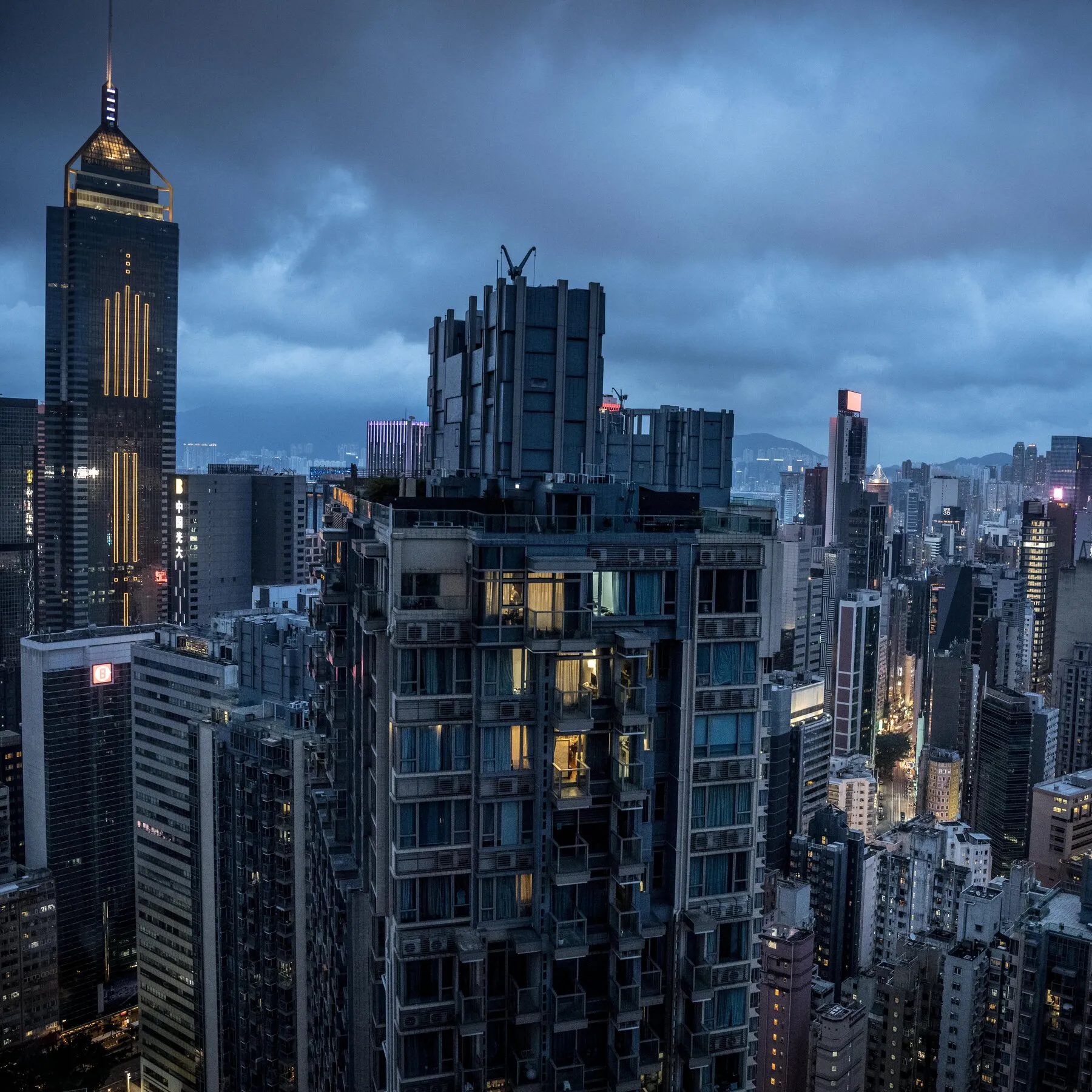
在世界上房价最难以承受的住房市场之一,高密度住宅成为了探索迷信与社会经济焦虑的背景。
Hong Kong’s ‘Apartment Horror’ Films Skewer Its Ghastly Property Market In one of the world’s least affordable housing markets, high-density housing is a backdrop for exploring superstition and socioeconomic anxiety.
香港的公寓可能会让人感到恐惧。而且这不仅仅是因为它们的价格标签。
Hong Kong apartments can be terrifying. And it’s not just their price tag.
在这个车位能卖到50多万美元、有些人被迫住在被称为“棺材房”的分割式住宅的城市里,香港是全球房价最难以承受的房地产市场之一。这种紧张局势催生了一个香港恐怖片子类型,高密度住宅在其中成为了探索迷信和社会经济焦虑的幽暗背景。
The city — where a parking spot can fetch more than half a million dollars and some people are forced to live in subdivided accommodation known as “coffin homes” — is one of the least affordable property markets on the planet. This tension has given rise to a subgenre of Hong Kong horror films in which high-density housing is a spooky backdrop for exploring superstition and socioeconomic anxieties.
“在香港,鬼魂和精怪与你一起被困在公寓里,”香港编剧兼电影人陈达仁说。“你出不去,它们也出不去。”其中一部“公寓恐怖”电影是陈果执导的2021年电影《鬼同你住》,这是一部充满血浆的讽刺片,直指资本主义和香港房地产市场的荒谬之处。在片中,对于生者试图分享它们空间的尝试,感到不满的反而是鬼魂——这窥见了香港非常本土的一种迷信,即一个可疑的便宜公寓往往预示着它极可能是悲剧或骇人罪行的发生地。
“In Hong Kong, the ghosts and the spirits are trapped in the apartment with you,” said Roy Tan, a screenwriter and filmmaker in the city. “You can’t get out, and they can’t get out either.”One “apartment horror” movie, “Coffin Homes” (Fruit Chan, 2021), is a splatter-filled satire that bites into the absurdities of capitalism and the Hong Kong property market. In the film, it is the ghosts who are displeased by the attempts of the living to share their space — a glimpse into a very Hong Kong superstition, where a suspiciously cheap apartment is a sign that it was most likely the site of a tragedy or grisly crime.
这些电影浸透了香港的民间传说,香港中文大学和香港浸会大学讲师托比亚斯·祖瑟(Tobias Zuser)说,他的课程包括对全球恐怖电影的讨论,在这些传说中,“人们普遍认为死者一直与我们生活在一起”。
The films are steeped in Hong Kong folklore, in which “it is generally believed that the dead live among us all the time,” said Tobias Zuser, a lecturer at the Chinese University of Hong Kong and Hong Kong Baptist University whose courses include discussions on global horror cinema.
“这是超级现代化城市与民间信仰延续之间的一种奇妙矛盾,”他说,并补充说这意味着迷信更多是试图安抚鬼魂,而不是否认它们的存在。
“It’s this wonderful contradiction between a hyper-modern city and the persistence of folk beliefs,” he said, adding that this means superstitions are more focused on trying to appease ghosts than denying their existence.
虽然公寓恐怖片中从不缺鬼魂,但真正的恐惧往往来自于人们试图挤进香港房地产市场的时候——彭浩翔2010年的电影《维多利亚一号》对此作了明确的展现。
While there is no shortage of spirits in apartment horror films, the real dread often comes when people try to break into the Hong Kong property market — something that “Dream Home” (Pang Ho-cheung, 2010) makes explicit.
片中的主角用了一生打多份工来存钱买公寓,结果业主却在最后关头抬高价格。这促使她展开了一场极其血腥的连环杀戮,不出所料,这最终压低了该栋大楼的房价。正如电影在其不祥的开场旁白中所说:“在一个疯狂的城市里,要想生存,人就得更疯狂。”香港影评人、研究员和节目策划人赖勇衡表示,恐怖电影是表达这种社会评论的有效载体,因为它们阐明了你想要的和你得不到的之间的紧张关系,特别是该市的住房市场。“焦虑和欲望是同一枚硬币的两面,”他说。
The film’s main character spends her whole life working multiple jobs to save up for an apartment, only for the owners to hike up the price at the last minute. That sends her on a prodigiously gory killing spree that, sure enough, ends up lowering the price of homes in the building. As the film says in its ominous opening screed: “In a crazy city, if one is to survive, he’s got to be more crazy.”Yung-Hang Bruce Lai, a film critic, researcher and programmer from Hong Kong, said that horror films are an effective vector for this brand of social commentary because they illustrate the tension between what you want and what you can’t get, particularly in the city’s housing market. “Anxiety and desire are two sides of the same coin,” he said.
《香港恐怖电影》(Hong Kong Horror Cinema)一书的联合主编加里·贝廷森(Gary Bettinson)表示,这一子类型中许多电影的恐惧之源,正是角色居住或搬入的地方。
Gary Bettinson, a co-editor of the book “Hong Kong Horror Cinema,” said the source of horror in many films in this subgenre is the place the characters live in or move to.
*“这不是怪物——怪物就是房产,”他说。他补充说,常见的批判目标包括政府应对住房状况的挣扎,以及“贪婪无良的房东和房地产开发商”。香港的地形赋予了其恐怖电影独特的质感。由于建设空间狭小,开发商只能向上发展——这确保了场景中充满幽深诡异的过渡空间和令人目眩的垂直感。在由一众香港恐怖片老戏骨出演的幻觉色彩电影《僵尸》(麦浚龙,2013年)中,恐怖的幽灵在逼仄的走廊里游荡,血腥的打斗在小房间里爆发。
“It’s not a monster — the monster is the property,” he said. He added that frequent targets include the government’s struggle to cope with the housing situation, as well as “rapacious and unscrupulous landlords and property developers.”Hong Kong’s topography gives its horror movies a distinct texture. With little space to build, developers look upward — ensuring a setting with spooky liminal spaces and dizzying verticality. In “Rigor Mortis” (Juno Mak, 2013), a phantasmagoric film with a cast of veteran Hong Kong horror stars, ghoulish apparitions stalk cramped corridors and bloody fights break out in small rooms.
编剧陈先生表示,该市有限的住房空间为电影人提供了灵感。“在世界各地,只有生、死和税收,”他说。“但在香港,税收太低了,所以只有生、死和平方英尺。”这种幽闭恐惧的方法与许多西方恐怖电影中漫无边际的鬼屋截然不同:与其说是对未知的恐惧,不如说是对潜伏在你身旁的亲密而迫切的恐惧。电梯是另一个令人恐惧的狭窄空间——在涉及驱逐凶宅的闹剧恐怖喜剧《回魂夜》(刘镇伟,1995年)中得到了极佳的应用。
Mr. Tan, the screenwriter, said that the city’s limited housing space is an inspiration for filmmakers. “Around the world, it’s life, death and taxes,” he said. “But in Hong Kong, taxes are so low that it’s life, death and square footage.”This claustrophobic approach is markedly different from the sprawling haunted houses of many Western horror movies: less a fear of the unknown and more the intimate, immediate dread of what lurks beside you. Elevators are another terrifyingly tight space — used to great effect in “Out of the Dark” (Jeffrey Lau, 1995), a slapstick horror comedy involving attempts to exorcise a haunted apartment building.
然后是天台,这在香港公寓楼里通常是共享空间。当主角发现自己处于悬崖边缘,“悬在这个深渊之上,有时甚至坠入其中”时,它们“就会变成悲惨和恐怖的场景,”《香港恐怖电影》主编贝廷森说。《回魂夜》和《怪物》(郑保瑞,2005年)——讲述了一对母子在新公寓里被疑似怪物的生物恐吓的故事——的高潮都设置在天台上。
And then there are rooftops, often a shared space in Hong Kong apartment buildings. They “become scenes of abjection and horror” when protagonists find themselves on the precipice, “hovering over this abyss and sometimes plunging into it,” said Mr. Bettinson, the “Hong Kong Horror Cinema” editor. Both “Out of the Dark” and “Home Sweet Home” (Soi Cheang, 2005) — in which a mother and son are terrorized in their new apartment by what appears to be a monster — have a climax set on rooftops.
在其最有效的时候,公寓恐怖电影颠覆了原本应该安全舒适的环境,从而彻底颠覆了家的概念。“家对你反戈一击;这是一种根深蒂固的恐惧,”贝廷森说。
At their most effective, apartment horror films turn the concept of a home on its head by subverting what is meant to be a safe and comfortable environment. “The home turns against you; it’s a deep-seated fear,” Mr. Bettinson said.
这些恐惧往往因为城市不断的嘈杂声而加剧。空调滴水和嗡嗡作响,交通噪声从远处下方回荡并变形,居住的绝对密度意味着夜里总有各种平淡无奇的声音。至少我们愿意这么认为。
Those fears are often made worse by the constant cacophony of the city. Air-conditioners drip and hum, traffic sounds echo and warp from far below, and the sheer density of living means there is no shortage of mundane things that go bump in the night. Or so we’d like to think.
“偶尔听到奇怪的声音,是每个香港居民在某个时候都不得不习惯的事情,”大学讲师祖瑟说。“我们通常最好告诉自己,这要么是管道、邻居,要么只是保安。”
“Hearing strange noises from time to time is something that every resident in Hong Kong will have to get used to at some point,” said Mr. Zuser, the university lecturer. “We are usually best off telling ourselves that this is either the piping, the neighbor or just the security guard.”