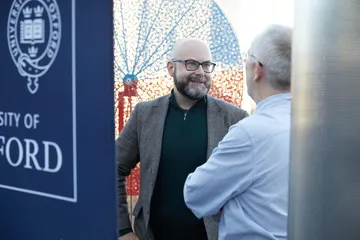
华尔街的量化公司长期以来一直是世界顶尖科学人才最赚钱的去处之一。人工智能热潮为这些数学家和物理学家带来了另一群资金雄厚的追求者,也让金融界最保密的雇主之一不得不开展日益公开的招聘活动。
Street’s quant firms have long been among the most lucrative destinations for the world’s top scientific minds. The AI boom has given those mathematicians and physicists another set of deep-pocketed suitors — and sent some of finance’s most secretive employers on an increasingly public recruitment drive.
以查尔斯·马丁内斯(Charles Martinez)的频繁出差日程为例,他负责伦敦量化交易公司G-Research的学术联络工作。他本人也是一位拥有博士学位的物理学家,参加世界各地的人工智能会议,从波士顿到北极圈走访大学,并举办以数学取代冷知识的酒吧问答竞赛。其核心推销话术是:帮助构建预测金融市场下一步走势的模型,而不是人工智能系统中的下一个词元——即使这意味着要在幕后辛苦工作。
Take the jet-setting schedule of Charles Martinez, who leads academic outreach for G-Research, a London-based quantitative trading firm. A physicist with a doctorate himself, he attends AI conferences around the world, visits universities from Boston to the Arctic Circle and hosts pub quizzes where math replaces trivia. The pitch, in essence: help build models to predict the next move in financial markets rather than the next token in an AI system — even if it means toiling in the shadows.
马丁内斯说:“你在OpenAI的朋友会说,‘好吧,我做了这个,我做了那个’,而你会说,‘是啊,我做了些什么,但我不能告诉你。’”量化金融领域的薪酬并不缺乏。据一家招聘公司称,机器学习及相关领域博士的第一年薪酬待遇通常在45万美元至65万美元之间,最高可达80万美元。但人工智能实验室和初创公司为这些研究人员提供了不同的主张:声望、知名度,以及在某些情况下,通过持有快速成长的科技公司股权而获得意外之财的前景。
“Your friend in OpenAI will be, ‘Okay, I did this, I did that,’ and you’ll be like, ‘Yeah, I did something, but I can’t tell you,’” said Martinez. Money is hardly scarce in quant finance. First-year compensation packages for machine-learning and related PhDs typically range from $450,000 to $650,000, but can go as high as $800,000, according to one recruiting firm. But AI labs and startups offer those same researchers a different proposition: prestige, visibility and, in some cases, the prospect of a windfall from owning a stake in a fast-growing technology company.
为应对竞争,一些量化公司正在更深入地介入学术界。Qube Research & Technologies推出了QRT Labs项目,资助超过70名博士和博士后研究人员。Jump Trading资助学术奖学金。阿布扎比投资局为博士生启动了量化研究驻留项目。巴黎的Capital Fund Management运营一个机器学习实验室,部分设计旨在模仿大学研究小组。
In response to the competition, some quant firms are pushing deeper into academia themselves. Qube Research & Technologies has launched QRT Labs, a program sponsoring more than 70 PhD and postdoctoral researchers. Jump Trading funds academic fellowships. Abu Dhabi Investment Authority has started a quant research residency for PhDs. Capital Fund Management in Paris runs a machine learning lab designed in part to resemble a university research group.
回报未必是立竿见影的交易信号。大学赞助可以提高公司在潜在招聘对象中的知名度,而内部实验室则有助于吸引科学家,并给他们空间从事可能最终改进交易模型的长期研究。
The payoff isn’t necessarily an immediate trading signal. University sponsorships can raise a firm’s profile among potential recruits, while internal labs can help attract scientists and give them room to pursue longer-term research that may eventually improve trading models.
G-Research也在下类似的赌注。今年夏天,它宣布对欧洲学习与智能系统实验室(一个机器学习研究者网络)进行私营部门最大规模的投资,为其中36名研究者提供资金。这家拥有约1000名员工的公司还资助了英国八所大学的43名博士生。
G-Research is making a similar bet. This summer, it announced the largest private-sector investment in the European Laboratory for Learning and Intelligent Systems, a network of machine-learning researchers, with funding for 36 of them. The firm, which employs about 1,000 people, also funds 43 PhD students across eight British universities.
马丁内斯强调,并不指望受资助的研究者最终会加入G-Research或从事可应用于金融的工作。回报在于声誉:提升公司在潜在招聘对象中的知名度,并给其品牌带来他所说的“温暖 fuzzy 感觉”。即便竞争激烈,他认为G-Research能够与AI实验室正面抗衡。
There’s no expectation that the sponsored researchers will eventually join G-Research or do work applicable to finance, Martinez stresses. The payoff is reputational: raising the firm’s profile among potential recruits and giving its brand what he calls a “warm fuzzy feeling.”Even with the intense competition, he reckons G-Research can go toe-to-toe with the AI labs.
他在该公司伦敦总部表示,其量化分析师“管理团队的方式就像大学管理博士生团队的方式”。“第二点是,我们受益于世界上最强大的计算资源之一。所以无论你想测试什么,都能做到。”XTX Markets Ltd.、摩根大通、Hudson River Trading LLC、Optiver Holding BV和CFM等公司也设有专门的人工智能实验室,尽管它们的使命各不相同。
The way its quants “run their groups is like the way a university would run a PhD group,” he said from the firm’s London headquarters. “The second thing is that we benefit from one of the most powerful computing resources in the world. So whatever you want to test, you can do it.”XTX Markets Ltd., JPMorgan Chase & Co., Hudson River Trading LLC, Optiver Holding BV and CFM are among other firms with dedicated AI labs, though their mandates vary.
CFM是一家总部位于巴黎、规模约350亿美元的量化对冲基金,由一位物理学教授联合创立,它建立了一个旨在保留部分学术研究自由的实验室。为了领导该实验室,公司聘请了一位纽约大学数学教授,此人现在也在巴黎任教。他与两名全职研究员和一组轮换的博士后一起工作。
CFM, the roughly $35 billion Paris-based quant hedge fund co-founded by a physics professor, has built a lab designed to preserve some of the freedoms of academic research. To lead it, the firm hired a New York University math professor who now also teaches in Paris. He works with two full-time researchers and a rotating group of postdocs.
“他们不需要承担构建阿尔法模型的压力,”首席产品官洛朗·拉卢表示。“他们拥有完全的学术自由,因为他们完全融入学术体系,参与并为研究、出版物和会议做出贡献,同时也将优秀研究带入公司内部。”量化分析师长期以来一直是华尔街中最具学术气质的群体。他们的许多模型都源于学术研究,工作往往依赖于在科学博士项目中锤炼的统计学和工程技能。随着系统性投资公司部署更多机器学习,这种关系进一步加深,而机器学习的突破往往源自大学。
“They are not under the pressure to build alpha models,” said Chief Product Officer Laurent Laloux. “They have complete academic freedom in the sense that they are fully immersed in the academic system, participating and contributing to research, publications and conferences and also bringing good research internally.”Quants have long been the most scholarly of Wall Street’s lot. Many of their models have academic origins, and the work often draws on statistical and engineering skills honed in science PhD programs. That relationship has only deepened as systematic firms deploy more machine learning, a field whose breakthroughs have often emerged from universities.
在CFM,实验室为研究人员提供时间和空间,以便“进行这种长期思考,确保我们能够掌握学术前沿,并理解如何将其应用于系统性投资,”拉卢表示。
At CFM, the lab gives its researchers the time and space to “do this longer-term thinking to ensure that we are able to grasp the cutting edge of academia and understand how it can be applied to systematic investing,” said Laloux.
像NeurIPS和ICML这样的顶尖机器学习会议,如今随处可见量化公司的展位,它们分发纪念品、举办派对,并向学生讲解金融入门知识。在今年12月的NeurIPS会议上,顶级赞助商中近一半是金融公司。
Leading machine-learning conferences such as NeurIPS and ICML are now dotted with booths from quant firms handing out swag, hosting parties and explaining finance 101 to students. Of the top-tier sponsors at the NeurIPS conference this December, nearly half are financial firms.
HRT、XTX和Jane Street等公司还运营着配备大量GPU的自有数据中心——这也是吸引顶尖人才的另一大因素。
The likes of HRT, XTX and Jane Street also operate their own data centers packed with GPUs — another draw for the top whizzes.
“这不仅仅是薪酬问题,”专注于人工智能领域的猎头公司Maven Partnership合伙人汤姆·钱伯斯表示,“更在于对算力和基础设施的承诺。”人才流动的频繁交替凸显了这场竞争。以长期人工智能实验室著称的HRT,已有多名员工跳槽至OpenAI。Two Sigma的量化分析师也已加入Anthropic。
“It isn’t just about compensation,” said Tom Chambers, partner specialized in AI at Maven Partnership, a recruitment firm. “It’s about commitment to compute and infrastructure.”The competition is evident in the revolving door of talent. HRT, known for its longstanding AI lab, has lost several employees to OpenAI.
偶尔,人才流动也会反向发生。例如,几名谷歌DeepMind科学家已加入Jump和Citadel Securities。
Two Sigma quants have gone to Anthropic. More occasionally, the traffic moves the other way.
老牌高频交易公司Jump的首席技术官亚历克斯·戴维斯表示,公司一直都有学术合作关系,但随着它试图吸引更年轻的研究人员,决定更多地公开这些关系。这些研究人员更倾向于自己调查潜在雇主,而不是通过招聘人员。
A few Google DeepMind scientists have joined Jump and Citadel Securities, for instance. At Jump, the long-established high-frequency trading firm, Chief Technology Officer Alex Davies says it has always had academic partnerships but decided to publicize them more as it tries to appeal to younger researchers, who are more likely to investigate potential employers themselves rather than go through recruiters.
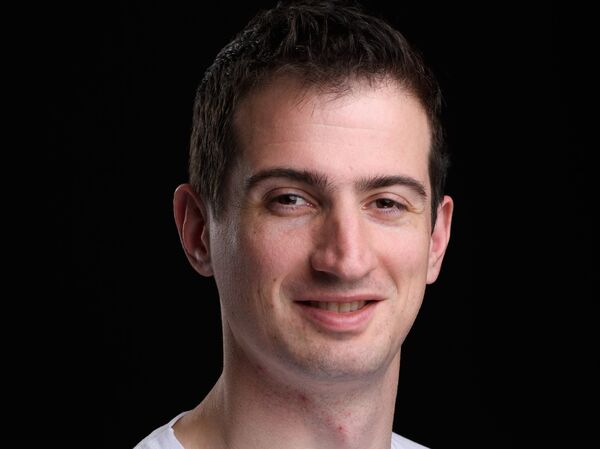
“人才竞争之激烈,是我所见过的最具挑战性的,”这位在Jump工作了15年的资深人士说。“人工智能实验室显然是眼下最大的竞争对手。”在某个方面,Jump也开始听起来更像那些实验室了。一些员工拥有“技术职员”的头衔,这是OpenAI和Anthropic推广的一种刻意模糊的称谓。戴维斯说,他喜欢这个词消除了研究人员和工程师之间的传统界限——随着AI辅助编程的发展,这条界线已经变得越来越模糊。
“The competition for talent is as challenging as I’ve ever known it,” said the 15-year Jump veteran. “AI labs are clearly the biggest competitor right now.”In one respect, Jump is also starting to sound more like those labs. Some employees take the title “member of technical staff,” a deliberately vague label popularized by OpenAI and Anthropic. Davies says he likes that the term erases the traditional distinction between researchers and engineers — a line that has become blurrier with AI-assisted coding.
量化公司和AI实验室都在训练机器学习模型以做出预测。但戴维斯认为,金融市场对那些被难题吸引的研究人员有着特殊的吸引力。
Both quant firms and AI labs train machine learning models to make predictions. But Davies thinks financial markets hold a particular appeal for researchers drawn to difficult problems.
“如果你的问题是完美地翻译语言,人们不会故意把语言弄得更难,来迷惑机器人,”戴维斯说。“即使你完美地解决了金融领域的预测问题,一旦将其推广开来,市场也会在你脚下发生变化,于是你就不再算解决了问题。”
“If your problem is to perfectly translate language, people don’t make the language harder to confuse the bot,” said Davies. “Even if you perfectly solve prediction in finance, by rolling that out, markets will change underneath you, and you haven’t solved it any more.”