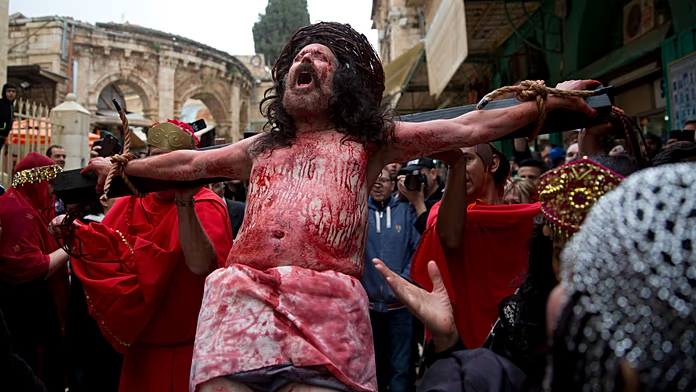
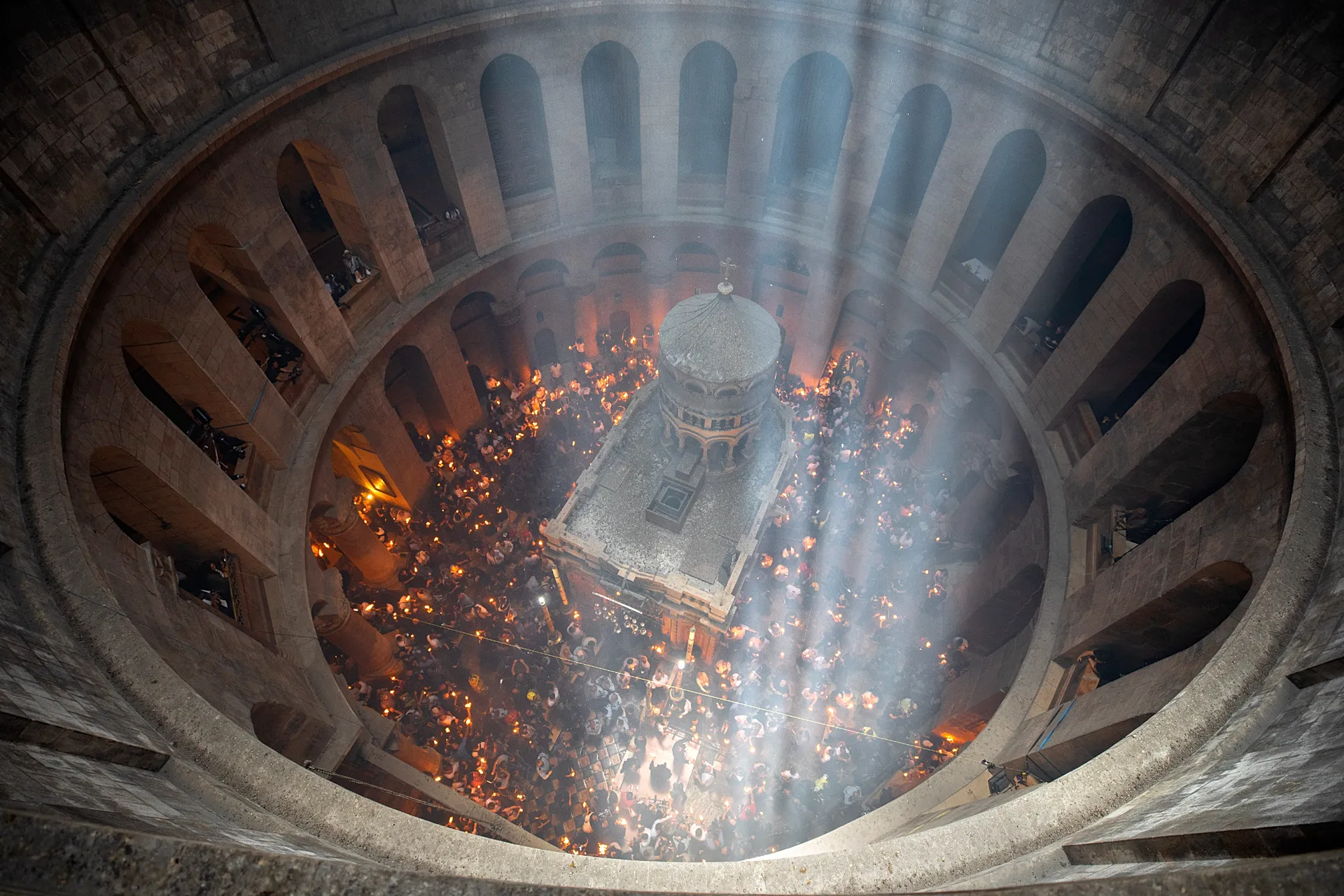
上帝是否存在在世界各地都存在争议。然而,绝大多数现代历史学家确信,拿撒勒人耶稣是一位真实的历史人物,生活在公元1世纪,并在罗马总督本丢·彼拉多统治下被钉死在十字架上。全球基督徒长期以来相信,这位犹太流浪传教士的墓穴位于耶路撒冷圣墓教堂之下。基督教朝圣者手持蜡烛聚集在耶路撒冷老城的圣墓教堂内。
Whether God exists or not is a matter of dispute around the world. A large majority of modern historians are, however, convinced that Jesus of Nazareth was a real historical figure who lived in the 1st century and was crucified under the Roman governor Pontius Pilate. Christians across the globe have long believed that the tomb of the Jewish itinerant preacher lies beneath the Church of the Holy Sepulchre in Jerusalem. Christian pilgrims hold candles as they gather in the Church of the Holy Sepulchre in Jerusalem's Old City.
圣墓教堂,东正教徒称之为复活教堂,矗立在耶路撒冷老城的基督教区。它是基督教最重要的圣地之一,因为人们相信它建在耶稣基督受难、安葬和复活的地点之上。它由罗马皇帝君士坦丁大帝下令建造,于4世纪建成。
The Church of the Holy Sepulchre, known to Orthodox Christians as the Church of the Resurrection, stands in the Christian Quarter of Jerusalem's Old City. It is one of the most important shrines in Christianity, as it is believed to have been built on what was thought to be the site of the crucifixion, burial and resurrection of Jesus Christ. It was commissioned by the Roman emperor Constantine the Great, and was built in the fourth century.
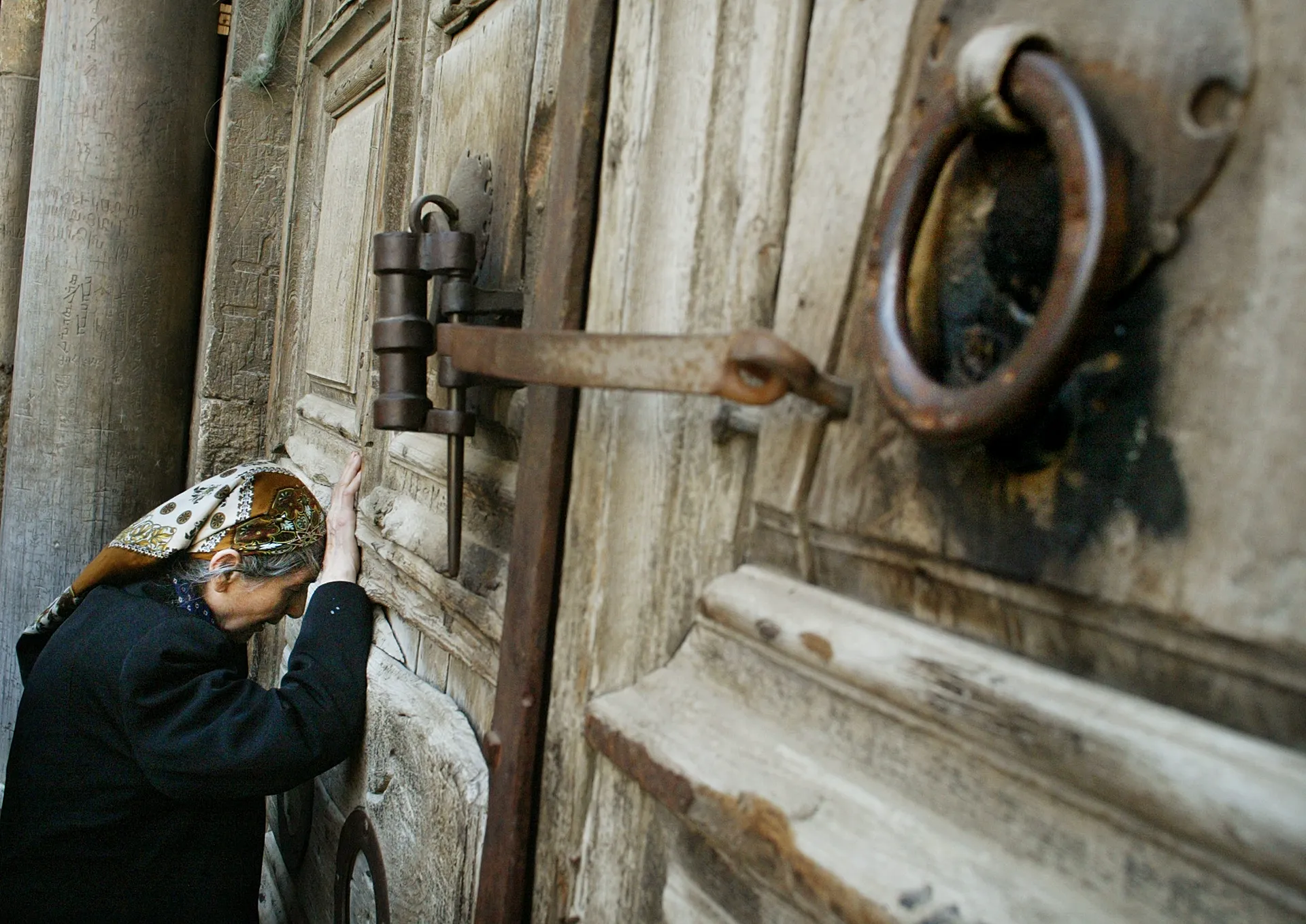
第一座教堂于公元335年祝圣。在其历史进程中,该建筑多次被毁又重建。1009年,在法蒂玛王朝哈里发哈基姆统治下,教堂遭受了特别严重的破坏。在随后的几十年里,教堂得到了部分修复。一名基督教朝圣者在耶路撒冷老城圣墓教堂的大门前祈祷。
The first church was consecrated in 335 AD. Over the course of its history, the building was destroyed and rebuilt several times. It suffered particularly heavy damage in 1009 under the Fatimid caliph al-Hakim. In the following decades the church was partially restored. A Christian pilgrim prays in front of the doors of the Church of the Holy Sepulchre in Jerusalem's Old City.
KEVIN FRAYER/AP 十字军于1099年攻占耶路撒冷后,进行了大规模改建。因此,教堂现在的外观是多个建设和修复阶段的结果。
KEVIN FRAYER/AP After the Crusaders captured Jerusalem in 1099, extensive alterations were carried out. The church's present appearance is therefore the result of numerous phases of construction and restoration.
长期以来,几乎不允许进行任何结构性变更、翻修工程或发掘工作,因为有几个基督教教派共同管理该教堂,每个教派都担心变动会削弱其权利和影响力。现在各方已达成协议。自2016年以来,圣墓教堂正在进行修复,这是200多年来的首次。
For a long time hardly any structural changes, renovation work or excavations were permitted, because several Christian denominations share the church and each feared that changes could weaken their rights and influence. Now the different parties have reached agreement. Since 2016 the Church of the Holy Sepulchre has been undergoing restoration, for the first time in more than 200 years.
2022年,教堂地板的全面修复工作最初被列入计划。随着工程推进,它变成了一项大规模考古发掘项目。研究人员在教堂下方发现了废弃的石矿场、农田、一座花园以及岩凿墓葬。
Ancient tombs and a garden found beneath the church floor In 2022 a comprehensive restoration of the church floor was initially planned. As work progressed, it turned into an extensive excavation project. Researchers discovered, beneath the church, an abandoned stone quarry, agricultural plots, a garden and rock-cut tombs.
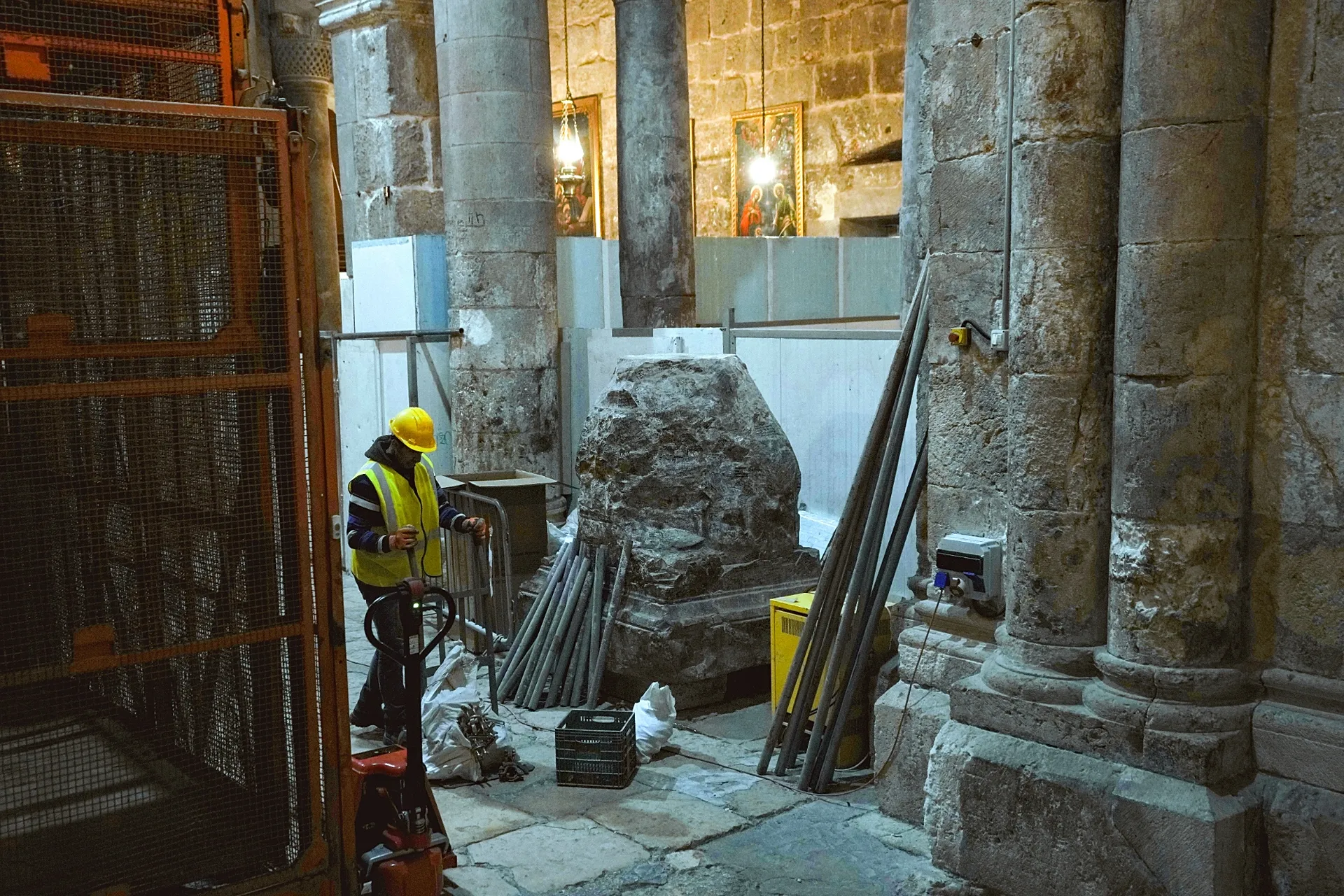
一名修复团队成员在圣墓教堂的地板上工作。许多基督徒相信,耶稣就是在这里被钉十字架、埋葬并复活的。
A member of the restoration team works on the floor of the Church of the Holy Sepulchre, where many Christians believe that Jesus was crucified, buried and rose from the dead.
这座花园具有特殊意义,因为《约翰福音》提到耶稣被钉十字架的地方有一座花园。根据《圣经》,钉十字架发生在耶路撒冷城界附近。《希伯来书》指出,耶稣是在城门外受苦。这也与考古学家的发现相符。
The garden is of particular significance, as the Gospel of John mentions a garden at the place of Jesus's crucifixion. According to the Bible, the crucifixion took place close to the city limits of Jerusalem. The Letter to the Hebrews notes that Jesus suffered outside the city gate. This, too, is consistent with the archaeologists' findings.
罗马“La Sapienza”大学的首席考古学家弗朗切斯卡·罗马娜·斯塔索拉将这些发现解读为一处墓葬景观的证据。斯塔索拉表示,发掘表明,曾经有一片耕地位于各各他(《圣经·新约》中称为髑髅地)与坟墓之间。
Lead archaeologist Francesca Romana Stasolla of Rome's "La Sapienza" university interprets the finds as evidence of a burial landscape. The excavations suggest that cultivated land once lay between Golgotha, known as Calvary in the Bible's new testament, and the tomb, according to Stasolla.
考古学家还发现了橄榄树和葡萄藤的痕迹,年代约为公元33年,这通常是耶稣死亡的时间。
The archaeologists also found traces of olive trees and vines, dated to around 33 AD, the period in which Jesus's death is usually placed.
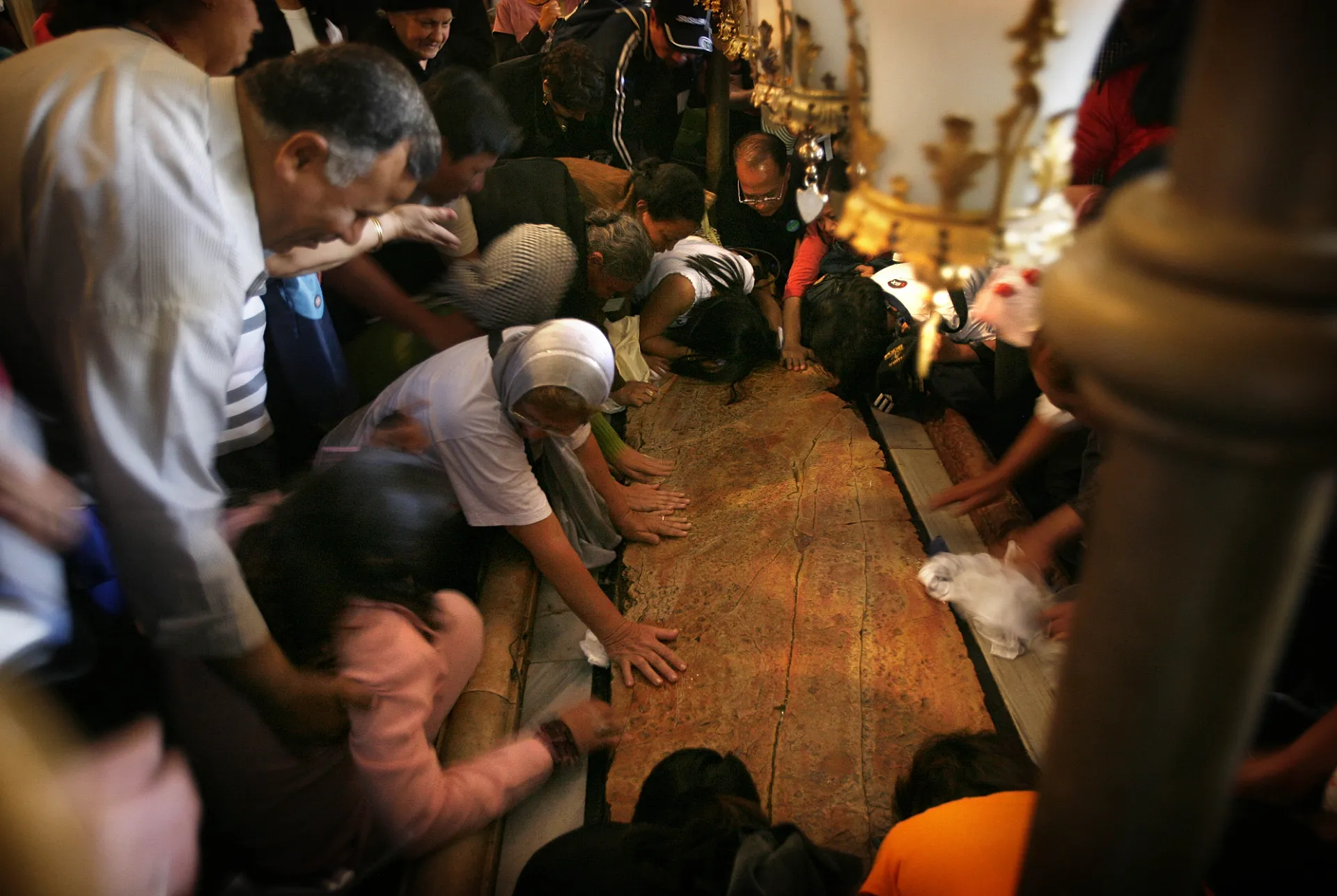
基督徒信徒在一块石头前祈祷。根据信仰,耶稣基督被钉十字架后曾被安放在这块石头上清洗。
Christian worshippers pray at the stone on which, according to belief, Jesus Christ was washed after his crucifixion.
斯塔索拉表示,凿入岩石的墓葬也指向一处更早的埋葬地点。《马太福音》《马可福音》和《路加福音》将耶稣的坟墓描述为从岩石中凿出的墓室,因此这一细节也相吻合。
According to Stasolla, the tombs carved into the rock also point to an earlier burial site. The Gospels of Matthew, Mark and Luke describe Jesus's tomb as a burial chamber hewn from rock, so this detail fits as well.
没有确凿证据。这些发现并不能为耶稣曾被葬在圣墓教堂遗址下方提供科学证据。没有这方面的铭文,也无法证明该墓室未曾使用过,或属于亚利马太的约瑟——根据福音书,约瑟将耶稣安放在他凿在岩石里的新坟墓中。这些植物遗存也尚不能精确断代到钉十字架的时代。
No conclusive proof The finds do not provide scientific proof that Jesus was buried underneath the site of the Church of the Holy Sepulchre. There is no inscription to that effect, nor can it be shown that the tomb chamber was unused or belonged to Joseph of Arimathea, who, according to the Gospels, laid Jesus in his new rock-cut tomb. The plant remains also cannot yet be dated precisely to the time of the crucifixion.
因此,这些发掘并未解决耶稣实际葬于何处的问题。不过,它们确实表明,基督徒数百年来尊崇的这处遗址,在地理和考古特征上与《新约》中的描述相符。
The excavations therefore do not settle the question of Jesus's actual burial place. They do, however, show that the site venerated by Christians for centuries has geographical and archaeological features that correspond to the descriptions in the New Testament.