欧洲农民正在减少化肥采购,因为价格上涨抑制了需求,这可能危及作物产量。
European farmers are curbing fertilizer purchases as elevated prices depress demand, potentially putting crop yields at risk.
据价格报告机构ICIS的市场调查,氮肥采购量比本季此时通常预期的水平低了多达20%。一些估计显示,用于促进植物生长和根系发育的关键养分——磷肥的需求下降了30%或更多。
Nitrogen fertilizer purchases are running as much as 20% below levels normally expected at this point in the season, according to a market survey by price-reporting agency ICIS. Demand for phosphate, a key nutrient used to support plant growth and root development, is down by 30% or more, some estimates show.
在干旱和极端高温损害今年欧洲收成之后,化肥需求走软,而伊朗战争推高了包括养分和柴油在内的农业投入品成本。土壤墒情不足已经给一些冬季作物的前景构成压力,施肥量减少可能进一步削弱明年的产量。
Weak demand for fertilizer comes after drought and extreme heat hurt this year’s European harvest, while the Iran war has pushed up the cost of farm inputs including nutrients and diesel. Low soil moisture levels are already weighing on the prospects for some winter crops, and reduced fertilizer applications could further dent yields next year.
随着采购窗口关闭,未来几个月养分需求将受到密切关注。小麦和油菜等冬季作物的氮肥施用通常在2月底或3月开始,而玉米等春季作物大约在4月或5月才会施肥。
Nutrient demand will be scrutinized over the next few months as the window closes for purchases. Nitrogen application for winter crops such as wheat and rapeseed typically begins in late February or March, while nutrients are only applied to spring crops such as corn around April or May.
“还有时间赶上,”荷兰合作银行专攻农业投入品和食糖的高级分析师多里安娜·米伦科娃表示。“随着春季施用窗口临近,风险会增加,因为大量肥料需要在相对较短的时间内通过供应链运输。”经由黑海和霍尔木兹海峡的关键贸易路线上的物流中断仍在持续,这带来不确定性,也让人们怀疑化肥供应能否跟上任何潜在的需求复苏。
“There is still time to catch up,” said Doriana Milenkova, a senior analyst specializing in farm inputs and sugar at Rabobank. “The risk increases as we move closer to the spring application window because a large volume would need to move through the supply chain in a relatively short period.”Logistical disruptions are continuing on key trade routes through the Black Sea and the Strait of Hormuz, sowing uncertainty and casting doubt on whether fertilizer supply could keep pace with any potential recovery in demand.
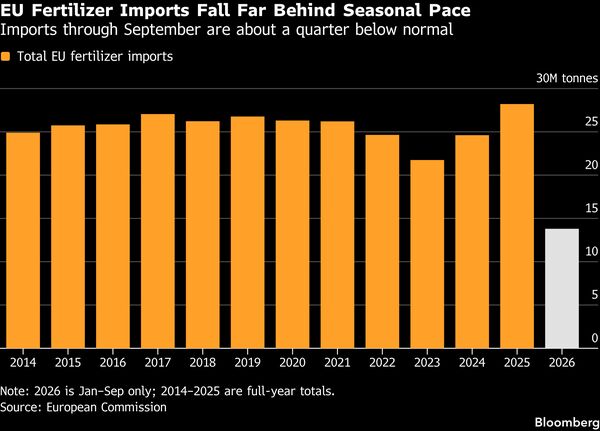
采购回落已在贸易流动中显现。根据欧盟委员会的数据,截至9月的九个月里,欧盟化肥进口总量约为1380万吨,比前五年同期平均水平低约25%。9月运抵欧洲大陆的化肥量是十年来最低的。
The pullback in buying is already evident in trade flows. EU fertilizer imports totaled about 13.8 million tons in the nine months through September, roughly 25% below the average for the same period over the previous five years, according to European Commission data. The volume that reached the continent in September was the lowest in a decade.
欧洲一些最大农业生产国的放缓尤为明显。截至9月,法国化肥进口同比下降43%,德国下降56%,波兰下降50%。
The slowdown is particularly stark in some of Europe’s biggest agricultural producers. Fertilizer imports through September were down 43% year-on-year in France, 56% in Germany and 50% in Poland.
与此同时,天然气价格飙升使得欧洲本土化肥生产的经济性降低。从1月开始,欧盟的碳边境调节机制也将适用于化肥进口,就在该地区对海外供应的依赖度增加之际,这增加了另一项潜在成本。
At the same time, surging natural gas prices are making domestic European fertilizer production less economic. From January, the European Union’s carbon border levy will also apply to fertilizer imports, adding another potential cost just as the region becomes more reliant on overseas supplies.
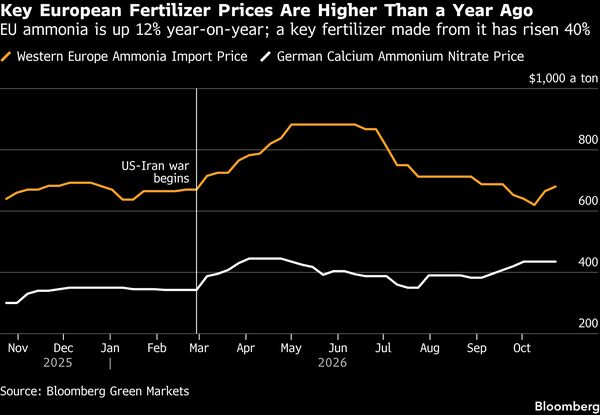
虽然化肥价格已从5月和6月触及的高点回落,但仍高于上年同期水平。据ICIS资深编辑Chris Vlachopoulos称,一系列制约因素可能使这个季节充满挑战,他在本月于布拉格举行的一次行业会议间隙对化肥买家和供应商进行了调查。
While fertilizer prices have declined from the peaks reached in May and June, they still remain above year-earlier levels. The range of constraints could make it a challenging season, according to Chris Vlachopoulos, a senior editor with ICIS, who surveyed fertilizer buyers and suppliers on the sidelines of an industry conference in Prague this month.
“12月初是我预期能对需求销毁与推迟采购得出明确答案的时候,”Vlachopoulos说。
“Early December is when I would expect to have a definitive answer on demand destruction versus late buying,” said Vlachopoulos.