在得克萨斯州尘土飞扬的康科迪亚公墓,草木覆盖着一座拥有140年历史的华人墓地。部分墓碑被盗或遭破坏;另一些墓碑则被刻有中英文名字的平整混凝土板取代。这些混凝土板比传统墓碑更难被盗走。还有些墓穴没有任何可见的标记。
At Texas’ dusty Concordia Cemetery, grass grows over graves in a 140-year-old Chinese burial ground. Some headstones have been stolen or vandalised; others have been marked by flat concrete slabs etched with names in Chinese and English. The slabs were harder to steal than traditional headstones. Still other graves have no visible markers.
“我觉得没多少人会去那里,”琳达·朱(Linda Chew)说,她是得克萨斯州第六大城市埃尔帕索的一名退休法官。
“I don’t think many people go out there,” says Linda Chew, a retired judge in El Paso, the state’s sixth-largest city.
然而,人们对“孤星州”华人社区历史的兴趣正在增长。“人们对华人在得克萨斯州影响力的理解正在真正复苏,”朱补充道。这是一个家族的故事。
Yet interest in the history of the Chinese community in the Lone Star State is growing. “There’s a real resurrection in understanding the influence of the Chinese in Texas,” Chew adds. This is the story of one family.
但它代表了得克萨斯州一个大得多的中国移民群体:他们修筑铁路,与牛仔共同生活,开设洗衣店、杂货店和餐馆,为美墨边境地区丰富的文化图景做出了贡献。
But it represents a much larger Chinese immigrant community in Texas that worked on the railroad, lived alongside cowboys, and established laundries, grocery stores and restaurants, contributing to the rich cultural tapestry of the US-Mexico borderlands.
研究人员和社区成员正致力于记录并唤醒得州华人的历史,就像这座墓地一样,它已随时间推移而淡化、变得杂草丛生。
Researchers and community members are now working to document and reawaken the history of Chinese in Texas that, like the cemetery, has faded and grown scruffy over time.
他们也在从这段漫长的偏见与排斥历史中汲取教训,以应对当今立法者限制财产、教育和投票权利的举措。
They’re also drawing lessons from that extended history of prejudice and exclusion to counter efforts by today’s lawmakers to restrict property, education and voting rights.
“我们利用历史和一百年前发生的事情,来折射当下正在发生的一切,”艺术家徐俊(June Xu)说,她试图在作品中描绘这些平行线索。“人们把公民权利视为理所当然,因为他们不知道那场斗争有多艰难。” 在对华人公民权全面限制的时代,于美墨边境建立生活 20世纪初,琳达的祖父母在对华人移民和公民权实施全面限制的时代,于美墨边境建立了他们的生活和事业。
“We are using history and what happened a hundred years ago to reflect what’s going on right now,” said artist June Xu, who seeks to draw the parallels in her work. “People take civil rights for granted because they don’t know how hard that fight was.”Building a life on the US-Mexico border despite sweeping restrictions on Chinese citizenship In the early 20th century, Linda’s grandparents built their lives and businesses on the US-Mexico border during the era of sweeping restrictions on Chinese immigration and citizenship.
她的祖母赫琳达被称为“华人的女王”,这一点在1919年《埃尔帕索时报》的一篇文章中有所展示。文章写道:“就华雷斯的华人人口而言,这位中国妇女是一位女王。”同一篇文章还声称,她曾在香港的一所长老会传教学校任教。
Her grandmother, Herlinda, became known as the “Queen of the Chinese”, as showcased in a 1919 El Paso Times article. “The Chinese woman is a queen so far as the Chinese population of Juarez is concerned,” the article reads. The same piece also claimed she once taught at a Presbyterian mission in Hong Kong.
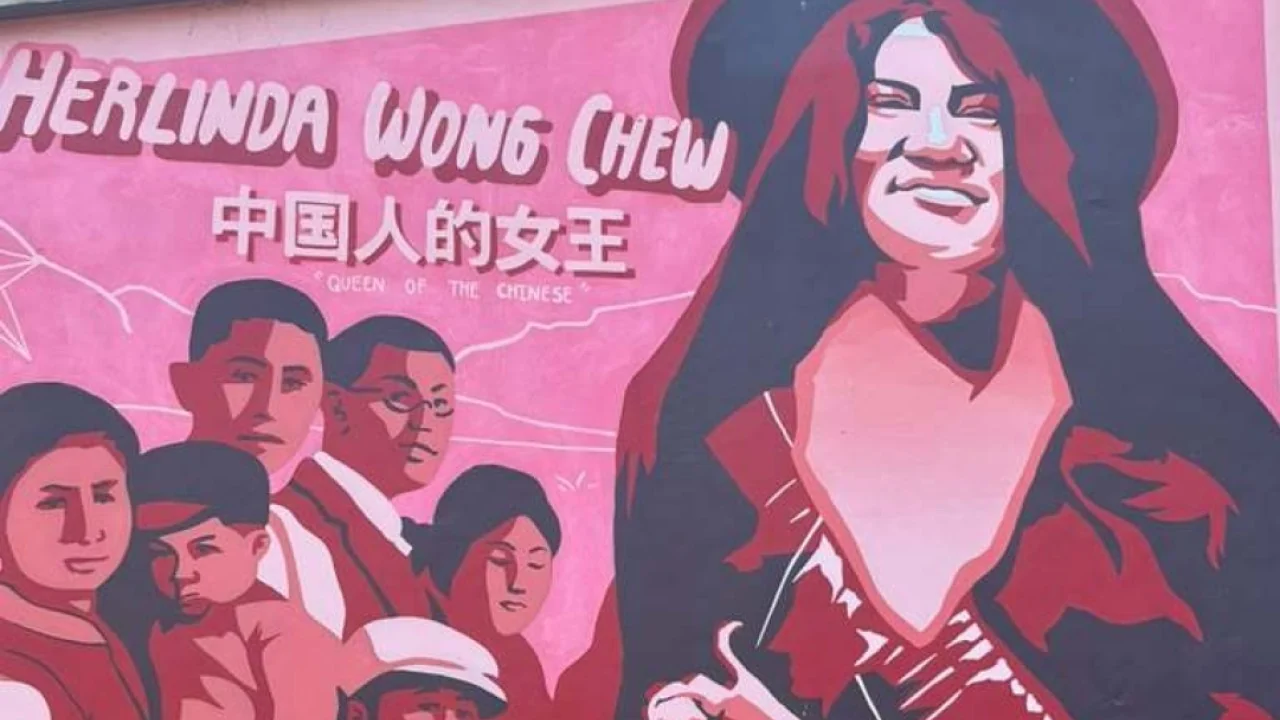
“她是个精力充沛、极具影响力的人物,”琳达说,同时指着一张祖母赫琳达·黄·丘的照片,照片中她的肖像出现在得克萨斯州首府奥斯汀的一幅亮粉色壁画上,这幅壁画旨在颂扬一位其家族帮助塑造得州历史的女性。这幅画作是作为一项旨在表彰有影响力的亚裔美国人、夏威夷原住民和太平洋岛民项目的一部分而委托创作的。
“She was a powerhouse,” Linda says, before pointing to a photograph of her grandmother, Herlinda Wong Chew, whose likeness appears on a bright pink mural in Austin, the state capital, celebrating a woman whose family helped shape Texas history. The painting was commissioned as part of a project to honour influential Asian-Americans, Native Hawaiians and Pacific Islanders.
1894年,赫琳达出生于墨西哥瓜达拉哈拉,母亲是墨西哥人,父亲是中国人。她嫁给了安东尼奥·叶·丘,后者是一名为谋生计移居墨西哥的中国移民。孙女琳达说,赫琳达是自学成才,“非常聪慧”。赫琳达的中文名是黄顺花,安东尼奥的中文名是余荣秋。
Herlinda was born in 1894 in Guadalajara, Mexico, to a Mexican mother and a Chinese father. She married Antonio Yee Chew, a Chinese immigrant who had moved to Mexico for work. Herlinda was self-taught and “really brilliant”, her granddaughter Linda says. Herlinda’s Chinese name was Wong Sun Far and Antonio’s was Yee Wing Chew.
在动荡的墨西哥革命期间,赫琳达和安东尼奥曾暂时逃往埃尔帕索。琳达说,赫琳达与边境官员建立了良好关系,在1919年华雷斯城第三次战役期间,帮助将边境对面华人社区的250人带入美国暂避。
During the turbulent Mexican Revolution, Herlinda and Antonio temporarily escaped to El Paso. Linda says Herlinda built a rapport with border agents, helping bring 250 people to the US from the Chinese community across the border to temporary safety during the Third Battle of Ciudad Juarez in 1919.
当赫琳达和安东尼奥返回墨西哥后,他们继续在华雷斯城经营杂货生意,随后决定移居美国,琳达说,这或许是为了寻求经济和教育机会。
When Herlinda and Antonio returned to Mexico, they continued to operate their grocery business in Juarez before deciding to move to the US, perhaps for its economic and educational opportunities, Linda says.
一个大问题摆在面前:1882年的《排华法案》——美国第一部基于种族和国籍限制移民的主要法律——禁止中国劳工入境,并阻止中国移民归化为美国公民。
One big problem: the Chinese Exclusion Act of 1882 – the first major US law to restrict immigration based on race and nationality – barred Chinese labourers from entering the US and prevented Chinese immigrants from becoming naturalised citizens.
然而,赫琳达并未气馁,她钻研美国移民法,发现如果中国商人满足某些严格要求并持有证明文件,便可合法移居美国,这一条款同样适用于外交官、教师、学生和游客。
Undeterred, however, Herlinda researched American immigration law and realised that Chinese merchants could legally move to the US if they met certain strict requirements and had documentation, a provision also open to diplomats, teachers, students and tourists.
1922年,赫琳达和安东尼奥利用这一豁免条款在埃尔帕索定居,并在那里开设了更多杂货店。他们的八个孩子中,四个出生在墨西哥,四个出生在美国。秉承典型的移民家庭传统,包括琳达的父亲惠灵顿·叶·丘在内的八个孩子都在家族店铺里帮工。但赫琳达小心翼翼地传承着家族的另一项传统。
In 1922, Herlinda and Antonio settled in El Paso using this exemption, where they established more grocery stores. Four of their children were born in Mexico and four in the US. In classic immigrant fashion, their eight children, including Linda’s father, Wellington Yee Chew, worked in their shops. But Herlinda was careful to keep their other tradition alive.
琳达补充道:“她确保孩子们真正了解他们的墨西哥文化和中国文化。”
“She made sure that they really understood their Mexican culture and their Chinese culture,” Linda adds.
凭借所学知识,赫琳达在埃尔帕索成为了一名事实上的移民专家,直接与铁路公司和轮船公司合作,帮助中国人前往美国或返回中国。琳达认为,如果当时条件允许,赫琳达本会成为一名移民律师。
Drawing on what she had learned, Herlinda became a de facto immigration specialist in El Paso, working directly with the railroads and steamship lines to help Chinese people travel to the US or back to China. Linda believes Herlinda would have become an immigration lawyer if that had been possible at the time.
1943年,随着中国和美国在第二次世界大战中结盟,《排华法案》被废除。虽然这恢复了中国人的入籍资格,但严格的中国移民配额依然存在。然而,赫琳达和安东尼奥均于1939年去世,从未成为美国公民。
In 1943, the Chinese Exclusion Act was repealed when China and the US allied during World War II. While this restored eligibility for naturalisation, strict Chinese immigration quotas remained. But Herlinda and Antonio both died in 1939 and never became US citizens.
丘氏家族世代传承自豪的法律遗产 丘氏家族几代人延续了赫琳达的法律遗产。惠灵顿成为埃尔帕索的一名移民律师和刑事辩护律师,据报道他是获得德克萨斯州律师协会执照的首位美籍华裔律师。
Generations of Chews help keep proud legal legacy alive Generations of Chews have picked up Herlinda’s legal legacy. Wellington became an immigration lawyer and criminal defence attorney in El Paso and was reportedly the first Chinese-American lawyer licensed by the State Bar of Texas.
琳达说:“他为我的祖母和父母,以及他们在埃尔帕索建立的社区感到无比自豪。”
“He was so proud of my grandmother and his parents, and the established community they created here in El Paso,” Linda says.
此外,琳达成为了一名法官,她的妹妹帕特里夏也是法官,现任埃尔帕索县遗嘱认证法院第一法院法官。她的哥哥大卫则成为德克萨斯州第八上诉法院首席大法官。
In addition, Linda became a judge, as did her sister Patricia, who serves on El Paso’s County Probate Court No 1. And her brother David became chief justice of the Texas Eighth Court of Appeals.
赫琳达和安东尼奥的故事中许多细节难以追溯,这在更广泛的中国历史中是一种常见现象,尤其是在其他留下书面记录极少的家庭中,历史学家安娜·法伊正致力于弥补这一缺憾。
Many of the details of Herlinda and Antonio’s story are difficult to trace, a pattern seen with Chinese history more broadly, particularly among other families that left few written records, something historian Anna Fahy is working to remedy.
康科迪亚曾是一座牧场,四周环绕着富兰克林山脉,在19世纪末逐渐变成了一处墓地。如今,它在52英亩(21公顷)的土地上以拼布般的布局安葬着约6万座坟墓。多年来,其墓地被出售给教会团体、军方和不同组织用作墓地。华人便是这些群体之一。
Concordia, a one-time ranch framed by the Franklin Mountains, gradually became a burial ground in the late 1800s. It now houses some 60,000 graves in a patchwork layout across 52 acres (21 hectares). Its plots were sold over the years to church groups, the military and different organisations for burial grounds. The Chinese were one of these groups.
葬在那里的人中包括臭名昭著的歹徒约翰·韦斯利·哈丁和将他击毙的执法者,还有两名华人男子——他们修建了康科迪亚华人墓区周围的石墙,后来也被安葬在这片墓区之内。
Among those buried there are the notable outlaw John Wesley Hardin and the lawman who gunned him down, as well as two Chinese men who built the rock wall around Concordia’s Chinese section and were later buried within its confines.
走进华人墓区的大门,法伊指出一侧刻有中文碑文,另一侧刻有英文。她说,华人社区一直完全拥有康科迪亚内的这块墓地。“这是得克萨斯州唯一的华人墓地。就是这样,”法伊补充道。
Entering the gates of the Chinese section, Fahy points out Chinese inscriptions on one side and English on the other. The Chinese community has always owned its plots outright within Concordia, she says. “The only Chinese cemetery in the state of Texas. Period,” Fahy adds.
到20世纪20年代中期,埃尔帕索拥有得克萨斯州最大的华人社区。埃尔帕索县历史学会的珍妮·杨将此归因于1881年南太平洋铁路的到来,恰在《排华法案》之前。
Into the mid 1920s, El Paso had the largest Chinese community in Texas. Janine Young of the El Paso County Historical Society attributes this to the arrival of the Southern Pacific Railroad in 1881, just before the Exclusion Act.
丘氏家族建立了代代相传的基业,而人们对华人铁路工人的了解则少得多——他们中许多人目不识丁,留下的足迹十分模糊。
While the Chew family built a generational legacy, far less is known about the Chinese railroad workers, many illiterate, who left faint footprints.
“他们是如此无名的工人,”杨补充道。“他们大多数人死在这里时没有家人,即使有家人,也留在了中国。”杨说,埃尔帕索的大多数洗衣店最初由华人拥有和经营,他们发展出了自己的经营方式。
“They were such anonymous workers,” Young adds. “Most of them died without families here and if they had families, they would have stayed back in China.”Most of the laundries in El Paso were initially owned and operated by Chinese, who developed their own business practices, Young says.
当时的一份报纸详细记载了华人洗衣店老板如何做笔记来帮助自己记住非华人顾客。
A newspaper from the time details how Chinese laundry owners kept notes to help them remember their non-Chinese customers.
“他们对人有各种各样的描述,”法伊说,并举了一个例子:“一个经常打喷嚏的矮个子女人。”
“They have all these different descriptions about people,” says Fahy, citing an example as: “short woman who sneezes a lot”.
杨补充说,早期来到该地区的中国移民几乎全是男性,这并非严格因为可从事的工作类型所致。1875年的《佩奇法案》将中国女性视为潜在性工作者,使她们更难入境美国,导致家庭破裂。
Almost all early Chinese immigrants in the area were men, Young adds, which was not strictly because of the types of work available. The Page Act of 1875, which treated Chinese women as potential sex workers, made it harder for them to enter the US, tearing apart families.
如今,华人社区依然是得克萨斯州既定的一部分,在圣安东尼奥、休斯顿、奥斯汀和达拉斯都有规模可观的人口。根据美国人口普查数据,得州拥有全美第三大华裔人口,约27.5万,仅次于加利福尼亚州和纽约州。
Nowadays, Chinese communities remain an established part of Texas, with sizeable populations in San Antonio, Houston, Austin and Dallas. According to US Census data, Texas has the third-largest ethnically Chinese population at around 275,000 behind California and New York.
2025年,艺术家徐作为亚裔美国人艺术与文化倡议的一部分,在奥斯汀推出了一场以赫琳达为主题的展览。展览名为“根脉揭秘:美籍华人历史,1783-1946”,由詹旭华策展,旨在保存“逐渐消逝的故事”。这位总部设在休斯顿的艺术家计划明年年初将展览带回家乡。
In 2025, Xu, the artist, launched an exhibit in Austin as part of the Asian-American Art & Culture Initiative that featured Herlinda. Titled “Root Unveiled: Chinese-American History, 1783-1946” and curated by Xuhua Zhan, it aims to preserve “fading stories”. The Houston-based artist plans to bring it to her hometown early next year.
对徐而言,得州华人移民的历史具有新的现实意义,因为立法者推出了影响外国人的新限制措施,历史歧视与2025年通过的得克萨斯州参议院第17号法案(Senate Bill 17)等政策形成了平行对照。
For Xu, the history of Chinese immigrants in the state has renewed relevance as lawmakers introduce new restrictions affecting foreign nationals, with parallels between historical discrimination and policies such as Texas Senate Bill 17, passed in 2025.
该法限制与中国、俄罗斯、伊朗和朝鲜有关联的特定个人和实体在得州购置房地产权益。支持者将其表述为国家安全举措,反对者则认为它特别是针对中国人,因为其他三国国民在得州的投资微乎其微。
That law restricts certain individuals and entities linked to China, Russia, Iran and North Korea from acquiring interests in Texas real estate. While supporters frame it as a national security measure, opponents see it aimed at the Chinese, in particular, given the minuscule investment by nationals from the other countries.
美国公民和合法永久居民豁免适用。该法还为合法美国居民用作自住住房的住宅物业提供了有限的豁免。
US citizens and lawful permanent residents are exempt. The law also provides a limited exception for a residential property used as a homestead by lawful US residents.
徐正在制作一部名为《以她的名义》的纪录片,探讨《排华法案》等历史上的限制性法律与当代规范外国人土地所有权的立法之间的联系。
Documentary to explore historical legal issues over the years Xu is producing a documentary called “Under Her Name” that explores links between historical restrictions such as the Chinese Exclusion Act and contemporary legislation governing foreign land ownership.
徐希望弥合华裔美国人在美国悠久历史与公众对其在美国地位的理解之间的差距。
Xu hopes to bridge the gap between the long history of Chinese Americans in the US and public understanding of their place in the country.
“过去30年来到美国的人往往不知道华裔美国人在这里扎根有多久了,”她说。
“People who arrived in the last 30 years often don’t know how long Chinese Americans have been rooted here,” she says.
琳达讲述家族历史时,反思了她亏欠祖先以及社区中许多其他人的恩情。
As Linda recounts her family history, she reflects on the debt owed to her ancestors and so many others in the community.
“这个国家是建立在他们的背上的,”她说。“建立在华人的背上,也建立在墨西哥人的背上。”
“This country was built on their backs,” she says. “On the backs of Chinese and on the backs of Mexicans.”