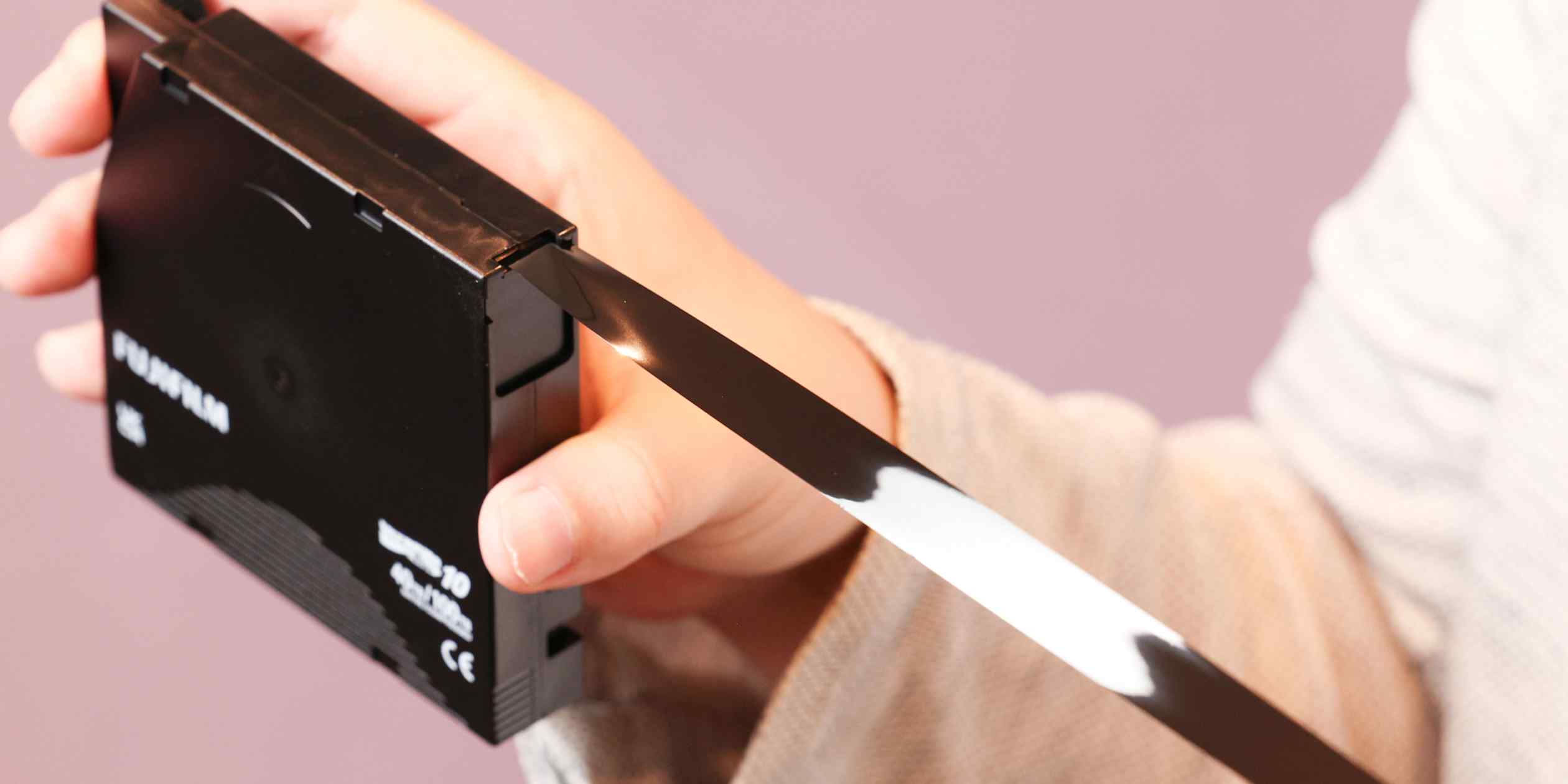
东京 —— 据《日经新闻》获悉,富士胶片将把磁带产能提高五倍,以满足人工智能驱动的需求,这标志着该公司约 20 年来在数据存储介质领域的最大投资。
TOKYO -- Fujifilm will raise production capacity for magnetic tape fivefold to meet artificial-intelligence-driven demand, marking the company's largest investment to make the data storage medium in roughly 20 years, Nikkei has learned.
这家日本公司将在截至 2028 财年期间,在位于东京附近小田原市的工厂投资 100 亿日元(约合 6330 万美元),主要用于增加容量高达 100 太字节的先进磁带产量。
The Japanese company will spend 10 billion yen ($63.3 million) at its plant in Odawara, near Tokyo, through fiscal 2028, mostly to increase production of advanced tape with capacities of up to 100 terabytes.
富士胶片 1954 年开始研究磁带,最初用于电视广播设备,随后用途扩展到音频和视频录制。
Fujifilm began research into magnetic tape in 1954 for television broadcasting equipment before its use expanded to audio and video recording.
几十年后,人工智能引发了数据爆炸式增长,需要存储的数据激增。据美国市场研究公司 IDC 预测,到 2030 年,全球数据生成量将达到 718 泽字节(1 泽字节等于 10 亿太字节),是 2024 年水平的四倍。
Decades later, AI has triggered an explosion of data that needs to be stored. Global data generation is expected to reach 718 zettabytes (1 zettabyte equals 1 billion terabytes) by 2030, four times the level of 2024, according to U.S. market research firm IDC.
磁带被数据中心运营商、金融机构和研究机构广泛用于数据备份。它非常适合在脱离在线网络的情况下进行长期存储,从而更容易保护敏感数据免受网络攻击、意外丢失或篡改。
Magnetic tape is widely used by data center operators, financial institutions and research organizations for data backup. It is well suited to long-term storage while disconnected from online networks, making it easier to protect sensitive data from cyberattacks and accidental loss or alteration.
固态硬盘(SSD)具有高速读写能力,大容量硬盘驱动器(HDD)则提供大容量,两者仍是主流存储介质。但磁带在耐用性和成本方面保持优势,使其成为存储不常访问的冷数据的理想选择。
Solid-state drives (SSDs), which offer high-speed reading and writing, and high-capacity hard-disk drives (HDDs) remain the dominant storage media. But magnetic tape retains advantages in durability and cost, making it attractive for storing infrequently accessed cold data.
固态硬盘和硬盘驱动器价格上涨增强了磁带的成本优势。(富士胶片)在磁带上存储数据的成本可以低至硬盘驱动器的四分之一,而硬盘驱动器又比固态硬盘便宜。半导体存储器供应紧张推高了固态硬盘价格,而数据中心需求增长使硬盘驱动器变得更贵,这进一步强化了磁带的成本优势。
Rising prices of solid-state drives and hard disk drives have strengthened magnetic tape's cost advantage. (Fujifilm) The cost of storing data on magnetic tape can be as little as one-fourth that of HDDs, which are cheaper than SSDs. Tight supplies of semiconductor memory have pushed up SSD prices, while growing demand from data centers has made HDDs more expensive, strengthening magnetic tape's cost advantage.
日本企业在磁带供应链的各个环节都占据强势地位。东丽、帝人等企业生产基膜,而磁性涂层材料则由同和控股等公司生产。
Japanese companies have a strong presence throughout the magnetic tape supply chain. Toray Industries, Teijin and others make film, while the magnetic coating materials are produced by companies including Dowa Holdings.
人工智能热潮正推动日本一系列数据存储相关产品制造商加大投资。
The AI boom is spurring a broad range of Japanese makers of data-storage-related products to ramp up investment.
铠侠8月宣布,将在日本东北部岩手县建设新的半导体存储器晶圆厂。该公司与美国合作伙伴西部数据共同计划,在未来六年总投资5万亿日元,其中包括位于日本西部三重县的工厂,以扩大面向数据中心的高性能固态硬盘(SSD)产能。
Kioxia announced in August that it will build a new semiconductor memory fabrication building in northern Japan's Iwate prefecture. Together with U.S. partner Sandisk, the company plans to invest a total of 5 trillion yen over the next six years, including in a plant in western Japan's Mie prefecture, to expand output of high-performance SSDs for data centers.
东芝将投资约600亿日元,扩建其在菲律宾的硬盘驱动器(HDD)工厂,使产能翻倍。
Toshiba will invest about 60 billion yen to expand its HDD factory in the Philippines and double production capacity.
为硬盘驱动器提供玻璃基板的霍雅,将斥资约500亿日元在越南建设新工厂。作为硬盘驱动器悬臂供应商的日本发条,计划投入350亿日元扩大产能。
Hoya, which supplies glass substrates for HDDs, will spend about 50 billion yen on a new factory in Vietnam. NHK Spring, a supplier of HDD suspensions, plans a 35 billion-yen production increase.