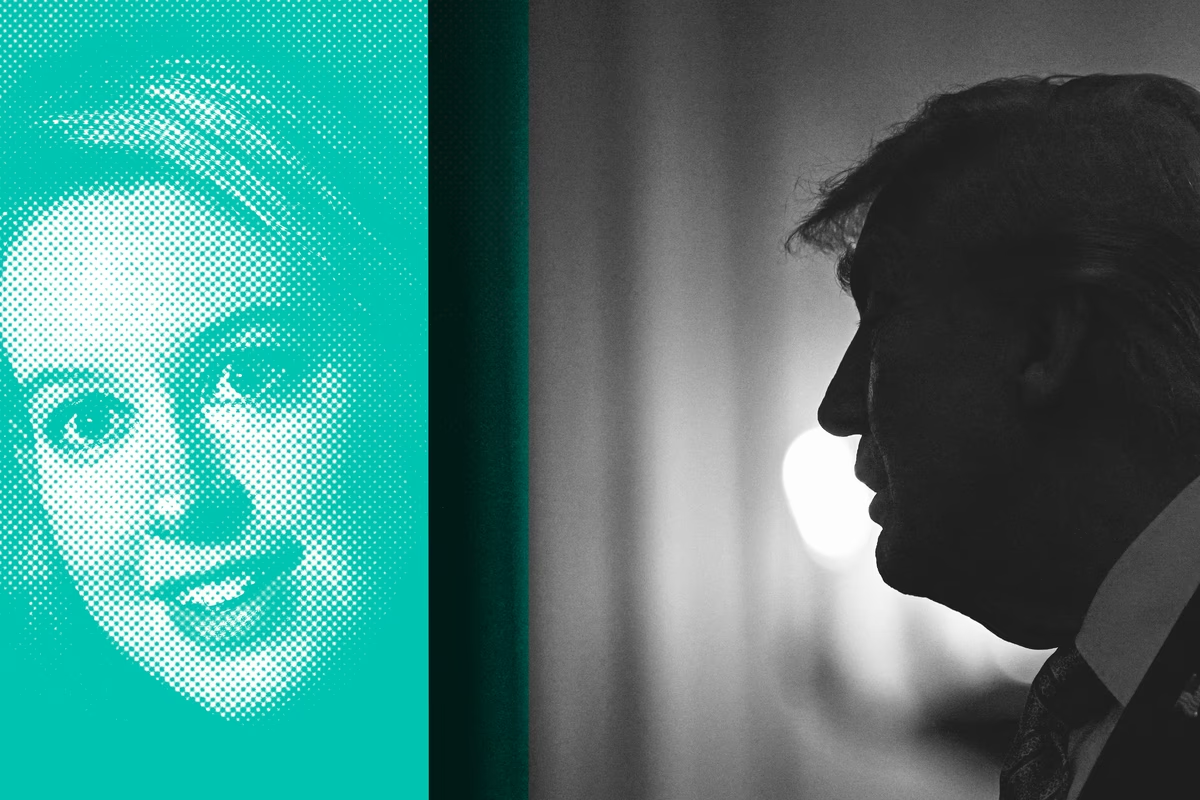
唐纳德·特朗普对其支持者持久的(尽管或许正在减弱)控制力,其中一个令人费解之处在于,他们竟赞誉特朗普为“直言不讳”之人。特朗普的把关人同样宣称这是“史上最透明的政府”,并以特朗普愿意向媒体现场直播其阿谀奉承的内阁会议为证,证明没有任何东西被掩盖。
One of the curiosities of Donald Trump’s enduring (if perhaps weakening) grip on his supporters is how they praise him as someone who “tells it like it is.”Trump’s gatekeepers have similarly declared this to be “the most transparent administration in history,” pointing to, among other things, Trump’s willingness to open his sycophantic Cabinet meetings to live media coverage as proof that nothing is being obscured.
其中的讽刺意味显而易见:特朗普被揭露撒谎的次数比历史上任何一位总统都多。然而,通过让自己无处不在,特朗普制造出一种开放的假象。在他看来,总统的终极权力在于时刻出现在人们面前——变得无法逃避,哪怕不被诚实审视;随心所欲地强加他那套自利的现实版本,无论多么荒诞。
The irony of this, of course, is that Trump has been caught in more obvious lies than any president in history. Yet by making himself so ubiquitous, Trump breeds an illusion of openness. To him, a president’s ultimate power rests in his ability to always be in people’s faces—to become inescapable, if not honestly examined; to impose his own self-serving version of reality whenever he pleases, no matter how outlandish.
当我观看近几周上映以来便引发文化热议的爆款纪录片《无所不见》时,不禁反复思考这个问题。这或许是我的“特朗普失调症”在作祟,但我忍不住将这部影片视为一个典型的特朗普时代寓言。
I kept thinking about this as I watched You Can See Everything, the blockbuster documentary that has become a source of cultural fascination since it started packing theaters a few weeks ago. This might be my Trump Derangement Syndrome showing, but I couldn’t help but view the film as a classic Trump-era parable.
《无所不见》记录了声名狼藉的 Theranos 创始人伊丽莎白·霍姆斯及其未婚夫比利·埃文斯,在霍姆斯开始服刑 11 年之前,与两个年幼的孩子共度的最后 34 天。霍姆斯因刑事欺诈罪被判入狱。在开场镜头中,埃文斯提出了“彻底透明”的承诺。这对夫妇邀请了电影制作人内森·菲尔德和兰斯·奥本海姆进入他们位于圣地亚哥附近的海滨租住屋。
You Can See Everything chronicles the disgraced Theranos founder, Elizabeth Holmes, and her fiancé, Billy Evans, during their final 34 days together, with their two young children, before Holmes begins an 11-year prison sentence for criminal fraud. In the opening scene, Evans introduces the promise of “radical transparency.”The couple have invited the filmmakers Nathan Fielder and Lance Oppenheim into their beachside rental house near San Diego.
按埃文斯的说法,将霍姆斯描绘成阴谋骗子的虚假叙事已根深蒂固,他们不如拉开所有帷幕,让人们看看她此刻最脆弱、最无防备的样子。他们无所损失,也无所隐瞒。
In Evans’s telling, the false narrative of Holmes as a scheming con artist has become so entrenched that they might as well raise every curtain, and allow people see her at this most vulnerable and unguarded time. They have nothing to lose and nothing to hide.
正如特朗普一样,霍姆斯和埃文斯富有、出名,且沉溺于受害者的角色之中。正如特朗普常说的那样(“没人”指的就是他自己),没人应该经历这些。救世主式的企业家也不该经历这些。霍姆斯散发着一种渴望被照料的气质,而不仅仅是埃文斯在提供这种照料,他扮演这个角色的方式咄咄逼人,甚至阴险狡诈。随着她被放逐的时刻临近,她的声音从开头坚持不懈的单调语调,变得哀怨柔和。一切都被不公正地夺走了。
Like Trump, Holmes and Evans are rich, famous, and secure in their victimhood. No one should have to go through this, as Trump often says (“no one” meaning himself). No messianic entrepreneur either. Holmes’s aura cries out for caretaking, and not just by Evans, who assumes the role aggressively, or deviously. Her voice goes from insistent monotone at the start to plaintive and soft as her banishment approaches. Everything has been taken from her, unfairly.
就像那位总统一样,霍姆斯擅长迎合真人秀的审美。她似乎直觉地知道,何时闪现一丝挫败或恼怒能强化场面效果。镜头爱她,甚至可以说是特别爱她崩溃的样子。霍姆斯意识到自己那双悲伤、如幼童般的眼睛具有催眠般的效果。“我花了很长时间才能接受让别人看见我哭,”她向菲尔德吐露心声,随后按部就班地掉下一滴眼泪。
Like the president, Holmes is adept at playing to reality-TV sensibilities. She seems to have an intuitive sense for when a flash of frustration or vexation can enhance a scene. The camera loves her, even (or especially) when she is melting down. Holmes recognizes the hypnotic effect of her sad, toddlerlike eyes. “It took me a really long time to be okay with letting someone see me cry,” she confides to Fielder, and then sheds a tear on cue.
霍姆斯行事不靠言辞,而靠彻底否认自己故意伤害过任何人。一度她声称自己这辈子从未撒过谎。又有谁能怀疑她呢?毕竟我们什么都看得见,那么问题或许出在我们身上。这就是彻底透明的力量。它能在我们这些观众心中滋生困惑,而非让我们对当事人有更清晰的认识。
Holmes operates not so much with words as with complete denial that she has intentionally hurt anyone. At one point, she claims that she’s never told a lie in her life. And how can anyone doubt her? We can see everything, after all, so maybe the problem is ours. That is the power of radical transparency. It can breed confusion in us, the audience, rather than clarity about the subject.
菲尔德设法传达出一种既共情又怀疑的姿态,不断暗示埃文斯和霍姆斯并非表里如一。随着故事展开,他们关于彻底透明的承诺逐渐瓦解。显而易见,埃文斯在限制接触、操纵事实,或许还在利用伴侣剩余的可商业化形象。
Fielder, who manages to convey a presence that is both empathetic and dubious, keeps suggesting that Evans and Holmes are not on the level. As the story unfolds, their promise of radical transparency unravels. It becomes evident that Evans is restricting access, manipulating facts, and perhaps exploiting what’s left of his partner’s marketable image.
在影片的进程中,Holmes对Fielder的提问的回答变得越来越含糊,满是借口和困惑。如果她有罪的话,似乎只是任由自己被误解。她并非在道德或法律上犯错,而是在沟通方式上出了问题。政客们也经常这样做——把责任推卸给自己的不足之处,转而归咎于自己(以及自己的团队)未能充分传达所取得的伟大成就。
Over the course of the film, Holmes’s responses to Fielder’s inquiries become mushy pleas of ignorance and confusion. If she is guilty of anything, she seems to suggest, it is of allowing herself to be badly misunderstood. She has erred not morally or legally, but in how she’s communicated. Politicians are always doing this too, placing blame not on their own shortcomings but on their (and their staff’s) failure to properly convey the greatness they’ve achieved.
硅谷最具魅力的众多企业家擅长构建信念体系,围绕他们的产品和自身,正如我的同事David Sims在他对《你可以看到一切》的评论中所写的一样。史蒂夫·乔布斯,苹果联合创始人,被视为这一领域的个中翘楚。Holmes把自己塑造成了乔布斯的信徒。她穿着同样的黑色高领衫和深邃的目光,将性感的企业形象模仿得像他的(尽管与Theranos不同,苹果的产品确实能发挥作用)。
Many of Silicon Valley’s most charismatic entrepreneurs are skilled at creating belief systems, around their products and themselves, as my colleague David Sims wrote in his review of You Can See Everything. Steve Jobs, the Apple co-founder, is considered the virtuoso of this. Holmes fashioned herself a Jobs acolyte. She wore the same black turtlenecks and intense gaze, and modeled her seductive corporate persona after his (notwithstanding that, unlike Theranos, Apple makes products that actually work).
观看那些——无论是政治还是企业——领导者展现出对自身说服力和感召力的完全信仰,往往令人着迷。他们坚信,只要站在观众面前,无论他们说些什么、卖什么产品,都能把观众拉到自己这边来。Holmes似乎也持有同样的信念。
Watching leaders—political or corporate—who project total faith in their ability to persuade and inspire can be mesmerizing. They are convinced that just by getting in front of an audience, they can bring viewers around, no matter what they say or what they are selling. Holmes seems to think this too.
特朗普有时会将对自己的信心推向荒谬的极端。 coronavirus疫情初期,他就坚持举行近乎每日的新闻发布会。他对病毒威胁毫无了解,却似乎相信仅凭自己的存在就能超越可怕的科学。他可能说了些无意义的话,但却是以完全的信念去做的。而且,他让自己变得如此无处不在。这难道不令人安心吗?
Trump has at times taken his own confidence to absurd extremes. Early on in the coronavirus pandemic, he insisted on near-daily press conferences. He had no grasp of the viral menace at hand but seemed to believe that his presence alone could transcend the scary science. He might have made little sense, but he did so with total conviction. And he made himself so relentlessly visible. That had to be reassuring, right?
特朗普的超能力之一,在于他总能比质疑者更持久。然而,真人秀终究会让人疲惫——无论是特朗普的两个任期,还是《你能看见一切》的三小时。即便是最引人入胜的故事和讲述者,也会让人感到过度曝光、陈腐乏味。观众终将失去耐心。揭示让位于重复。怀疑悄然滋长:这真的是一切吗?够了。观众已准备好让闹剧落幕,让判决开始。
One of Trump’s superpowers has been his ability to outlast his skeptics. Still, reality shows can become exhausting—whether it’s two terms of Trump or three hours of You Can See Everything. Even the most compelling stories and storytellers can feel overexposed and stale. Customers eventually lose patience. Revelation gives way to repetition. Suspicion creeps in: Is this really everything? Enough already. The audience is ready for the spectacle to end and the sentence to begin.