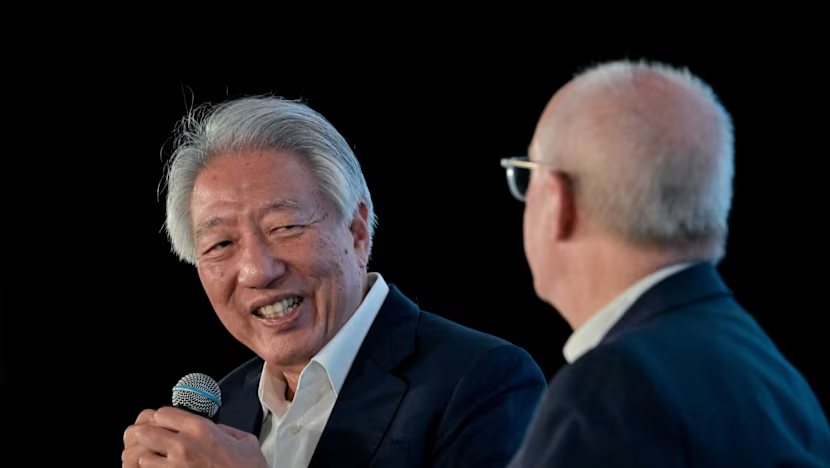
新加坡:淡马锡控股主席陈志远周三(10月27日)表示,在一个变化多端且分裂的世界里,新加坡等小国需要与各国及非政府组织(NGO)开展更多“多边多元”(polylateral)合作。
SINGAPORE: Small countries like Singapore need more "polylateral" cooperation with countries and non-governmental organisations (NGOs) in a changing and fractured world, Temasek Holdings chairman Teo Chee Hean said on Wednesday (Oct 27).
这位前资深部长指出,随着多边合作变得“磨损且薄弱”,多边多元安排可以在国家间的双边和多边伙伴关系之外,帮助支撑全球合作。
As multilateral cooperation has become "frayed and weak", polylateral arrangements can help support global cooperation, alongside bilateral and plurilateral partnerships between countries, the former senior minister said.
他在“管家型领导力峰会”的炉边谈话中说:“这可以为我们在时机成熟时重建多边层面提供基础。”
"This can provide the foundation upon which we rebuild the multilateral layer when the time is right," he said during a fireside chat at the Steward Leadership Summit.
陈志远援引过往经验指出,在1999年世界贸易组织(WTO)会议后,新加坡意识到“通过世贸组织推进工作将非常困难”,因此转而寻求更多双边自由贸易协定(FTA)。
Pointing to past experience, Mr Teo said Singapore pursued more bilateral free trade agreements (FTAs) after the 1999 World Trade Organization (WTO) meetings, as it realised that "getting things done through the WTO was going to be very difficult".
1999年在西雅图举行的世贸组织部长级会议未能达成协议,并面临大规模反全球化抗议。
The WTO Ministerial Conference in Seattle in 1999 failed to reach agreement and faced large-scale anti-globalisation protests.
他指出,许多国家如今正采取类似做法,并以欧盟、加拿大和印度最近敲定长期停滞的自贸协定谈判为例。
He noted that many countries are taking a similar approach today, pointing to how the European Union, Canada and India have recently concluded long-stalled FTA negotiations.
陈志远在由淡马锡控股设立的非营利组织“管家型领导力学院”主办、于新加坡乌节希尔顿酒店举行的峰会上,向公私部门领袖发表了上述讲话。
Mr Teo was addressing public and private sector leaders at the Hilton Singapore Orchard, in the summit organised by the Steward Leadership Institute, a non-profit organisation established by Temasek Holdings.
在炉边谈话前的主题演讲中,陈志远表示,地缘政治、科技、能源和商业领域的剧变正在汇聚。
In his keynote address ahead of the fireside chat, Mr Teo said that dramatic changes in geopolitics, technology, energy and business are converging.
他补充说,这些变化不能作为单一议题处理,而必须通过综合、互联的策略来应对。
These, he added, must be dealt with not as single issues but through comprehensive, interconnected strategies.
他说:“大国和地缘政治竞争将在一段时间内持续存在,即使公开冲突平息,甚至某些国家发生领导层更迭也是如此。”
Major power and geopolitical competition will remain with us for some time, even if open conflicts subside or even if there are leadership transitions in some countries," he said.
“较小的国家和企业无法负担得起原地不动、保持沉默、指望事情能以某种方式回到从前的状态。它们不会回去。”张志贤表示,因此,较小的国家和企业必须为自己创造选择。这需要以明确目标为指引的管治、严谨的治理、开明的自身利益以及对后代的责任。
"Smaller countries and businesses cannot afford to stand still and wait in silence in the hope that things will somehow go back where we were before. They will not." Mr Teo said smaller countries and businesses therefore have to create options for themselves. This involves s tewardship guided by a clear purpose, disciplined governance, enlightened self-interest and a responsibility towards future generations.
对政府和企业领袖而言,这意味着要优先创造长期价值和可持续回报,而不是因应压力而进行短期思维。
For government and business leaders, this means prioritising the creation of long-term value and sustainable returns, instead of short-term thinking in response to pressures.
他说:“你可能在每笔交易中都实现利益最大化,但最终你会失去朋友、失去合作伙伴,并发现人们可能会选择与别人打交道,而不是与你。”
"You may maximise deal to deal, but in the end you lose friends, you lose partners, and you find that people may choose to deal with somebody else rather than you," he said.
张志贤还强调了围绕人工智能(AI)护栏的讨论,这是一个可受益于多边合作的领域。
Mr Teo also highlighted discussions around artificial intelligence (AI) guardrails as one area that could benefit from polylateral cooperation.
他表示,这可能包括政府联盟、主要人工智能公司和非政府组织,以及工会,因为工人对人工智能采用将如何影响他们有着合理的担忧。
This could include a coalition of governments, major AI companies and NGOs, as well as unions, as workers have valid concerns about how they will be affected by AI adoption, he said.
在人工智能方面,他指出,新加坡打破了发达经济体对该技术接受度较低的全球趋势,并引用调查结果显示,本地对人工智能的接受度高于对其风险(如工作岗位被取代)的担忧。
In the case of AI, he noted that Singapore bucks a global trend of developed economies being less accepting of the technology, pointing to survey results that show more local acceptance for AI than concern about the risks it poses, such as job displacement.
他将此归因于人们有信心,新加坡政府能够针对人工智能使用制定适当的约束,从而限制该技术的一些社会弊端和危险。
He attributed this to people's confidence that the Singapore government will be able to put in place appropriate restraints on AI use, limiting some of the technology's societal ills and dangers.
他说,在经历了多轮工业和劳动力转型后,人们有信心,政府、雇主和工会的三方伙伴关系将帮助工人实现向人工智能时代的过渡。
After many waves of industrial and workforce transformation, there is confidence that the tripartite partnership of government, employers and unions will help workers make the transition to the age of AI, he said.