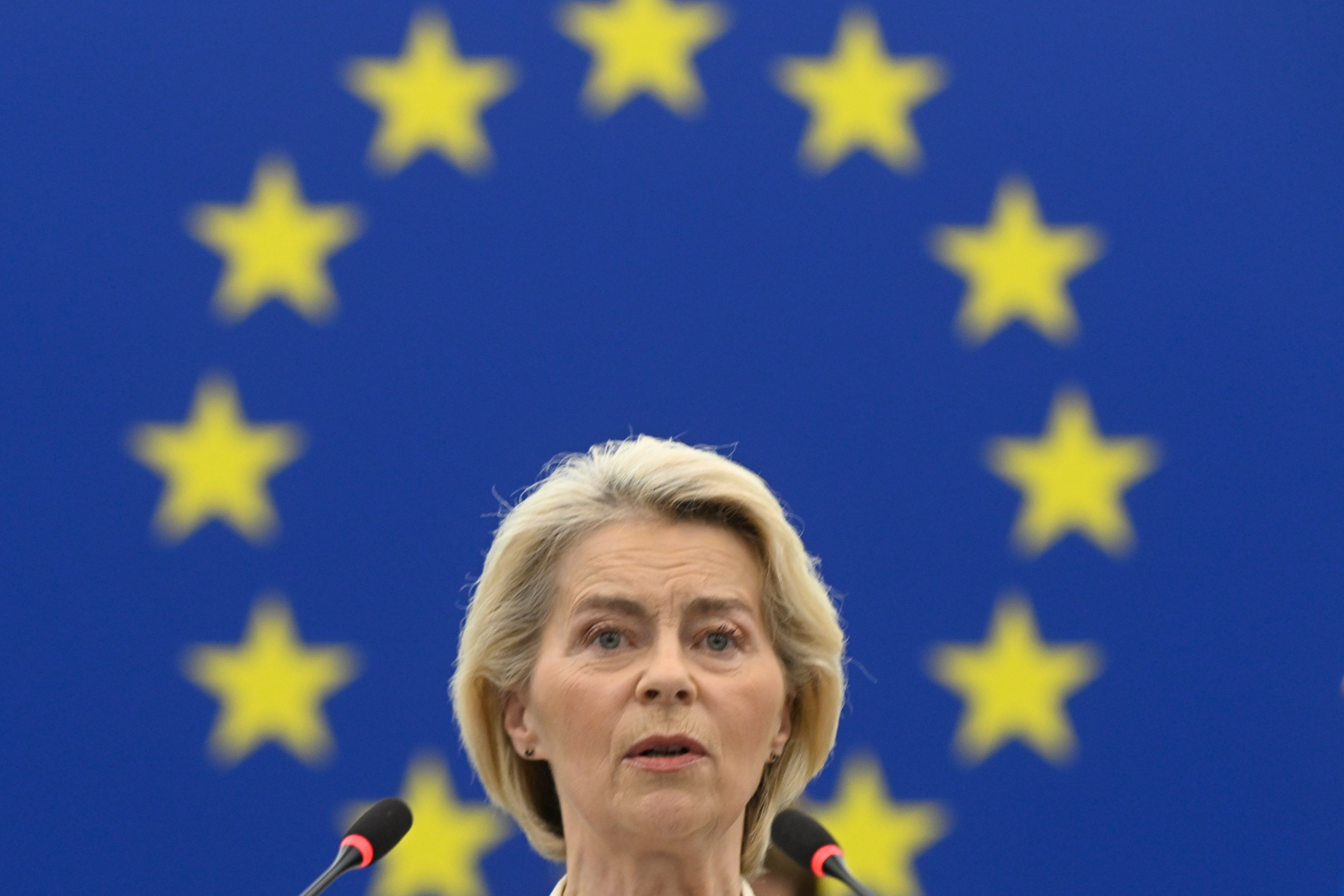
欧盟推出备受期待的保护全区儿童免受社交媒体影响的提案六周后,各国政府正在推进自己的规则。
Six weeks after the EU unveiled its much-anticipated proposal to protect kids across the bloc from social media, European governments are pressing ahead with their own rules.
国家政治领导人曾花数月时间呼吁欧盟范围内统一社交媒体访问年龄限制,以避免出现27套不同的规则。欧盟委员会主席乌尔苏拉·冯德莱恩在九月作出回应,推出了欧盟儿童法案,这是她第二任期的标志性倡议,将禁止13岁以下儿童访问大多数现有社交媒体平台,并严格限制15岁以下儿童的访问。
National political leaders had spent months asking for unified age restrictions for social media access across the European Union, to avoid 27 different sets of rules. European Commission President Ursula von der Leyen’s response came in September with the EU Kids Act, a signature initiative of her second term that would ban under-13s from accessing most current social media platforms and severely restrict access for under-15s.
但越来越清楚的是,各国不想等待布鲁塞尔的立法程序运转——在某些情况下,它们正在推进国家法律,将比冯德莱恩设想的更多儿童踢出这些平台。
But it is becoming clear that individual countries don’t want to wait for the Brussels legislative wheels to turn — and in some cases, are proceeding with national laws that would kick even more kids off the platforms than what von der Leyen has in mind.
“在等待欧盟儿童法案的同时,我们正在推进国家立法,”丹麦数字部长克里斯蒂娜·埃格伦德说。“问题很紧迫。不应要求儿童和家长等待。”上周,希腊议会通过了一项法案,禁止15岁以下儿童访问社交媒体,而意大利此前停滞的保护14岁以下儿童的努力突然获得了新的动力。
“While we wait for the EU Kids Act – we are pushing forward with national legislation,” Denmark’s digital minister Christina Egelund said. “The problems are urgent. Children and parents should not be asked to wait.”Last week, Greece’s parliament passed a bill to bar social media access for under-15s, while Italy’s own stalled efforts to shield under-14s suddenly found new winds.
到周四,委员会将不得不首次表明将如何处理国家法律。它对奥地利禁止14岁以下儿童访问社交媒体的提案的回应将是首个测试案例。
By Thursday, the Commission will have to give the first indication of how it will deal with national laws. Its response to Austria’s proposal to bar social media access for under-14s will be the first test case.
各首都最终仍倾向于统一的欧盟法律,这与现有规则一致,即布鲁塞尔对Instagram和TikTok等大型平台拥有监督权。统一法律还避免了因不同国家采用不同规则而导致市场碎片化。
Capitals continue to ultimately favor a unified EU law, which is in line with existing rules that give Brussels oversight of big platforms like Instagram and TikTok. A harmonized law also avoids fragmenting the market with different rules in different countries.
然而,就这项立法的最终文本达成一致并实施《儿童法案》将需要一年多的时间——对于急于表明自己认真对待保护儿童心理健康和约束大型科技公司的各国领导人来说,这太长了。设置限制的年龄也是一个症结,各国倾向于在13至16岁之间设定不同的门槛。
Yet agreeing on a final text for the legislation and implementing the Kids Act will take more than a year — too long for national leaders eager to show they are serious about protecting the mental health of kids and reining in Big Tech. The age at which limits are set is also a sticking point, with countries preferring various thresholds between 13 and 16.
希腊数字部发言人表示:“希腊决定推进自己的关于未成年人使用社交媒体的立法,因为保护儿童是一个紧迫问题,需要及时采取具体行动。”他们说:“我们有责任解决一个已经影响儿童及其家庭日常生活的问题。”他们补充说,希腊法律是对欧盟法律的“补充”,雅典方面仍然支持全欧盟范围的解决方案。
“Greece decided to move forward with its own legislation on minors’ access to social media because protecting children is a pressing issue that calls for timely and concrete action,” a spokesperson for the country's digital ministry said. “We have a responsibility to address an issue that is already affecting the daily lives of children and their families," they said, adding that the Greek law is “complementary” to the EU’s and that Athens is still in favor of a bloc-wide solution.
葡萄牙在《儿童法案》提出后仅一周多就正式向欧盟委员会通报了自己的法律,正式要求欧盟执行机构说明里斯本的计划是否符合欧洲规则。塞浦路斯的部长们在布鲁塞尔提出其法律的当天就批准了自己针对15岁以下人群的禁令。奥地利和德国也没有表现出任何放缓的迹象。其中许多国家此前都支持全欧盟范围的解决方案。
Portugal formally notified the Commission of its own law a little over a week after the Kids Act was proposed, formally asking the EU executive to say if Lisbon’s plans are in line with European rules. Cyprus’s ministers approved their own ban for under-15s on the day Brussels proposed its law. Austria and Germany have also not shown any signs of slowing down. Many of these countries had backed an EU-wide solution.
目前的趋势可能会给未成年人造成混乱的局面:他们可能在2027年1月被挡在社交媒体之外,但等到《儿童法案》于当年晚些时候或2028年实施后,又会在家长控制下重新获得访问权限。
The current trajectory could create a confusing situation for minors, who may find themselves locked out of social media in January 2027 only to then regain access under parental controls once the Kids Act is implemented later that year or in 2028.
欧盟委员会曾强调,该法律将带来“最大程度的协调统一”,这意味着一旦欧盟范围内的措施生效,各国法律将被废除。
The Commission had stressed that the law would bring about “maximum harmonization,” meaning national laws would be scrapped if and when the EU-wide measures came into force.
《儿童法案》将需要在欧盟委员会、欧洲议会和欧盟各国政府之间进行谈判。| Carl Court/Getty Images当法国首次正式通知委员会其禁止15岁以下未成年人使用社交媒体的国家法律时,“我们非常明确地表示:你们应该能够,并且应该准备好在欧洲层面措施到位后废除这项法律,”一位委员会高级官员在9月宣布该法案时对记者说道。
The Kids Act will have to be negotiated between the European Commission, European Parliament and EU governments. | Carl Court/Getty Images When France first formally informed the Commission of its national law to ban social media access for under-15s, “we said very clearly: you should be able, and you should be ready to repeal this law once there are European measures in place,” a senior Commission official told reporters when announcing the law in September.
但几周后,委员会发言人托马斯·雷尼耶告诉《政治报》(POLITICO),欧盟执行机构仍在考虑如何回应那些已提交以供检查是否符合欧洲规则的法律。
But a few weeks later, Commission spokesperson Thomas Regnier told POLITICO that the EU executive was still considering how to respond to the laws that have been submitted to be checked for compatibility with European rules.
《儿童法案》将需要在委员会、欧洲议会和欧盟各国政府之间进行谈判,这意味着可能要几个月后才能最终敲定。随后六个月后生效。这位高级官员估计,谈判将从明年9月开始,耗时8至12个月,这将使实施日期推至2028年晚些时候。
The Kids Act will have to be negotiated between the Commission, the European Parliament and EU governments, meaning it may not be finalized for months. It would then come into force six months later. The senior official estimated negotiations would take eight to 12 months starting next September, putting the implementation date well into 2028.
各国首都之所以支持泛欧解决方案,部分原因在于这能使执法与里程碑式的《数字服务法案》保持一致,后者赋予布鲁塞尔监督Instagram和TikTok等大型平台的权力。行业界和一些民间社会团体也支持欧盟层面的统一解决方案,因为这样他们就不必应对几十部国家法律以及各国不同的年龄限制。
Capitals had backed a pan-European solution in part because it allows enforcement to align with the landmark Digital Services Act, which gives the power to oversee big platforms like Instagram and TikTok to Brussels. Industry and some civil society groups were also supportive of an EU-wide solution because they wouldn’t have to deal with dozens of national laws and different ages in different countries.
但在近年来,公众对社交媒体与青少年心理健康关系的情绪已急剧恶化,最终导致Meta和TikTok在美国面临数百万美元、甚至在某些情况下高达数十亿美元的和解赔偿。
But public sentiment around social media and teen mental health has taken a severe turn for the worse in recent years, culminating in multimillion- and, in some cases, billion-dollar settlements against Meta and TikTok across the U.S.
与此同时,欧洲领导人和冯德莱恩在过去一年里一直向公众承诺将出台社交媒体年龄限制。
In the meantime, European leaders and von der Leyen have spent the last year promising the public age restrictions for social media.
来自丹麦的埃格伦(Egelund)表示:“一个欧洲的年龄限制将向大型科技公司发出一个强得多的信号——适可而止。”她还表示:“这也将把责任坚定而直接地放在那些本应承担责任的人身上——科技巨头。”
“A European age limit will send a much stronger signal to Big Tech – enough is enough,” said Denmark’s Egelund. “It will also place the responsibility firmly and directly on those who should bear it – the tech giants."