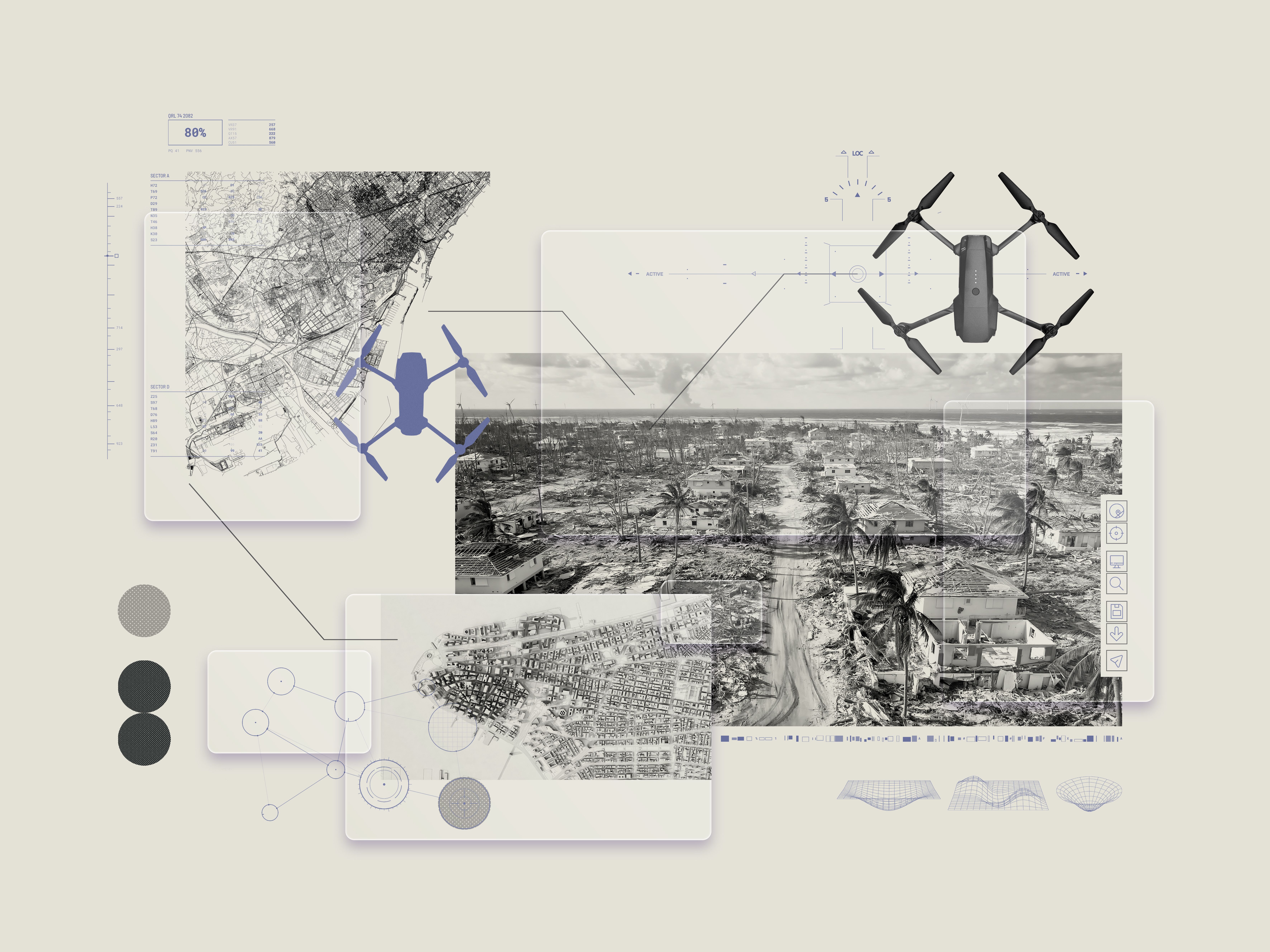
飓风过后,无人机可以捕捉受损房屋和道路的详细图像。但将这些图像传给应急响应人员却更加困难:文件体积巨大,而且风暴过后的网络连接通常很不稳定。
After a hurricane, drones can capture detailed images of damaged homes and roads. But getting those images to emergency responders is harder: The files are huge, and connectivity in the wake of a storm is often spotty.
由得克萨斯农工大学开发、并获得美国国家科学基金会社会决策人工智能研究所资助的CLARKE系统,旨在加速这一进程。无人机降落后,CLARKE系统可以在没有互联网连接的情况下分析图像,然后团队就可以发送详细说明建筑物损坏情况和道路状况的精简报告,而不是巨大的图像文件。
CLARKE, developed at Texas A&M University with funding from the National Science Foundation’s AI Institute for Societal Decision Making, is designed to speed up the process. After a drone lands, the CLARKE system can analyze images without an internet connection, and teams can then send compact reports detailing building damage and road conditions, rather than huge image files.
这项工作是利用人工智能参与应急响应努力的更广泛举措的一部分。2025年3月缅甸发生大地震后,微软的“造福人类人工智能实验室”分析了卫星图像,以帮助援助组织识别受损建筑物。
The work is part of a broader effort to use AI in emergency response efforts. After Myanmar experienced a major earthquake in March 2025, Microsoft’s AI for Good Lab analyzed satellite imagery to help aid groups identify damaged buildings.
通过减少传输和解读图像的延迟,研究人员估计CLARKE可以帮助应急管理者大约提前一天做出决策。这反过来又使他们能够首先将重点放在受灾最严重的地区。在严重危机中,这可能会拯救生命。
By reducing delays in transferring and interpreting images, researchers estimate CLARKE could help emergency managers make decisions roughly a day earlier. This, in turn, allows them to focus on the hardest-hit areas first. In a serious crisis, that could save lives.
得克萨斯农工大学研究员汤姆·曼齐尼表示:“应急管理者做出决策所需的信息是存在的,但它存在于他们无法获取的地方。”
“The information exists for emergency managers to make decisions, but it exists in a place where they can’t get to it,” Texas A&M researcher Tom Manzini said.
曼齐尼表示,CLARKE可以在七分钟内评估2000栋房屋。应急响应人员在2024年“黛比”和“海伦”飓风过后使用了该系统。它现在已成为佛罗里达州灾害无人机团队FL-UAS1标准作业程序的一部分。总体而言,曼齐尼及其团队已经培训了125名应急响应人员使用CLARKE系统。
Manzini says CLARKE can assess 2,000 homes in seven minutes. Emergency responders used the system after hurricanes Debby and Helene in 2024. It is now part of the standard operating procedure for Florida’s disaster drone team, FL-UAS1. In total, Manzini and his team have trained 125 emergency responders on using the CLARKE system. — Zoë Schiffer