经历过过去四分之一个世纪左右的人,对债务厄运循环(debt doom loop)的概念都不会陌生。比方说,巨额政府赤字会导致利率上升,迫使政府支付更高的借贷成本,还要救助持有其不断贬值债券的银行,从而使其陷入更深的债务泥潭。洗刷,重复。
Anybody who has lived through the past quarter century or so is familiar with the concept of a debt doom loop. Big government deficits, say, cause higher interest rates, making the government pay more to borrow and also bail out the banks that own its sinking bonds, driving it even deeper into debt. Rinse, repeat.
未来四分之一个世纪将出现一种新型的债务厄运循环,由变暖的地球驱动。假设一个主权政府或得克萨斯州的一个城镇,财政预算紧张且容易受到气候灾害的影响。本应用来抵御灾难的大部分资金转而用于偿还债务。当灾难不可避免地来临时,它不得不借更多的钱来恢复,借款利率可能更高,这使得它用于下一次灾害恢复韧性的资金变得更少。水灾,重复。
The next quarter century will feature a new kind of debt doom loop, one driven by a heating planet. Say a sovereign government, or a Texas town, has a tight budget and vulnerability to climate-driven disasters. Most of the money it would have spent shoring up against catastrophe goes to debt payments instead. When trouble inevitably arrives, it has to borrow more money to recover, probably at higher rates, giving it even less to spend on resilience for the next disaster. Flood, repeat.
你或许可以将其称为气候厄运循环(climate-doom loop),上周发表在《科学》杂志上的一篇论文探讨了一个最近的例子:牙买加。在过去的十年里,其政府努力将其债务负担从2013年占国内生产总值的144%降至2024年的65%。这让这个岛国每年花费31亿美元,相当于其每年用于道路、桥梁和其他易受灾害影响的基础设施建设支出的六倍。但这带来了多次信用评级上调的回报,其中包括标普全球评级(Standard & Poor's)在2025年9月给出的创纪录的BB级及“稳定”展望。
You might call this a climate-doom loop, and a paper published last week in the journal Science explores a recent example: Jamaica. Over a decade, its government diligently worked its debt load down from 144% of gross domestic product in 2013 to 65% in 2024. This cost the island nation $3.1 billion every year, or six times its annual spending on roads, bridges and other infrastructure vulnerable to disasters. But that paid off in repeated credit-rating upgrades, including an all-time-high BB rating with a “positive” outlook from Standard & Poor’s in September 2025.
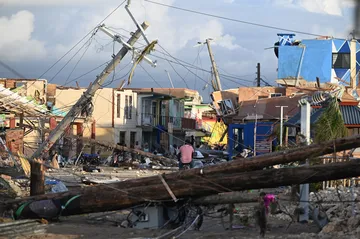
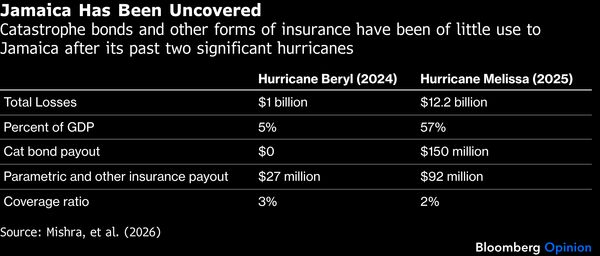
只可惜信用评级无法阻挡飓风。就在评级上调一个月后,飓风梅丽莎作为五级巨兽(大西洋历史上最强烈的飓风之一)猛烈袭击牙买加,抹去了该国大部分艰苦的财政成果。这场风暴造成了122亿美元的损失,占牙买加国内生产总值的57%。
Too bad credit ratings don’t stop hurricanes. Just a month after the upgrade, Hurricane Melissa smashed into Jamaica as a Category 5 monster, one of the strongest in Atlantic history, undoing much of the country’s hard fiscal work. The storm inflicted $12.2 billion in losses, or 57% of Jamaica’s GDP.
在一个日益熟悉的叙事中,牙买加的灾害保险基本上毫无用处。是的,这个岛国拥有灾难债券和参数保险(parametric insurance),后者在达到风速等特定风暴测量标准时会进行赔付。但灾难债券的价值仅为1.5亿美元,保险赔付额也只有9200万美元。两者加起来仅覆盖了牙买加不到2%的损失。
In an increasingly familiar story, Jamaica’s disaster insurance was essentially useless. Yes, the island nation had catastrophe bonds and parametric insurance, which pays out when certain storm measurements such as wind speed are met. But the cat bond was worth only $150 million, and the insurance paid only $92 million. Together they covered less than 2% of Jamaica’s damage.
其余部分只能通过借贷来解决。因此,牙买加的年度债务服务支出从31亿美元增至37亿美元以上,进一步拉大了债务支付与用于保护自身免受未来风暴袭击的支出之间的巨大差距。在梅丽莎飓风过后两个月,标普将牙买加的展望从“积极”下调至“稳定”,可谓雪上加霜。
Borrowing would have to handle the rest. As a result, Jamaica’s annual debt service has gone from $3.1 billion to upward of $3.7 billion, widening the huge gap between debt payments and spending to protect itself from future storms. Kicking the country when it was down, two months after Melissa, S&P trimmed Jamaica’s outlook from “positive” to “stable.”
东北大学的环境科学家、《科学》论文的作者之一阿尤希·米什拉(Aayushi Mishra)对我表示:“当前的系统奖励的是偿还债务的国家,而对那些能够减少这些损失的保护措施却毫无奖励。各国不应该在被视为财政负责任和保护自己之间做出选择。”牙买加并不是第一个进入此类厄运循环的国家,也不会是最后一个。米什拉和她的合著者已经确定了约35个目前脆弱的高负债岛国,随着地球变暖和气候灾害破坏性越来越大,这一群体将会扩大。
“The current system is rewarding countries for paying down debt but nothing for the very protections that would reduce those losses,” Aayushi Mishra, an environmental scientist at Northeastern University and an author of the Science paper, told me. “Countries shouldn’t have to choose between what is seen as fiscally responsible and protecting themselves.”Jamaica isn’t the first country to enter one of these doom loops, and it won’t be the last. Mishra and her co-authors have identified about 35 heavily indebted island nations that are vulnerable now, but that cohort will expand as the planet becomes hotter and climate disasters get more damaging.
在美国,潜在的厄运循环主体甚至更加拥挤:构成4.2万亿美元市政债券市场的约5.5万亿美元(原文如此)借款人。米什拉和她的合著者在1月发表在《自然·城市》(Nature Cities)杂志上的一篇论文中发现,与主权债务一样,市政债券借款人面临的一个巨大风险是灾难发生后债券突然重新定价,从而引发债务厄运循环。
And there’s an even more crowded universe of potential doom-loopers in the US: the roughly 55,000 borrowers that make up the $4.2 trillion municipal-bond market. In a paper published in January in the journal Nature Cities,Mishra and her co-authors found that, as with sovereign debt, one big risk for muni borrowers is a sudden bond repricing after a disaster that triggers a debt doom loop.
研究人员发现,平均而言,高温和海平面上升会推高市政债券的利率,但幅度微乎其微。当灾难来临时,市政债券利用债务来弥补损失,这会彻底破坏他们的财务状况。2018年坎普大火(Camp Fire)后,加州天堂市重建局(Paradise Redevelopment Agency)的违约就是一个例子。正如我的彭博观点专栏同事马修·温克勒(Matthew Winkler)所指出的那样,随着投资者深入了解科珀斯克里斯蒂市的水资源危机,其借贷成本的飙升正在成为另一个例子。
On average, heat and sea-level rise raise muni interest rates, the researchers found, but just barely. When a catastrophe strikes and munis use debt to cover the damage, that trashes their finances. The default by California’s Paradise Redevelopment Agency after the Camp Fire in 2018 is one example. The surge in Corpus Christi’s borrowing costs as investors plumb the depths of its water crisis is shaping up to be another, as my Bloomberg Opinion colleague Matthew Winkler has noted.
一个更热、更混乱的未来将带来更多的此类金融危机。特朗普政府要求州和地方政府承担更多准备和恢复灾难负担的要求也是如此。依赖私人债权人根本无法解决任何问题;正如美国土木工程师协会(American Society of Civil Engineers)所指出的那样,它肯定没有阻止这个国家对关键基础设施危险的投资不足扩大到9.1万亿美元。
A hotter, more chaotic future will bring more of these financial crises. So will the Trump administration’s demand that state and local governments bear more of the burden of preparing for and recovering from disasters. Relying on private creditors won’t solve anything; it certainly hasn’t stopped this country’s dangerous underinvestment in critical infrastructure from yawning to $9.1 trillion, according to the American Society of Civil Engineers.
像保险业一样,主权债务和市政债务系统是为另一个时代建造的,那是在数十亿美元的气候灾害成为常态之前的时代。即使每个人都按规则行事,就像牙买加的情况一样,这个系统也会崩溃。
Like the insurance industry, the sovereign and muni debt systems are built for a different era, one before multibillion-dollar climate disasters became routine. Even when everybody plays by the rules, as happened in Jamaica’s case, that system buckles.
在这个时代,脆弱的借款人需要更大规模的公共金融后盾。米什拉和她的合著者呼吁建立一个联邦机构,用于购买或支持由市政债券发行的韧性基础设施贷款,并将它们打包成资产支持证券。如果联邦政府继续拒绝提供帮助,另一个可能的解决方案是全州范围内的投资和灾害恢复赠款及资金池。
In this era, vulnerable borrowers need bigger, public financial backstops. Mishra and her co-authors have called for a federal institution for buying or backing resilient-infrastructure loans issued by munis and bundling them into asset-backed securities. If the feds keep refusing to help, another possible solution is statewide grants and pools for investment and disaster recovery.
市政和主权借款人需要相关条款,以便在自然灾害发生后推迟偿还债务。国际货币基金组织、多边开发银行和其他债权人应将减免债务作为对韧性支出的奖励,因为债务偿还与损失规避并不是相互排斥的。主权国家可以在区域和全球范围内汇集资金,以帮助彼此支付账单。
Muni and sovereign borrowers need clauses that let them postpone debt payments after a natural disaster. The International Monetary Fund, multilateral development banks and other creditors should retire debt as a reward for resilience spending because debt payment and loss avoidance aren’t mutually exclusive. Sovereigns could pool their money regionally and globally to help one another pay the bills.
预防气候债务厄运循环需要似乎供应短缺的政治意愿和想象力。但是,如果我们经历了数十年的金融和气候灾难学到了什么,那就是现在的一点痛苦将避免未来的巨大痛苦。
Preventing climate-debt doom loops will take political will and imagination that seem to be in short supply. But if we’ve learned anything after decades of both financial and climate disasters, it’s that a little pain now will avoid a lot in the future.