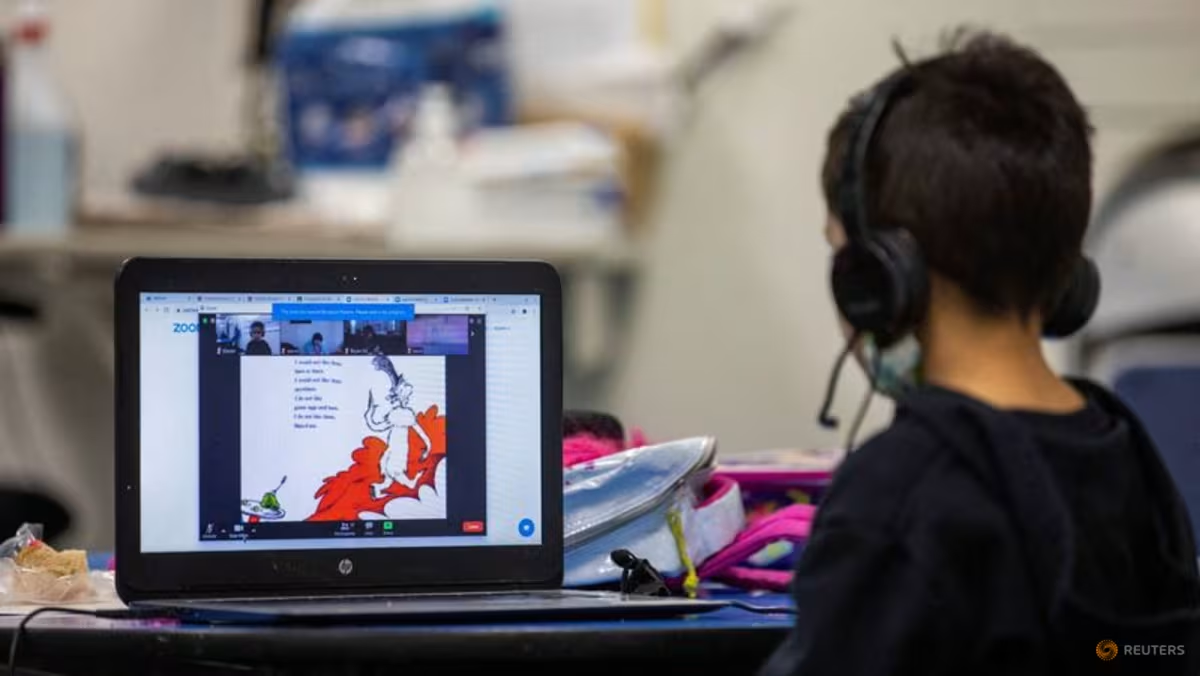
10月28日:在世界人工智能之都,六年级人文教师崔斯滕·张正在设计她的课堂,使学生无法依赖聊天机器人。
Oct 28 : In the AI capital of the world, sixth-grade humanities teacher Tristen Chang is designing her classroom so students can’t rely on chatbots.
从去年开始,张老师在她位于旧金山的学校取消了带回家的作文,改用口试来测试学生。她向学生提出关于人物、情节、主题和隐喻的15个问题,学生只需五分钟就能回答完毕。
Starting last year, Chang did away with take-home essays and began using oral exams to test students at her San Francisco school. She asks students 15 questions about character, plot, theme and metaphor, which they can answer in as little as five minutes.
张老师说:“技术改变教学已经有一个漫长的过程,但人工智能是最剧烈的。一切都得重来。”随着生成式人工智能变得无处不在,美国中学教师正在重新思考如何评估学习成果。据路透社对全国十几位教师和教育专家的采访,教育工作者正在减少带回家的作业,增加课堂写作和讨论,并重新设计作业,以衡量学生的思维过程,而不仅仅是他们的答案。
"There’s been a long march of technology changing teaching, but AI is the most drastic," Chang said. "Everything’s out the window.”As generative AI becomes ubiquitous, US middle and high school teachers are rethinking how they assess learning. Educators are assigning less take-home work, increasing in-class writing and discussion, and redesigning assignments to measure students' thinking rather than simply their answers, according to Reuters interviews with a dozen teachers and education experts across the country.
学校系统在人工智能问题上仍存在分歧,导致许多教师不得不独自应对这一转型。一些人希望将人工智能融入课堂;另一些人希望对其进行限制。许多人则处于中间立场。
School systems remain divided over AI, leaving many teachers to navigate the transition largely on their own. Some want AI integrated into classrooms; others want it restricted. Many occupy a middle ground.
斯坦福大学教育学教授、全美英语教师协会主席安特罗·加西亚说:“许多成年人正在工作场景中出于各种目的使用这些工具来辅助工作,但我们还没有真正弄清楚这对教育意味着什么。”
“Where many adults are using these tools for various kinds of purposes to help them in work-based settings, we haven't really figured out what that means for education,” said Antero Garcia, an education professor at Stanford University and president of the National Council of Teachers of English.
教育中的固定组成部分 随着学生在手机和笔记本电脑上获得人工智能聊天机器人的使用权,教师们正将更多学习环节移回课堂。他们越来越多地依赖课堂写作、教学和面对面评估。
A FIXTURE IN EDUCATION As students gain access to AI chatbots on their phones and laptops, teachers are moving more learning back into the classroom. They are increasingly relying on in-class writing, instruction and face-to-face assessment.
在旧金山任教中学英语的拉斯蒂·谢比说,当学生感到不知所措时,往往会在家里求助于人工智能。他试图通过投入更多课堂时间进行写作来对抗这种冲动,例如花一个月时间指导七年级学生完成一篇作文。
Rusty Shabe, who teaches middle school English in San Francisco, said students often turn to AI at home when they feel overwhelmed. He is trying to combat that impulse by devoting more classroom time to writing, taking a month, for example, to work on an essay with seventh-graders.
纽约高中数学教师 Bobson Wong 现在减少了家庭作业题量,增加了课堂练习,以便更好地监控学生的解题过程。
Bobson Wong, a high school math teacher in New York, now assigns fewer homework questions and more in-class practice so he can better monitor how his students are working.
“AI 不仅改变了学生做数学的方式,也绝对改变了我的教学方式,”Wong 说。
“AI has definitely changed not just how students do math, but how I teach it,” Wong said.
AI 对学习的影响仍有争议。2025 年哈佛大学的一项随机对照试验发现,定制化 AI 导师提高了学习收获和学生投入度;而 2025 年麻省理工学院媒体实验室的一项小规模研究发现,使用 ChatGPT 写作文的人完成作业更快,但似乎思考得更少。
AI's effect on learning is up for debate. A 2025 Harvard randomized trial found that a custom AI tutor improved learning gains and student engagement, while a small 2025 MIT Media Lab study found that people who used ChatGPT to write essays did the work faster, but appeared to do less thinking.
即便如此,AI 正成为教育领域的常态:2025 年兰德公司的一项调查发现,美国大多数学生以及英语、数学和科学教师都表示在学业中使用过 AI。
Even so, AI is becoming a fixture in education: a 2025 RAND survey found that the majority of US students and English, math and science teachers reported using AI for schoolwork.
去年春天,纽约市郊区的高中英语教师 Meghan Hyland 发现一些学生去洗手间时利用手机访问 AI。尽管她的课堂早已禁用手机,但她开始要求学生离开教室时必须把手机留下。
Last spring, Meghan Hyland, a high school English teacher in a New York City suburb, realized some students were heading to the bathroom to access AI on their phones. Although phones were already banned in her class, she began requiring students to leave them behind when they left.
她还增加了课堂作业在成绩中的权重,不再依赖家庭作业作为练习。
She has also made classwork a bigger component of students' grades and stopped relying on homework as practice.
“我判断他们是否具备批判性思维能力的主要途径,必须在学校里完成,”Hyland 说。
“My main ability to understand whether they know how to do critical thinking has to be done in school,” Hyland said.
对一些教育工作者来说,应对 AI 的最佳办法是避免可预测的问题。因为 AI 擅长回答关于人物和情节的常规问题,一些教师开始要求学生给出偏离主流思维的解读。
For some educators, the best way to beat AI is to avoid predictable questions. Because AI is adept at answering conventional questions about character and plot, some teachers have begun asking students for interpretations that depart from mainstream thinking.
“我非常努力地设计提示词,使其至少在目前 AI 还难以完美应对,”布朗克斯区高中英语教师 Pian Rockfeld 说。
“I try very hard to create prompts that, at the moment at least, AI is imperfect at responding to,” said Pian Rockfeld, a high school English teacher in the Bronx.
她的其他策略包括:布置需要阅读学术文章的作文,这些文章通常设有付费墙,受到 AI 聊天机器人的保护。
Among her other strategies: assigning essays that require students to read scholarly articles that typically sit behind a paywall, protected from AI chatbots.
“笔记本电脑收起时,你无处可藏” 对于一些教师而言,人工智能正在加速一场针对课堂技术的更广泛反弹,促使他们远离屏幕,转向笔记本、纸笔书写和实体项目。
‘YOU CAN’T HIDE WHEN THE LAPTOPS ARE AWAY’ For some teachers, AI is accelerating a broader backlash against classroom technology, motivating them to move away from screens and toward notebooks, pen-and-paper writing and physical projects.
在芝加哥郊区的一所高中,英语教师雷克斯·奥瓦莱要求学生上课伊始从箱子里取出一本作文笔记本。他将 Chromebook(谷歌笔记本电脑)的使用限制在大约 10% 的上课日。
Rex Ovalle, a high school English teacher in a Chicago suburb, tells students to retrieve a composition notebook from a box at the start of class. He limits Chromebook use to roughly 10 per cent of school days.
“笔记本电脑收起时,你无处可藏,我因此看到了很多投入,”奥瓦莱说。
“I have seen a lot of engagement because you can’t hide when the laptops are away,” Ovalle said.
虽然 Chromebook 和其他技术在新冠疫情期间变得无处不在,但许多学区现在正在重新评估其技术使用,因为人们担心屏幕时间过长。
While Chromebooks and other technology became pervasive during the COVID-19 pandemic, many school districts are now re-evaluating their technology use amid concerns about excessive screen time.
在海兰德的英语课上,除非学生需要特殊照顾,否则都要手写。她开发了新的方式来评估学生对书籍的理解,例如布置烹饪演示来展示他们如何理解《双城记》。例如,一块黑白饼干代表了该书著名的开篇句——关于最好的时代和最坏的时代。
In Hyland’s English classes, students write by hand except when they require special accommodations. She has developed new ways to assess their comprehension of a book, such as assigning a cooking demonstration to show how they understand “A Tale of Two Cities." A black-and-white cookie, for example, represented the book's famous opening line about the best of times and worst of times.
海兰德说,她寻找的是涉及“现场完成某事,这样他们能实时展示创造性思维”的课程。即使担心滥用,一些教师也在拥抱人工智能作为课堂工具。他们说,人工智能可以帮助他们查找特定主题的文章、设计教室标识和制作幻灯片演示的图形等。
Hyland said she looks for lessons that involve “something done live so that in real time they are showing creative thinking.”Even as they worry about misuse, some teachers are embracing AI as a classroom tool. They said it can help them find articles on a specific topic, design classroom signage and develop graphics for slide presentations, for example.
在纽约市郊区的一所高中,社会研究教师迈克尔·扎加里利用人工智能调整历史文献中的词汇难度,以适应不同阅读水平的学生,并精简文章以便在课堂上讲授。
Michael Zagari, a high school social studies teacher in a New York City suburb, uses AI to change the vocabulary in historical documents for students at different reading levels and to condense articles so he can cover them in class.
他鼓励学生利用人工智能开展研究项目,并认为他们通过学习如何有效地向人工智能提问,能培养批判性思维技能。
He encourages students to use AI to get started on research projects and thinks they develop critical thinking skills by learning how to effectively prompt AI.
扎加里说:“AI不会消失。我们需要教授如何负责任地使用AI的公民责任,就像我们教导负责任地使用互联网一样。”
“AI is not going away,” Zagari said. “We need to teach civic responsibility of how to use AI just like we taught responsible use of the Internet.”