修复受损海草床的竞赛 Axel Warnstedt Sarah Steffen 2026年10月28日海草能保护海岸、为成千上万物种提供栖息地并储存二氧化碳。但自19世纪末以来,这一宝贵生态系统已有约30%消失。我们能让它恢复吗?
The race to restore damaged seagrass meadows Axel Warnstedt Sarah Steffen October 28, 2026 Seagrass protects coasts, shelters thousands of species and stores CO2. But some 30% of this valuable ecosystem has disappeared since the late 19th century. Can we bring it back?
重建水下海草床需要时间和耐心 半打潜水员正在德国北部小海滨镇达默海岸附近的波罗的海冷水中穿行。
Regrowing underwater seagrass meadows takes time and patience Half a dozen divers are navigating the cold waters of the Baltic Sea off the coast of Dahme, a small beach town in northern Germany.
保护人员在保持根系完整的前提下,小心翼翼地从一片供体海草床上采集茎秆,并将其装入袋中。
Keeping the roots intact, conservationists carefully lift shoots from a donor meadow of seagrass and place them in a bag.
他们在每处仅采集少量茎秆,这些茎秆将被种植在保护人员希望重建海草床的区域。他们已经为幼苗选定了一块优质区域,那里需要沙质沉积物、免受风浪和洋流冲击,并拥有充足的光照和氧气,幼苗才能茁壮成长。
They only take a few shoots from each spot, which will be planted where the conservationists hope to regrow another meadow. They've already picked out a prime area for the young plants, which need sandy sediment, shelter from waves and currents and sufficient light and oxygen to thrive.
科学家们视这项工作为至关重要。非政府组织“海草保护”的负责人米里亚姆·施皮卡表示,在她潜水的30多年里,她“看到了变化”。而她并非唯一见证这场破坏的人。
The scientists see the work as critical. Myriam Spicka, who heads the NGO Seagrass Conservation, says she has "seen the changes" in the more than 30 years she's been diving. And she is not the only one who has witnessed the destruction.
海草如何成为一种绿色建筑材料 观看此视频 ,科学家估计,波罗的海沿岸约60%的海草床已经消失。
How seagrass is becoming a green building material To view this video , and Scientists estimate that around 60% of the Baltic coast's seagrass meadows have disappeared.
“坏消息是这个,”基尔亥姆霍兹海洋研究中心的海洋生态学家托尔斯滕·罗伊施说,“好消息是衰退已经停止。” 为什么我们要关心海草?
"That's the bad news," said marine ecologist Thorsten Reusch from the GEOMAR Helmholtz Center for Ocean Research Kiel . "The good news is that the decline has stopped." Why should we care about seagrass?
水下海草床为鱼类、螃蟹、贝类及许多其他物种提供食物和庇护所 它们改善水质、减缓波浪,有助于保护海岸免受侵蚀。而且它们在海床中封存碳的速度比森林快约30到50倍。
Underwater seagrass meadows feed and shelter fish, crabs, shellfish and many other species They improve water quality and slow waves, helping protect shores from erosion. And they store carbon in the seabed about 30 to 50 times faster than forests.
全球150多个国家的海岸线分布着约70种海草。有些生长在水面之下,另一些则生长在60米深、近200英尺的深处。在马略卡岛的“海草警察”巡逻时“有些国家的海草数量要多得多,尤其是在印太地区,”鲁施说。“在那里,海草可以在碳平衡中发挥重要作用。”但海草的价值不仅限于碳储存。它在波罗的海的草甸是海洋中最有价值的栖息地之一。
Around 70 species of seagrass can be found along the coasts of more than 150 countries. Some grow just below the surface, others at depths of 60 meters or almost 200 feet. On patrol with Mallorca's 'seagrass police' "Some countries have far more seagrass, particularly in the Indo-Pacific," said Reusch. "There, it can play a major role in their carbon balance." But the value of seagrass goes beyond carbon storage. Its meadows in the Baltic are among the sea's most valuable habitats.
它们为野生动物提供庇护,稳定海床,并通过捕获颗粒和养分充当天然过滤器。如何在更大规模上重新种植海草?
They shelter wildlife, stabilize the seabed and act as natural filters by trapping particles and nutrients. How can seagrass be replanted on a larger scale?
单独种植海草苗是一项繁琐的工作,因此像莱因哈德·赫尔比格这样的人正尝试让它更容易。
Planting individual seagrass shoots is painstaking work so people like Reinhard Helbig are trying to make it easier.
通过他共同创立的初创公司ZosteraTec,他帮助恢复海洋栖息地,包括因海上活动(如风电场建设)受损的海草草甸。他的工作从海滩开始。
Through ZosteraTec, the start-up he co-founded, he helps restore marine habitats, including seagrass meadows damaged by offshore activity, such as wind farm construction. His work begins on the beach.
“暴风天气对我们有帮助。海浪和潮流会把海草冲出海床。一天或两天后,它们会被冲到这里,仍然是新鲜的,”他说。
"Stormy weather helps us. Waves and currents wash seagrass out of the seabed. A day or two later, it washes up here, still fresh," he said.
用可降解线压制的海草株条使其更容易在海底更长的距离上种植。收集的海草苗在ZosteraTec的水产养殖场中培育并繁殖。几个月后,这些海洋幼苗被放置在植株支架上。专门研发的机器用可降解线将种植好的株条绑在一起。得到的长条可以在海床上铺设,减少潜水工作量。
The pressed strand of seagrass with biodegradable thread makes it easier to plant on longer stretches along the ocean floor The collected shoots are grown and multiplied in ZosteraTec's aquaculture. Several months later, the marine saplings are laid on a plant support. A specially developed machine binds the planted strands with biodegradable thread. The resulting lengths can be laid on the seabed with less diving work.
“我们在陆地上种植,以减少水下作业。这意味着潜水次数更少,繁琐的工作可以在岸上完成,”赫尔比格说。种子种植能成为解决方案吗?
"We plant here on land to cut down on underwater work. That means fewer dives, and we can do the painstaking work on shore," Helbig said. Could planting seeds be a solution?
基尔Geomar赫尔姆霍兹中心的研究人员也在测试恢复海草的大面积新方法,包括使用种子。
Researchers at the Geomar Helmholtz Center in Kiel are also testing new ways to restore seagrass across larger areas, including using seeds.
海洋生态学家埃丝特·汤姆森伸手进入水族箱,取出装有海草的花盆。
Marine ecologist Esther Thomsen reaches into an aquarium tank and pulls out a flowerpot containing seagrass.
“我们草甸中有百分之十的植物会产生种子。你可以清楚地看到种子坐落在种子荚内,”她说。
"Ten percent of the plants in our meadows produce seeds. You can clearly see the seeds sitting inside the seed pod," she said.
托姆森解释说:“用种子恢复草甸的最大优势是遗传多样性更丰富。而且未来我们应该能够在更大的面积上播种。”
"The big advantage of restoring meadows from seed is greater genetic diversity.
种子与重新栽种的嫩枝相结合,可以帮助水下草甸重新生长。Geomar的罗伊施表示,他们目前“认为培育能够抵御气候变化的草甸最有希望的方法是,先种植单个嫩枝作为基础,然后在它们之间播撒种子以增加遗传多样性。”看到结果需要时间。一项种植任务是否成功,要在数月甚至数年后才会揭晓。
And in the future, we should be able to sow seeds over much larger areas," explained Thomsen. Together with replanted shoots, seeds can help regrow underwater meadows Reusch from Geomar said they currently "think the most promising way to grow meadows that can withstand climate change is to plant individual shoots as a foundation, then sow seeds between them to increase genetic diversity." It takes time to see results Whether a planting mission is successful is revealed months or even years later.
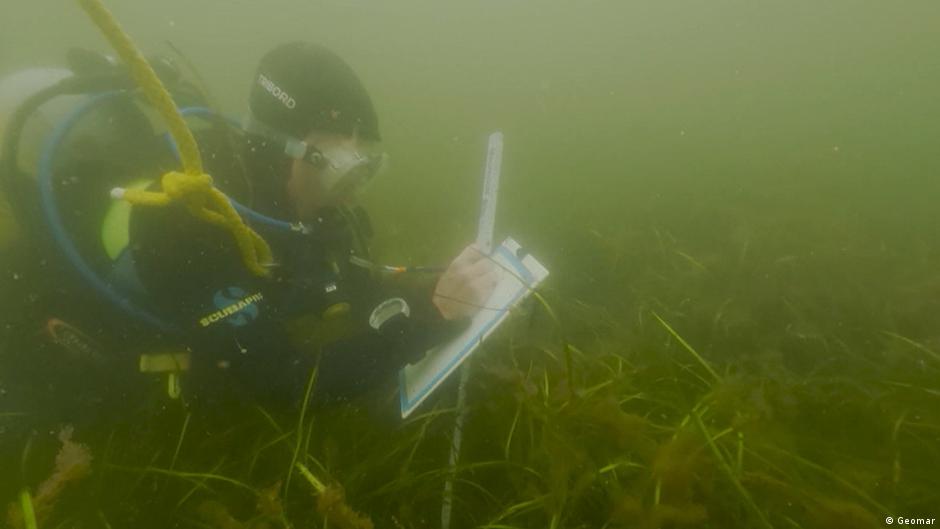
托姆森和同事正在探访2021年在德国波罗的海水域种植的第一片海草草甸。潜水员清点嫩枝数量,检查它们生长的密度,并记录草甸的发育情况。
Thomsen and her colleagues are visiting the first seagrass meadow planted in Germany's Baltic waters in 2021. The divers count shoots, check how densely they grow and record how the meadow has developed.
然后他们将其与提供植株的供体草甸进行比较。只有通过这种比较才能揭示新作物是仅仅存活下来,还是开始更像自然草甸那样运作。
They then compare it with the donor meadow that supplied the plants. Only that comparison reveals whether the new crop has merely survived or is beginning to function more like a natural one.
“我们刚刚检查了海草草甸,它真的很茂密。我们数了每平方米有很多嫩枝,”托姆森说。“看起来真的很好。”本文基于《全球美国》的视频报道。
"We've just checked the seagrass meadow, and it's really dense. We counted lots of shoots per square," Thomsen said. "It's looking really good." This article is based on a Global Us video report.