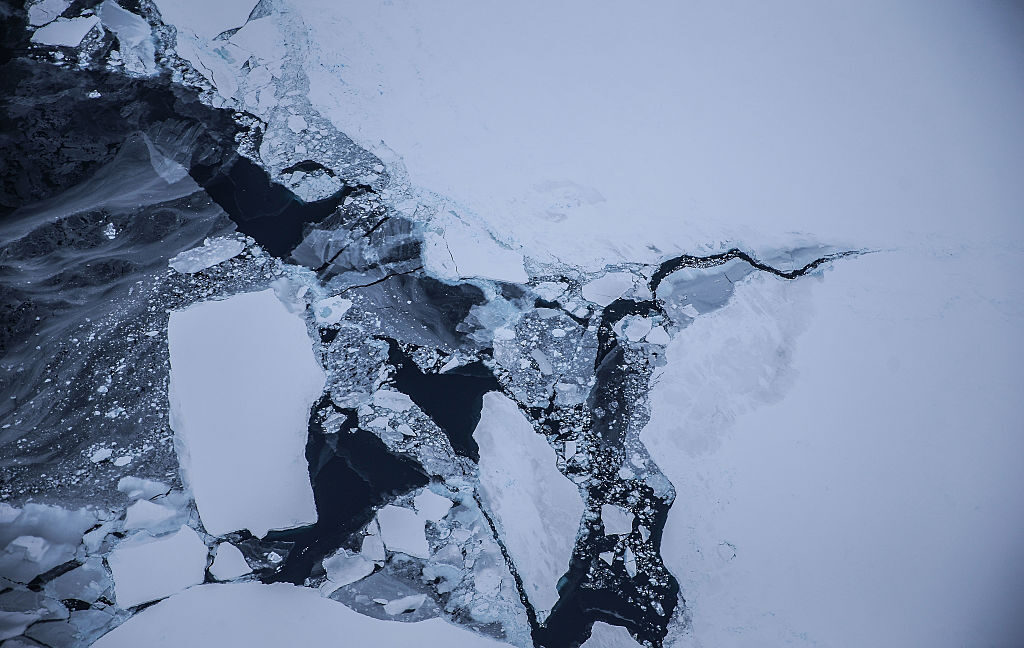
科学家表示,自2016年以来南极海冰的迅速减少,已引发地球气候系统中一个关键部分的剧烈转变。
The rapid decline of Antarctic sea ice since 2016 has triggered a dramatic shift in a crucial part of Earth’s climate system, scientists say.
在周三发表的一篇论文中,研究人员记录到南大洋一大片水层的盐度急剧上升,该水层深度从2300英尺延伸至4000英尺,环绕南极洲。这一转变逆转了数十年来海水变淡的趋势,与通常被认为在数千年间伴随全球重大气候变迁出现的海洋变化相呼应,但如今这一切仅发生在短短几年之内。
In a paper published Wednesday, researchers documented a sharp salinity increase in a vast layer of the Southern Ocean, extending from 2,300 to 4,000 feet deep and encircling Antarctica. The shift reverses decades of freshening and echoes ocean changes usually associated with major global climate shifts over millennia but is now happening in just a few years.
从长达数十年的海水变淡趋势转为盐度上升,其影响可能超出南极洲。共同作者比沙克达塔·加延表示,这一被称为南极中层水的水层向北扩散进入印度洋、太平洋和大西洋,将热量、碳、氧气和营养物质输送向热带,甚至跨越赤道。加延是墨尔本大学以及印度班加罗尔大气与海洋科学中心的研究员和教授。
The switch from a decades-long trend of freshening water to increasing salinity has implications that could extend beyond Antarctica. The layer, known as Antarctic Intermediate Water, spreads northward into the Indian, Pacific, and Atlantic oceans, transporting heat, carbon, oxygen, and nutrients toward the tropics, and even across the equator, said co-author Bishakhdatta Gayen, a researcher and professor at the University of Melbourne and at the Centre for Atmospheric and Oceanic Sciences in Bengaluru, India.