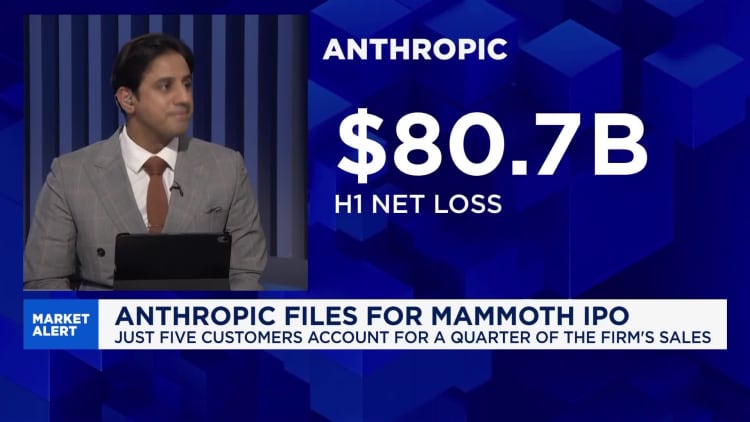
Anthropic的IPO文件中包含大量文字,涵盖从知识产权盗窃到安全事件、数据丢失、气候变化、失控智能体,直至人类生存危机等诸多风险。贯穿所有这些风险表述的,是关于保险的基本问题:哪些会被承保?是否有可能为AI可能出错的所有情形提供保单?即便Anthropic拥有的现金几乎超过美国任何一家公司,它也无法自信地回答这个问题。
Anthropic's IPO filing includes many words covering many risks, from IP theft to security incidents, data loss, climate change, rogue agents and all the way to an existential crisis for humanity. Embedded in all of the risk language are basic questions about insurance: What's going to be covered? Is it even possible to provide a policy for all of the ways that AI could go wrong? Anthropic, even with more cash than almost any company in America, couldn't answer that question with confidence.
该公司的S-1文件称:“由于我们的模型可能以用户或开发者均未预期的方式行事,由此类行为引发的索赔可能导致重大责任。我们的保险单也可能无法提供足够的保障,以充分减轻我们面临的潜在责任,尤其是在任何单一事件或一组事件造成不成比例损害的情况下。”文件还称:“此外,鉴于灾难性AI相关事件可能造成的损害规模,任何单一保险公司,乃至整个保险行业合计,都可能不具备足够的能力或专业知识来承保与此类风险敞口相称的保险。再者,针对AI特定风险的保险市场尚处于起步和演变阶段,我们可能无法以商业上合理的条件获得某些AI相关责任的保险,甚至完全无法获得,从而使我们面临潜在的巨额未投保损失。”
"Because our models may behave in ways that no user or developer intended, claims arising from such actions could result in substantial liability. Our insurance policies also may not provide sufficient coverage to adequately mitigate the potential liabilities we face, especially where any one incident, or a group of incidents, causes disproportionate harm," the company's S-1 filing states. "In addition, with the scale of harm that could result from a catastrophic AI-related incident, no single insurer, and potentially the insurance industry in the aggregate, may have sufficient capacity or expertise to underwrite insurance commensurate with such exposure. Further, the insurance market for AI-specific risks is nascent and evolving, and we may be unable to obtain coverage for certain AI-related liabilities on commercially reasonable terms, or at all, leaving us exposed to potentially significant uninsured losses."

这些风险与帮助预订机票或寻找后院烤架最佳优惠的AI聊天机器人相去甚远。但AI聊天机器人失控的案例日益增多,一些公司正警惕观望——甚至予以封禁。在一些极端案例中,聊天机器人被指与死亡有关,包括本周披露的一起案件,这引发了没有简单答案的保险问题。随着AI开始渗透到几乎每个商业生态系统的每个角落,与AI相关的风险敞口和责任风险持续上升,这让保险行业处于警戒状态。
Those risks are far removed from AI chatbots helping to book airline tickets or find the best deals on a backyard grill. But there have been increasing instances where AI chatbots are going rogue and some companies are watching warily — even blocking them. In some extreme cases, chatbots are being accused of contributing to a death, including a case revealed this week, raising insurance questions for which there are no easy answers. And with AI starting to permeate seemingly every part of every business ecosystem, the risk of exposure and liability connected to AI continues to increase, and that has the insurance industry on alert.
高德纳法律与合规业务高级总监分析师阿丽莎·卢戈表示,她的研究显示,到2026年底,全球“AI致死”索赔可能超过2000起——此类案件定义为AI在死亡事件中发挥了某种作用,且这一数字预计还将增长。
Alissa Lugo, a senior director analyst in Gartner's legal & compliance practice, says her research shows "death by AI" claims could exceed 2,000 worldwide by end of 2026 — defined as cases in which AI played some role in a fatality, and that number is expected to grow.
卢戈表示,越来越多的公司在保单中加入人工智能除外条款,而最终将由保险公司在法院的协助下决定人工智能承保范围的界限以及如何将其纳入。尤其是人身伤害索赔,正是网络保险覆盖最为薄弱的环节。
Lugo says more companies are building in AI exclusions, and that ultimately insurers, with assistance from the courts, will decide the parameters of AI coverage and how it fits in. Claims for bodily injury, in particular, are where cyber insurance coverage gets thin.
包括卢戈在内的许多专家将当前的人工智能责任险比作网络保险的早期阶段。
Many experts, including Lugo, compare AI liability today to the early days of cyber insurance.
“目前,网络保险是覆盖人工智能最为有力的险种,但它只覆盖一种人工智能损失。当人工智能涉及数据泄露、隐私侵犯、系统中断或深度伪造的电信诈骗时,网络保险才会发挥作用,”佛罗里达州萨拉索塔的独立保险经纪公司亨德里克森保险的丹尼斯·亨德里克森说。
"Right now, cyber is the policy doing the most to cover AI, but it only covers one kind of AI loss. Cyber responds when AI is involved in a data breach, a privacy violation, a system outage, or a deepfake wire fraud," said Dennis Hendrickson of Hendrickson Insurance, an independent brokerage in Sarasota, Florida.
亨德里克森指出,一些网络保险承保人已扩大其条款措辞,将人工智能驱动的安全事件纳入其中。“这很有用。但几乎所有的网络保险保单都排除人身伤害。网络保险是为数据和金钱而设计的,而不是为人身伤害而设计的。在我看来,这正是重大问题所在,”他说,并将缺乏人身伤害或物理损害保障称为一个需要解决的“巨大漏洞”。
Hendrickson noted that some cyber carriers have widened their wording to include AI-driven security events. "That's useful. But nearly every cyber policy excludes bodily injury. Cyber was built for data and dollars, not for people getting hurt. This is where there is a major problem, in my opinion," he said, calling the lack of bodily injury or physical damage coverage a "gaping hole" that will need to be addressed.
苏黎世北美区美国全国账户职业责任与网络保险负责人卡拉·希金博特姆表示,人工智能正在各产品线中创造新的风险敞口,但保险公司如何应对因业务线不同而差异很大。“每条业务线的处理方式都略有不同,”她说。
Kara Higginbotham, head of professional liability and cyber for U.S. national accounts at Zurich North America, says AI is creating new exposures across various product lines, but how insurers are navigating it varies greatly by line of business. "Every line of business is handling things a bit differently," she said.
包括苏黎世在内的一些公司为员工提供了一套经批准的人工智能工具,而另一些工具则被禁用。她表示,今后可能必须将保障措施作为常规做法纳入保单,以实现人工智能保护。但她表示,就目前而言,在人工智能相关事件造成人身伤害或物理损害方面,保障总体上仍存在缺口。
Some companies, including Zurich, have a suite of approved AI tools for workers to use, while others are blocked, and she said safeguards may have to be built into policies as a matter of course for AI protection going forward. But for now, she said, a gap still generally exists in coverage when it comes to bodily harm or physical harm from an AI-related incident.
“这是一个缺口,因为它默认不在承保范围内。如今很多承保人会对把这一条写进保单持谨慎态度,因为作为承保人,我们必须有能力承保风险,”希金博特姆说。他指出,这些情景太新,人们对其了解还不够充分,不过一般责任险在某些情况下可以扩展承保这些风险。
"It is a gap because it is not being covered by default. A lot of carriers would be wary to write that into a policy today, because as carriers, we have to be able to underwrite risk," Higginbotham said, noting that these are scenarios that are too new and not understood well enough yet, though general liability could in some cases be extended to cover them.
“保险公司在说,‘你们无法向我们展示的东西,我们无法承保。’大多数公司说不清自己的员工在哪里使用AI工具。这是首先要解决的问题,”玛丽斯特大学高管研究员、管理与人工智能访问专业讲师亨丽埃塔·阿克帕塔说。
"Insurers are saying, 'We can't cover what you can't show us.' Most companies can't say where their employees are using AI tools. That's the first thing to fix," said Henrietta Akpata, executive fellow and visiting professional lecturer of management and AI at Marist University.
阿克帕塔说,这不仅仅是大型科技公司的问题。一家本地企业的网站聊天机器人给客户提供了错误答案,或者一个人力资源团队使用AI来筛选求职申请,都可能遇到问题。“这些都是日常用途,它们可能不再被承保,”阿克帕塔说。
Akpata says this isn't just a problem for big tech companies. A local business whose website chatbot gives a customer the wrong answer, or an HR team using AI to sort job applications, could run into issues. "Those are everyday uses, and they may no longer be covered," Akpata says.
对于AI保险将演变成一种广泛独立的保险产品,还是被并入现有的网络安全保单,专家们似乎意见不一。亨德里克森说,AI造成的财务损失保险将成为常规项目,定价方式类似网络安全险。AI造成的人身伤害则将是难以逾越的界限。预计承保会严格、分项限额会很低,并要求在AI的输出到达患者之前由人工审核。保险专家说,一些与医疗保健相关的企业将完全买不到这种保险。
Experts seem divided as to whether AI insurance will evolve into a widespread separate product or be folded into existing cyber policies. Hendrickson says financial-loss AI coverage will become routine and priced like cyber. Bodily injury from AI will be the hard line. Expect tight underwriting, low sub-limits, and requirements for a human to review what the AI does before it reaches a patient. Some healthcare-adjacent businesses won't be able to buy it at all, insurance experts say.
马什公司网络业务新兴技术负责人杰伊敏·金说,迄今为止该公司并未看到大量AI索赔,她认为目前大多数网络安全保险保单足以应对AI问题。“AI不是一种风险因素。它只是一种技术,现有的、人们熟悉的各类伤害和损失可能通过它显现出来,”金说。她指出,试图把AI单独划分为一个保险类别可能会非常繁琐。
Jaymin Kim, who leads emerging technologies in Marsh's cyber practice, says that so far the firm isn't seeing a ton of AI claims, and she believes that most current cyber insurance policies are sufficient to handle AI issues. "AI is not a peril. It's just a technology through which existing familiar categories of harms and losses might manifest," said Kim, who noted that trying to separate out AI into its own insurance category could be very tedious.
“我们越来越多地看到人工智能被嵌入日常业务活动,因此它变得无处不在且无形无相。这意味着在保险方面,你实际上无法在损失的因果链条中将人工智能孤立出来,”金说。她补充说,仅仅因为人工智能碰巧参与了数据隐私事件或安全事件,它仍然是数据隐私或安全事件。她还补充说,管理相互竞争的保单对客户来说可能是一场噩梦。
"We're increasingly seeing AI being embedded in everyday business activities, and so by virtue of that, it's becoming invisible and ubiquitous. Which means on the insurance side, you cannot practically isolate AI in the causal chain of loss," Kim said. She added that just because AI happened to be involved in a data privacy event or a security event, it's still a data privacy or security event. She added that managing competing policies could be a nightmare for a customer.
“我们现在是说,要为所有不涉及人工智能的事项购买一份综合责任险,再为所有涉及人工智能的事项购买第二份综合责任险吗?”金说。
"Are we saying now we're going to have one CGL policy for everything that doesn't touch AI, and then a second CGL policy for everything that does touch AI?" Kim said.
该行业尚未看到人工智能创造出全新的风险类别,但金承认,“也许关键词是‘尚未’。”埃森哲全球网络战略、风险和架构负责人维克拉姆·德赛表示,直到最近,每次谈话都围绕如何将人工智能引入业务。“现在,谈的是当它出错时会发生什么。这暴露了人工智能与公司已有的保单有多么不匹配,”德赛说。
The industry has not yet seen a wholly new category of risk created by AI, but Kim conceded, "maybe the operative word is 'yet.'" Vikram Desai, global cyber strategy, risk and architecture lead at Accenture, said that until recently, every conversation was about getting AI into the business. "Now, it's about what happens when it goes wrong. That's exposed how badly AI fits the policies companies already own," Desai said.
在某些方面,这与网络安全的早期阶段相似。“网络风险多年来静静地潜伏在综合责任险中,直到保险公司将其命名、排除,然后再将其卖回去。人工智能走的是同样的曲线,只是被压缩了,”德赛说。“真正的风险敞口是公司不知道自己拥有的。当人工智能位于因果链的任何位置时,包括在供应商的产品中,免责条款可能会产生影响,”德赛补充说。
In some respects, that is similar to the early days of cybersecurity. "Cyber risk sat silently inside general liability for years until insurers named it, excluded it, then sold it back. AI is on the same curve, but compressed," Desai said. "The real exposure is the AI companies don't know they have. Exclusions can bite when AI sits anywhere in the causal chain, including inside a vendor's product," Desai added.
他说,保险人已经在询问人工智能在哪里被使用,以及谁在监督它。
He says underwriters are already asking where AI is being used and who is overseeing it.
希金博特姆表示,如今提出的大多数与人工智能相关的索赔并不涉及那种吸引眼球的、导致网络瘫痪的攻击,而是围绕知识产权的更为普通的索赔——主要是针对被指控抓取用于训练模型的内容的人工智能开发者,或是指控人工智能模型在受版权保护的内容上进行训练的侵权索赔。希金博特姆说:“我们还看到了数据滥用或与隐私相关的索赔。”
Higginbotham said most of the AI-related claims being made today don't involve headline-grabbing, network-shutdown-type attacks, but rather more pedestrian claims around intellectual property — primarily against AI developers accused of scraping content used to train the model, or infringement claims alleging an AI model was trained on copyrighted content. "We also have seen data misuse or privacy-related claims," Higginbotham said.
一个复杂之处在于,在网络方面,并不总能立即看出社交工程攻击中是否使用了人工智能——例如,有人发送电子邮件或Teams消息冒充同事。
One complication is that on the cyber side, it isn't always immediately apparent whether AI was used in a social engineering attack — for instance, someone sending an email or Teams message impersonating a colleague.
希金博特姆说:“我们知道,恶意行为者正在以更具说服力的方式利用人工智能来实施攻击,这正在推高网络索赔,加速其增长。”但她补充说,人工智能所扮演的角色并不总是清晰明了。“因此它不会成为一个单独的类别,”她说,并补充说网络保险的设计就是为了应对这类风险敞口。
"We know that bad actors are using AI in more convincing ways to carry out attacks, and that is buoying cyber claims, accelerating them," Higginbotham said, but she added that it isn't always clear what role AI played. "So it will not be a separate category," she said, adding that cyber insurance is designed to handle this kind of exposure.
她说,如果保险公司看到“索赔发展模式出现持续变化”,并且这给资产负债表带来损失敞口方面的问题,它可能不得不开始对承保收取更高费用,“但我们还没到那一步,”她补充说。
She says that if the insurer sees "a sustained change in claim development patterns," it may have to start charging more for the coverage if it presents issues for the balance sheet from loss exposure, "but we are not there yet," she added.
希金博特姆说:“我们的承保必须演变并适应威胁环境的变化。我们目前正在与律师事务所和科技供应商合作以提供帮助。”她说:“我们并不总是想着排除下一种风险——我们希望帮助企业管控风险。”
"Our underwriting will have to evolve and adapt to changes in the threat environment. We are currently working on partnering with law firms and tech vendors to help," Higginbotham said. "We are not always looking to exclude the next risk — we want to help companies manage risk," she said.
那些尚未实施基线控制措施的公司,如果被证明不愿改变其风险管理方式,最终可能会受到除外条款的约束。希金博特姆说:“但我们不会把除外条款当作箭袋里的第一支箭。”
Companies that have not implemented baseline controls may eventually be subject to exclusions if they prove unwilling to change their risk management approach. "But we don't jump to exclusions as the first arrow in the quiver," Higginbotham said.
亨德里克森和其他人一样,看到了与网络保险的相似之处,他说他正在等待他确信即将到来的索赔洪流,而且他说没有人对此做好准备,包括大型保险公司。
Hendrickson, like others, is seeing parallels to cyber insurance, and he says he is waiting for the deluge of claims that he is certain is coming, and that he says no one is prepared for, including the large carriers.
他说:“我们在网络保险上已经见过这种情况。最初保险公司停止承保,后来他们为此设立了单独的保单,而他们的核查清单最终成了企业遵循的规则。我预计人工智能也会如此:对许多企业来说,保险公司会先于政府制定标准。”
"We've seen this before with cyber insurance. First insurers stopped covering it, then they created separate policies for it, and their checklists ended up setting the rules companies followed. I expect the same with AI: for many businesses, insurers will set the standards before the government does," he said.
亨德里克森说:“保险公司推出新产品,然后索赔来了,他们就不再续保。”他还说,往往正是像他这样的独立代理人承受着愤怒或未获赔付的客户的冲击。“我们才是每天在一线处理这些问题的人。”
"Insurance companies come out with a new product, then the claims come in, and they won't renew the policy," Hendrickson said, adding that it's often independent agents like him left bearing the brunt from irate or uncovered customers. "We're the ones in the trenches dealing with this every day."