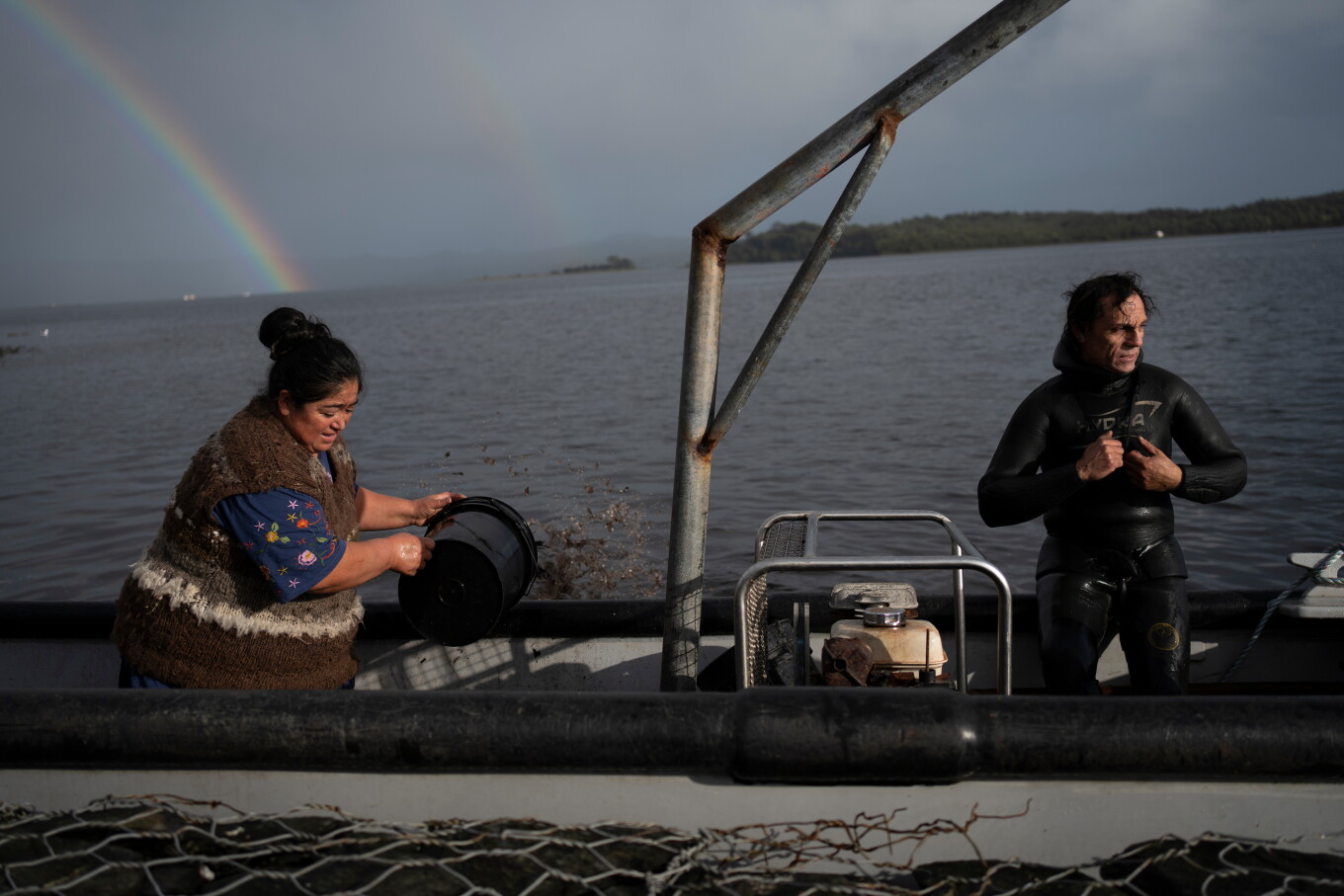
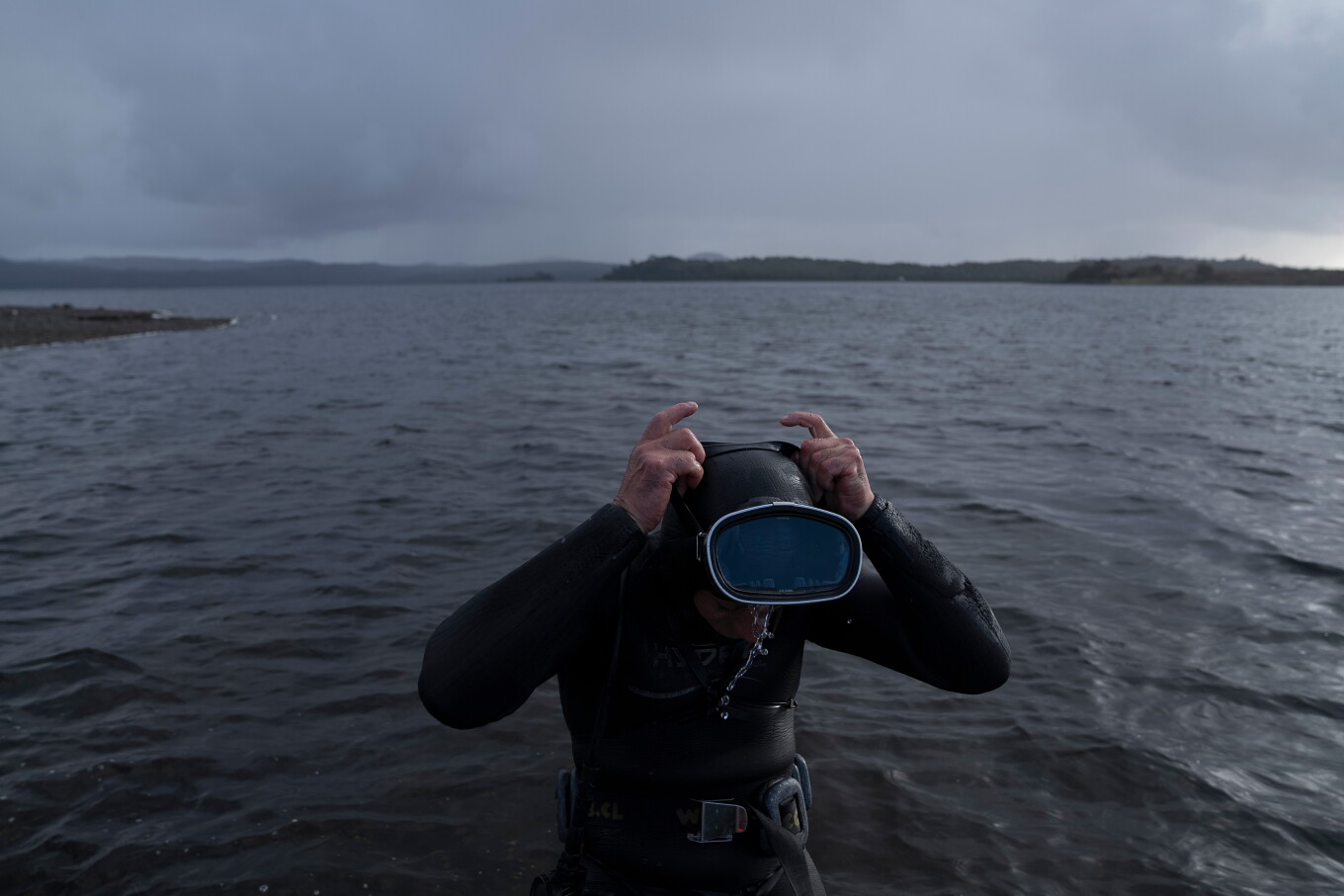
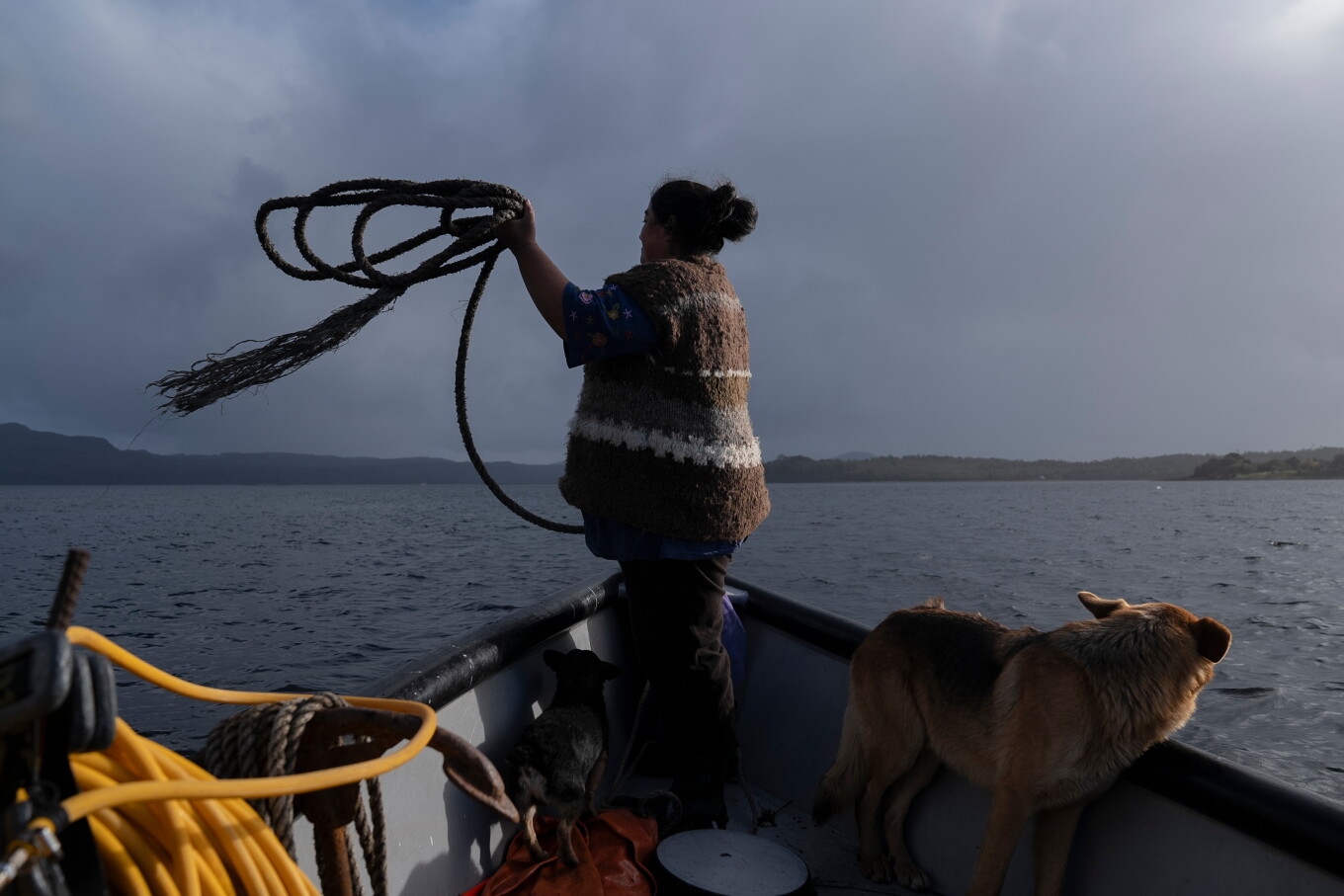
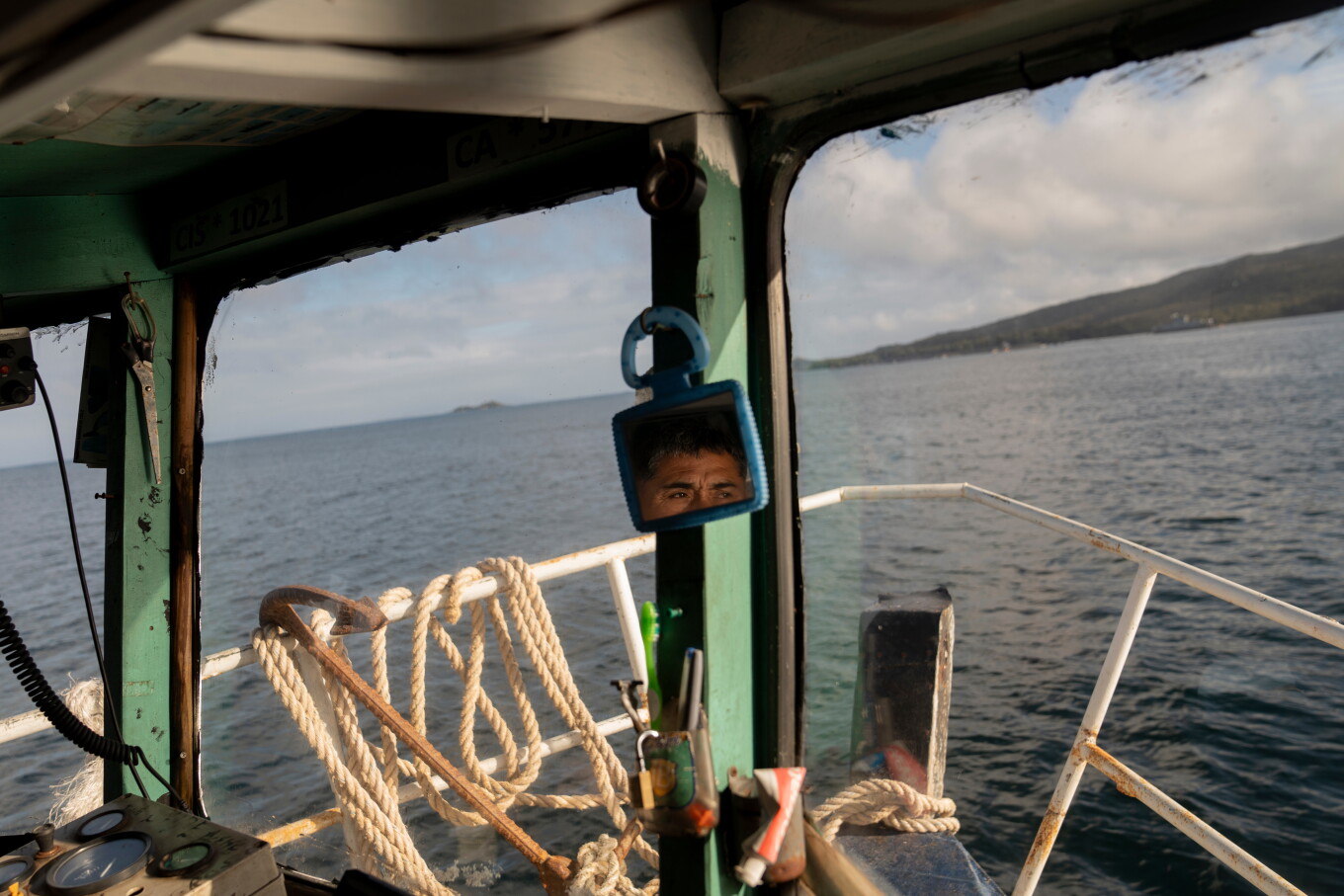
智利埃莱娜·巴索·梅林卡 — 耶西卡·法比亚娜·莱维南科驾驶着小木船,她的伴侣保罗·维拉·佩雷斯潜入智利南部海岸外冰冷的海水中。
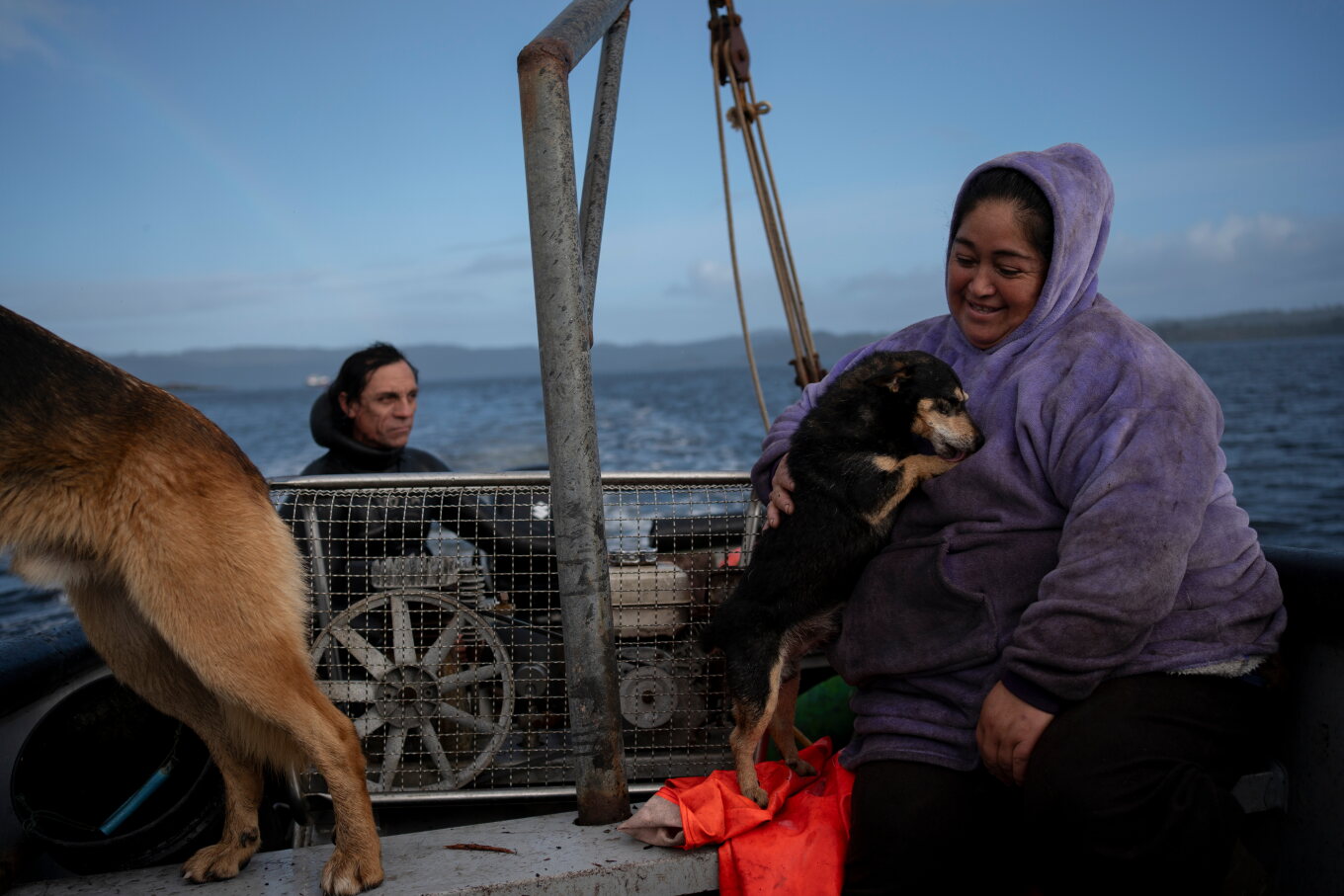
ELENA BASSO MELINKA, Chile — Yesica Fabiana Leviñanco steers her small wooden boat while her partner, Paulo Vera Perez, dives into the cold ocean waters off the coast of southern Chile.
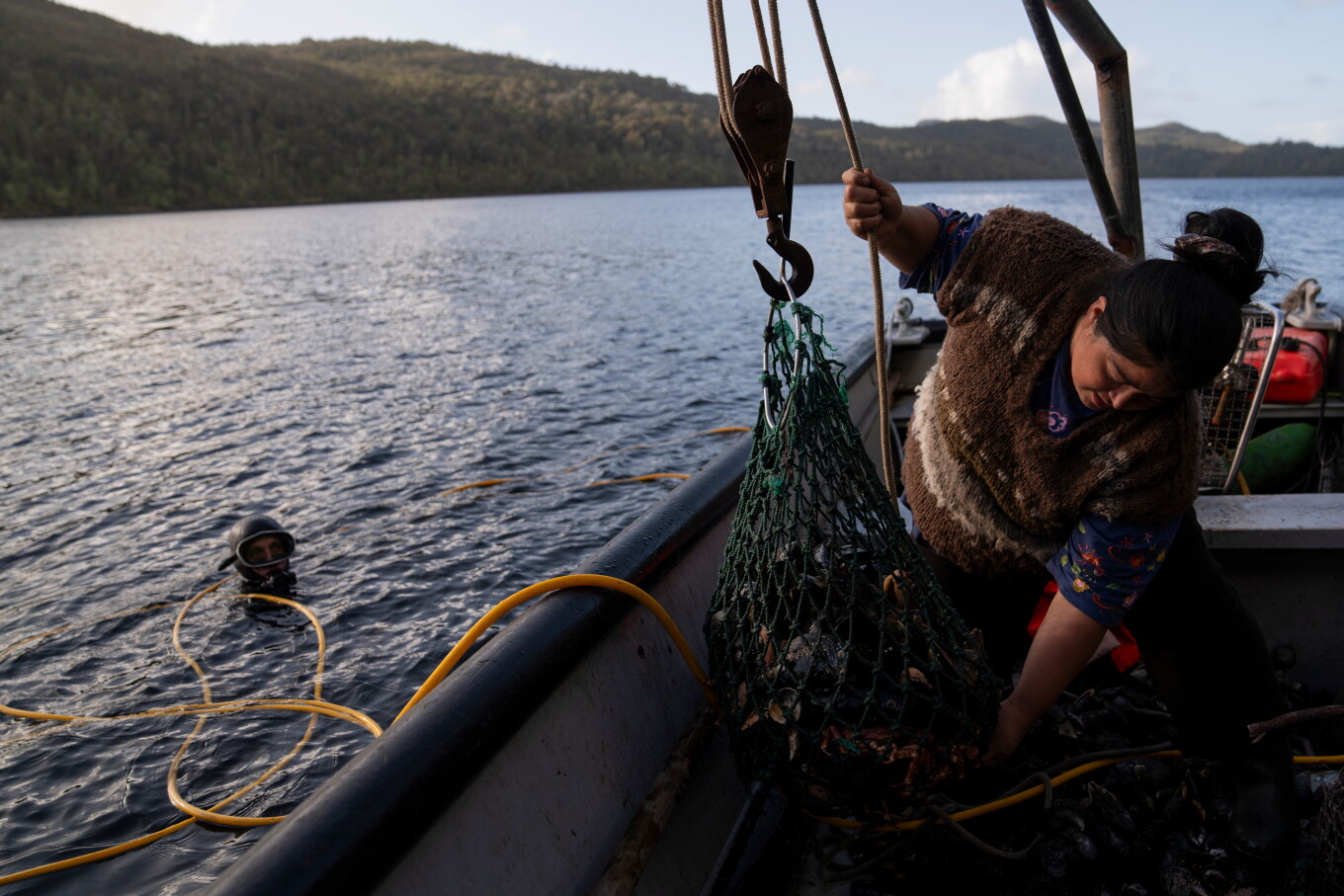
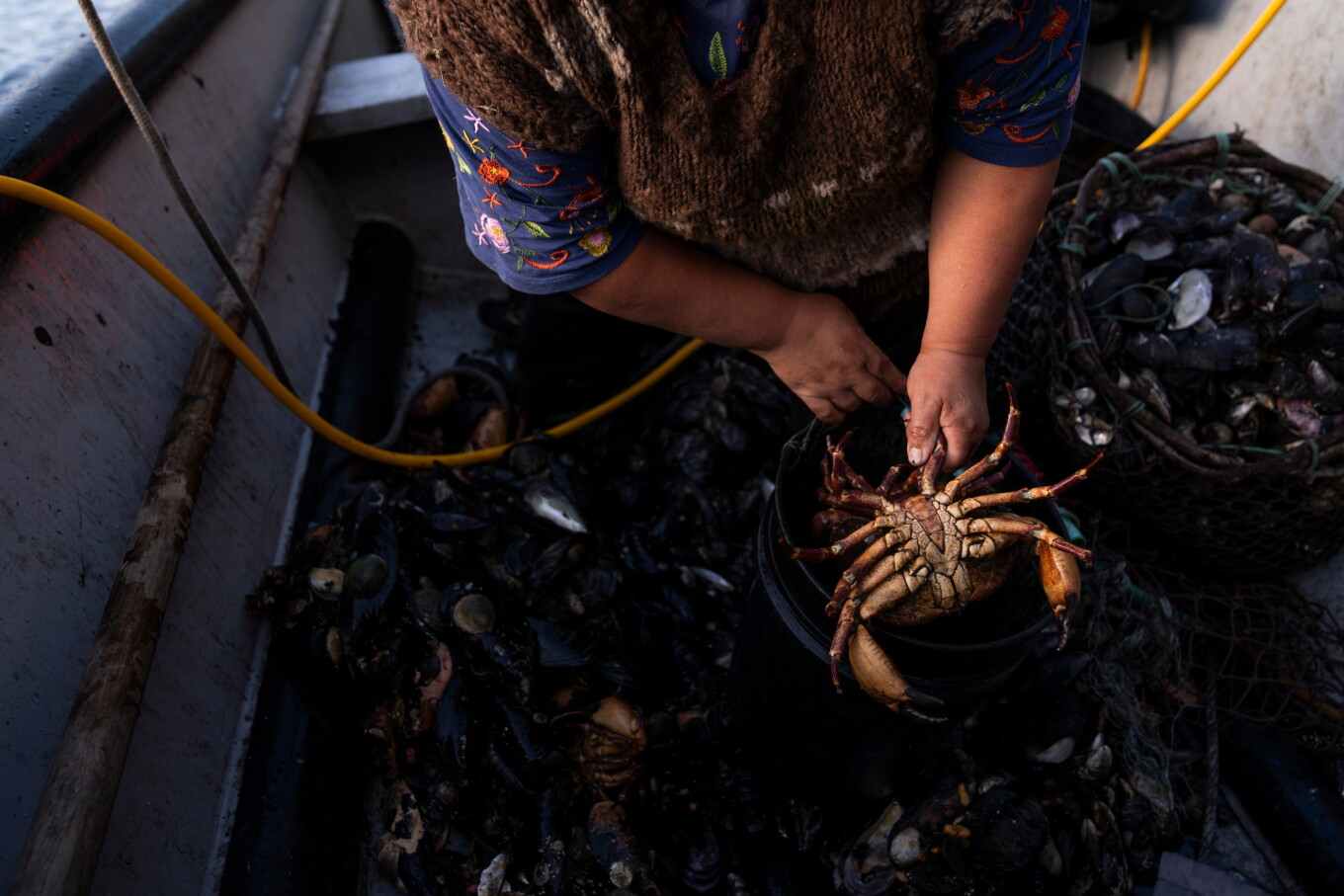
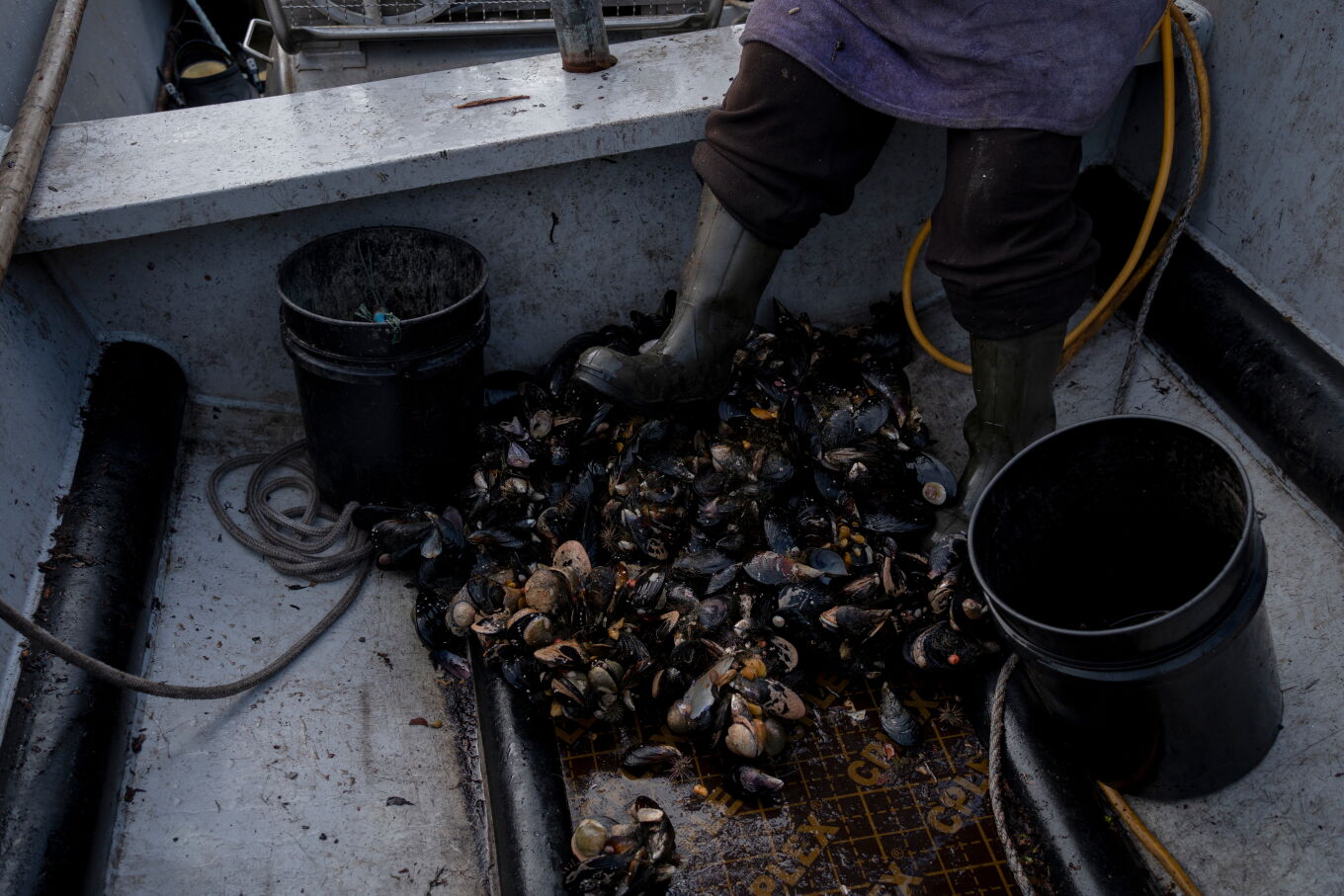
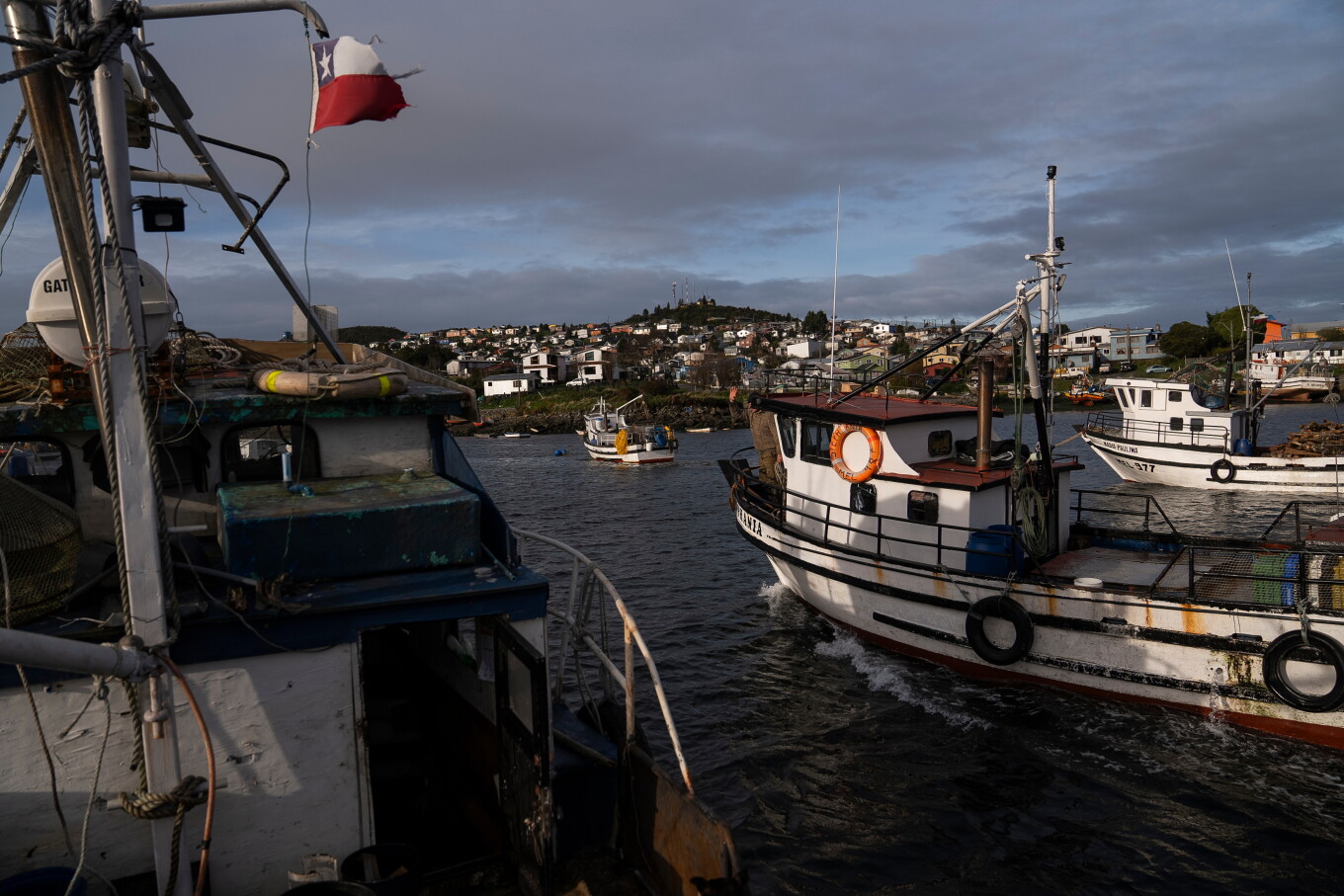
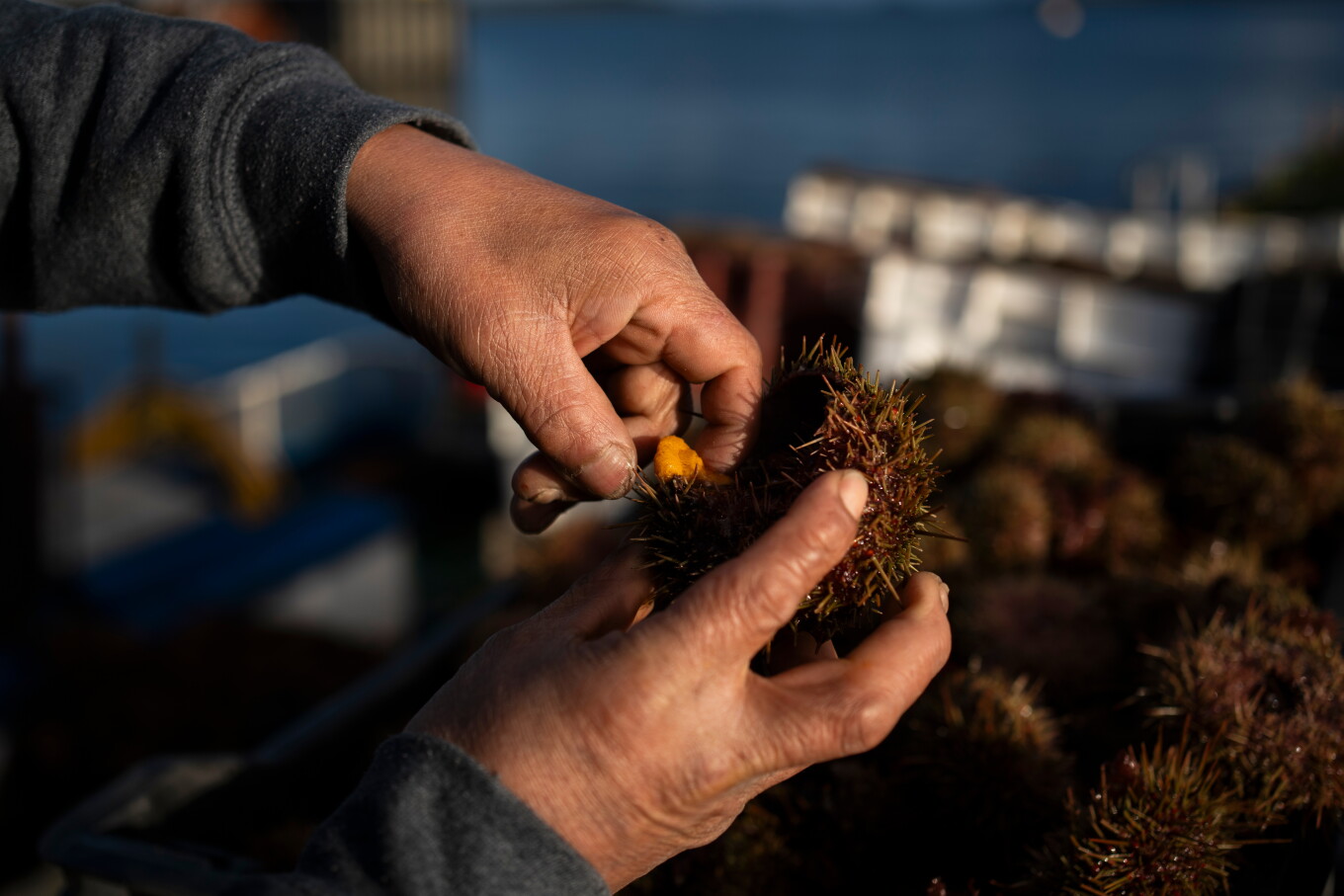
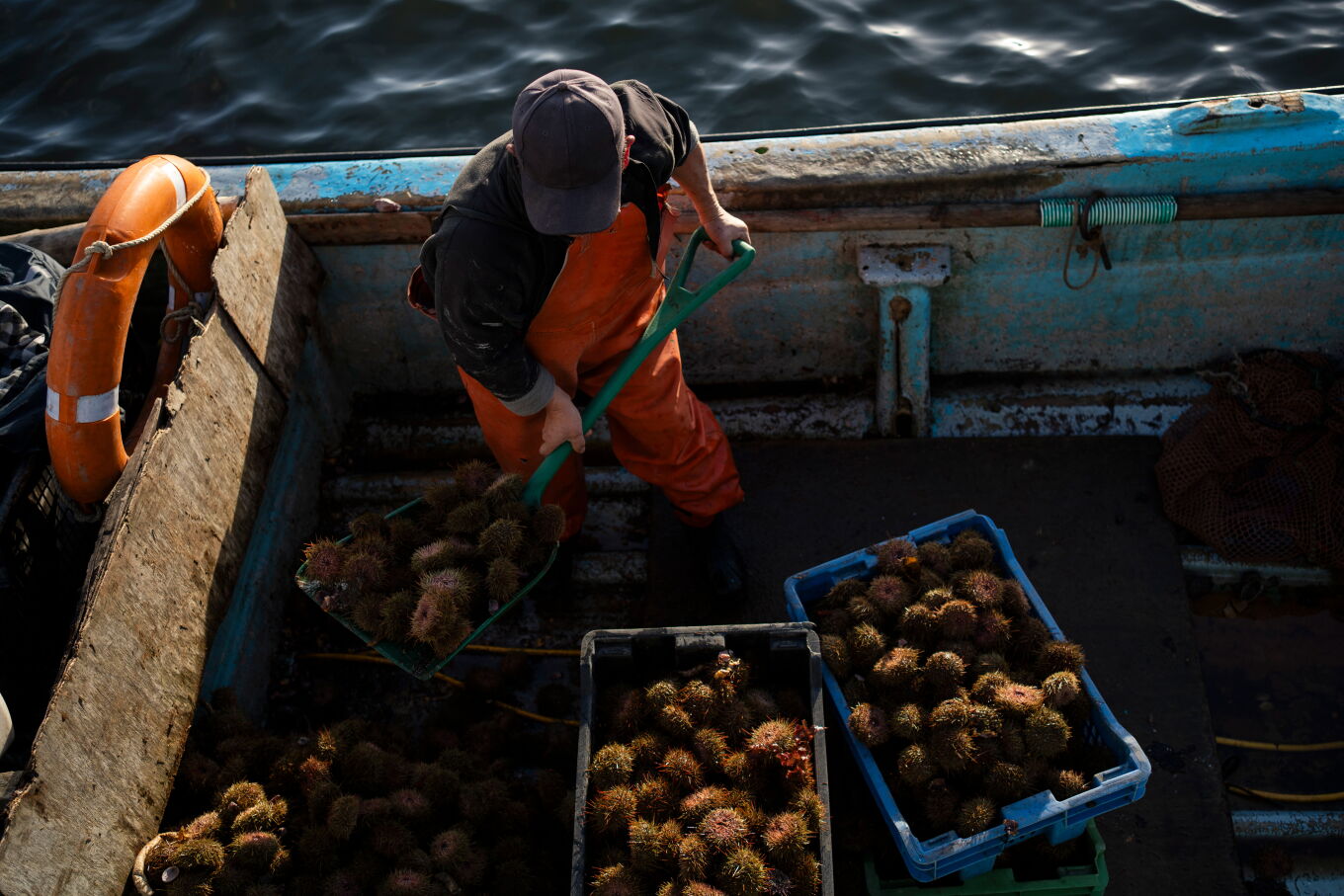
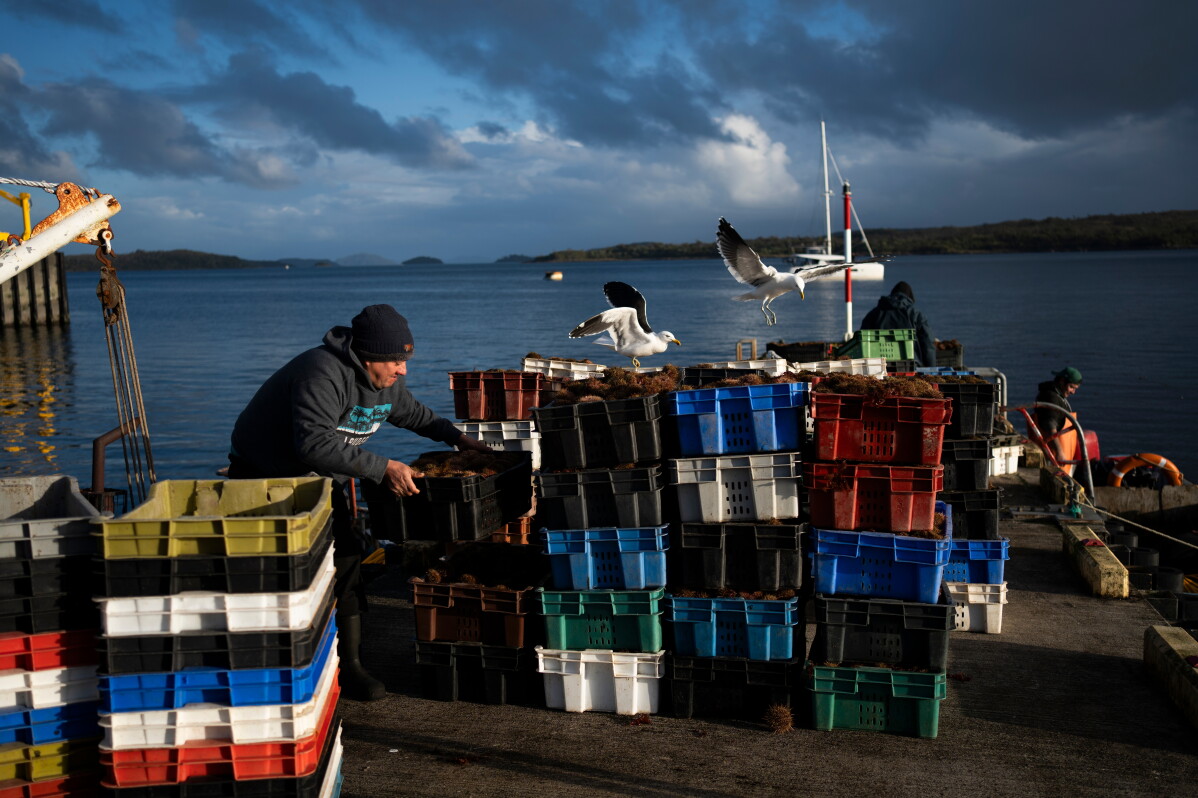
几小时内,这对均年过四十的夫妇便将船装满了贝类、海胆、贻贝和螃蟹,莱维南科将把它们在瓜伊特卡斯群岛主岛梅林卡的市场上出售。即便是几年前,这样的收获也是不可想象的。
Within a few hours the couple, both in their mid-40s, has filled the boat with shellfish, sea urchins, mussels and crabs that Leviñanco will sell at the market in Melinka, the main island in the Guaitecas Archipelago. Even a few years ago, such a haul would have been unthinkable.
“看着今天的景象似乎难以置信,但多年来这整片海域都是死海,”莱维南科说。“没有鸟类、鱼类或海洋动物。一个养殖三文鱼的设施毁了一切。” 编者注:本报道得到欧洲新闻基金的支持。
“It seems incredible looking at it today, but for years the sea throughout this area was dead,” said Leviñanco. “There were no birds, fish or marine animals. A salmon-farming facility had destroyed everything.”EDITORS’ NOTE: This story was supported by Journalismfund Europe.
瓜伊特卡斯群岛由40多个小岛组成,是通往智利巴塔哥尼亚地区的门户,也是世界上最偏远的地方之一。尽管它是一个国家保护区,但这里也栖息着众多三文鱼养殖场,每年向大海排放数百吨化学品和抗生素。
Made up of more than 40 small islands, the Guaitecas Archipelago is a gateway to Chile’s Patagonia region that is one of the world’s most remote places. Despite being a national reserve, it’s also home to numerous salmon farms that discharge hundreds of tons of chemicals and antibiotics into the sea every year.
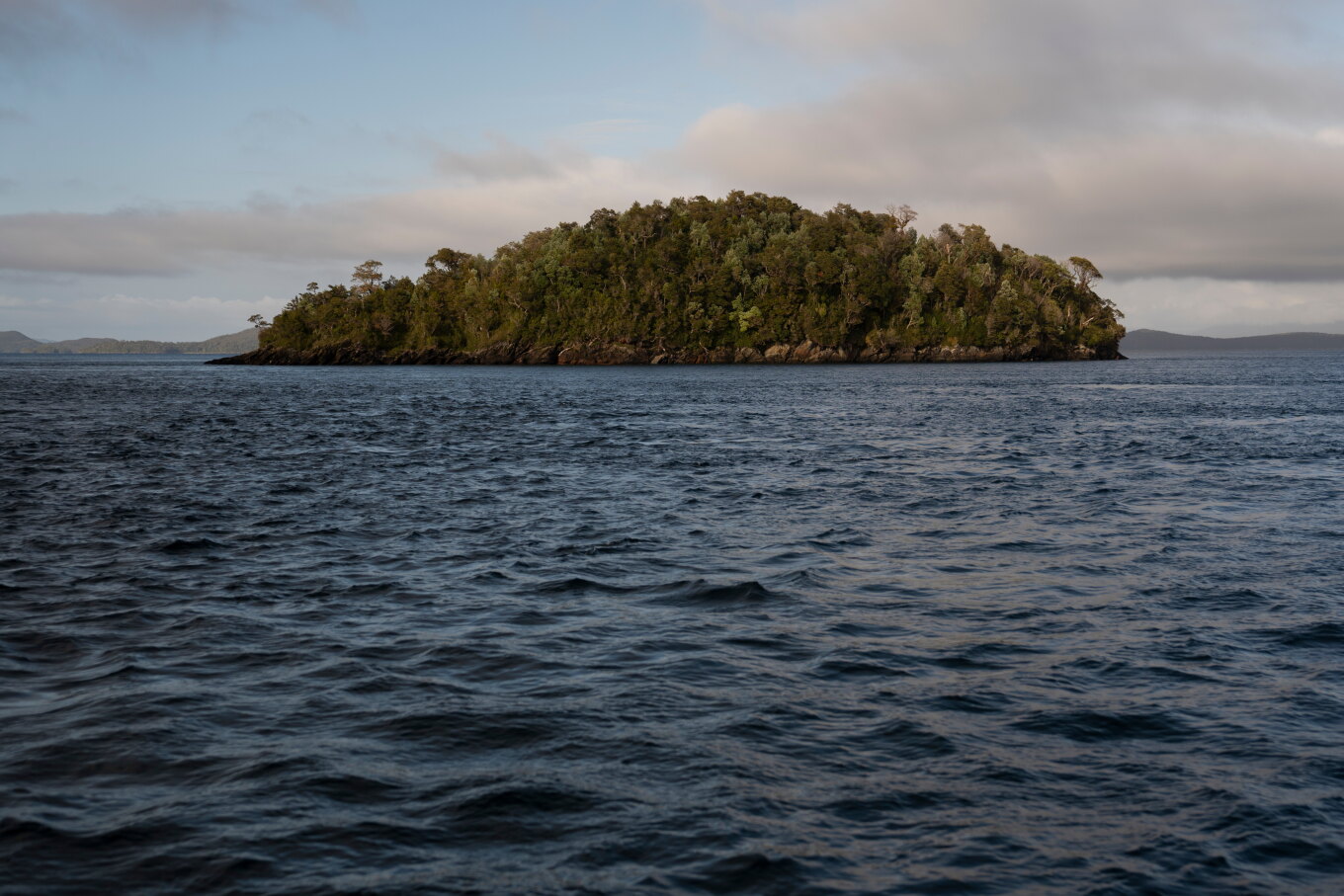
据智利国家渔业和水产养殖局(简称Sernapesca)称,群岛内至少有313个三文鱼养殖场获批运营。
At least 313 salmon farms were authorized in the archipelago, according to Chile’s National Fisheries and Aquaculture Service, called Sernapesca.
莱维南科和维拉·佩雷斯表示,高强度养殖破坏了他们的渔场,因此他们决定设法扭转这一局面。他们开始从其他地区引进健康的贻贝和蛤蜊。亲朋好友都觉得他们疯了,但多年的努力最终有了回报。“鱼类、鸟类和其他海洋动物都回来了,”莱维南科说。
Leviñanco and Vera Perez say the intensive farming damaged where they fished, so they decided to try to counter that. They started bringing in healthy mussels and clams from other areas. Friends and family thought they were crazy, but over years the work paid off. “The fish, birds and other marine animals came back,” said Leviñanco.
智利是仅次于挪威的世界第二大三文鱼生产国,三文鱼是这个拉美国家仅次于铜的第二大出口产品。据Sernapesca称,2025年智利三文鱼产量超过100万吨。
Chile is the world’s second-largest salmon producer after Norway, and the fish is the Latin American country’s second-most exported product, after copper. In 2025, over 1 million tonnes were produced in the country, according to Sernapesca.
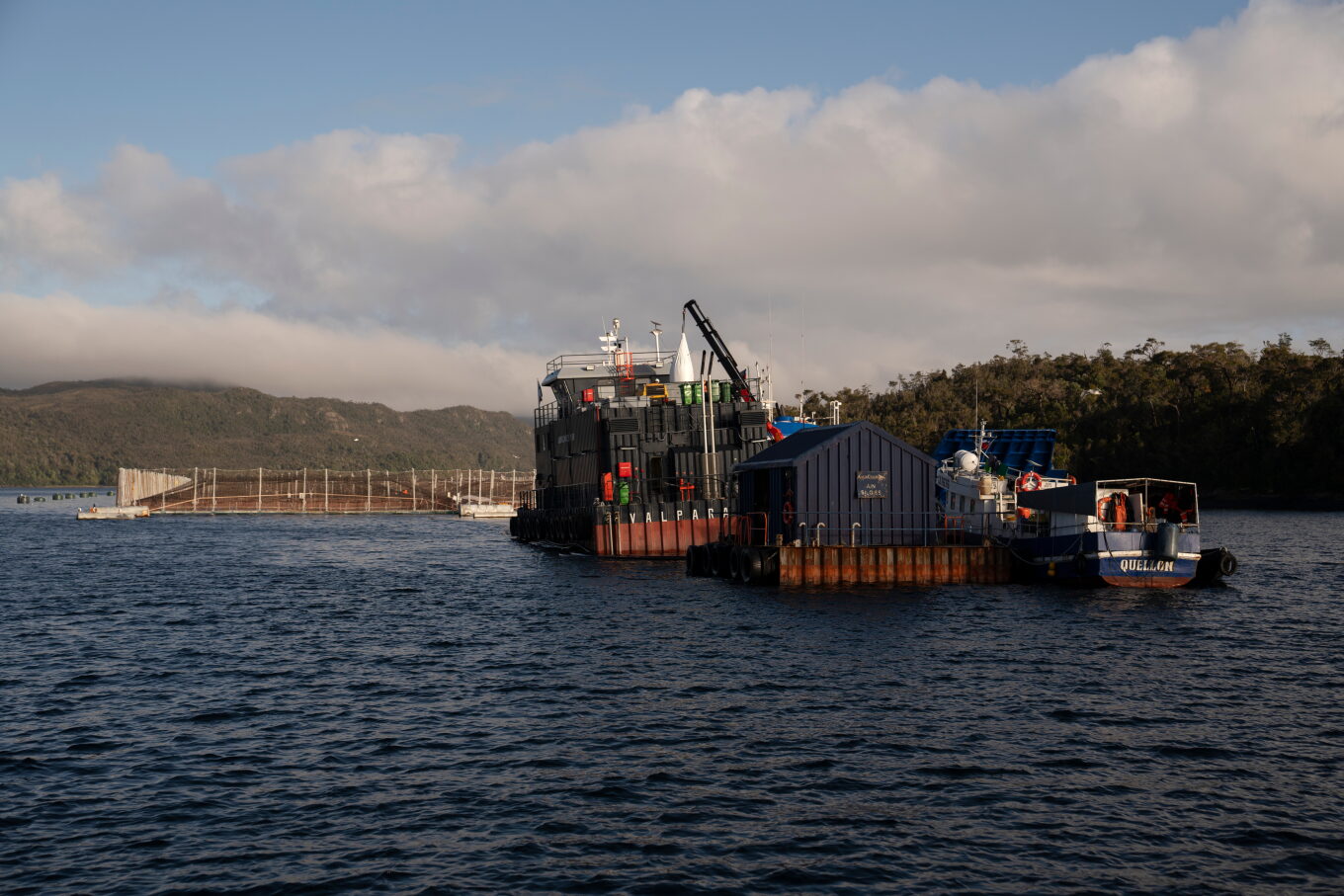
三文鱼并非智利水域的原生物种。这种鱼最早于1970年代和1980年代从挪威引入,当时正值奥古斯托·皮诺切特将军的独裁统治时期。
Salmon is not native to Chilean waters. The fish was first imported from Norway in the 1970s and 1980s, during the dictatorship of Gen. Augusto Pinochet.
多年来,智利的集约化鲑鱼养殖一直受到科学家、环保倡导组织、渔民、原住民社区和当地居民的批评。他们指责该行业在养殖场使用大量化学品,污染海洋,不尊重原住民社区的权利,并违反工作场所安全规定。根据智利非营利组织“生态海洋”提供的数据,自2013年以来,该行业已有90名工人死亡。致命事故包括工人在清理网具时被缠住,以及该区域船只发生沉船事故。
For years, intensive salmon farming in Chile has been criticized by scientists, environmental advocacy groups, fishers, Indigenous communities and local residents, who accuse the industry of polluting the sea because of the large quantities of chemicals used at the farms, failing to respect the rights of Indigenous communities and breaching workplace safety regulations. According to figures provided by the Chilean nonprofit Ecoceanos, 90 workers have died in the industry since 2013. Fatal accidents range from workers getting entangled while cleaning nets to shipwrecks among vessels in the area. The Guaitecas Archipelago is the largest nature reserve in the country and one of the oldest, having been established in 1938, and has many endangered marine species.
瓜伊特卡斯群岛是该国最大的自然保护区,也是最古老的保护区之一,建于1938年,拥有许多濒危海洋物种。
Many locals and scientists say that salmon farms have severely damaged multiple marine areas, leaving parts of the seabed with oxygen levels so low that other forms of life struggle to survive.
许多当地人和科学家表示,鲑鱼养殖场严重破坏了多个海域,导致部分海床的氧气含量低到其他生命形式难以生存。他们称这些区域为“死亡区”。莱维南科一生捕鱼并帮助恢复的一处海域就是其中之一。
They describe these areas as “dead.”One such area is where Leviñanco has fished throughout her life and which she helped to restore. “Intensive salmon farming can have various impacts on marine ecosystems. Pollution can result both from the accumulation of organic matter and from the use of chemicals,” said Catalina Sapag, a marine biologist and scientific area coordinator at the nonprofit Oceana in Chile.
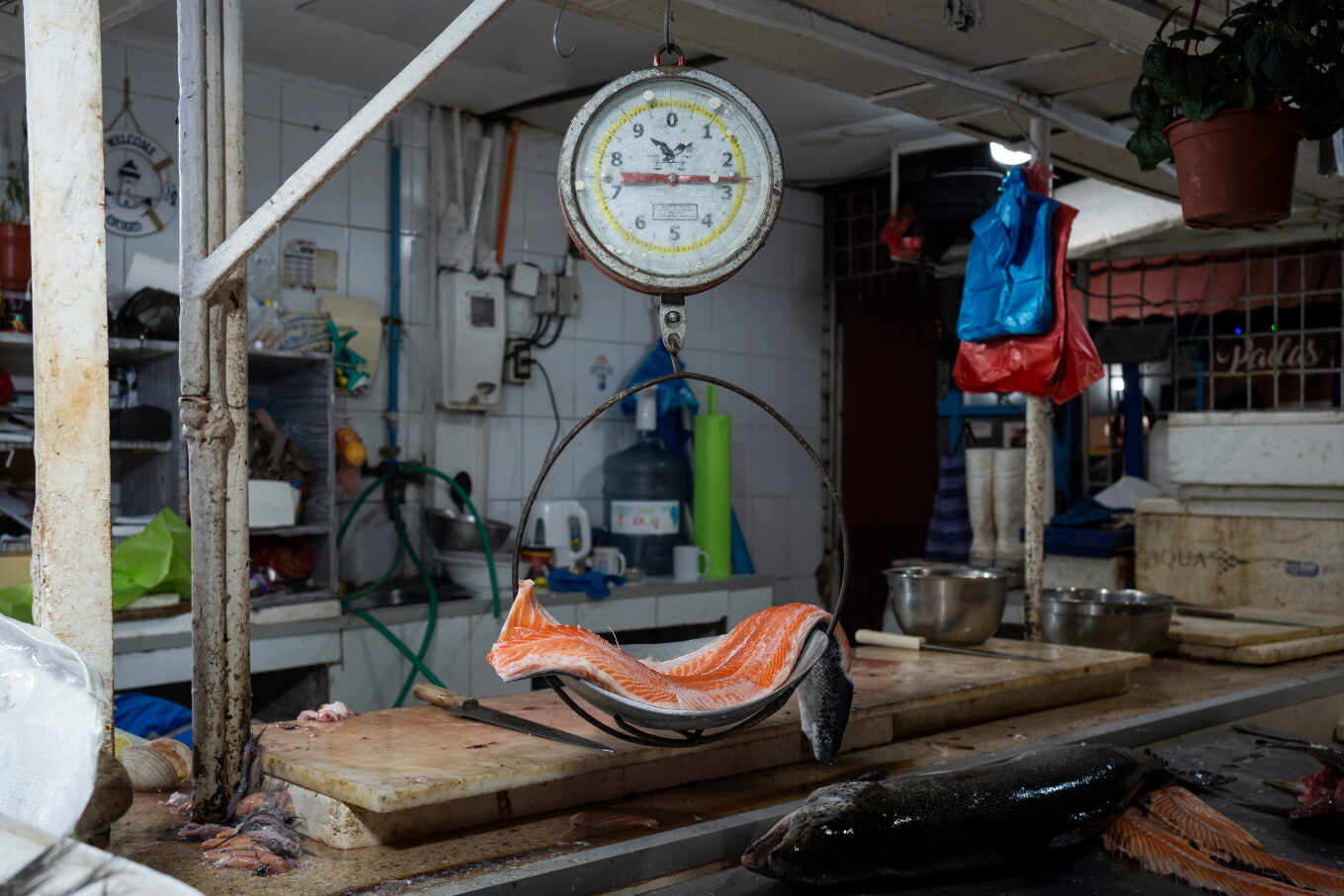
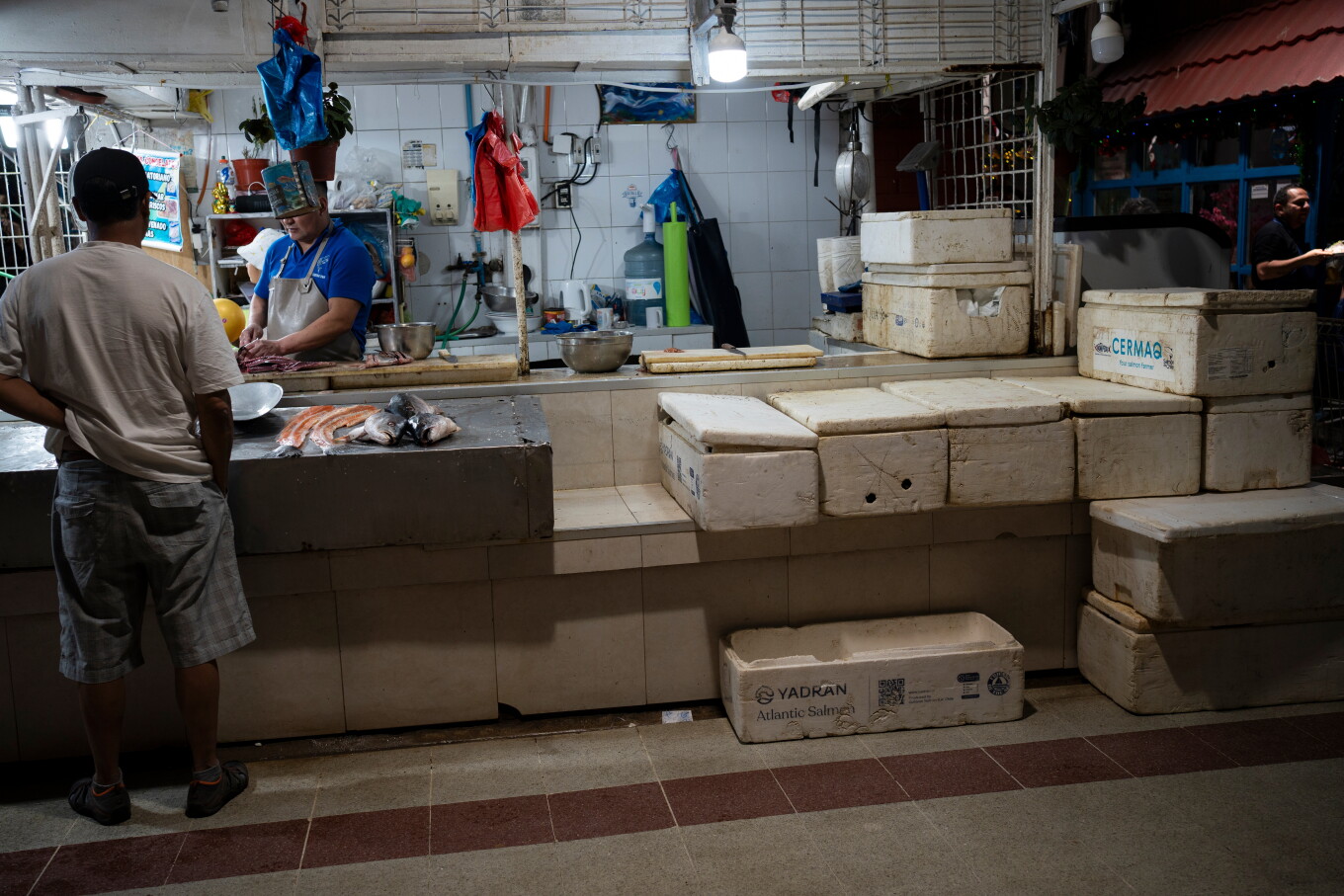
“集约化鲑鱼养殖会对海洋生态系统产生各种影响。污染既可能来自有机物的积累,也可能来自化学品的使用,”海洋生物学家、智利非营利组织“大洋洲”科学领域协调员卡塔利娜·萨帕格说。
Despite opposition, particularly in the south of the country, there is strong support for the salmon industry, as it generates many jobs.
尽管遭到反对,尤其是在该国南部,但鲑鱼产业仍获得强力支持,因为它创造了许多就业机会。
SalmonChile, a trade association representing many farming companies, argues that the decline in fish stocks can’t be attributed just to salmon farming.
代表许多养殖公司的行业协会“智利鲑鱼”认为,鱼类资源下降不能仅归咎于鲑鱼养殖。
“It may be due to various factors, such as climate change, changes in water temperature, illegal fishing, overexploitation of resources and the introduction of non-native species for recreational fishing. The industry therefore represents only one of the factors at play,” the association said in a statement.
“这可能由多种因素造成,例如气候变化、水温变化、非法捕鱼、资源过度开发以及为休闲垂钓引入非本地物种。因此,该行业只是起作用的原因之一,”该协会在一份声明中表示。
The United States accounts for 40% of Chile’s salmon exports ($2.6 billion), followed by Japan with 17% (just over $1 billion) and Brazil with 13% ($796 million), according to figures from SalmonChile.
根据SalmonChile的数据,美国占智利鲑鱼出口的40%(26亿美元),其次是日本占17%(略高于10亿美元)和巴西占13%(7.96亿美元)。
Chilean fishers claim that pollution caused by salmon-farming facilities is significantly reducing the abundance of fish and shellfish in the sea.
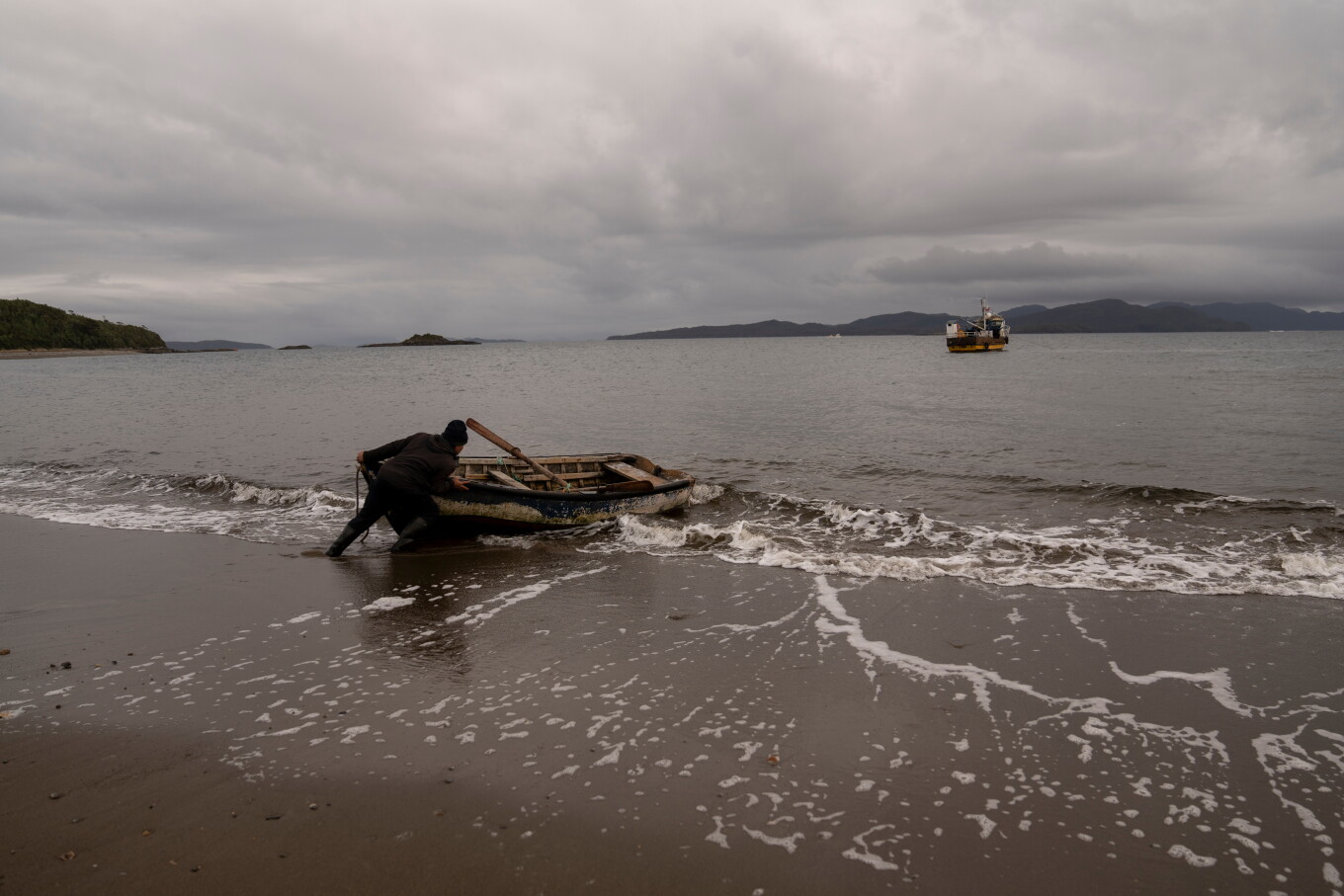
智利渔民声称,鲑鱼养殖设施造成的污染正在大幅减少海中鱼类和贝类的数量。在提出这些担忧的人中,声音最响亮的人物之一就住在梅林卡。
One of the most vocal figures to have raised these concerns lives in Melinka. His name is Daniel Arturo Caniullan Huentel.
他名叫丹尼尔·阿图罗·卡尼乌兰·温特尔,52岁,已从事潜水员工作35年,是梅林卡马普切普瓦皮原住民社区的祖传权威。
He is 52 years old, has worked as a diver for 35 years and is an ancestral authority of the Indigenous Mapuche Pu Wapi community in Melinka.
“海床曾经生机勃勃,到处都是色彩和动物。如今完全不同了,”卡尼乌兰·温特尔说。“色彩已经褪去,许多物种已经消失,以前不存在的生物却出现了。每当新建一个鲑鱼养殖设施,我们就看到影响在加剧。”马普切社区正推动依据《拉夫肯切法》保护该区域水域。这部2008年通过的法律允许原住民社区保护海洋和沿海区域,并与国家机构共同管理,前提是他们能够证明其社区在那里从事祖传活动。
“The seabed was teeming with life, with colors and animals everywhere. Today it is completely different,” said Caniullan Huentel. “The colors have faded, many species have disappeared and organisms that did not exist before have appeared. Every time a new salmon-farming facility was installed, we saw the impacts increase.”The Mapuche community is pushing to protect the area’s waters under Ley Lafkenche, a law passed in 2008 that allows Indigenous communities to protect marine and coastal areas and manage them jointly with state institutions, provided they can demonstrate that their community carries out ancestral practices there. The arrangement does not grant Indigenous peoples ownership of the sea or seabed, but protects the area’s ancestral uses, including fishing, shellfish and seaweed gathering, as well as access to sacred sites and areas used for navigation.
这一安排并不授予原住民对海洋或海床的所有权,但保护该区域的祖传用途,包括捕鱼、采集贝类和海藻,以及进入圣地和航行所用区域。
Once a community applies to manage an area, the state can no longer authorize new concessions — such as those for salmon-farming facilities — within it.
一旦某个社区申请管理某一区域,国家就不能再在该区域内批准新的特许权——例如鲑鱼养殖设施的特许权。
In 2013, the state approved an application by Caniullan Huentel’s community covering 8,000 hectares (19,800 acres).
2013年,国家批准了卡尼乌兰·温特尔所在社区提出的8000公顷(19800英亩)申请。2017年,智利政府拒绝了该社区追加8000公顷(19800英亩)的申请;2024年,又拒绝了另一项要求35万公顷(86.5万英亩)的申请。去年3月,该社区提交了一份面积更小的新申请,为3000公顷(7400英亩),目前正等待答复。
In 2017, the Chilean state rejected an application by Caniullan Huentel’s community for an additional 8,000 hectares (19,800 acres), and in 2024 it rejected another one that requested 350,000 hectares (865,000 acres). Last March, the community submitted an application for a further, smaller area of 3,000 hectares (7,400 acres), and they are now awaiting a response. “This struggle is not just about us,” said Caniullan Huentel.
“这场斗争不仅仅关乎我们,”卡尼乌兰·温特尔说,“它关乎海洋的未来、小型渔业以及子孙后代。如果我们今天不捍卫这些领地,明天我们就有可能永久失去一笔巨大的自然和文化遗产。”
“It is about the future of the sea, small-scale fishing and generations to come. If we do not defend these territories today, tomorrow we risk permanently losing an immense natural and cultural heritage.”