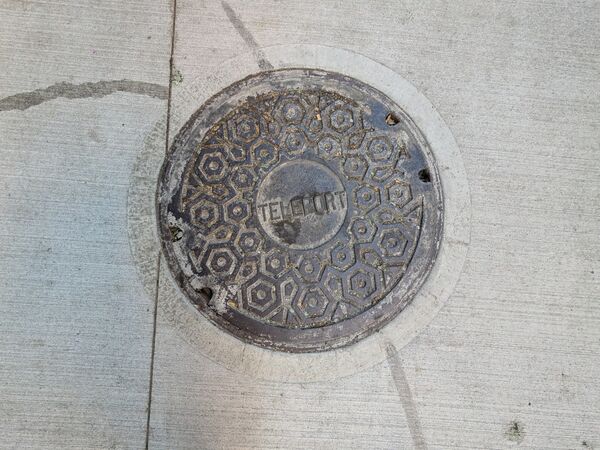
当英格丽德·伯林顿走在纽约市的街道上时,她会注意到别人可能忽略的东西。比如布鲁克林一条侧街上的一块井盖,上面赫然标着“TELEPORT”(传送点)。
When Ingrid Burrington walks the streets of New York City, she notices things others might overlook. Like a manhole cover on a Brooklyn side street, tantalizingly labeled “TELEPORT.”
“这真是个古怪的小惊喜,”住在布鲁克林的作家兼艺术家伯林顿说。“就像,如果我站在这上面,我就会被带到另一个地方。”不幸的是,你并不会,除非你把维基百科上“AT&T历史”的页面也算上。Teleport是Teleport Communications Group的缩写,这是一家控股公司,代表的是20世纪80年代在斯塔滕岛建造的一座数字通信设施,该公司在90年代被AT&T收购。印有它名字的这块井盖并不是通往幻想维度的入口,而是通往我们脚下嗡嗡运转的公用设施冥界的入口。
“ It’s such a weird little treat,” says Burrington, a writer and artist based in Brooklyn. “Like, if I stand on this, I’m gonna get taken to another place.”Unfortunately, you’re not, unless you count the Wikipedia page for “History of AT&T.”Teleport is short for Teleport Communications Group, a holding company for a digital communications facility built in Staten Island in the 1980s, which was acquired by AT&T in the ’90s. The manhole cover that bears its name isn’t a portal to a fantasy dimension but to the netherworld of utilities humming beneath our feet.
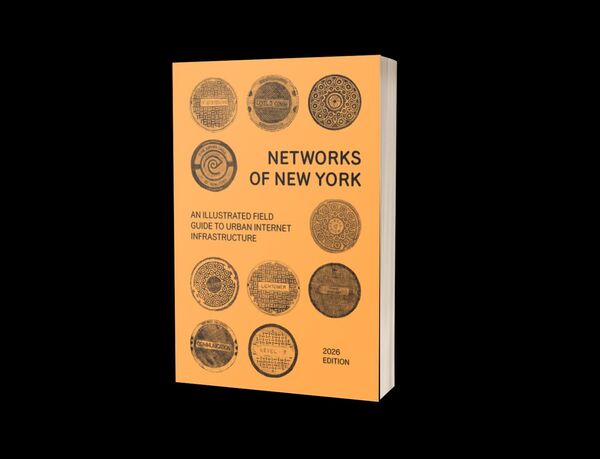
伯林顿是电线、电缆、机箱、集线器、电表、传感器和节点的热心记录者,这些设施将庞大而无形的互联网与我们家中非常真实的手机和电脑连接起来,并进而与我们的头脑相连。她关于纽约市互联网基础设施的实地指南于2016年出版,当时人工智能末日场景还让人觉得像科幻小说,数据中心默默无闻。十年后,伯林顿针对已经转变的技术时代重新审视并修订了这本书,请人们重新留意互联网——同时承认其中的讽刺意味:在2026年,“互联网如今在这座城市的公共空间里让自己过于清晰可见,而且是以一些最糟糕的形式。”
Burrington is an avid chronicler of the wires, cables, boxes, hubs, meters, sensors and nodes that connect the vast amorphous internet to the very real phones and computers in our homes, and by extension, to our brains. Her field guide to the internet infrastructure of New York City, was published in 2016, a time when AI doomsday scenarios still felt like science fiction and data centers lived in obscurity. A decade later, Burrington has revisited and revised the book for a transformed technological age, asking people to notice the internet anew — while acknowledging the irony that, in 2026, “the internet makes itself all too legible in the city’s public spaces now, in some of its worst forms.”
对伯林顿来说,停下来思考数字通信的实物痕迹是值得的——从用螺栓固定在电线杆上的光纤分配箱,到屋顶上的手机信号塔天线——因为它们的存在“提醒我,虽然互联网在时间推移中被造成了某种样子,但它事实上曾经可以、也确实本可以以不同方式被建造,”她写道。“也许它仍然可以被造成不同的样子。”为帮助推广这本书,伯林顿一直在纽约各地举行“互联网漫步”活动;她将于11月8日在布鲁克林红钩区的先锋工厂再举行一场。我们的对话经过编辑和精简。
To Burrington, it’s worth it to stop and consider the artifacts of digital communication — from fiber distribution boxes bolted to telephone poles to cell tower antennas on rooftops — because their presence “reminds me that while the internet has been made a certain way over time, it was in fact and could have been made differently,” she writes. “Maybe it still can be made differently.”To help promote the book, Burrington has been holding “Internet Walks” around New York; she’s holding another one on Nov. 8, at Pioneer Works in Red Hook, Brooklyn. Our conversation has been edited and condensed.
我想知道,你是否可以先带我回到2016年,也就是你首次出版这本书的时候。你当时想回答什么问题?你是否觉得人们需要被提醒,互联网正以不同的方式塑造他们的物理现实?
I’m wondering if you could start by taking me back to 2016, when you first published this book. What question were you trying to answer? Did it feel like people needed to be alerted to the ways that the internet was shaping their physical reality in a different way?
对我来说,这项工作很大一部分真正开始于2013年前后。当时大量爱德华·斯诺登关于美国国家安全局的报道接连出现,围绕政府监控有很多喧嚷,而所有与这些报道相关的图像都是那些令人费解的PowerPoint图表,以及一个穿连帽衫的人打字的库存照片。网络罪犯。
A lot of this work really started for me around 2013. A lot of the Edward Snowden NSA stories were dropping, and there was a lot of hubbub around government surveillance, and all of the imagery associated with those stories were these inscrutable PowerPoint graphics and stock photos of, like, a guy in a hoodie typing. The cyber criminal.
非常诡异,像《黑客帝国》里的场景,又像旋转画那种东西。我当时强烈地感觉到:我不太清楚互联网到底长什么样,但我觉得它肯定不长这样。
Very spooky, Matrix, spin-art-type thing. And I had this strong sense of: I don’t quite know what the internet looks like, but I don’t think it looks like this.
我最初更感兴趣的是国防承包与互联网基础设施之间的相互交织。北弗吉尼亚走廊之所以在那里,自有其原因。我对那些平淡无奇的办公园区着迷不已,一边是数据中心,另一边就是诺斯罗普·格鲁曼公司。
I initially was more interested in that interplay of defense contracting and internet infrastructure. Because the Northern Virginia corridor is where it is for a reason. I was really fascinated by these banal office parks that were like, data center on one side, Northrop Grumman on the other.
与互联网共存的许多层面,似乎都是在没有任何人参与的情况下决定下来的。就像在说:“哦,这是复杂的技术,你们不懂,这有点遥远,发生在别的地方。”要么你不需要操心,要么你根本绕不过去,太庞大了。这本书是一种将其“个人化”的方式。
A lot of aspects of living with the internet seem to have been decided without anyone’s input. It’s like, “Oh, this is complicated technology and you don’t understand, and this is kind of distant and happens somewhere else.”And either you don’t need to worry about it or you can’t wrap your head around it. It’s too big.
是啊,把它带到人类可感知的尺度。能认出一根光缆沿着这条街铺设,并不意味着你能改变光缆的走向。但我认为,将其识别为城市肌理的一部分——同时也承认,如果没有公共空间和公共通行权的可用性,这么多东西根本不可能实现——这很重要。互联网是一个大规模的私有公共空间。
The book is a way of personalizing it. Yeah, bringing it to a human scale. Being able to identify a cable running down this street doesn’t mean that you’re going to change the trajectory of the cable. But I think the recognition of it as one part of the urban fabric — and also acknowledging that so much of this stuff isn’t possible without the availability of access to public space and public right of way.
这关联到我们现在看到的一些问题:公司是否应该被允许在郊区建设巨大的数据中心。十年后,你承认现在是个奇怪的时刻,要在纽约市重申科技与公共空间的这些碰撞,因为正如你所写,“网络氛围不仅在城市中无处不在,而且恶臭熏天。”那么,为什么要把我们的注意力拉回到这里?
The internet is this massive privately owned public space. That connects to some of the questions we’re now seeing about whether companies should be allowed to build huge data centers in the suburbs. Ten years later, you acknowledge that it’s a weird time to be highlighting these collisions between technology and public space in New York City, where, as you write, “online vibes are not only omnipresent in the city, but also rancid.”
坦白说,部分原因仅仅是这本书已经绝版了。多年来,我一直想重新回到这本书,把它做成我从一开始就希望它成为的样子。但另一个觉得重访这本书是个好时机的原因是,随着数据中心话题的讨论变得更加激烈,有人问我:“你想和我们聊聊‘互联网的物质性’吗?”说“在我眼里,数据中心在其他人之前就已经是坏东西了”,这感觉非常怪。在这方面走在前面没有任何好处。但你或许比其他人更早注意到了它们。
So why bring our attention back here? Some of it, to be quite candid, was simply the book went out of print. Over the years, I’d kind of been like, it’d be nice to come back to this, make it the way I wanted it to be from very early on. But another reason that it seemed like a good time to revisit was, as data center discourse got a lot more heated, I had people asking, “Would you like to talk with us about ‘materiality of internet’?”It’s very weird to be like, “I thought data centers were bad before everyone else.”There’s no win in being early on this.
当然。目前正在进行一种近乎“算力的道德经济学”探讨——我们到底在用所有的算力做什么,这算不算社会契约的一部分?
But you noticed them perhaps before everyone else. Certainly.
特别是在2010年代后期加密货币经历大泡沫的时候,我认为公众开始稍微更清晰地意识到,算力被用在了并不真正服务于公共利益的事情上,而且它的使用实际上正在挤占其他资源。加密货币成为了人们愤怒的一个更容易的靶子,因为你简直就是在用汽油凭空制造“空气币”。但我认为目前公众对这些事物的关注是相似的。这种感受非常直观。而且可能会变得更加棘手,因为有一种感觉,也许这一次会不一样。AI或许拥有稍多一点的效用。
There’s something about almost, like, a moral economy of computing that’s underway right now of — what are we using all of the compute power for, and is that part of the social contract? Especially when crypto had a big bubble moment in the later 2010s, I think the public understanding that compute was being used for stuff that did not really serve a public interest, and its use was in fact taxing other resources, was starting to become a bit more legible. Crypto was a much easier target for people to be mad at, because you’re just literally making funny money out of gasoline. But the current engagement with this stuff I think has been similar. It’s very visceral. And it can get more fraught, because there is some sense that perhaps this one will be different.
数据中心是互联网一个非常显眼的物质化表现。它们巨大、具有破坏性,人们能看见它们、触摸到它们。这是否让它们成为了一个更好的“反派”,或是AI反对者可以围绕组织起来的有用象征?
That AI may have slightly more utility. Data centers are a very glaring physical manifestation of the internet. They are huge, they’re disruptive, people can see them and touch them.
首先,你实际上根本摸不到它们。这些设施周围的安保措施让人头疼。它们是人们能看见的东西,是能激发人们集结的东西,但大多数人进不去。
Does that make them a better villain or a useful symbol for opponents of AI to organize around? Well, first of all, you actually can’t really touch them. The security around these things can be a pain.
我认为数据中心遭遇抵制更多发生在城镇规划会议层面、网络组织或其他类似场合的另一个原因是,试图围绕数据中心举行示威游行的视觉效果太差了。即使你聚集了相当不错的临界规模,100个人站在那栋楼前仍然会显得微不足道。
They are a thing people can see, they are a thing people can be galvanized around, but most people can’t get inside. One of the other reasons I think data center resistance is happening more at the town planning meeting level or in online organizing or in these other environments is, the optics of trying to do a demonstration around a data center are terrible.
我确实认为它们是较为实质性的表现形式之一,而且在某种程度上,人们觉得自己仍然可以对它施加一些干预。比如,你没法让你的老板改变主意,决定大家是否都必须学会使用AI,尽管它并没有带来明显的效率提升。或者,对于我在地铁上还得看多少AI广告,我没有多少发言权。对于华尔街正在发生什么、又创造了哪些奇怪的新型特殊目的实体来在其中转移资金,我也没有多少发言权。但我可以去参加规划会议。
Even if you’ve got a reasonably good critical mass, 100 people in front of that building is still gonna be dwarfed. I do think that they’re one of the more material manifestations, and a thing that people to some extent feel like they can still have some intervention in. Like, you can’t get your boss to change his mind on whether you all have to learn how to use AI even though there’s no clear efficiency gain from it. Or, I don’t have a lot of say about how many more AI ads I have to see on the subway. I don’t have a lot of say over what’s happening on Wall Street and what weird new special-purpose vehicles are being created to move money around in this.
我是说,不是我本人,因为我住在纽约市,那里的数据中心开发通常是在改造现有建筑中进行的,因为你能把超大规模数据中心建在哪儿呢?斯塔滕岛?也许是皇后区?
But I can go to a planning meeting. I mean, not me personally, because I live in New York City, where data center development is generally going to be happening in repurposed existing buildings, because where are you gonna put a hyperscaler? Staten Island?
另一种成为抗议场所的实体技术 manifestation 是Flock摄像头和自动车牌识别系统。你写到纽约市警方使用ALPR的漫长历程。[除了在车辆上使用ALPR摄像头外,纽约警察局还与一家名为Vigilant Solutions的公司签约,以访问其车牌数据库。]在全国各地,人们正在破坏Flock摄像头。鉴于你对之前几十年监控历史的了解,你如何看待当前这一波对ALPR的反弹?
Queens, maybe? The other physical manifestation of technology that has become a site of protest is Flock cameras and automated license plate readers. You write about the long sweep of ALPRs being used by police in New York City. [In addition to using ALPR cameras on vehicles, the NYPD has contracted with a company called Vigilant Solutions to access its license plate database.] Around the country, people are vandalizing Flock cameras. How do you think about this current moment of ALPR backlash given all that you know about the decades of surveillance that have come before it? I often feel like a bit of a pedant telling people like, “Well, actually Flock’s not in New York City because we’ve been doing it longer.”
我常常觉得自己有点像个学究,会跟人说:“其实Flock并不在纽约市,因为我们做这行比他们早。”而且Flock确实存在质的差别,我认为这一点值得坦率说明。主要是他们现在做的远不止车牌识别(ALPR),其次,因为他们是一个网络化的云平台,允许跨辖区共享信息,所以他们作为产品的覆盖范围非常不同。
And there is a qualitative difference to Flock that I think is worth being upfront about. Mainly that they’re doing much more than ALPR at this point, and two, because they are this networked cloud platform that allows cross-sharing of stuff across jurisdictions, their reach as a product is very different. I wonder, to some extent, if there’s also a generational component to it.
我在某种程度上也想知道,这里面是否还有代际因素。纽约市警察局在纽约市的监控体系中,很多东西都是9·11之后的产物。如今有一代成年人,他们对那个时期几乎没有记忆,有些甚至当时还没出生,这就多了一点空间,让人们去审视那些以国家安全之名建立起来的东西,并承认它并没有真正做到它本该做的事,而且代价非常巨大。
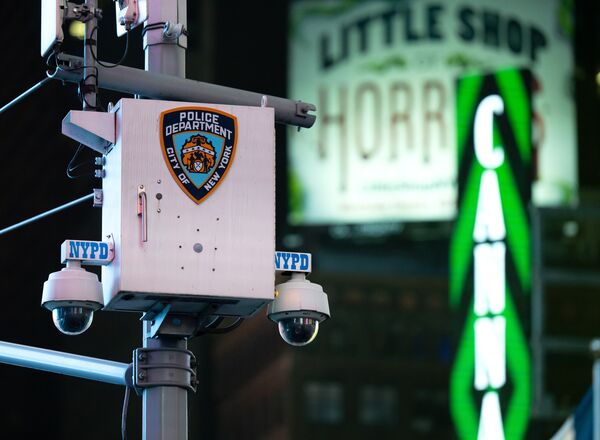
So much of what exists in the NYPD’s surveillance apparatus in New York City was a post-9/11 thing. Now that there is a generation of adults who have very little recollection of that time period, and in some cases were not even alive for it, there is a little bit more room to look at what was built in the name of national security and acknowledge that it hasn’t really done what it was supposed to do, and that its costs are very great. A lot of your book is spent documenting the kinds of surveillance happening in New York City, both by law enforcement and by ad tech companies.
你的书用了大量篇幅记录纽约市正在发生的各类监控,既有执法部门的,也有广告技术公司的。知道了这些运作方式之后,你穿行空间的方式会不一样吗?
Do you move through space differently knowing what you know about how this operates? To a degree.
某种程度上会。我个人能投入到这类事情上的脑力空间是有限的。如果我要去找布鲁克林褐石区每一台Ring摄像头,我走路是快不起来的。
There’s only so much monitoring of that stuff that I can personally devote my head space to. If I’m looking for every Ring camera in Brownstone Brooklyn, I’m not gonna move very fast. One of the things I find especially pernicious are the consumer grade — and especially landlord-grade — surveillance.
我觉得尤其有害的一类,是消费级——尤其是房东级——的监控。我在指南里收录了ButterflyMX自助终端。有些事让我特别不安——为什么一家管理公司需要知道我什么时候进出自己的家?为什么他们需要知道我有客人?为什么他们需要留有那个人的照片?
I included the ButterflyMX kiosks in the guide. There is just something so unnerving to me about — why does a management company need to know when I’m coming in and out of my own house? Why do they need to know that I have guests? Why do they need to have a photo of that person? The other piece of this is so much of it is theater.
另一部分原因在于,这其中很多都只是做样子。很难判断一个监控摄像头究竟只是摆设,还是商家装在那里、理论上用来威慑犯罪的。
It’s hard to tell if a surveillance camera is actually just a decoy or something that a business owner has left up so that they will theoretically deter crime. And in that way, the physical presence of it is the whole thing.
这样一来,它的物理存在本身就是全部意义所在。甚至与技术本身无关。是啊。福柯先生,你一直都说对了。
It’s not even the technology itself. Yeah. Monsieur Foucault, you were right all along. My other favorite part of the book was the way you drew attention to the more analog evidence of the internet in public space.
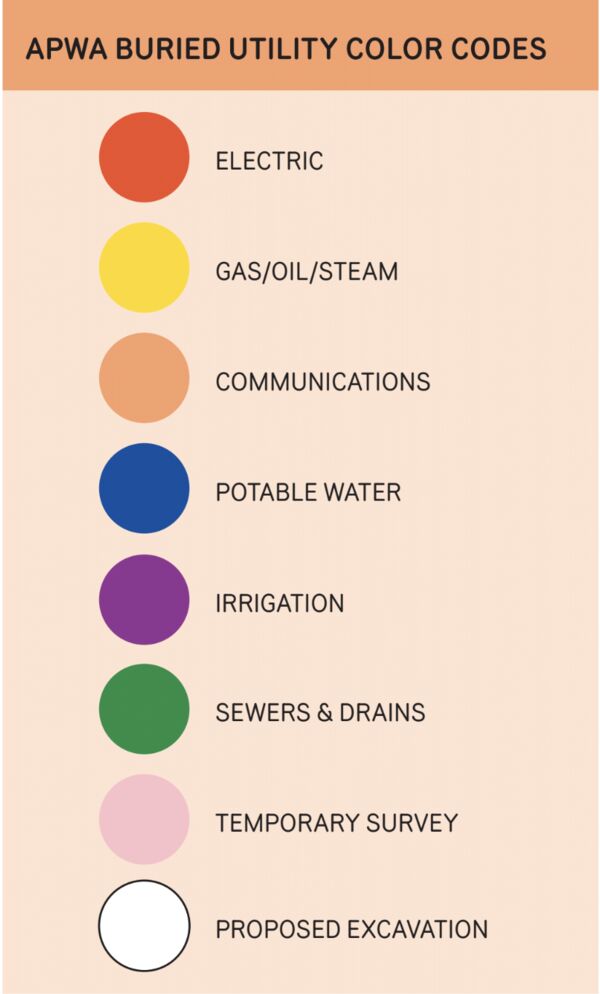
这本书里我另一个最喜欢的部分,是你让人注意到互联网在公共空间中那些更“模拟”的痕迹。比如街道上的喷漆,标示着地下哪里埋着什么电缆,或者印着电信公司标志的井盖。
Like, the spray paint on the streets indicating which underground cables are buried where, or the manhole covers with telecoms company logos. The buried utility markings are such a treat.
那些地下管线的标记真是妙极了。这也正是让我意识到这本书非常适合纽约带小孩的人的原因。他们个子矮,离地面近,对什么都好奇。
And that is also the entry point through which I realized, this book is great for people with children in New York City. They’re low to the ground. Curious about stuff.
我觉得能解读这些符号真的很有满足感,因为往往很直观。你会看到,好,这里有个井盖,有喷漆从井盖延伸出来,直接连到这根路灯杆,你还能看到杆顶的基站。那种完整回路的感觉让人非常满足。
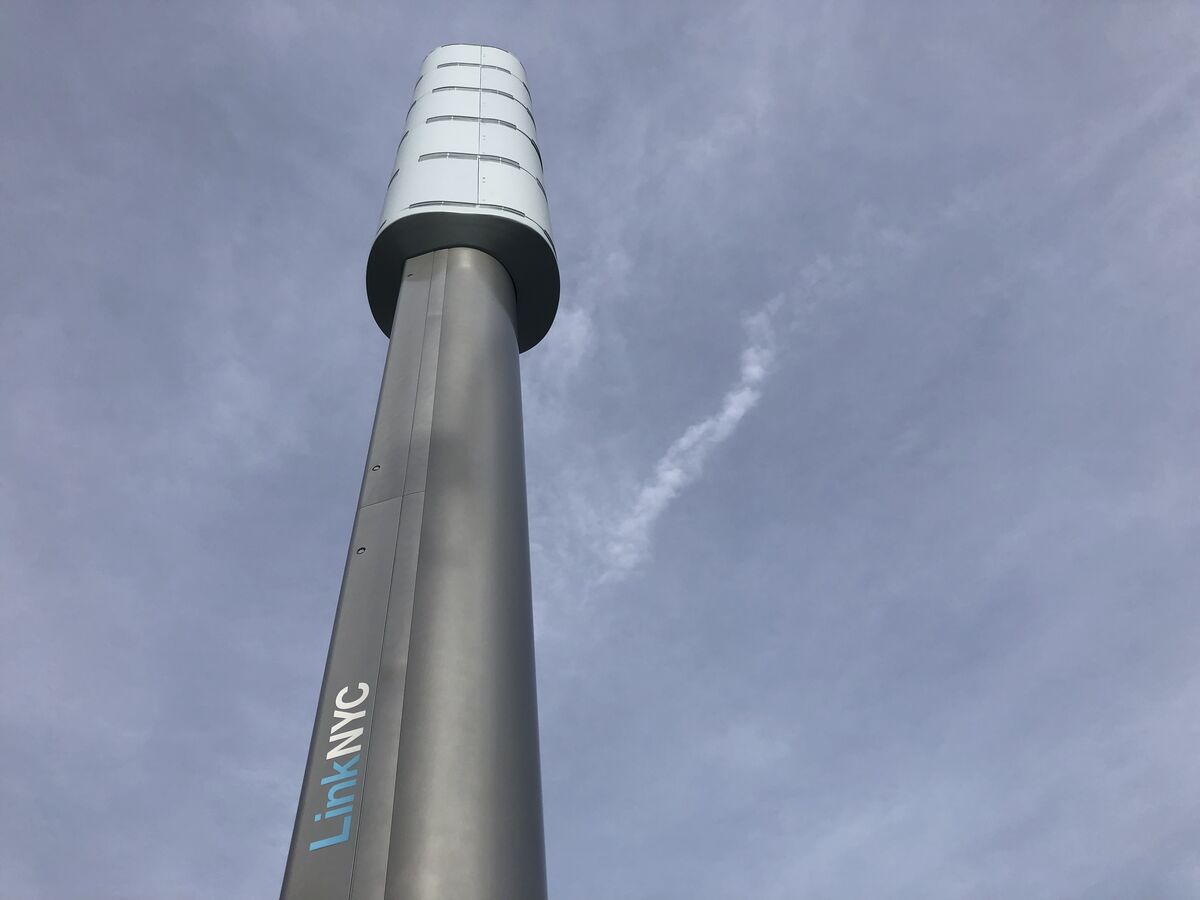
I find being able to decode those symbols is really satisfying in that often it’s quite immediate. You’ll see, OK, there’s a manhole cover and there’s spray paint coming out of it, and it’s going directly into this light post, and you can see the cell tower on the top of it. There’s something very satisfying about a complete circuit in that sense.
你在书的结尾谈到了纽约一些由社区主导的互联网项目,比如红钩无线社区网状网络,它在飓风桑迪期间其他运营商都瘫痪时仍保持在线;还有NYC Mesh,一个由志愿者运营的社区自有互联网项目。这类项目为什么如此重要,它们又会有怎样的未来?
You end the book by talking about some community-led internet projects in New York, like the Red Hook Wi-Fi Community Mesh Network, which stayed online when other providers were down during Hurricane Sandy; and NYC Mesh, a community-owned internet project run by volunteers. Why are these kinds of projects so important, and what kind of future do they have?
红钩无线可以说已经逐渐式微了。NYC Mesh是最活跃、最成功的,而且可以说在某种意义上不那么以社区为驱动,因为它不是社区规模的。只要能架天线的地方,他们都会去。
Red Hook Wi-Fi has kind of gone by the wayside. NYC Mesh is the most active and successful, and is arguably less community-driven in the sense that it’s not neighborhood scale. They’ll go anywhere they can put an antenna.
Community Tech New York有这个刚起步的项目——他们正与南布朗克斯亨茨角的The Point合作。他们的社区网络仍在运行,他们一直试图借助社区土地信托模式来思考本地治理的互联网基础设施,因为这类项目最难的一点就是确保它们能持续下去。你可以用非常临时、DIY的方式做所有这些事,但也许最热衷于此的人搬到了另一个街区,或者当初让你启动的拨款用完了。
Community Tech New York has this nascent project — they’re working with The Point in Hunts Point in the South Bronx. Their community network is still running, and they’ve been trying to use the community land trust model to think about locally governed internet infrastructure, because one of the things that’s really hard about these projects is making sure they last. You can do all this stuff in a very ad-hoc, DIY mode, and then maybe the person who was the most excited about it moves to a different neighborhood, or the grant that got you started runs out.
我思考基础设施——或者说重新思考我如何看待基础设施——的一种方式是,它是一个大词,有时被用来仅仅指“生产资料”。我们如何流通信息?我们如何生产知识?我们如何运送商品和服务?我们如何为工业提供动力?谁掌控着做到这些的能力?而那些拥有本地化治理、或者不是按照这种更高层级的金融化模式运营的网络,具有一种韧性。
One way I’ve been thinking about infrastructure, or rethinking how I think about infrastructure, is that it’s a big word that’s sometimes used to just mean “means of production.”How are we circulating information? How are we producing knowledge? How are we moving goods and services? How are we powering industry? And who controls the ability to do that? And networks that have a localized governance or that aren’t operated from this higher-level financialized model, there’s a resiliency to that.
我也一直在想,这么多年轻人对互联网的唯一记忆就是十几家控制一切的大公司,这是多么令人悲哀。这些更加本地化的自下而上的网络能做的一件事,就是重新唤起这样一种可能性:事实上这些是开放协议和系统,可以用现成的组件来实现,而这实际上非常酷。
I’ve been also thinking a lot about how sad it is that so many young adults have no recollection of the internet as being anything other than a dozen huge companies that control everything. One thing that these much more localized bottom-up networks can do is revive that possibility that in fact these are open protocols and systems that can be done with off-the-shelf components, and that’s actually incredibly cool.