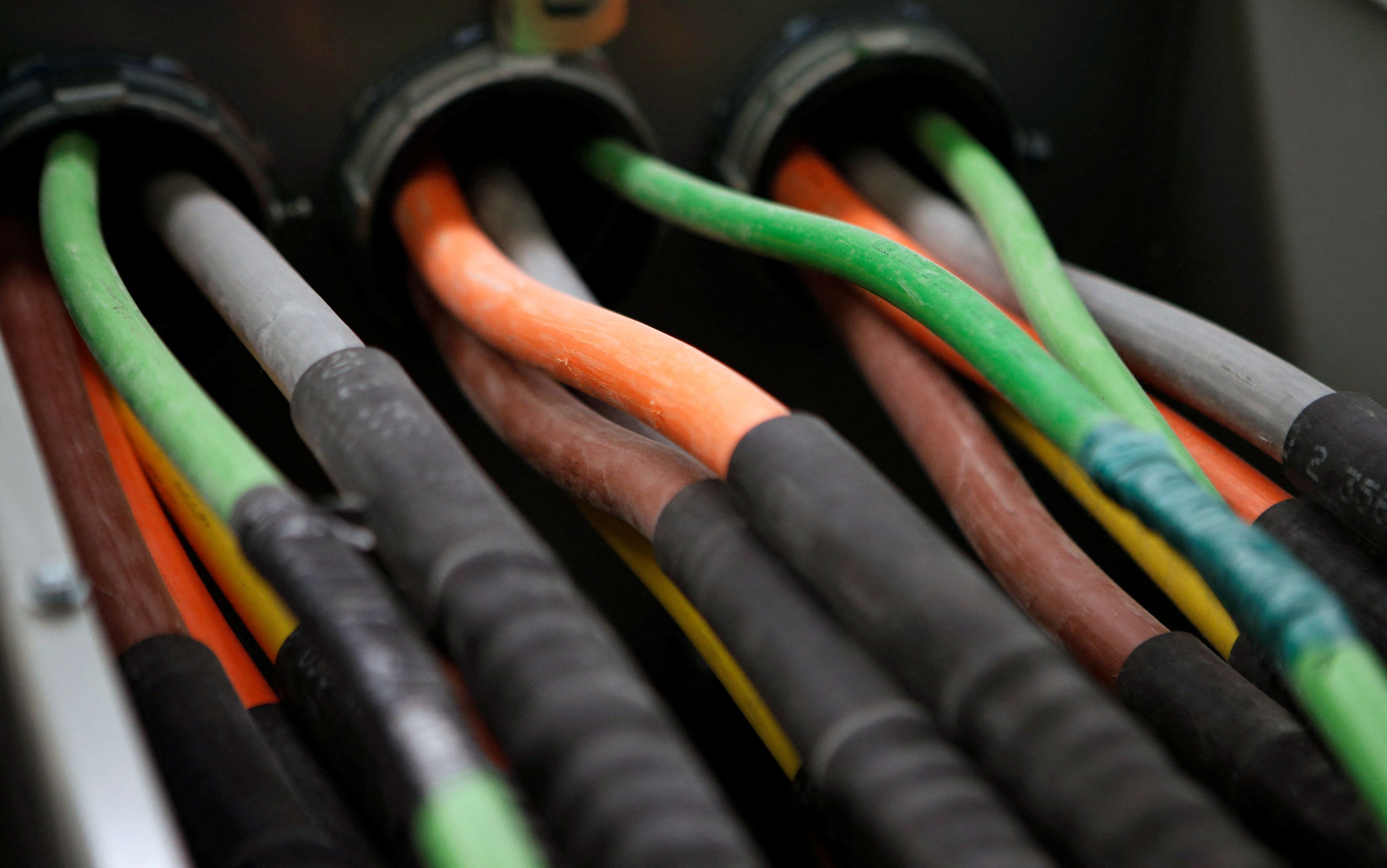
PsiQuantum 正在打造其首款产品。这并非一台量子计算机,但它可能成为 AI 数据中心的“超级助力”。
PsiQuantum is building its first product. It isn’t a quantum computer, but it could become a superpower for AI data centers.
这家公司已耗时十年,致力于构建利用光子作为信息“比特”的量子计算机,并自行研制出能以极高精度控制光粒子的光学芯片。这种操控光的能力,在 AI 竞赛的下一阶段可能转化为一项可商品化的工具——数据中心因铜缆的物理极限而陷入瓶颈,正转向改用光纤。
The company has been working for a decade on building quantum computers that use photons as “bits” of information and has built its own optical chips that control light particles with extreme precision. That ability to manipulate light could turn out to be a marketable tool in the next phase of the AI race, where data centers, bottlenecked by the limits of copper wiring, are switching to using fiber optics instead.
PsiQuantum 表示,已向潜在客户展示了一款新型“光电路交换机”原型,可用于在数据中心内更高效地路由来自 GPU 的光信号。
PsiQuantum says it has been showing potential customers a prototype of a new “optical circuit switch” that could be used to route optical signals from GPUs across data centers much more efficiently.
客户最关注 PsiQuantum 能否攻克一项名为“插入损耗”的基准指标,该指标以分贝为单位,决定传输过程中有多少光子逸散,从而可能导致信号衰减。PsiQuantum 称,要在 AI 数据中心应用,插入损耗需低于 2 至 3 分贝。其原型机轻松跨越这一门槛,达到 1.2 分贝。
Customers were most focused on PsiQuantum’s ability to beat a benchmark known as “insertion loss,” measured in decibels, that determines how many photons escape during transport, potentially leading to a degraded signal. To work in an AI datacenter, insertion loss needed to be less than two to three decibels, PsiQuantum said. Its prototype barreled through that requirement, reaching 1.2.
如果没有将成百上千个 AI 处理器联网的能力,AI 繁荣就不会发生。但所有这些联网也是数据中心最薄弱的环节。GPU 虽能以极快速度运算,却受制于速度相对缓慢的铜缆,后者负责将运算结果从一个 GPU 传送到另一个 GPU。
The AI boom wouldn’t have happened without the ability to network hundreds of thousands of AI processors together. But all that networking is also the data center’s weakest link. While GPUs can crunch numbers at blazing speeds, they are bottlenecked by the comparatively slow copper that carries the output of that math from GPU to GPU.
在日益庞大的 AI 模型训练过程中,这种瓶颈尤为突出,因为这需要大量 GPU 之间进行最高程度的协调。
That’s especially true during the training process of increasingly large AI models that require the most coordination between large numbers of GPUs.
新一代数据中心机柜更多采用光缆在 GPU 间传输数据。但光信息必须先转换为电信号以便路由至目的地,再转回光信号,到达目的地前还要再转换一次。
The next generation of data center racks are more often using optical cables to carry the data between GPUs. But optical information must be converted into an electrical signal in order to be routed to its destination, then converted back into light, before it’s converted once again when it reaches its destination.
在最大型数据中心中,每秒发生数十亿次的此类转换需要光开关,而这些开关会产生热量、消耗能量且体积庞大。
All those conversions happening billions of times per second in the largest data centers require optical switches that generate heat, energy and bulk.
PsiQuantum 表示,其新设备无需将光子转换为电信号即可完成上述任务。它可用于在 AI 数据中心的服务器机架之间建立光速连接,这种连接几乎不产生热量,且能耗可忽略不计。
PsiQuantum says its new device can do that without ever having to convert the photons into electrical signals. It could be used to create speed-of-light connections between server racks in AI data centers that generate almost no heat and consume negligible energy.
目前,在 AI 数据中心中唯一采用纯光电路交换的主要超大规模运营商是 Google,该公司构建了一套利用被称为 MEMS(微机电系统)的微型镜片来引导光信号的系统。
The only major hyperscaler currently using purely optical circuit switching in an AI data center today is Google, which built a system that uses tiny mirrors, known as MEMS, to direct the light signal.
PsiQuantum 执行副总裁 Robert Soderbery 在接受 Semafor 采访时表示,借助 PsiQuantum 的设备,独立的数据中心机架将实际上表现得如同一个整体。数据可在不同服务器机架的 GPU 之间以与单个机架内 GPU 互联相同的速度和延迟流动。这将是一个巨大优势,因为当前服务器机架已触及算力密度、体积和能效的极限。
Robert Soderbery, executive vice president of PsiQuantum, said in an interview with Semafor that separate data center racks will effectively behave as one, using PsiQuantum’s device. Data could flow between GPUs in separate server racks at the same speed and latency as they would between GPUs interconnected inside a single rack. That would be a huge advantage because today server racks are reaching the limit of compute density, size and energy efficiency.
PsiQuantum 并非孤军奋战。自 ChatGPT 时刻引发 AI 竞赛以来,将数据中心网络转向光子学的角逐愈演愈烈。今年早些时候,光子计算公司 Lightmatter 助力发起了一项倡议,旨在规范数据中心领域的光学标准。Nvidia 已投入数十亿美元投资 Lumentum 和 Coherent 等光计算公司。
PsiQuantum isn’t alone. The battle to convert data center networking to photonics has been raging since the ChatGPT moment kicked off the AI race. Earlier this year, photonic computing company Lightmatter helped launch an initiative to standardize optics in the data center space. Nvidia has been spending billions on investments in optics computing companies like Lumentum and Coherent.
目前 GPU 依然占据统治地位,但数据中心正迎来更多“光”的应用。
For now, the GPU reigns supreme but data centers are seeing a lot more of the light.