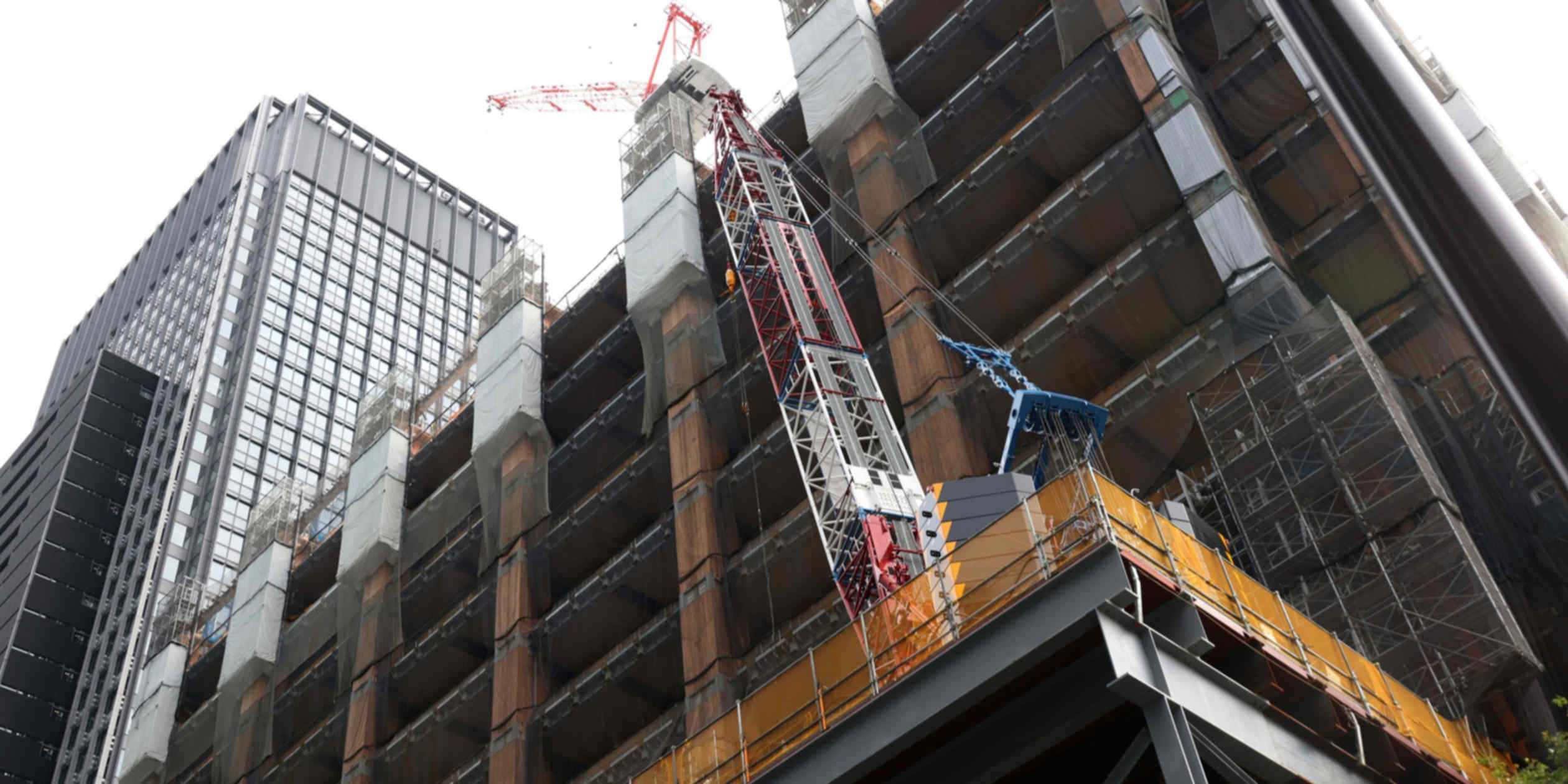
东京——日本行业协会周三发布的数据显示,日本4月至9月下半年的建筑订单同比下降,这是自2020年以来首次出现下降,原因是大型再开发项目陷入停滞期。
TOKYO -- Construction orders in Japan fell year over year in the April-September half for the first time since 2020, data released Wednesday by an industry group shows, as big redevelopment projects hit a dry spell.
日本建筑业联合会(JFCC)表示,占总量约70%的民营部门订单下降16%,降至6.49万亿日元(约合410亿美元)。自新冠疫情早期资本支出受挫以来,订单一直在稳步增长。JFCC汇总了其92家会员公司的订单,编制了这份报告。
Private-sector orders, which account for roughly 70% of the total, sank 16% to 6.49 trillion yen ($41 billion), said the Japan Federation of Construction Contractors (JFCC). Orders had been steadily growing seen since the chill in capital spending early in the COVID-19 pandemic. The JFCC tallied orders at its 92 member companies to compile the report.
与工厂等制造业相关的建筑订单增长22%,达到1.67万亿日元。但包括办公楼、商业设施和酒店在内的非制造业部门订单下降24%,降至4.81万亿日元。
Manufacturing-related construction such as factories grew 22% to 1.67 trillion yen. But orders from the nonmanufacturing sector -- including offices, commercial facilities and hotels -- dropped 24% to 4.81 trillion yen.
大型城市再开发项目曾是疫情后增长的主要驱动力。由包括东日本旅客铁道在内的公司开发的东京高轮Gateway City项目,投资6000亿日元,于3月全面开业。城市中的麻布台丘项目耗资约6400亿日元,去年竣工。但这一趋势似乎正在改变。
Big urban redevelopment projects had been a major driver of post-pandemic growth. The 600 billion-yen Takanawa Gateway City project in Tokyo, by companies including East Japan Railway, opened fully in March. Work on Azabudai Hills in the city, which cost around 640 billion yen, was completed last year. But this trend appears to be changing.
周三,高轮王子大饭店新馆的大堂里熙熙攘攘,挤满了顾客。该场所原计划本财年关闭,以便建造一家新酒店,新酒店预计2028财年开工,2032财年竣工。但计划已被推迟,竣工时间现定为2035财年,目前的酒店将一直营业到大约2029财年。
The lobby of the Grand Prince Hotel Shin Takanawa bustled with customers Wednesday. The site had been set to close this fiscal year for construction of a new hotel, scheduled to begin in fiscal 2028 and finish in fiscal 2032. But plans have been pushed back with completion now slated for fiscal 2035, and the current hotel will stay open until around fiscal 2029.
“我们面临着建筑成本飙升、总承包商产能等外部因素,”经营该连锁酒店的西武控股企业企划部部长原田武夫表示。“我们正在仔细调查开发项目的进度安排。”帝国酒店于5月无限期推迟了原定于2031财年至2036财年进行的东京帝国酒店本馆重建工程。由森大厦和住友不动产在东京六本木区推进、原定于2030财年完工的再开发项目,预计也将延期。
"We're facing external factors such as soaring construction costs and the capacity of general contractors," said Takeo Harada, head of corporate planning at Seibu Holdings, which operates the chain. "We're carefully surveying development project schedules." Imperial Hotel in May indefinitely postponed reconstruction of the main building of Imperial Hotel Tokyo, previously slated to occur between fiscal 2031 and fiscal 2036. A redevelopment in Tokyo's Roppongi district by Mori Building and Sumitomo Realty & Development, scheduled to finish in fiscal 2030, is also expected to be delayed.
人手短缺导致人工费大幅上涨,材料价格也在上涨。据建筑物价调查会的初步报告,其编制的东京办公楼建筑成本指数于9月同比上涨6.3%,达到147.3。
Labor costs have ballooned in a shorthanded industry, and materials are more expensive as well. A construction cost index for Tokyo office buildings calculated by the Construction Research Institute rose 6.3% on the year to 147.3 in September, according to a preliminary report.
建筑公司与发包方在成本问题上的分歧,导致部分项目延期或缩减规模。
Disagreements between construction companies and their customers over costs are causing some projects to be delayed or scaled back.
日本建设业联合会(JFCC)一位代表周三对记者表示:“发包方的投资意愿依然很高。但似乎在适当工期和建筑成本上的谈判拖得很长,导致再开发项目动工所需时间比以往更长。”随着现有项目陆续完工,这些延误恐将给承包商带来更长的空窗期。JFCC报告称,2026财年上半年(2025年4月至9月),没有金额超过1000亿日元的办公楼、酒店或商业设施订单。承包商正将目光投向更有前景的业务领域。
"Contractees' appetite for investment is still high," a JFCC representative told reporters Wednesday. "But it seems that negotiations over appropriate schedules and construction costs have dragged on, meaning it takes more time than before to start on redevelopment." With existing projects concluding, the delays likely will create a longer gap for contractors. No orders for offices, hotels or commercial facilities worth over 100 billion yen came in during the first half of fiscal 2026, the JFCC reports. Contractors are eyeing more promising businesses.
鹿岛建设正着眼于核电和数据中心业务。该公司2025财年核电相关项目营收约1000亿日元,预计将维持在该水平左右,直至2030财年前后。
Kajima is looking to nuclear power and data centers. The company brought in revenue of around 100 billion yen from nuclear-related projects in fiscal 2025 and expects to remain around that level until fiscal 2030 or so.
鹿岛建设在8月的业绩说明会上表示:“数据中心扩建需求旺盛且要求速度,容易确保利润。”大成正专注于翻新工程,该业务提供的收入流比新建工程更稳定。
"There's strong demand for speedy expansion of data centers, which makes it easy to secure profits," Kajima said in an August earnings briefing. Taisei is focusing on renovations, which provide a steadier income stream than new construction.
“大成国内建设项目的收入结构在2020年为80%的新建工程和20%的翻新工程,”大成高级执行董事上松透说。“我们希望到2030财年左右,将翻新工程提升至30%。”大林组和清水建设正在追求海外增长。大林组6月表示,将收购总部位于英国、主要在澳大利亚运营的建筑商Multiplex Global。清水建设计划到2030财年,使海外业务占合并毛利润的25%。
"In 2020, the revenue structure of our domestic construction projects was 80% new builds and 20% renovations," said Tohru Uematsu, a senior managing executive officer at Taisei. "We want to raise renovations to 30% by around fiscal 2030." Obayashi and Shimizu are pursuing growth abroad. Obayashi in June said it would acquire Multiplex Global, a U.K.-based builder that operates mainly in Australia. Shimizu aims to have overseas operations account for 25% of consolidated gross profit by fiscal 2030.
Infroneer控股正在扩大其基础设施业务和可再生能源业务,力求在不依赖利润率相对较低的建设项目的情况下,建立稳定的利润基础。
Infroneer Holdings is expanding its infrastructure operation and renewable energy businesses, seeking to build a stable profit base without relying on relatively low-margin construction projects.