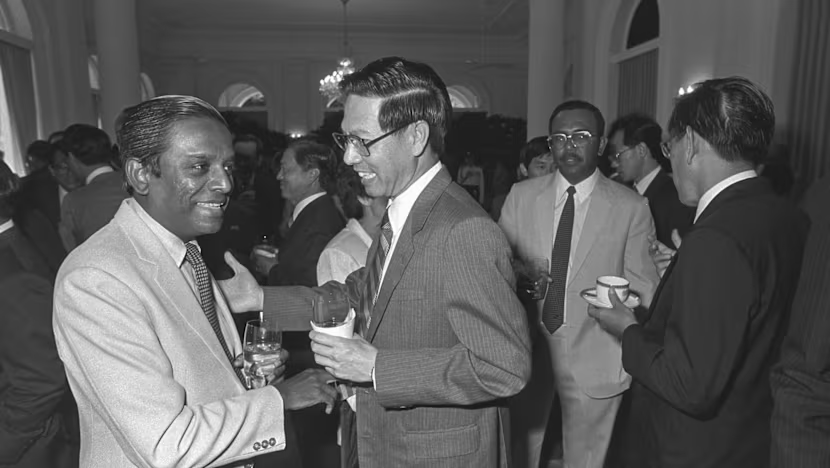
这是新加坡亚洲新闻台(CNA)对前资政S·贾亚库马专访的三篇报道中的第二篇。贾亚库马近日推出新书《创造三部新加坡独有法律:内幕故事》,书中记述了选举总统制、集选区制和非选区议员制如何通过宪法修正案确立。
This is the second of three articles from CNA’s interview with former Senior Minister S Jayakumar, who recently launched his book Creating Three Unique Singapore Laws: An Inside Story. The book chronicles how the elected presidency, Group Representation Constituencies and Non-Constituency Members of Parliament were established through constitutional amendment.
新加坡:前资政S·贾亚库马教授表示,已故总统王鼎昌通过与政府的分歧对选举总统制进行了“压力测试”,他的任期表明,来自建制派的总统也能独立行事。
SINGAPORE: The late Ong Teng Cheong "stress-tested" the elected presidency through disagreements with the government, and his term showed a president from the establishment can act independently, said former Senior Minister S Jayakumar.
“他是建制派出身。他曾任副总理,后当选总统。他认真履职,在任期间,在一些问题上与政府出现了分歧,”贾亚库马教授在接受CNA独家专访时表示。
“He was from the establishment. He had been deputy prime minister and became elected president. He took the role seriously and in the course of his term of office, there were some issues on which there were disagreements (with) the government,” Professor Jayakumar told CNA in an exclusive interview.
专访在旧国会大厦(现名为艺术之家)进行,该地曾是法律辩论和通过的场所。
The interview took place at the Old Parliament House, now The Arts House, where laws were debated and passed.
贾亚库马教授于8月推出新书《创造三部新加坡独有法律:内幕故事》,追溯了选举总统制、集选区制和非选区议员制的由来。
Prof Jayakumar launched his book, Creating Three Unique Singapore Laws: An Inside Story, in August. It traces how the elected presidency, Group Representation Constituency system and Non-Constituency Member of Parliament scheme came about.
王鼎昌先生曾任副总理,于1993年至1999年担任总统。他于2002年逝世。
Mr Ong, a former deputy prime minister, served as president from 1993 to 1999. He died in 2002.
选举总统制于1991年写入法律,赋予总统额外权力,包括保障国家储备和关键公共部门任命。在王鼎昌之前,总统由国会议员选出,而非由选民在全国大选中选出。
The elected presidency was written into law in 1991, giving the president additional powers, including safeguarding the reserves and key public sector appointments. Before Mr Ong, the president was elected by Members of Parliament rather than voters in a nationwide election.
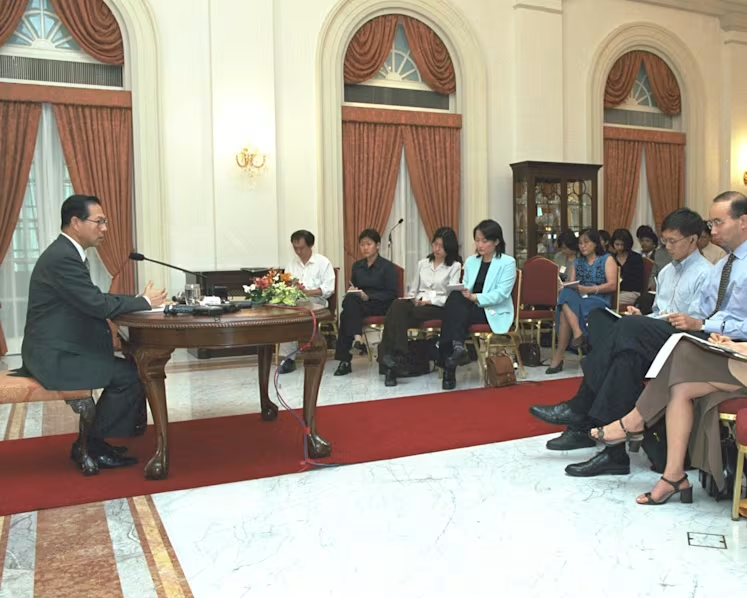
1999年7月16日,临近任期结束时,王鼎昌召开记者会,宣布不寻求连任,并提出他在与政府共事时面临的挑战。
On Jul 16, 1999, towards the end of his term, Mr Ong held a press conference to announce he would not seek re-election and to raise challenges he faced working with the government.
他对公务员在某些事务上合作不足表示失望,并对可能动用储备金表示担忧。
He expressed disappointment over what he saw as insufficient cooperation from civil servants on certain matters, along with concerns over a possible drawdown on the reserves.
在随后的一次议会会议上,时任总理吴作栋和时任财政部长胡以晨均“费尽心思逐一回应王鼎昌的每一点观点”,贾雅库马教授说。
At a parliament sitting afterwards, then-Prime Minister Goh Chok Tong and then-Finance Minister Richard Hu both “took pains to deal with every one of Ong Teng Cheong’s points”, Prof Jayakumar said.
“他们以一种方式进行解释,以表明所呈现的事实显示王鼎昌总统存在误解,而他并未回来反驳,”他说。
“They explained it in a way to show that the facts as presented showed that there was a misunderstanding by President Ong Teng Cheong, who did not come back to rebut it,” he said.
第22H条争议 一场更早的分歧发生在1994年,焦点在于宪法第22H条,该条款赋予总统拒绝批准削减或规避其酌情权的法案的权力。
ARTICLE 22H DISPUTE An earlier disagreement, in 1994, centred on Article 22H of the Constitution, which lets the president withhold assent to bills that curtail or circumvent his discretionary powers.
政府希望修改该条款,使否决权仅涵盖法案,而不包括宪法修正案。问题在于总统能否否决该修正案本身。
The government wanted to amend the article so the veto would cover only Bills, not constitutional amendments. The question was whether the president could veto that amendment itself.
“王鼎昌总统认为该修正案将受其否决权约束。政府则持不同意见,”时任法律部长的贾雅库马教授说。
“President Ong Teng Cheong felt that that amendment would be subject to his veto. The government disagreed,” said Prof Jayakumar, who was law minister at the time.
他说,他在研读宪法并征询了检察总长意见后,与王鼎昌的看法不一致,检察总长持相似立场。
He said he disagreed with Mr Ong after reading the Constitution and checking with the Attorney-General, who took a similar stance.
贾雅库马教授说,王鼎昌是他的私人好友和前内阁同事,两人曾一起打高尔夫球、出访海外。
Prof Jayakumar said Mr Ong was a personal friend and former Cabinet colleague, with whom he played golf and accompanied on overseas trips.
“但我们必须严格且恰当。我传达了政府的立场,他无法被说服,”贾雅库马教授说。前最高法院大楼现为新加坡国家美术馆的部分馆址。
“But we had to be strict and proper. I conveyed the government's views, he could not be persuaded,” said Prof Jayakumar. The former Supreme Court building now houses part of the National Gallery Singapore.
双方最终同意寻求由法官组成的特别宪法法庭的咨询意见。议会于1994年8月通过立法设立该法庭,后者于1995年4月裁定总统无权否决该拟议修正案。
The two sides eventually agreed to seek an advisory opinion from a special constitutional tribunal of judges. Parliament passed legislation in August 1994 to set up such a tribunal, which ruled in April 1995 that the president could not veto the proposed amendment.
“我引用此例也是为了表明,即使是来自建制派的总统,仍能独立行使权力,”贾雅库马教授说。
“I cite this too to show that you can have a president from the establishment who could still exercise powers independently,” said Prof Jayakumar.
“除了这些问题之外,我还应该说,另一方面,他和政府、总统职位和政府能够就一套运作储备框架的原则达成一致,这也是一件好事。”他补充说,问题解决的方式表明,民选总统制度的理由运作良好。
“Apart from the issues, I should also say, on the other hand, he and the government, the presidency and the government, were able to come to an agreement on a set of principles on operating the framework of reserves, which is also a good thing.”The way the issues were resolved showed the rationale for the elected presidency worked well, he added.
新加坡首席执行官:名誉国务资政贾古玛教授表示,首任总理李光耀最初将民选总统构想为一种“守门员模式”,其权力比今天该职位所拥有的权力更大。这个词来自板球运动,守门员站在击球手身后,阻止球穿过。
A CHIEF EXECUTIVE FOR SINGAPORE Founding Prime Minister Lee Kuan Yew initially conceived the elected presidency as a “wicket-keeper model” with stronger powers than the office has today, said Prof Jayakumar. The term comes from cricket, where the wicket-keeper stands behind the batter to stop balls that get past.
贾古玛教授说,李光耀提出的权力范围之广,让他和较年轻一代的部长们“感到不安”。
The breadth of powers Mr Lee proposed left Prof Jayakumar and his peers from the younger cohort of ministers “perturbed”, he said.
“我认为年轻部长们可以接受这样的理由:储备金是如此宝贵的资产,必须为子孙后代培育和节约,不应有不当和过度支出储备金。我们也可以同意,应该有一种制衡机制,防止这种对储备金的不当掠夺,”贾古玛教授说。
“I think the younger ministers could accept the rationale that the reserves were such a precious asset that they must be nurtured and husbanded for future generations and there should not be unwarranted and overspending of the reserves. We could also agree that there ought to be a check to prevent such unwarranted raid on the reserves,” said Prof Jayakumar.
“但他的想法对我们来说太宽泛了。事实上,正如陈庆炎博士所说,总统或多或少就是首席执行官。”陈庆炎博士本人后来成为总统,任期从2011年到2017年。
“But his idea to us was too wide. In fact, as Dr Tony Tan put it, the president would more or less be the chief executive officer.”Dr Tan himself later became president, serving from 2011 to 2017.
贾古玛教授说,年轻部长们必须权衡该提议是否可以接受,因为他们将负责管理国家,而这些变化将直接影响他们。
The younger ministers had to weigh whether the proposal was acceptable, as they would run the country going forward and the changes would affect them directly, said Prof Jayakumar.
“李光耀先生的立场是:‘你们有一天会掌权,你们将不得不运作这个制度’。好吧,如果我们必须运作这个制度,我们对它感到满意吗?我们能在原则上捍卫它,并向人民解释和证明它合理吗?我们不这么认为,”他说。
“Mr Lee Kuan Yew's position was: ‘You guys will be in charge one day and you'll have to work the system’. Well, if we have to work the system, are we comfortable with it? Can we defend it in principle and explain it and justify it to the people? We did not think so,” he said.
他们随后试图说服李光耀,并达成了共识,因为“年轻部长们觉得可以放心地准备直言不讳”,贾古玛教授说。
They then sought to persuade Mr Lee, and reached a consensus because “the younger ministers felt comfortable to be prepared to speak up”, said Prof Jayakumar.
他说,李光耀愿意倾听、交流并修改他最初的提议。贾雅库马教授希望这一描述能消除一种迷思,即李光耀意志坚定、主见强烈,行事像个“不容异议的独裁领袖”。
Mr Lee was willing to listen, engage and modify his original proposal, he said. Prof Jayakumar hopes this account can dispel the myth that Mr Lee was so strong-willed and strong-minded that he acted like a “dictatorial leader” brooking no dissent.
“这就是他处事方式的全部写照。如果他固执己见,说:‘不,我不同意’,那将是另一番光景了。”
“That sums it all, his approach. If he had been intransigent and said: ‘No, I don’t agree’, it would have been a different story.”