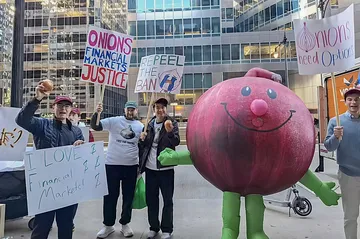
上周,在芝加哥商品交易所外,一小群大学生举行了一场不拘一格的集会,在部分美国金融精英中引发了一场严肃辩论,探讨什么可以交易、什么不可以交易。
Outside the Chicago Mercantile Exchange last week, a small group of university students staged an irreverent rally that sparked a serious debate among some of America’s financial elite about what can and can’t be traded.
乍一看,抗议组织“为我们的未来”(For Our Futures)的靶子似乎颇为冷门:一项已实施68年的洋葱期货交易禁令,学生们要求废除这项禁令。
At first glance, the target of the protest group, called For Our Futures, appeared to be obscure: a 68-year-old ban on trading onion futures, a prohibition the students want to overturn.
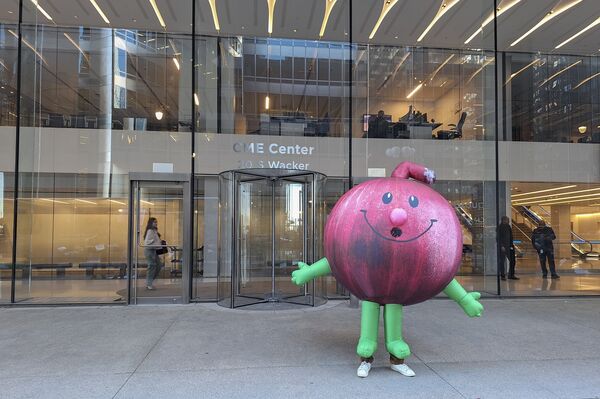
但这场配有巨型红洋葱吉祥物的示威,也折射出金融市场的当下时刻。预测市场公司如Kalshi Inc.和Polymarket正在突破界限,让投资者能够全天候押注从美联储利率决议、选举结果到天气模式和流行文化趋势等方方面面。
But the demonstration, featuring a giant red onion mascot, also captured the moment in financial markets. Prediction market companies such as Kalshi Inc. and Polymarket are pushing boundaries, opening up access for investors to wager on everything from Fed interest rate decisions and election outcomes to weather patterns and pop-culture trends around the clock.
在这场动荡中,对一些市场参与者而言,洋葱禁令象征着那种陈旧且过度干预的衍生品监管,理应被扔进历史垃圾堆。Kalshi支持了此次活动,派出几名代表并为学生提供贴纸、T恤和交通接送。芝加哥交易巨头DRW Holdings LLC的创始人以及Polymarket的首席法务官也对集会发表了看法。
Amid the upheaval, the onion ban symbolizes for some market participants the kind of outmoded and heavy-handed derivatives regulation that should be consigned to history. Kalshi supported the event, sending a few representatives and supplying stickers, T-shirts and transportation for the students. The founder of Chicago trading powerhouse DRW Holdings LLC and the chief legal officer of Polymarket weighed in on the rally.
“我们目前正处于金融市场创新空前的时代——想想Kalshi、加密货币市场——人们正在创新并开发各种新型金融和面向期货的产品,”伊利诺伊大学农业经济学家斯科特·欧文(Scott Irwin)表示,他曾撰文探讨过这项禁令。“那种有某种东西交易是非法的想法,会让人产生一种‘怎么会这样?’的时刻。”
“We’re in an era right now of tremendous innovation in financial markets — thinking of Kalshi, crypto markets — where people are innovating and developing all sorts of new financial and futures-oriented products,” said Scott Irwin, an agricultural economist at the University of Illinois who has written on the ban. “The idea that there’s something that’s illegal to trade is one of those, ‘How can that be?’ moments.”
这项禁令可追溯到20世纪50年代,当时两名交易员垄断了洋葱市场。此举最终导致价格崩盘,使许多农民破产,据一些说法,还促使生产商将大量毫无价值的洋葱倾倒进芝加哥河。1958年,总统德怀特·艾森豪威尔(Dwight Eisenhower)签署了《洋葱期货法》(Onion Futures Act),禁止“在美国任何交易委员会”进行洋葱期货交易。世界上其他任何地方都没有用于交易洋葱期货的替代交易所。印度的国家商品及衍生品交易所此前曾计划推出洋葱期货,但从未推出过相关合约。
The prohibition dates back to the 1950s, when two traders cornered the market on onions. The move ultimately caused prices to crash, ruining many farmers and, by some accounts, prompting producers to dump masses of worthless onions in the Chicago River. In 1958, President Dwight Eisenhower signed the Onion Futures Act into law, banning onion futures “on any board of trade in the United States.”There are no alternative exchanges for trading onion futures anywhere else in the world. India’s National Commodity & Derivatives Exchange previously planned onion futures but never launched a contract.
芝加哥与洋葱长期以来密不可分。这座城市的名字被认为源自一个阿尔冈琴语词汇——指过去曾沿着流经该市中心的河流生长的野洋葱和大蒜。
Chicago and onions have long been linked. The city’s name is thought to derive from an Algonquian word — — for the wild onions and garlic that once grew along the river that runs through the heart of the city.
上周,芝加哥大学的学生们带着从一家餐馆供应仓库购买整袋洋葱,以及印有Kalshi标志上方写着“解放洋葱”(Free the Onions)字样的衬衫和贴纸,聚集在交易所外的人行道上,为一份呼吁国会废除该禁令的请愿书收集签名。
Last week, armed with bags of whole onions purchased from a restaurant supply depot, and shirts and stickers bearing the message “Free the Onions” above a Kalshi logo, the University of Chicago students gathered on the sidewalk outside the exchange to collect signatures on a petition asking Congress for a repeal.
尽管一些路人质疑此举是一场公关特技,还是一个借鉴讽刺新闻出版物的精心玩笑,但组织者坚信他们的使命是真诚的。他们认为,鉴于美国现今拥有更严格的市场操纵监管规定,这项禁令已经过时。
While some passersby questioned whether the effort was a PR stunt or an elaborate joke referencing the satirical news publication , organizers insisted their mission is genuine. They think the prohibition is antiquated given the stronger market manipulation regulations the US has in place today.
芝加哥大学经济学专业学生、“为了我们的未来”(For Our Futures)创始人亚当·阿什(Adam Ash)在同伴们的呼喊和分发洋葱声中表示:“这不是美国最重要的法律,但这恰恰是它对我们重要的原因。我们希望引起人们的注意,即现行法律中存在许多过时的法律。”阿什表示,这个想法源于与对政治话语感到幻灭的同学们的交流,他们希望表明自己能够通过成功开展竞选活动来改变某项特定法律。
“This is not the most important law in America, but this is precisely why it matters to us,” said For Our Futures founder Adam Ash, an economics major at the University of Chicago, as peers chanted and handed out onions. “We want to bring attention to the fact that there are many outdated laws on the books.”Ash said the idea came from talking with fellow students disenchanted with the political discourse, and who wanted to show they could successfully campaign to change a specific law.
芝商所(CME)的这一奇观在交易界引发了一阵议论,其中包括Kalshi,该平台经常增加新的合约以吸引更多交易员使用其博彩平台,包括今年增加其大宗商品供应。
The spectacle at the CME touched off a flurry of chatter in the trading community, including from Kalshi, which is frequently adding new contracts to attract more traders to its betting platform, including boosting its commodity offerings this year.
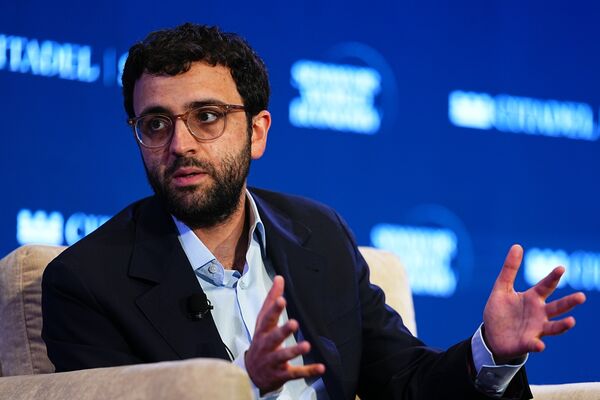
Kalshi首席执行官塔里克·曼苏尔(Tarek Mansour)今年早些时候就已经对“为了我们的未来”发表了评论,他在5月分享了一篇突出该组织竞选活动的帖子。上周,他在转发一段他们在芝商所外集会的视频时,称赞这些学生是“爱国者”。
Kalshi Chief Executive Officer Tarek Mansour had already commented on For Our Futures earlier in the year, sharing a post in May that highlighted the group’s campaign. Last week, he lauded the students as “patriots” when reposting a video of their rally outside the CME.
曼苏尔在另一篇帖子中写道:“洋葱种植者理应获得可预测性。解除洋葱期货禁令。”Kalshi的一位发言人表示,结束禁令“早已逾期”。
“Onion farmers deserve predictability,” Mansour wrote in a separate post. “Unban onion futures.”A Kalshi spokesperson said an end to the ban is “long overdue.”
这位发言人在一封电子邮件声明中表示:“68年来,洋葱一直是国会决定美国人不能被信任进行对冲的唯一农作物。不是石油。不是小麦。不是猪肚。对于自艾森豪威尔政府以来一直没有对冲工具的种植者:我们看到了你们。很抱歉花了这么长时间。”芝商所表示,看到上周的抗议活动得到Kalshi的支持,他们感到“意外”。芝商所发言人称:“由于Kalshi声称希望实现市场民主化,支持废除1958年为防止市场操纵而制定的法律,似乎是一个不同寻常的选择。”
“For 68 years, onions have been the only crop Congress decided Americans couldn’t be trusted to hedge. Not oil. Not wheat. Not pork bellies,” the spokesperson said in an emailed statement. “To the growers who have gone without a hedge since the Eisenhower administration: we see you. We’re sorry it took this long.”CME Group said it was “surprised” to see last week’s protest was supported by Kalshi. “As Kalshi claims it wants to democratize markets, supporting the reversal of a law put in place in 1958 to protect against market manipulation seems an unusual choice,” a CME spokesperson said.
“为了我们的未来”组织者表示,他们最早是在今年夏天早些时候效仿其他地方的抗议活动后,萌生了在芝商所外举行集会的想法,而卡尔希(Kalshi)是在该团组织划定并宣布了这一活动之后才介入的。该公司在集会前几天提供了T恤和贴纸。
For Our Futures organizers said they first thought of holding a rally outside the CME over the summer, following other protests elsewhere earlier this year, and Kalshi only got involved after the group had already planned and announced the event. The company offered the shirts and stickers a few days before the rally.
代表洋葱种植户并在20世纪50年代倡导实施该禁令的国家洋葱协会表示,该协会看不到推翻这一禁止令的理由。
The National Onion Association, which represents onion farmers and advocated for the ban in the 1950s, said it sees no reason to reverse the prohibition.
该协会在一份声明中表示:“1956年,时任国家洋葱协会会长韦里尔·鲍德温表示,业界‘坚信洋葱极易腐烂、上市季节太短、太容易被操纵、产业规模太小,不适合进行期货交易’。种植户曾为争取这一保护而战,我们至今仍坚决支持它。”经济学家欧文表示,该禁令的通过对芝商所而言是一次“濒死体验”,该交易所一夜之间失去了当时其规模最大的合约之一。
“In 1956, then NOA President Veril Baldwin said the industry ‘is firmly convinced that onions are too perishable, too short in season, too vulnerable for manipulation, too small an industry to lend itself to futures trading,’” the association said in a statement. “Growers fought for this protection, and we continue to stand behind it.”Irwin, the economist, said the ban’s passage was a “near-death experience” for the CME, which lost what was then one of its biggest contracts overnight.
他曾撰文指出,他将该禁令称为“对市场的亵渎”,它实际上让洋葱价格波动更大。他还认为,正是这段插曲促使芝商所走上了一条创新之路,使其成为今天的行业巨头。
He has written that the ban, which he calls a “blasphemy against markets,” actually made onion prices more volatile. He also argues that the episode is what prompted the CME onto a path of innovation that made it the industry heavyweight it is today.
他说:“他们不得不寻找新的交易品种,于是转向了牲畜交易。”随后是货币、金融期货以及电子交易。“而且此后他们一直在这样做。”在交易世界的其他巨头中,交易公司DRW控股的创始人唐·威尔逊在转发芝商所外集会片段时,呼吁结束洋葱禁令。
“They had to find something new to trade, so they turned to livestock,” he said, then currency and financial futures, and e-trading. “And they’ve just kept doing it ever since.”Among other heavyweights in the trading world, Don Wilson, founder of trading firm DRW Holdings, called for an end to the onion ban when he reposted a clip of the gathering outside the CME.
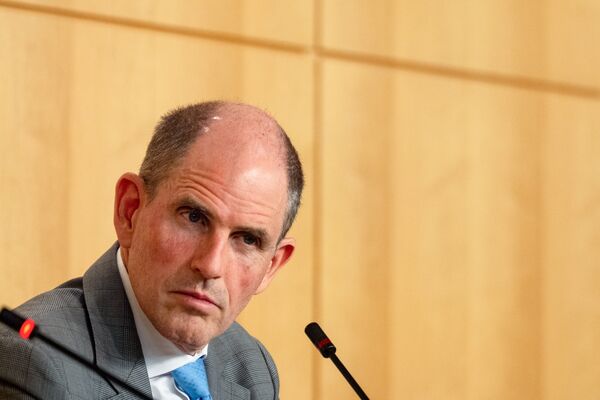
“操纵是监管市场的理由,而非永久禁止市场的理由,”威尔逊在发给彭博社的信息中表示。“我们拿洋葱开开玩笑,但让企业承担本可通过对冲规避的风险,这算哪门子‘保护’它们?”前商品期货交易委员会(CFTC)总法律顾问罗布·施瓦茨附和道:“孩子们很棒。”无论这算不算严肃的努力,他都为学生们赢来的关注点赞,因为他们的运动触及了一场大得多的辩论。
“Manipulation is a reason to police a market, not permanently outlaw it,” Wilson said in a message to Bloomberg. “We’re having some fun with onions, but leaving businesses with risks they could otherwise hedge is a strange definition of protecting them.”Rob Schwartz, former general counsel for the Commodity Futures Trading Commission, chimed in with, “The kids are alright.”Whether a serious effort or not, he commended the students for the attention they’d garnered as their campaign hit on a much larger debate.
“我想知道会不会有洋葱期货市场——也许没有——但我猜这并不是重点,对吧?市场说了算,”现任职于摩根、刘易斯与博奇乌斯律师事务所的施瓦茨在接受采访时表示。
“I wonder if there would be a market for onion futures — maybe not — but I guess that’s not really the point, right? The market decides,” Schwartz, now with Morgan, Lewis & Bockius LLP, said in an interview.
阿什说,他的团队很高兴获得关注。虽然他们对目标是认真的,但“为我们的未来”成员也乐在其中。
Ash said his group is excited to be getting the attention. While they’re serious about their goal, For Our Futures members also embrace the humor in it.
“你可以在快乐中做造福世界的事,”学生集会组织者莉莉·库斯科夫斯基说。
“You can have fun and still do things that are good for the world,” said student rallier Lilly Kuskovsky.