许多国家级政治人物近来显得身形消瘦。但翻查公众人物的药柜并不妥当。而且,只有极少数人就这类有望扭转美国肥胖流行病的新型“神药”——GLP-1类药物——的政策含义多说几句。
A number of national political figures are looking svelte these days. But it doesn’t do to rifle through public figures’ medicine cabinets. And only a few of them are saying much about the policy implications of the new class of miracle drugs that promise to reverse America’s obesity epidemic: GLP-1s.
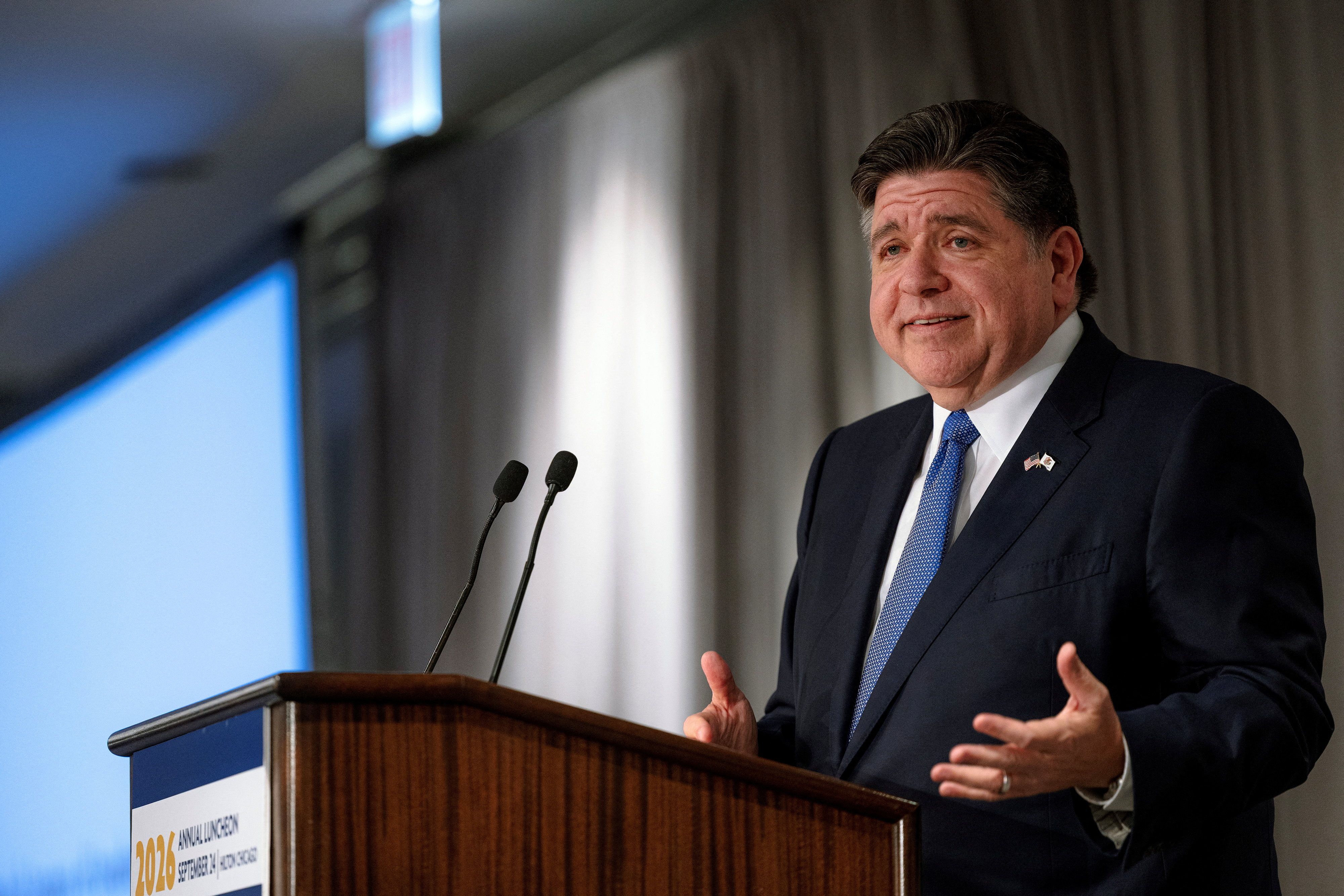
因此,我联系了唯一一位既公开谈论过自身治疗经历,又采取切实措施扩大药物覆盖范围以纳入减重适应症的国家级人物:伊利诺伊州州长J·B·普里茨克。
So I called up the only national figure who has both talked openly about his own treatment and taken concrete steps to expand coverage of the drugs to include weight loss: Illinois Gov. JB Pritzker.
普里茨克于2024年被诊断患有2型糖尿病,开始注射胰岛素。几个月后,一位医生在其治疗方案中加入了GLP-1类药物。此后,他减重约80磅(约36公斤),且不再需要注射胰岛素。
Pritzker was diagnosed with Type 2 diabetes in 2024 and began taking insulin. A doctor added a GLP-1 to his treatment protocol a few months later. He’s since lost about 80 pounds and no longer takes insulin.
我们本周通话时,他感觉良好:他说自己精力更充沛了,开始去散步,并走出了终身与体重作斗争的“过山车”般境遇。
He was feeling good when we spoke this week: He said he has more energy, he goes for walks, and he’s stepped off a lifelong “rollercoaster” of struggling with his weight.
“当我想到肥胖在人群中造成的一切不良影响,以及随之而来的成本——我说的是个人代价,也是经济代价——我觉得我们可能偶然发现了某种东西,”他感叹道。“随着价格下降,我们真的应该向所有人提供这种药物。”伊利诺伊州于2024年将该类药物的覆盖范围从仅限糖尿病扩大至肥胖症,惠及州政府雇员。目前,约3.2万名伊利诺伊州政府雇员及其家属正在使用这些药物,总费用达1.49亿美元——普里茨克办公室称,这占州处方药预算的18%。为作对比,其他品牌专利专科药物由6500名雇员使用,却占据了41%的预算。
“When I think about all the ill effects of obesity across the population, and the costs that come with it — and I’m talking about personal cost as well as financial cost — it feels to me like we may have stumbled onto something,” he marveled. “As the price drops, we really ought to be offering this to everyone.”Illinois extended its coverage of the drugs — from covering them for just diabetes to also covering them for obesity — for state employees in 2024. About 32,000 Illinois state employees and their family members are currently on the drugs, at a total cost of $149 million — a sum that Pritzker’s office says makes up 18% of the state’s prescription budget. For perspective, 41% goes to coverage of other brand-name specialty drugs taken by 6,500 employees.
GLP-1类药物触及了美国医疗政治的敏感神经,从民粹主义者对大型保险公司和制药公司的愤怒,到对政府开支的担忧,再到对慢性病沉重代价日益增强的认知。
GLP-1s touch nerve centers of US healthcare politics, from populist fury at big insurers and pharmaceutical companies to worries about government spending and a growing awareness of the toll of chronic illness.
即使特朗普总统在推动礼来公司和诺和诺德降价,而各州、2028年大选(实际上将在下周中期选举后拉开帷幕)也将成为这些药物不再是新鲜事物后的首场总统竞选。
But even as President Donald Trump pushed Eli Lilly and Novo Nordisk to lower prices and states, the 2028 campaign, which effectively begins after the midterms next week, will be the first presidential race during which the drugs will no longer be a novelty.
普里茨克尚未承诺参加2028年竞选,他也还没准备好提出宏大的政治主张,或逼迫私营公司承担这些药物的费用。“如果节省成本的效果得到证实,我认为你可以以此为竞选卖点,”他说。
Pritzker hasn’t committed to running in 2028, and he’s not ready to make sweeping political claims or to push private companies to cover the drugs.“If the cost savings bear themselves out, then I think you can campaign on it,” he said.
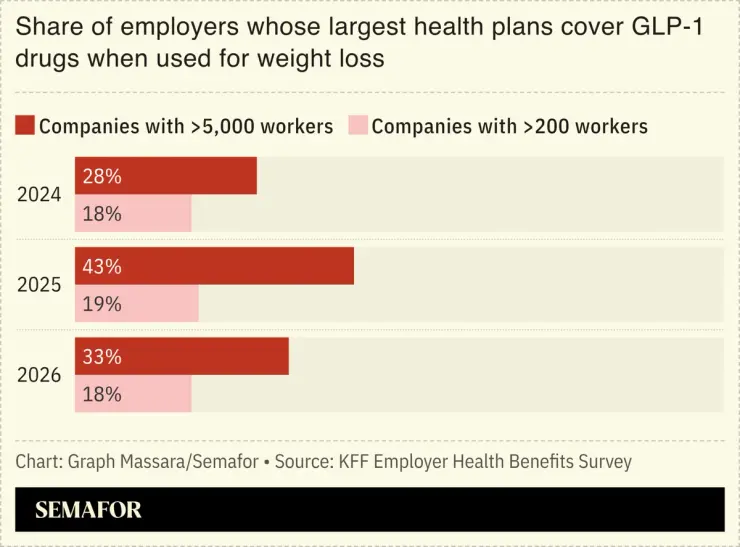
围绕GLP-1类药物的政策问题,在州级医疗补助计划和健康保险计划中,以及在企业董事会里都异常火热——首席执行官和人力资源高管们正在权衡员工需求与对利润的冲击。
The policy questions around GLP-1s are red-hot in state Medicaid and health plans — and in corporate boardrooms, where CEOs and human resources executives are balancing demand from employees with a hit to the bottom line.
根据凯撒家庭基金会(KFF)2024年的一项研究,视扩大覆盖范围的标准而定,拥有私人保险的65岁以下美国人中,可能有超过40%在临床上符合使用GLP-1类药物的条件。
Depending on expansion criteria, more than 40% of Americans under age 65 with private insurance could be clinically eligible for GLP-1s, a 2024 KFF study found.
这些成本会累积起来:服用GLP-1类药物的美国人,每年在药物上的平均支出为1528美元,这其中包括有保险和无保险的人。对于自费患者,费用可能高得多。生产Wegovy和Ozempic的诺和诺德标示的标价根据剂量不同,从每月149美元到399美元不等。
Those costs would add up: Americans taking a GLP-1 spend an average of $1,528 per year on their medication, including those with insurance coverage and without it. For cash payers, the cost can be far higher. Novo Nordisk, which makes Wegovy and Ozempic, advertises list prices ranging from $149 per month to $399 per month, depending on the dose.
今年,有七个将GLP-1类药物减重用途纳入医疗补助覆盖范围的州,要么取消了该福利,要么增加了限制以缩小受益资格。(伊利诺伊州并未将覆盖范围扩展至医疗补助参保人。)2025年税法案中通过的医疗补助削减措施将于明年生效,预计将加剧各州的困境。
This year, seven states that expanded Medicaid coverage of GLP-1s for weight loss either dropped the benefit or added restrictions to limit eligibility. (Illinois did not extend coverage to Medicaid enrollees.) Medicaid cuts passed in a 2025 tax bill set to take effect next year are expected to exacerbate states’ problems.
一个关键问题是时间:更好的健康何时能节省医疗开支?美国人的中位任职年限约为四年,而联邦政府评估健康结果的时间表则是十年。
A key question is time: When does better health save healthcare money? The median job tenure in the US is about four years, while the federal government evaluates health outcomes on a 10-year timetable.
普利兹克表示,他的州正在密切关注GLP-1药物带来的节省,并认为这些节省至少能抵消一部分费用。(他说,“在州政府里,我们有相当多的人任职时间相当长”,这可能有所帮助。)其他人则认为,狭隘的精算问题分散了人们对更大政治议题的注意力。直接面向消费者的医疗保健公司Ro的首席执行官扎卡里亚·雷塔诺对我说:“我们为远比公民健康更糟糕的理由透支未来。”
Pritzker said his state is carefully monitoring the savings GLP-1s bring and thinks they can at least defray some of the price tag. (It may help that “in state government, we have quite a lot of people who stay for a reasonably long period of time,” he said.) Others argue that narrow actuarial questions are a distraction from the larger political issue. “We borrow against our future for far worse reasons than the health of our citizens,” the CEO of the direct-to-consumer health care company Ro, Zachariah Reitano, told me.
慈善家、前能源交易员约翰·阿诺德指出,这些药物在该州以及私人市场的价格限制了它们的使用。
The cost of the drugs there and in the private market limits their use, the philanthropist and former energy trader John Arnold notes.
他说:“如果人们无法获得药物,药物就不起作用。这一类药品应该以公平的价格广泛供应。”
“Drugs don’t work if people can’t access them. This class of drugs should be broadly available at a fair price,” he said.
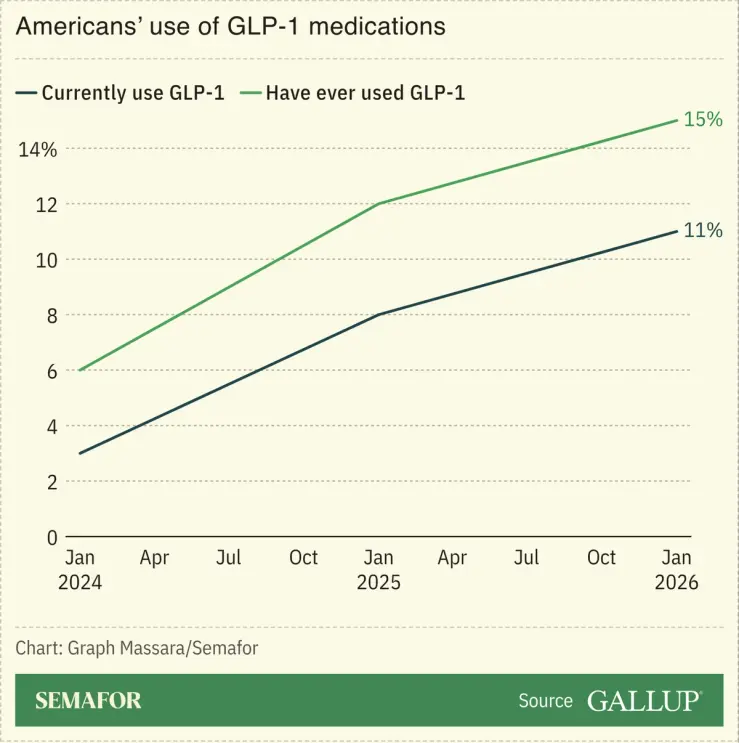
约有3200万美国人服用GLP-1药物,这一数字高于美国犹太人和穆斯林人数的总和。服用这类药物的美国人数量大约是付费订阅人工智能服务人数的两倍。
About 32 million Americans take GLP-1s, a higher number than there are American Jews and Muslims combined. About twice as many Americans take drugs as pay for artificial intelligence subscriptions.
许多人自付的费用与汽油等开支相当。(我每月向礼来公司支付454美元,购买30毫克Zepbound和一些小针头;作为选民,我当然愿意接受普利兹克——或者比如说JD·万斯——让我省下几块钱的计划。)而GLP-1药物的政治前景尚未明朗。普利兹克低调地推出了这些药物,而那些担心政府开支不断增长的选民(更不用说人数虽少但颇有影响力的瘦人群体)似乎有可能对更大范围的扩展心存疑虑。
Many are paying out-of-pocket sums comparable to expenses like gasoline. (I pay Eli Lilly $454 a month for 30 milligrams of Zepbound and some small needles, and would certainly be receptive, as a voter, to Pritzker’s or, say, JD Vance’s plan to save me a few bucks.) And the politics of GLP-1s are unsettled. Pritzker rolled them out quietly, and it seems possible that voters concerned about the growing cost of government (not to mention the small but influential minority of thin people) may have qualms about broader expansions.
但同样显而易见的是,任何寻求2028年美国总统职位的人,都必须设法应对围绕这些注射药物的一系列棘手政策问题。在西弗吉尼亚州、肯塔基州、路易斯安那州、俄克拉何马州和得克萨斯州等地尤其如此,这些地方的药物使用率(以及肥胖和糖尿病等疾病)位居全国最高之列。
But it’s also obvious that anyone seeking the American presidency in 2028 will have to figure out a response to the challenging policy questions around the jabs. This is particularly true in states like West Virginia, Kentucky, Louisiana, Oklahoma, and Texas, where medication usage (and diseases like obesity and diabetes) are among the highest in the country.
活跃在该领域的人士提出了一些建议:阿诺德呼吁国会堵住诺和诺德和礼来可能用来拖延仿制GLP-1药物竞争的空子。他还指出,最明显、最有效的解决方案,比如强制公共和私人项目为治疗肥胖的GLP-1药物提供覆盖,将会代价高昂。
People active in the space have some suggestions: Arnold called on Congress to block loopholes Novo Nordisk and Eli Lilly could use to delay competition from generic GLP-1s. He also noted that the most obvious and effective solutions, like mandating public and private programs to cover GLP-1s for obesity, will be expensive.
Ro的雷塔诺建议利用政府的规模来谈判降低价格,并设计出为患者持续接受治疗付费、而不仅仅是支付起始治疗费用的项目,因为当患者停止用药时,大部分健康价值就会消失。
Ro’s Reitano suggested using the government’s scale to negotiate lower prices, and to structure programs that pay for patients staying on the treatment, not just starting it, as much of the health value disappears when patients stop.
约翰·普里在《国家评论》上主张,政府不应介入GLP-1药物的覆盖——因为私人市场正在努力降低成本,这是一场“关于一种革命性疗法在传统支付体系之外运行会发生什么的实时实验”。与其他重磅药物不同,多家公司推出了各自的版本,这既在当下创造了竞争,也很可能在2030年代仿制药上市时带来大幅降低的价格。
John Puri argued in National Review that the government should stay out of covering GLP-1s —because the private market is working to bring down cost in “a real-time experiment in what happens when a revolutionary treatment runs outside traditional payment systems.”Unlike other blockbuster drugs, multiple companies introduced versions, which is both creating competition now and will likely lead to much lower prices in the 2030s when generics become available.