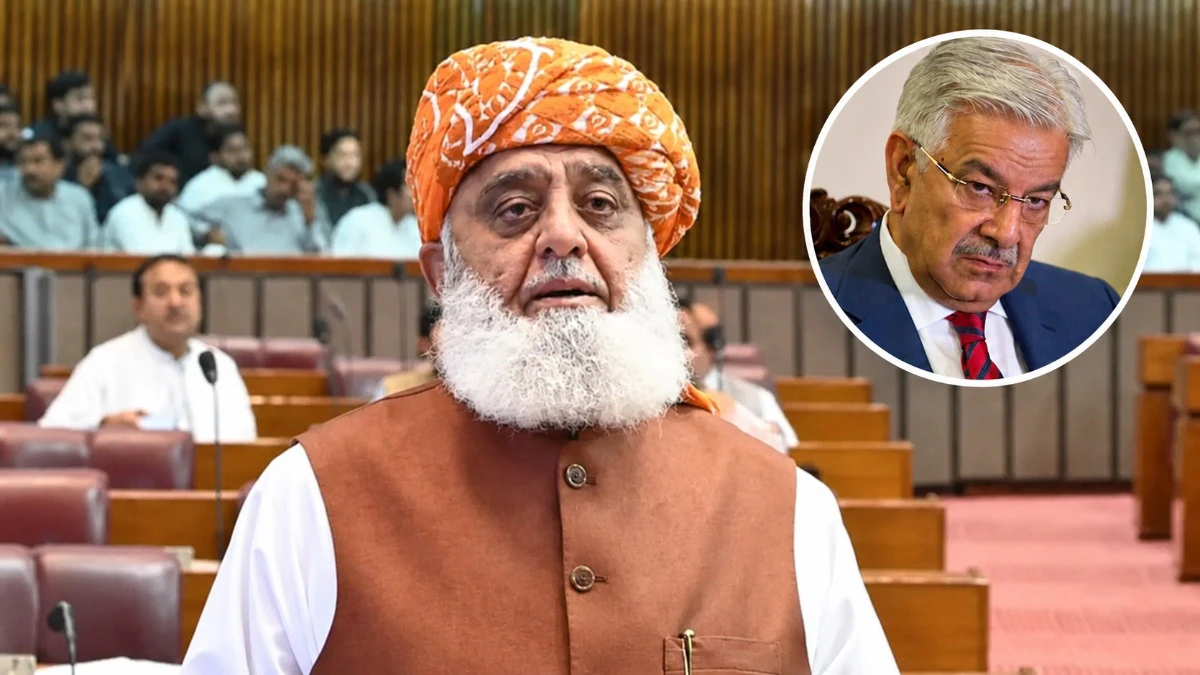
巴基斯坦反对派领袖毛拉纳·法扎勒·拉赫曼在议会中就伊朗的国防谈判讽刺了国防部长哈瓦贾·阿西夫。这位从宗教人士转行从政的普什图人嘲讽了阿西夫,并对巴基斯坦军队在外交政策中的作用提出了质疑。
Pakistani opposition leader Maulana Fazlur Rehman took a swipe at Defence Minister Khawaja Asif in Parliament over defence talks in Iran. The Pashtun cleric-turned-politician mocked Asif and raised questions over the role of Pakistan's military in foreign policy.
巴基斯坦国防部长哈瓦贾·阿西夫在议会中成了议会讽刺的对象,当时伊斯兰教法党-法兹勒派(JUI-F)主席毛拉纳·法扎勒·拉赫曼质疑,为什么一项国防协议正在伊朗讨论,而部长本人却坐在议会里。
Pakistan's Defence Minister Khawaja Asif found himself at the receiving end of a parliamentary jibe, when Jamiat Ulema-e-Islam-Fazl (JUI-F) chief Maulana Fazlur Rehman questioned why a defence agreement was being discussed in Iran while the minister was sitting in Parliament.
在国民议会的一次演讲中,拉赫曼讽刺阿西夫说:“一项国防协议正在伊朗达成,而国防部长却坐在这里。”
Taking a dig at Asif during a speech in the National Assembly, Rehman said, "A defence agreement is being made in Iran, and the defence minister is sitting here."
他随后用阿西夫自己著名的政治口号反讽他,问道:“Koi sharam hoti hai, koi haya hoti hai”——这是一句印地语-乌尔都语表达,意思是“要点羞耻心,要点体面吗?”这番话在议会引起了笑声,该交流的片段在社交媒体上流传。拉赫曼的言论再次将巴基斯坦文职政府与其强大的军事领导层之间职责划分的问题推到了聚光灯下,特别是在涉及国家安全和外交政策的决策被讨论之际。
He then turned Asif's own famous political catchphrase against him, asking, "Koi sharam hoti hai, koi haya hoti hai" — a Hindi-Urdu expression meaning, "Have some shame, have some decency?" The remark drew laughter in the House, and a clip of the exchange circulated on social media. Rehman's comments have again put the spotlight on the division of responsibilities between Pakistan's civilian government and its powerful military leadership, particularly when decisions involving national security and foreign policy are being discussed.
毛拉纳·法扎勒·拉赫曼是巴基斯坦开伯尔-普什图省代拉伊斯迈尔汗的一位著名普什图(帕坦)宗教人士转行从政者。
Maulana Fazlur Rehman is a prominent Pashtun (Pathan) cleric-turned-politician from Dera Ismail Khan in Pakistan's Khyber Pakhtunkhwa province.
他领导的JUI-F是一个逊尼派德奥班德宗教政党,其支持大部分来自开伯尔-普什图省和俾路支省的普什图人占多数地区,其基层网络根植于宗教神学院和机构。
He leads JUI-F, a Sunni Deobandi religious party that draws much of its support from the Pashtun-majority areas of Khyber Pakhtunkhwa and Balochistan, with its grassroots network rooted in religious seminaries and institutions.
与以伊姆兰·汗领导为中心的民粹主义政党巴基斯坦正义运动党(PTI),或拥有世袭政治传统的中左翼政党巴基斯坦人民党(PPP)不同,JUI-F将宗教保守主义和倡导伊斯兰教法与选举政治相结合。阿西姆·穆尼尔为何在伊朗?
Unlike Imran Khan's Pakistan Tehreek-e-Insaf (PTI), which emerged as a populist party centred on Khan's leadership, or the Pakistan Peoples Party (PPP), a centre-left party with a dynastic political legacy, JUI-F combines religious conservatism and advocacy of Sharia law with electoral politics. WHY WAS ASIM MUNIR IN IRAN?
拉赫曼的讽刺是在10月26日德黑兰举行的高层外交会谈背景下提出的,会谈涉及巴基斯坦、沙特阿拉伯和土耳其的代表。会议汇聚了巴基斯坦国防部队主席、陆军元帅阿西姆·穆尼尔、沙特国防大臣哈立德·本·萨勒曼王子、土耳其情报局局长易卜拉欣·卡林,他们会见了伊朗总统马苏德·佩泽希齐扬及其他高级官员。
Rehman's jibe came against the backdrop of high-level diplomatic talks in Tehran on October 26, involving representatives of Pakistan, Saudi Arabia and Turkey. The meeting brought together Pakistan's Chief of Defence Forces, Field Marshal Asim Munir, Saudi Defence Minister Prince Khalid bin Salman, and Turkish intelligence chief, Ibrahim Kalin, who met Iranian President Masoud Pezeshkian and other senior officials.
会谈是在《麦加联合防御协定》框架下进行的,该协定由巴基斯坦、沙特阿拉伯和土耳其于8月签署。该协定规定了集体防御,即对一国的攻击视为对三国的攻击。
The talks took place under the framework of the Makkah Joint Defence Agreement, signed by Pakistan, Saudi Arabia and Turkey in August. The pact provides for collective defence, with an attack on one member to be treated as an attack on all three.
德黑兰会谈旨在防止地区局势进一步升级,解决与胡塞武装袭击沙特阿拉伯有关的安全担忧,并探索恢复美国与伊朗谈判的途径。巴基斯坦在推动华盛顿和德黑兰重返谈判桌的努力中发挥了调解作用。
The Tehran discussions were aimed at preventing a fresh escalation in the region, addressing security concerns linked to the attacks by Houthis on Saudi Arabia and exploring ways to revive negotiations between the United States and Iran. Pakistan has played a mediating role in efforts to bring Washington and Tehran back to the negotiating table.
穆尼尔出席会谈凸显了巴基斯坦军方领导层在涉及地区安全的外交中所承担的核心角色。内政部长莫辛·纳克维也曾于8月陪同穆尼尔访问伊朗,并参与了伊斯兰堡在华盛顿和德黑兰之间进行调解的努力。
Munir's presence at the talks highlighted the central role Pakistan's military leadership has assumed in diplomacy involving regional security. Interior Minister Mohsin Naqvi also accompanied Munir on an earlier visit to Iran in August and has participated in Islamabad's efforts to mediate between Washington and Tehran.
因此,拉赫曼的批评不仅仅关乎一位部长缺席会议。它还引发了一个问题:在涉及防务承诺、地区安全和外交政策的谈判中,究竟是谁代表巴基斯坦?
Rehman's criticism, therefore, was not just about a minister's absence from a meeting. It also drew attention to the question of who represents Pakistan in negotiations involving defence commitments, regional security and foreign policy.
国防部长哈瓦贾·阿西夫敦促毛拉纳·法兹卢·拉赫曼保持克制 国防部长哈瓦贾·阿西夫周四在国民议会回应拉赫曼的批评,否认德黑兰正在谈判防务协定,也否认讨论涉及巴基斯坦国防部,卡拉奇《黎明报》报道。
KHAWAJA ASIF URGES MAULANA FAZLUR REHMAN TO SHOW RESTRAINT Defence Minister Khawaja Asif responded to Rehman's criticism in the National Assembly on Thursday, denying that a defence pact was being negotiated in Tehran or that the discussions concerned Pakistan's defence ministry, reported Karachi-based daily Dawn.
阿西夫表示,陆军元帅阿西姆·穆尼尔已承担起在该地区推动和平与对话的角色,并帮助将地区国家凝聚在一起。阿西夫辩称,德黑兰会议不在其部职权范围内,他无需出席。
Asif said Field Marshal Asim Munir had taken on the role of promoting peace and dialogue in the region, and had helped bring the regional countries together. Asif argued that the Tehran meeting fell outside his ministry's mandate and that he was not required to attend.
据《黎明报》援引阿西夫的话报道,巴基斯坦已签署两项防务协议——麦加防务联盟和白德尔谅解备忘录。“我参与了这些协议,因为我是国防部长,”他说。据《黎明报》报道,阿西夫还表示,德黑兰会议“不属于国防部的职权范围”。
Asif said Pakistan had signed two defence pacts — the Makkah Defence Alliance and the Badr MoU. "I was involved in those pacts as I am the defence minister,” he was quoted as saying by Dawn. Asif also said the meeting in Tehran was "not the defence ministry's mandate", according to Dawn.
他还回击了拉赫曼,称其批评不着边际,并指责伊斯兰学者阵线(JUI-F)领袖拉赫曼搞政治投机。阿西夫敦促拉赫曼保持克制,称尽管存在政治分歧,巴基斯坦的外交努力应当得到认可。
He also hit back at Rehman, calling his criticism misplaced and accusing the JUI-F chief of political opportunism. Asif urged Rehman to show restraint, saying Pakistan's diplomatic efforts should be acknowledged despite political differences.
拉赫曼质疑政府决策 与阿西夫的交锋是拉赫曼更广泛演讲的一部分,他在演讲中质疑联邦政府在政治和安全事务上的处理方式。他批评了他所描述的宪法条款被滥用的现象,并质疑政府辩称其行动因应对恐怖主义的需要而合理的论点。
REHMAN QUESTIONED GOVERNMENT'S DECISIONS The exchange with Asif was part of a broader speech in which Rehman questioned the federal government's handling of political and security matters. He criticised what he described as the misuse of constitutional provisions and challenged the government's argument that its actions were justified by the need to tackle terrorism.
拉赫曼辩称,宪法赋予的权力不得以损害民主代表性的方式行使。“使用宪法和滥用宪法是有区别的,”他说,指的是政府依据宪法条款为其决策辩护。
Rehman argued that constitutional powers could not be exercised in a manner that undermined democratic representation. "There is a difference between using it and misusing the Constitution," he said, referring to the government's reliance on constitutional provisions to justify its decisions.
他还质疑以省政府未能应对恐怖主义为由将其撤职的建议,认为巴基斯坦其他地区的安全挑战也理应接受类似的审视。“如果是关于失败,那么俾路支省在反恐战争的失败程度上要领先两个等次,”拉赫曼说,并询问为何那里未实施紧急措施。
He also questioned the suggestion that a provincial government could be removed because of its failure to address terrorism, arguing that security challenges elsewhere in Pakistan warranted similar scrutiny. "If it's about failure, then Balochistan is two degrees ahead in the failure of the war against terrorism," Rehman said, asking why emergency measures had not been imposed there.
“要实现变革,不是靠发动革命、推翻一切;相反,即便是为了这个目的,也必须深入群众,”他说。
"The way to bring about change is not to bring a revolution and overturn everything; rather, even for that, one must go to the people," he said.
这一事件发生之际,巴基斯坦军方领导层在安全政策和外交事务中均扮演着显要角色。身兼国防部队参谋长联席会议主席和陆军参谋长的穆尼尔,一直参与管控地区紧张局势、斡旋华盛顿与德黑兰对话的努力。
The episode comes at a time when Pakistan's military leadership is playing a prominent role in both security policy and diplomacy. Munir, who serves as the country's chief of defence forces as well as army chief, has been involved in efforts to manage regional tensions and facilitate talks between Washington and Tehran.
巴基斯坦与沙特阿拉伯、土耳其签署的“麦加防务协定”,也引发了关于其义务范围以及议会对安全决策监督程度的质疑。
Pakistan's Makkah defence pact with Saudi Arabia and Turkey has also raised questions about the scope of its obligations and the extent of parliamentary scrutiny over security decisions.
声称伊斯兰学者阵线(JUI-F)在暴力事件中遭受重大损失的拉赫曼还表示:“你们的血是神圣的,我们的血就白流了吗?这不行;你们必须给予尊重。” 直接的政治启示在于,拉赫曼精准地引用了阿西夫自己的话来反击他。通过在国民议会援引“难道没有羞耻感吗,难道没有廉耻之心吗”,拉赫曼将这一政治嘲讽转化为对政府处理敏感防务外交方式的批评。
Claiming that JUI-F had suffered significant losses in violence, Rehman also said, "Is your blood sacred, and my blood wasted? This won't do; you will have to give respect." The immediate political takeaway is Rehman's pointed use of Asif's own words against him. By invoking "koi sharam hoti hai, koi haya hoti hai" in the National Assembly, Rehman turned the political taunt into a criticism of the government's handling of sensitive defence diplomacy.