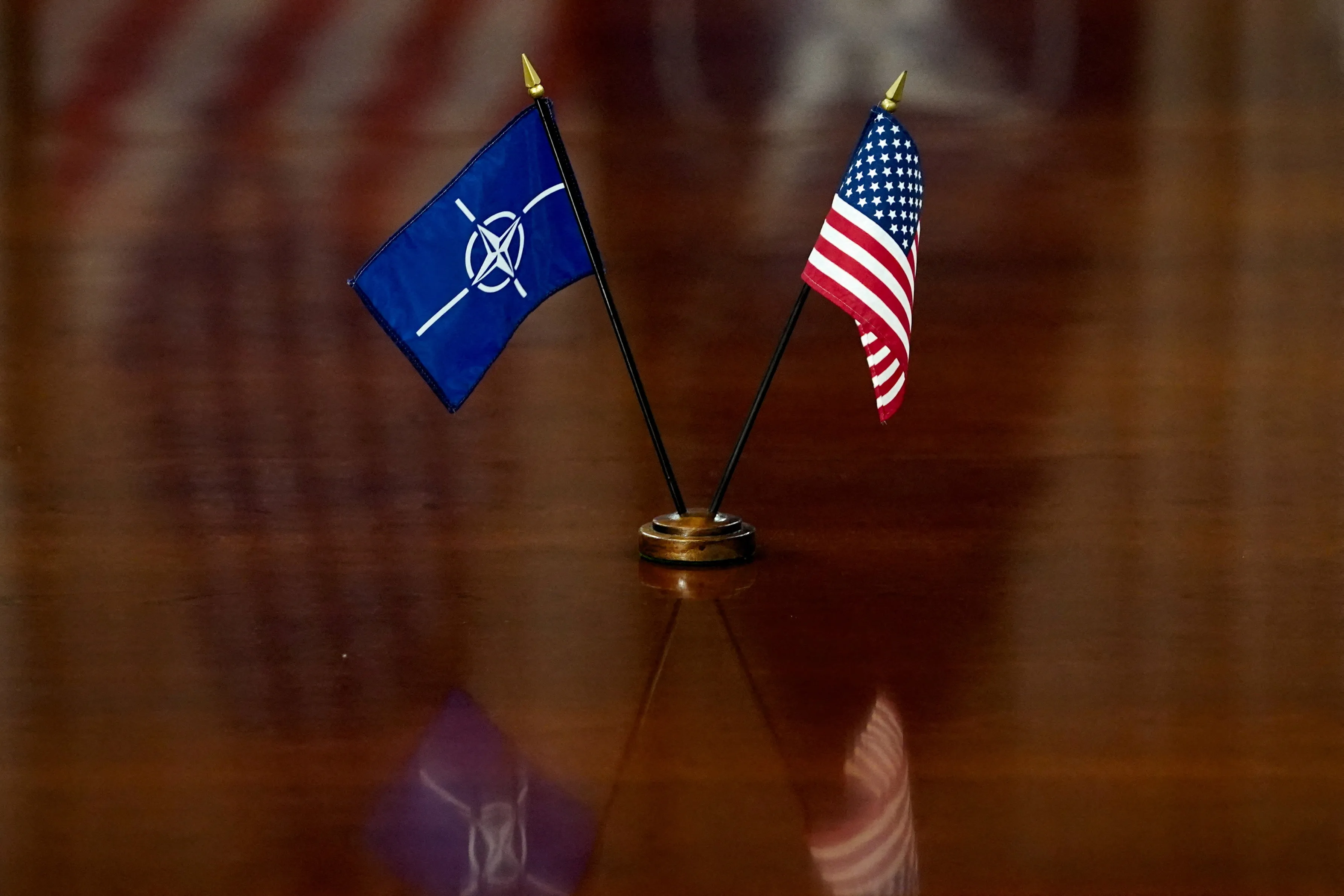
根据兰德公司的一项新研究,美国军队若从欧洲进行快速、无序的撤军,从长远来看可能会促使关键北约盟友进一步远离美国武器装备,研究作者称,这种转变将损害美国的国防工业基础。
A rapid, uncoordinated U.S. military drawdown from Europe could push key NATO allies further away from American weapons over the long term, according to a new RAND study , a shift the authors say would hurt the U.S. defense industrial base.
兰德公司于周三发布了题为《预判盟友对美国从欧洲撤军的反应》的报告。该报告考察了法国、德国、波兰和英国可能如何应对兰德公司所谓的不同版本的“有限撤军”:即在不完全退出北约的前提下,削减美国对欧洲的承诺和驻军。
RAND released the report, “Anticipating Allies’ Responses to U.S. Retrenchment from Europe,” on Wednesday. It examines how France, Germany, Poland and the U.K. would likely respond to different versions of what RAND calls limited retrenchment: cuts to American commitments and forces in Europe that stop short of leaving NATO altogether.
该研究借鉴了冷战时期的先例、盟国政府文件和公开辩论,并采访了这四个国家的51名官员和专家,大多数访谈于2025年4月至11月期间进行。作者提醒称,其调查结果仅适用于这四个盟友。
The study draws on Cold War precedents, allied government documents and public debate, and interviews with 51 officials and experts in the four countries, most conducted between April and November 2025. The authors caution that their findings apply only to those four allies.
报告的主要发现是,美国撤军的方式将决定盟友的反应。作者写道,这四个盟友“认为有序、协调的美国撤军与快速、无序的撤军有着截然不同的后果,前者是他们觉得可以应对的,而后者在他们眼中将造成重大能力缺口,并可能鼓励俄罗斯攻击北约成员国。”
The report’s main finding is that how the U.S. withdraws will shape how allies respond. The four allies “see a stark difference between a coordinated, orderly U.S. withdrawal, which they feel they could handle, and a rapid, uncoordinated one, which they see as creating major capability gaps and potentially emboldening Russia to attack a NATO member,” the authors wrote.
作者建议美国在与盟友协商制定的长期时间表上落实更大规模的兵力削减,他们表示,这或许有助于维持盟友的国防开支轨迹,即使在国内推销这一政策变得更加困难。
The authors recommend the U.S. follow through with larger force cuts on a long-term timeline worked out with allies, which they say may help keep allies’ defense spending on track even as it gets harder to sell at home.
兰德公司将这些选项与“北约3.0”进行了权衡,“北约3.0”是国防部政策副部长埃尔布里奇·科尔比于2月提出的联盟概念。该概念主张由欧洲承担主要责任负责自身的非核防御,而美国则将资源转向西半球和太平洋地区。
RAND weighs those choices against NATO 3.0 , the alliance concept Under Secretary of Defense for Policy Elbridge Colby presented in February. It calls for Europe to take primary responsibility for its own non-nuclear defense while the U.S. shifts resources to the Western Hemisphere and the Pacific.
报告引用美国欧洲司令部司令在国会作证的证词称,五角大楼已经开始缩减其在欧洲的军事足迹。截至2025年,约有8万名美军驻扎在欧洲约30个基地。
The Pentagon has already begun reducing its footprint in Europe. About 80,000 U.S. troops were stationed there across roughly 30 bases as of 2025, according to congressional testimony from the head of U.S. European Command cited in the report.
五月,五角大楼宣布将从德国撤回约5000名士兵。随后在六月,美国削减了在危机时刻可供北约调用的兵力。对驻欧美军的评估工作正在进行中。
In May, the Pentagon announced it would pull about 5,000 troops out of Germany . Then in June, the U.S. cut the forces it would make available to NATO in a crisis . A review of U.S. forces in Europe is underway.
法国、德国、意大利、波兰和英国的国防部长周一在一份联合声明中表示,欧洲“必须为自身安全承担更大责任”。他们同时称美国是“不可或缺的盟友”。军售面临风险接受兰德公司采访的英国受访者表示,突然撤军会让盟友陷入两难。短期内,他们几乎别无选择,只能购买现货装备(通常来自美国供应商)来填补空缺。从长远来看,信任破裂将推动盟友转向欧洲或本土替代方案,作者得出这一结论。
Defense ministers from France, Germany, Italy, Poland and the U.K. said Monday in a joint statement that Europe “must assume greater responsibility for its own security.”They also called the U.S. “an indispensable Ally.”Arms sales at risk A sudden pullout would put allies in a bind, U.K. interviewees told RAND. In the short term, they would have little choice but to buy off-the-shelf equipment, often from U.S. suppliers, to fill gaps. Over the long term, broken trust would push allies toward European or homegrown alternatives, the authors concluded.
受访者称,就英国而言,突然撤军将“加速英国从美国国防装备转向主权或欧洲替代方案的重新定向”。作者预计德国,以及可能的波兰,会得出类似结论。
In Britain’s case, a sudden withdrawal would “accelerate the UK’s reorientation away from U.S. defense equipment toward sovereign or European alternatives,” those interviewees said. The authors expect Germany, and possibly Poland, to reach a similar conclusion.
德国购买美国武器部分是为了让华盛顿继续承诺留在欧洲。快速、无序的撤军将表明这种做法已失败,柏林“可能不再看到继续在军售或其他交易中优先考虑美国企业的益处”,作者写道。
Germany has bought U.S. arms partly to keep Washington committed to Europe. A rapid, uncoordinated withdrawal would suggest that approach had failed, and Berlin “may not see a benefit to continuing to privilege U.S. firms for arms sales or other deals,” the authors write.
报告称:“这种转变将损害美国国防工业基础,后者受益于出口带来的规模经济效应。”“这种转变的主要原因将是对美国作为盟友可靠性的看法,而非任何特定美国军事能力的丧失。”
“Such a shift would be detrimental to the U.S. defense industrial base, which benefits from exports that help create economies of scale,” the report said. “The main cause of this shift would be perceptions of U.S. reliability as an ally rather than the loss of any specific U.S. military capabilities.”
根据斯德哥尔摩国际和平研究所的数据,2021年至2025年,美国提供了欧洲北约成员国进口主要武器的58%,低于该研究所前一个五年统计周期的64%。
The U.S. supplied 58% of the major weapons European NATO members imported from 2021 to 2025, according to the Stockholm International Peace Research Institute , down from 64% in the institute’s previous five-year count.
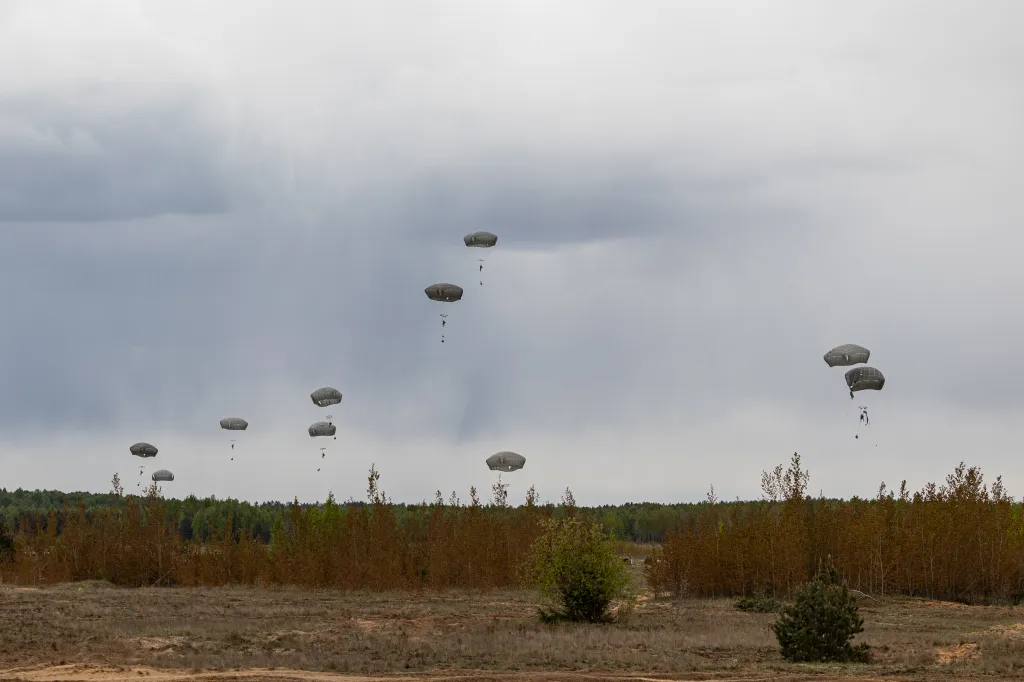
2025年5月16日,美国士兵在立陶宛鲁克拉附近的盖久训练区,与北约部队和伙伴国举行“铁狼”军事演习期间进行空降。
U.S. soldiers parachute during Iron Wolf military exercises with NATO forces and partners on May 16, 2025, at the Gaiziunai training area near Rukla, Lithuania.
在周一的声明中,这五位部长还承诺加强“更紧密的国防工业合作”。但英国国防大臣韦斯·斯特里廷10月15日表示,购买欧洲或美国装备“不应是非此即彼的选择”。他在华盛顿战略与国际研究中心表示,英国工业生产每架F-35战机约15%的部件。
In Monday’s statement, the five ministers also committed to “closer defence-industrial cooperation.”But British Defense Secretary Wes Streeting said Oct. 15 that buying European or American equipment “should not be an either/or choice.”British industry produces about 15% of each F-35, he told the Center for Strategic and International Studies in Washington.
该研究称,美国突然撤军可能对法国从美国防务公司采购的数量影响不大,因为巴黎已经是“四个盟友中最致力于减少对美国依赖的国家”。
A sudden U.S. pullout would likely have little impact on how much France buys from U.S. defense companies, as Paris is already “the most committed of the four allies to reducing reliance on the United States,” the study said.
然而,法国官员在战时告诉兰德公司,其军队仍将依赖美军提供情报、监视和侦察;远程精确打击;战斗机;防空和反导防御;指挥与控制(即战斗中指挥部队的系统);以及后勤保障。
During wartime, however, French officials told RAND their military would still count on U.S. forces for intelligence, surveillance and reconnaissance; long-range precision strike; fighter jets; air and missile defense; command and control, the systems used to direct forces in combat; and logistics.
作者写道,在法国能够自行填补这些空白之前,巴黎将把美国突然撤军视为华盛顿不在乎其盟友安全的信号。这可能会使两国在军事计划或外交倡议上更难达成一致。情报共享作者还考察了如果美国在乌克兰战争持续期间寻求与俄罗斯关系正常化,而不解决欧洲的安全担忧,会发生什么情况。在这种情况下,盟友可能会限制情报共享和联合军事规划,担心泄露给莫斯科。
Until France can fill those gaps itself, Paris would see a sudden U.S. pullout as a sign Washington cares little about its allies’ security, the authors wrote. That could make the two countries less likely to agree on military plans or diplomatic initiatives. Intelligence sharing The authors also looked at what would happen if the U.S. moved to normalize relations with Russia while the war in Ukraine continued, without addressing Europe’s security concerns. In that case, allies might limit intelligence sharing and joint military planning, fearing leaks to Moscow.
报告称,一些盟友已经因与华盛顿的其他分歧而开始限制情报共享,尽管幅度不大。报告援引英国对美国在加勒比海军事行动的担忧,以及荷兰对美国对俄政策的担忧,这导致两国都减少了一些情报共享。
Some allies have already begun limiting intelligence sharing over other disagreements with Washington, albeit modestly, the report said. It cites U.K. concerns about U.S. military operations in the Caribbean, and Dutch concerns about U.S. policy toward Russia, which led both countries to reduce some intelligence sharing.
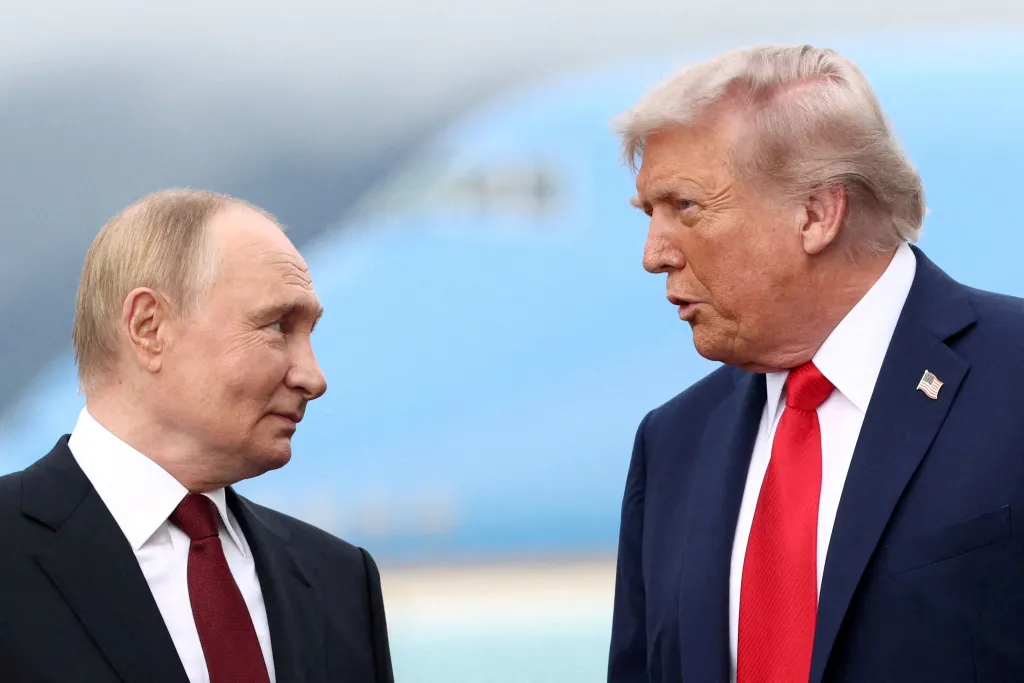
美国总统唐纳德·特朗普在阿拉斯加埃尔门多夫-理查森联合基地与俄罗斯总统弗拉基米尔·普京会晤,就结束乌克兰战争进行谈判,2025年8月15日摄。(凯文·拉马尔克/路透社)尽管如此,作者们得出结论:在兰德公司研究的任何情景下,这四个盟友都不会在安全问题上站在俄罗斯或中国一边。
U.S. President Donald Trump speaks with Russian President Vladimir Putin as they meet to negotiate for an end to the war in Ukraine, at Joint Base Elmendorf-Richardson, Alaska, Aug. 15, 2025. (Kevin Lamarque/Reuters) Still, none of the four allies would side with Russia or China on security under any scenario RAND examined, the authors concluded.
“一些战略家担心,随着美国撤军,盟友会倒向俄罗斯,这种担忧被夸大了,”作者们写道。这四个国家加上意大利在周一的声明中称俄罗斯是“欧洲-大西洋安全与稳定面临的最严峻、最长期的威胁”。支出差距作者们发现,有限的撤军更可能刺激盟友增加开支并加强合作。根据北约2025年峰会宣言,这四个国家都已承诺到2035年将核心国防开支达到国内生产总值(GDP)至少3.5%的北约目标。
“Some strategists’ fears about allies aligning with Russia as the United States draws down are overblown,” the authors wrote. The four countries and Italy called Russia “the most acute and long-term threat to Euro-Atlantic security and stability” in Monday’s statement. Spending gap A limited pullback is more likely to spur allies to spend more and work more closely together, the authors found. All four have committed to NATO’s target of at least 3.5% of gross domestic product, or GDP, for core defense spending by 2035, according to the alliance’s 2025 summit declaration .
报告称,自2014年以来,波兰的国防开支占GDP的比重已翻倍多,今年目标定为5%。据《防务新闻》报道,德国计划在五年内投入6490亿欧元用于军费,将开支从2025年的GDP占比2.4%提高到2029年的3.5%。
Poland has more than doubled defense spending as a share of GDP since 2014 and is aiming for 5% this year, the report said. Germany plans to spend €649 billion on its military over five years, raising spending from 2.4% of GDP in 2025 to 3.5% by 2029, Defense News reported .
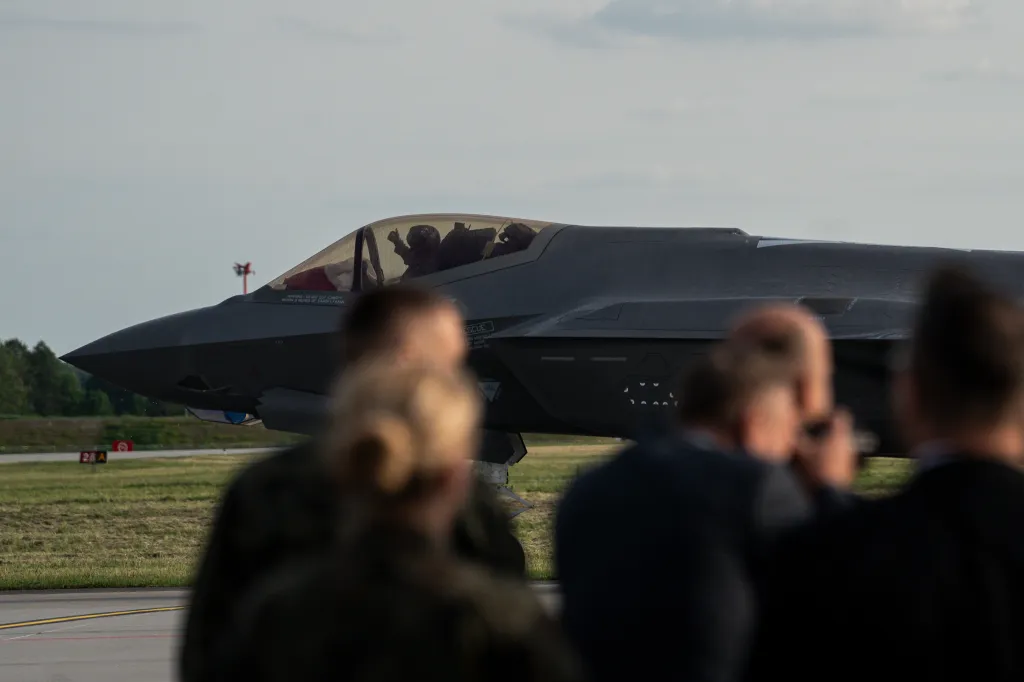
波兰空军成员在2026年5月22日于波兰拉斯克第32空军基地观看三架洛克希德·马丁F-35A“胡萨尔”战斗机抵达。
Members of the Polish Air Force watch the arrival of one of three Lockheed Martin F-35A “Husarz” fighter jets at the 32nd Air Base in Lask, Poland, on May 22, 2026.
报告称,由于债务高企和增长缓慢,法国和英国将难以达到北约目标。法国公共债务从2019年的GDP占比98%上升到2020至2024年平均112%。一位受访者称预算问题是法国重整军备的“阿喀琉斯之踵”。
France and the U.K. will struggle to meet NATO’s target because of high debt and slow growth, the report said. French public debt rose from 98% of GDP in 2019 to an average of 112% from 2020 to 2024. One interviewee called the budget problem France’s “Achilles’ heel” in rearming.
报告称,英国国防部曾要求额外拨款280亿英镑以弥补至2030年的缺口,但只获得了150亿英镑。据路透社报道,英国政府于10月28日表示将为其《国防投资计划》提供全额资金。军队作为筹码作者还警告不要利用驻军规模来奖惩个别盟友。作为评估的一部分,五角大楼向盟友发放的问卷询问了它们的国防开支以及对美国外交政策优先事项的支持情况。报告称,一些盟友将其解读为驻军决定将取决于政治立场一致性的信号。
The U.K. Ministry of Defence asked for an extra £28 billion to cover a shortfall through 2030 and received £15 billion, the report said. The British government said Oct. 28 it would fully fund its Defence Investment Plan, Reuters reported . Troops as leverage The authors also warn against using troop levels to reward or punish individual allies. Questionnaires the Pentagon sent allies as part of the review asked about their defense spending and support for U.S. foreign policy priorities. Some allies read that as a sign troop decisions would hinge on political alignment, the report said.
波兰已经见识到美国驻军决定变化有多快。5月,五角大楼突然取消了向波兰部署约4000名士兵的计划。特朗普总统随后承诺在未指定的日期派遣5000名士兵。华沙将这一反转部分归功于向华盛顿提醒,波兰是购买美国武器系统的“模范盟友”。
Poland has already seen how quickly U.S. troop decisions can change. In May, the Pentagon abruptly canceled a planned deployment of about 4,000 soldiers to Poland . President Donald Trump later pledged to send 5,000 troops at an unspecified date. Warsaw credited the reversal partly to reminding Washington that Poland is a “model ally” that buys U.S. systems.
作者表示,这一插曲既展示了波兰期望得到的回报,也暴露了其做法的弱点:美国的驻军规模和承诺建立在“突如其来、易于逆转的决定”之上。呼吁制定计划报告称:“‘北约3.0’是一个削减美国角色和重新分配资源的愿景。但并没有具体的长期计划。”
The authors said the episode demonstrates both the payoff Poland expects and the weakness of its approach: U.S. troop levels and commitments rest on “abrupt, easily reversible decisions.”Call for a plan “NATO 3.0 is a vision for a reduced U.S. role and reallocation of resources. But there is no concrete, long-term plan,” the report said.
作者敦促政府与盟友合作,确定和平时期驻欧美军数量、战时美军增派数量,以及实现这一目标的时间表。
The authors urge the administration to work with allies to set how many U.S. troops stay in Europe in peacetime and how many the U.S. would send in a war, along with a timeline to get there.
欧洲评估是否会产生此类计划尚不清楚。根据路透社8月看到的一份五角大楼文件,评估须在11月6日前向国防部长皮特·赫格塞斯提交至少四套驻军方案。完整评估报告将于12月提交。
It is unclear whether the Europe review will produce such a plan. Under a Pentagon document seen by Reuters in August, the review is due to give Defense Secretary Pete Hegseth at least four sets of troop options by Nov. 6. The full review is due in December.
作者写道,赋予盟友发言权的可预测长期计划“能够维持一种持续的、尽管是重新构想的跨大西洋伙伴关系”。他们补充道,相比之下,将驻军和承诺视为筹码,“可能会破坏地区合作,进而削弱‘北约3.0’实现欧洲强大的目标。”
Predictable long-term plans that give allies a say “could sustain a continued, if reimagined, transatlantic partnership,” the authors wrote. Adding that treating troops and commitments as bargaining chips, by contrast, “could undercut regional cooperation and, in turn, NATO 3.0’s goal of European strength.”