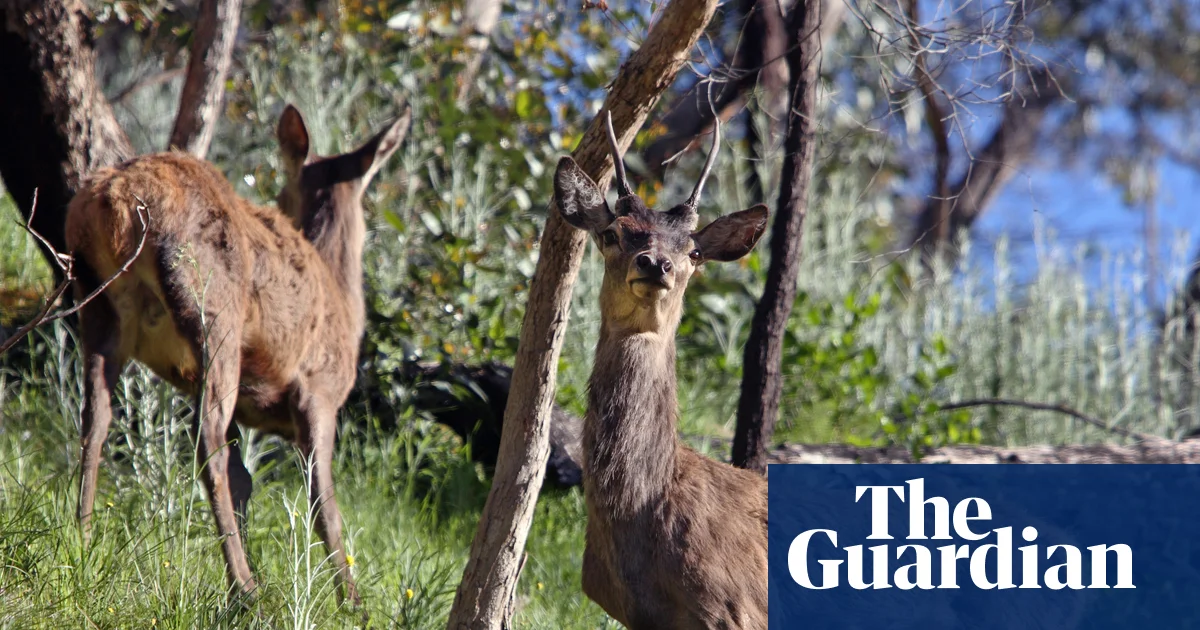
一份未公开的政府报告显示,澳大利亚在阻止野鹿扩散方面的努力已告失败,一位倡导者警告称,野鹿可能成为“澳大利亚的下一种野猪”。2020年至2025年这五年间,即国家野鹿行动计划接受评估的时期,这种以难以捉摸著称的物种日益侵入主要城市,导致遭遇事件更加频繁——其中包括一次令人难忘的事件:两名男子在丛林中裸体晒太阳时被鹿惊吓而迷路,随后因不同程度的裸露被罚款。
An unpublished government report on feral deer shows Australia is failing in its efforts to stop the spread of what one advocate warns could become "Australia's next feral pig The five years from 2020-2025 over which the national feral deer action plan was assessed covers a period in which the famously elusive species has increasingly encroached upon major cities, leading to more frequent encounters– including a memorable occasion in which two men in various degrees of undress were fined after becoming lost in the bush when they were spooked by deer while nude sunbathing The report says deer, one of the country's "most rapidly increasing invasive pests", have both increased in numbers and spread in territory, costing more than $91m in production loss and management time every year.
报告称,野鹿是该国“增长最快的入侵性害兽之一”,其数量和分布范围均有所增加,每年造成超过9100万澳元的生产损失和管理时间成本。
Deakin University's Prof Euan Ritchie, president of the Australian Mammal Society, said he was "not at all" surprised by this year's national vertebrate pest management report card.
迪肯大学教授、澳大利亚哺乳动物学会会长尤安·里奇表示,他对今年的国家脊椎动物害兽管理报告单结果“一点也不感到惊讶”。
"This report shows that governments are failing miserably to invest enough to control deer populations and the severe impacts that they can have on agriculture, native wildlife and the environment, road safety and culturally significant sites," Ritchie said.
里奇说:“这份报告表明,政府在投入资源控制鹿群数量及其对农业、本土野生动物和环境、道路安全以及文化重要遗址可能造成的严重影响方面,惨败于投入严重不足。”
"This is what sustained failure to act sufficiently results in." Six species of feral deer are established in Australia – chital, fallow, hog, red, rusa and sambar – with well-established populations across south-eastern Australia, where densities are highest. There are smaller, more localised populations in South and Western Australia and the Northern Territory.
“这就是长期未能采取充分行动所导致的结果。”澳大利亚已建立种群的野鹿共有六种——梅花鹿、黇鹿、猪鹿、赤鹿、马来鹿和马鹿——在澳大利亚东南部拥有成熟种群,该区域密度最高。在南澳大利亚州、西澳大利亚州和北领地则存在较小、更局部的种群。
The report card, produced by the National Vertebrate Pest Coordinators, shows every state and territory is failing or floundering in their efforts to control feral deer – with one notable exception. South Australia, which launched an ambitious statewide eradication plan in 2022, received a green in all four categories assessed under the traffic light system of marking. The report showed – with high confidence – that the state had decreased the abundance, distribution and environmental and agricultural impacts of deer.
由国家脊椎动物害兽协调员编制的这份报告单显示,在控制野鹿方面,每个州和领地的表现均为不及格或举步维艰——只有一个显著的例外。南澳大利亚州于2022年启动了一项雄心勃勃的全州根除计划,在交通灯评分制的四个评估类别中均获得绿灯。报告以高置信度显示,该州已减少了鹿的数量、分布范围以及对环境和农业的影响。
New South Wales and Tasmania were given reds in all four categories, while Queensland and the ACT both received three reds and a yellow. No jurisdiction but SA received a single green pass mark.
新南威尔士州和塔斯马尼亚州在所有四个类别中均被判定为红灯,而昆士兰州和澳大利亚首都领地均获得三个红灯和一个黄灯。除南澳大利亚州外,没有任何辖区获得哪怕一项绿灯及格分。
Invasive Species Council advocacy manager Reece Pianta said the report confirmed what land managers had been seeing on the ground for some years. In May 2025, the council released footage and images that it said showed the Gold Coast "under feral deer siege".
入侵物种委员会倡导经理里斯·皮安塔表示,该报告证实了土地管理者多年来在实地所见。2025年5月,该委员会发布了视频和图片,称显示黄金海岸“处于野鹿围攻之下”。
Pianta said the report, leaked to his organisation, points to "a long-term systemic underfunding of deer control". He said deer did not have the recognition of other more notorious invasives, but controlling them was every bit as necessary.
皮安塔表示,这份泄露给其组织的报告指向“长期系统性的野鹿控制资金不足”。他说,野鹿不像其他更臭名昭著的入侵物种那样受到重视,但控制它们同样必要。
"Deer are the next feral pig," he said. "The difference with deer is that an intervention now could make a significant difference to the population numbers and contain, or even reverse, that spread." While Pianta said deer "probably can't be eradicated" from the entire continent, he said South Australia's "A+" report score showed it was possible to do so in some states and territories, while others would require a long-term effort to contain the spread of deer and mitigate their impacts.
“野鹿是下一个野猪,”他说。“不同之处在于,现在的干预措施可能对种群数量产生显著影响,并能遏制甚至扭转其扩散趋势。”虽然皮安塔表示野鹿“可能无法从整个大陆根除”,但他说南澳大利亚州的“A+”报告评分表明,在某些州和领地实现根除是可能的,而其他地区则需要长期努力来遏制野鹿扩散并减轻其影响。
Adelaide University Environment Institute director Prof Andrew Lowe said the report was a "good news story" for his state that rang true with what he was seeing on the ground.
阿德莱德大学环境研究所所长安德鲁·洛教授表示,该报告是他所在州的一个“好消息故事”,与他实地所见相符。
Lowe, who is also member of the Hills and Fleurieu Landscape Board, which is involved in managing deer, said SA grappled with its "massive problem with deer" in earnest from 2022, after an agricultural impact estimate showed the $36m worth of damage done every year by deer there was set to increase to $241m by 2031.
Lowe 同时也是 Hills and Fleurieu Landscape Board(希尔斯和弗勒里厄景观委员会)成员,该委员会参与鹿群管理。他表示,南澳大利亚州从 2022 年起开始认真应对其“严重的鹿害问题”,此前一项农业影响评估显示,鹿群每年在该州造成的 3600 万澳元损失预计将增至 2031 年的 2.41 亿澳元。
But although deer had "massively declined" in the few years since a $4m eradication program began, Lowe said deer were seeking refuge on the fringes of urban areas, where culling was more expensive. He said functional eradication of deer from SA would take about another $10m over 10 years.
但尽管自一项耗资 400 万澳元的根除计划启动以来的几年里,鹿群数量已“大幅下降”,Lowe 表示,鹿群正寻求在城郊边缘地带避难,那里的捕杀成本更高。他说,要在南澳实现对鹿的功能性根除,未来 10 年还需约 1000 万澳元。不过,不作为的代价则是另一个量级。
The cost of inaction, though, was of a different magnitude.
Lowe 说:“如果我们不这么做,种群数量会再次上升,我们将回到同样的困境。所以是 1000 万澳元对 2.4 亿澳元——自己算算账吧。”
"If we don't do that, then the population will go up again and we're going to be in the same situation," Lowe said. "So $10m versus $240m – do the math."