音乐在阿富汗已被禁五年,执政的塔利班仅允许宗教曲调。埃琳娜·贝卡托罗斯 喀布尔,阿富汗 —— 曾几何时,音乐充斥着喀布尔的许多街道,从咖啡馆和餐馆飘出,渗透出组成阿富汗首都音乐区的错综复杂的巷弄民宅。那些日子早已一去不复返。
Music has been banned in Afghanistan for five years, with the ruling Taliban only allowing religious tunes. ELENA BECATOROS KABUL, Afghanistan — There was a time when music would fill many of Kabul’s streets, wafting out of cafes and restaurants, seeping out of homes in the warren of alleys that make up the Afghan capital’s music district. Those days are long gone.
自2022年起,在阿富汗全境演奏或收听音乐已被正式禁止。2021年夺取政权的塔利班禁止除宗教音乐——无伴奏声乐吟唱——以外的一切音乐,禁令由令人闻风丧胆的促进美德与防止恶行部道德警察执行。
Since 2022, playing or listening to music has been officially banned throughout Afghanistan. The Taliban who seized power in 2021 have prohibited anything but religious music — unaccompanied vocal chanting — with the ban enforced by the feared morality police of the Ministry for the Propagation of Virtue and Prevention of Vice.
“音乐在伊斯兰教中是被禁止的,”该部发言人赛义夫·乌勒·伊斯兰·海贝尔说,并补充称音乐“充当让撒旦欢愉的手段”,且“往往导致各种其他恶行”。他说,任何人“不得收听音乐,也不得录制歌曲和乐曲”。许多音乐家和表演者在塔利班接管政权后逃离了该国。留下来的人将乐器送往国外或将其藏匿,以免被当局砸毁。
“Music is forbidden in Islam,” said ministry spokesperson Saif ul Islam Khyber, adding that it “serves as a means of joy to Satan,” and that it “often leads to various other vices.”No one, he said, “is permitted to listen to music or to record songs and musical compositions.”Many musicians and performers fled the country after the takeover. Those who remained sent their instruments abroad or hid them to save them from being smashed by authorities.
位于喀布尔老城、许多音乐家聚居的库切·哈拉巴特街区的音乐商店,如今售卖其他商品,从食品杂货到衣物和日用品,唯独不卖乐器。在阿富汗各地,音乐家一夜之间失去了生计。
The music shops in Kucha-e-Kharabat, the neighborhood in Kabul’s old city where many musicians lived, now sell other wares, from food and groceries to clothes and household goods. Anything except musical instruments.
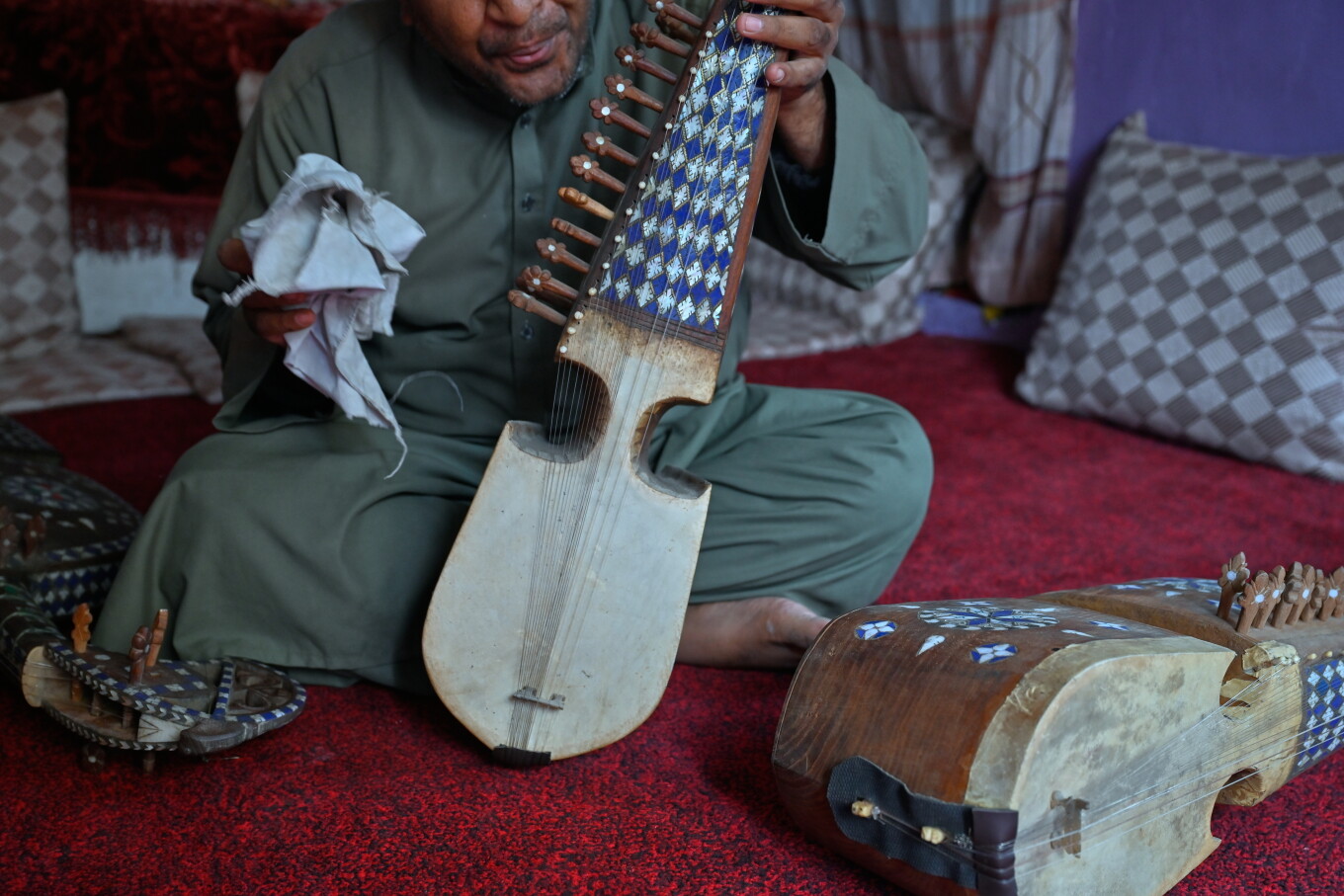
然而对许多人来说,音乐流淌在血液里。它在他们的家族中传承了数代,永远不再演奏的念头令人无法忍受。偶尔,有人会拿出乐器偷偷演奏。敲门声可能意味着危险。即便如此,他们依然演奏。音乐家誓言传承传统在一条狭窄街道深处的一间小屋里,一位音乐家拿出三把手工雕刻的木制鲁巴布,这是一种传统的拨弦琵琶状乐器,是阿富汗音乐文化不可或缺的组成部分。他拿起一把,将其横放在腿上片刻,随即开始演奏。鲁巴布共鸣悠扬、音色温暖的声音充满了这间狭小的房间。
Across Afghanistan, musicians lost their livelihoods overnight. Yet for many, music is in their blood. It has flowed through their families for generations, and the thought of never playing again is unbearable. Every so often, some pull out their instruments and play in secret. A knock at the door could mean danger. Still, they play. Musicians vow to keep traditions alive In a small home tucked down a narrow street, a musician pulls out three hand-carved wooden rubabs, a traditional plucked lute-like instrument that is an integral part of Afghan musical culture. Picking one up, he cradles it in his lap for a moment before beginning to play.
“只要我活着,我就会继续演奏,”他说。“也许我会秘密地演奏,但我绝不允许(鲁巴布)沉默。这是我们的文化,是阿富汗的传统,绝不能沉默;它们必须复兴,我将为此而战。”在喀布尔的另一处,一位歌手也表达了与鲁巴布演奏者同样的决心。
The resonant, warm sound of the rubab fills the tiny room. “As long as I am alive, I will continue to play,” he says. “Perhaps I will do so in secret, but I will not allow (the rubab) to be silent. This is our culture, the traditions of Afghanistan which must not be silent; they must be revived and I will fight for that.”
“目前音乐可能无法公开演奏,但没有人能将它从我们心中抹去,”这位歌手说。“无论是在秘密中还是在梦里,我们都将继续歌唱、演奏我们的音乐。”两人均因担心被捕,要求匿名发言。
In another part of Kabul, a singer echoes the rubab player’s determination. “For now, music may not be performed openly, but no one can ever erase it from our hearts,” the singer said. “Whether in secret or in our dreams, we will continue to sing and play our music.”
在政权更迭之前,这位歌手曾在音乐会和庆典上演出。他也藏起了自己的乐器:一把鲁巴布、一架手风琴、一支长笛、一副塔布拉鼓——阿富汗传统手鼓——还有一架电子琴。
Both spoke on condition of anonymity for fear of arrest. Before the takeover, the singer had performed at concerts and celebrations.
“把乐器带回家、用帆布遮盖起来的那一天,感觉就像我被活埋在了那层遮盖物之下,仿佛我已死去,”他说。“音乐给了我生命;它带给我名声和认可。没有音乐,艺术家就像一具没有灵魂的尸体。”
He, too, has hidden his instruments: a rubab, a harmonium, a flute, a tabla — traditional Afghan hand drums — and a keyboard. “The day I brought my musical instruments home and covered them with a tarp felt as if I had been buried alive beneath that very covering, as if I were dead,” he said.
有时,他站在藏匿的乐器前痛哭。“我向乐器乞求原谅,解释说我已无法再演奏它们。”音乐家陷入贫困这位鲁巴布演奏者曾在一所学校任教音乐,还经营一家传统乐器店。作为音乐家的儿子和孙子,这家店铺和音乐是他的家族产业。
“Music gave me life; it brought me fame and recognition. Without music, an artist is like a soulless corpse.”Sometimes, he stands before his hidden instruments and weeps. “I beg my instruments for forgiveness, explaining that I can no longer play them.”Musicians descend into poverty The rubab player taught music at a school and also owned a traditional musical instrument shop.
但在政权更迭后,他收拾起尽可能多的乐器送往国外,其余的则藏了起来。乐器店倒闭了。
The son and grandson of musicians, the shop and music were his family business. But after the takeover, he packed up as many of the instruments as he could and sent them abroad.
失去生意是沉重打击。不仅在财务上,而且在情感上,尤其是对他父亲而言。不久之后,他的父亲死于心脏病发作。这位音乐家认为,失去店铺是他永远无法从中恢复过来的事情。
Others, he hid. The music shop shut down. Losing the business was a heavy blow. Not just financially, but also emotionally, especially for his father.
在教学和经营店铺之间,这位音乐家过着非常舒适的生活,他说自己每天能赚大约10,000阿富汗尼(150美元)。现在,他作为一名体力劳动者,每天勉强能挣100阿富汗尼(1.50美元)。他要养活妻子和孩子,现在陷入了极度贫困。
A short while later, his father died of a heart attack. The musician believes the loss of the shop was something he never recovered from. Between teaching and the shop, the musician made a very comfortable living, earning about 10,000 afghanis ($150) a day, he said.
至于这位歌手,他在失业两年后,才在朋友的帮助下开始了一家小生意。
Now, he barely makes 100 afghanis ($1.50) as a manual laborer.
地下演出变得过于危险。当音乐禁令最初实施时,仍有少数地下演出继续进行。这位歌手和鲁巴布演奏者都曾在其中一些演出中表演。但现在,这实在太危险了。
With a wife and children to feed, he’s now desperately poor. For his part, the singer spent two years unemployed before friends helped him start a small business. Underground performances have become too dangerous When the music ban was first imposed, a few underground performances continued. Both the singer and the rubab player performed at some.
“情况一天比一天变得越来越困难,政府特工正在积极寻找像我这样的人来逮捕,”这位歌手说。他已经有四年没有在秘密聚会上表演了。“风险实在太高,我不想最终进监狱。我有年幼的孩子。”鲁巴布演奏者说,他曾在一次聚会上表演,后来该聚会被宣德警察突袭,因为一名参与者拍了照片并发给了当局。许多参与者被捕,但他设法溜走了。从那以后,他就没有再在秘密聚会上表演过。
But now, it’s just too dangerous. “The situation was becoming increasingly difficult day by day, and government agents were actively searching for individuals like me to arrest them,” the singer said. He hasn’t performed at a secret gathering for four years now. “The risk is simply too high, and I do not want to end up in prison. I have young children.”The rubab player said a gathering he had performed at was raided by the vice and virtue police after one of those attending took photos and sent them to the authorities. Many participants were arrested, but he managed to slip away.
阿富汗的音乐传统面临消亡的危险。这位鲁巴布演奏者是从父亲那里学会弹奏的——这是一门代代相传的艺术形式。尽管存在危险,他说他将开始教他的大儿子。
He hasn’t performed at a secret gathering since. Afghanistan’s musical tradition is in danger of dying out The rubab player learned how to play from his father — an art form handed down through the generations. Despite the dangers, he says he will start teaching his eldest son.
“这是我父亲留下的遗产,我希望这份传统能够延续,”他说。“从祖父到父亲,从父亲到我,再从我传给我的儿子,如此循环。这一传统必须延续。”对于这位歌手来说,音乐与阿富汗的文化和身份认同如此紧密地交织在一起,他认为音乐永远无法被真正地沉默。
“It’s a legacy from my father, and I want this heritage to continue,” he said. “From my grandfather to my father, from my father to me, and from me to my son, and so on. This tradition must continue.”For the singer, music is so enmeshed in Afghan culture and identity that he believes it can never truly be silenced.
“没有人能真正将音乐与阿富汗社会分开,”他说。“它们就像指甲与肉一样密不可分。”
“No one can ever truly separate music from Afghan society,” he said. “They are as inseparable as the fingernail from the flesh.”