日本研究人员发现一种有助于长期保存卵细胞中染色体的蛋白质。这一发现可能有助于解释排卵者的生育能力为何随年龄增长而下降,并可能为新的生育治疗铺平道路。
Japanese researchers have discovered a protein that helps preserve chromosomes in egg cells over long periods. The finding could help explain why fertility in those who ovulate declines with age and potentially pave the way for new fertility treatments.
由千叶大学、熊本大学和理化学研究所的科学家领导的研究团队,鉴定出一种名为OMC1的蛋白质,该蛋白质在维持卵细胞在整个生育期内染色体之间的连接方面起着关键作用。
The research team, led by scientists from Chiba University, Kumamoto University and the Riken research institute, identified the protein — which they named OMC1 — that plays a crucial role in maintaining the bonds between chromosomes in egg cells throughout reproductive life.
该研究周四发表在科学期刊《自然·老年学》上,可能为理解年长排卵者面临更大不孕、流产及其子女患唐氏综合征等染色体疾病风险的原因提供新的见解。
The findings, published Thursday in the scientific journal Nature Aging, could provide new insights into why older people who ovulate face greater risks of infertility, miscarriage and their children having chromosomal disorders such as Down syndrome.
与人体大多数细胞不同,卵细胞在拥有卵巢的人胎儿期就开始一种称为减数分裂的特殊分裂过程,并在出生后保持休眠状态,直到可能数十年后的排卵。
Unlike most cells in the human body, egg cells begin a specialized process of division, known as meiosis, during the fetal period of a person with ovaries and remain dormant after their birth until ovulation potentially decades later.
在这段休眠期,一种名为REC8粘连蛋白的蛋白质复合物充当分子胶,将染色体结合在一起。这些连接会随年龄增长而逐渐减弱,增加细胞分裂过程中染色体分离出错的可能性。
During this dormant period, a protein complex called REC8 cohesin acts as a molecular glue, holding chromosomes together. These bonds gradually weaken with age, increasing the likelihood of errors when chromosomes separate during cell division.
研究人员利用小鼠发现,OMC1有助于防止REC8粘连蛋白减少,使染色体能够保持正确连接。
Using mice, the researchers discovered that OMC1 helps prevent REC8 cohesin from declining, allowing chromosomes to remain properly connected.
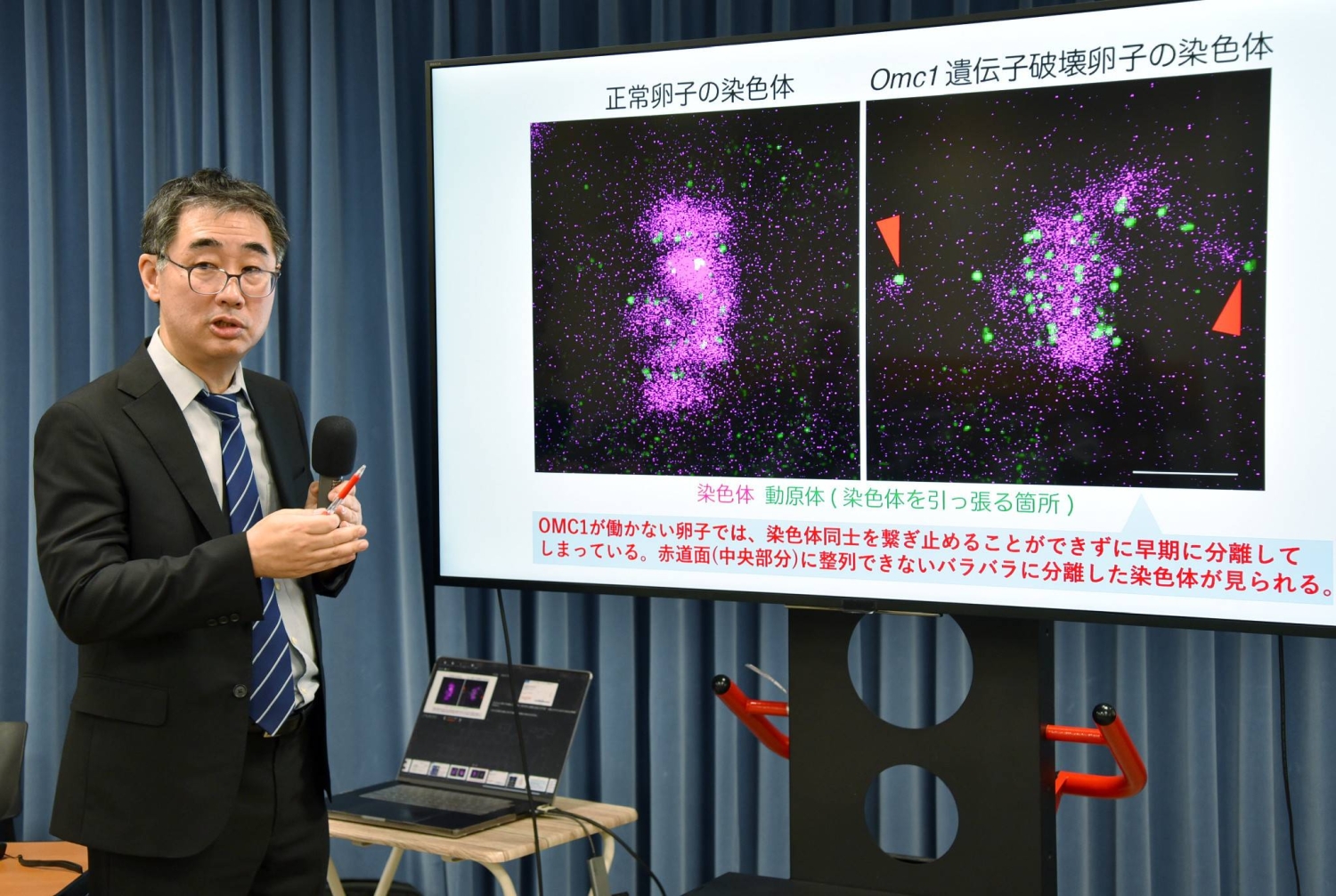
当科学家通过基因改造去除OMC1时,即使是年轻小鼠也出现了通常在老年卵细胞中才见到的染色体异常。研究人员还发现,缺乏OMC1的卵细胞产生的胚胎受精后不太可能正常发育。
When the scientists genetically removed OMC1, even young mice exhibited chromosome abnormalities resembling those typically seen in older eggs. The researchers also found that embryos produced from eggs lacking OMC1 were less likely to develop normally after fertilization.
然而,当研究人员将OMC1人工重新引入缺乏该蛋白质的卵细胞时,过早的染色体分离得到了抑制。
However, when researchers artificially reintroduced OMC1 into deficient eggs, premature chromosome separation was suppressed.
该团队还研究了一种与人类基因CCDC201中相应突变相关的突变,此前的研究已将该基因与绝经提前联系起来。
The team also investigated a mutation corresponding to one in the human gene CCDC201, which previous research has linked to premature menopause.
一项2024年的研究发现,排卵且携带特定CCDC201基因突变两个拷贝的人,绝经年龄比其他人早约九年。
A 2024 study found that people who ovulate and carry two copies of a particular CCDC201 mutation experienced menopause approximately nine years earlier than others.
领导该研究的千叶大学医学研究生院教授石黑圭一郎周四在新闻发布会上告诉记者,这一蛋白质发现最终可能有助于开发旨在预防与年龄相关的卵子质量下降的技术。
Keiichiro Ishiguro, a professor at the Graduate School of Medicine at Chiba University who led the research, told reporters at a news conference Thursday the protein discovery could eventually contribute to technologies aimed at preventing age-related deterioration in egg quality.
然而,该团队表示,这些发现主要基于小鼠实验,还需要进一步研究,以确定该蛋白质在人类卵子中是否发挥相同作用,以及这一发现是否可以应用于生育治疗。
However, the findings are based primarily on experiments in mice, and further research is needed to establish whether the protein plays the same role in human eggs and whether the discovery could be applied to fertility treatments, the team said.