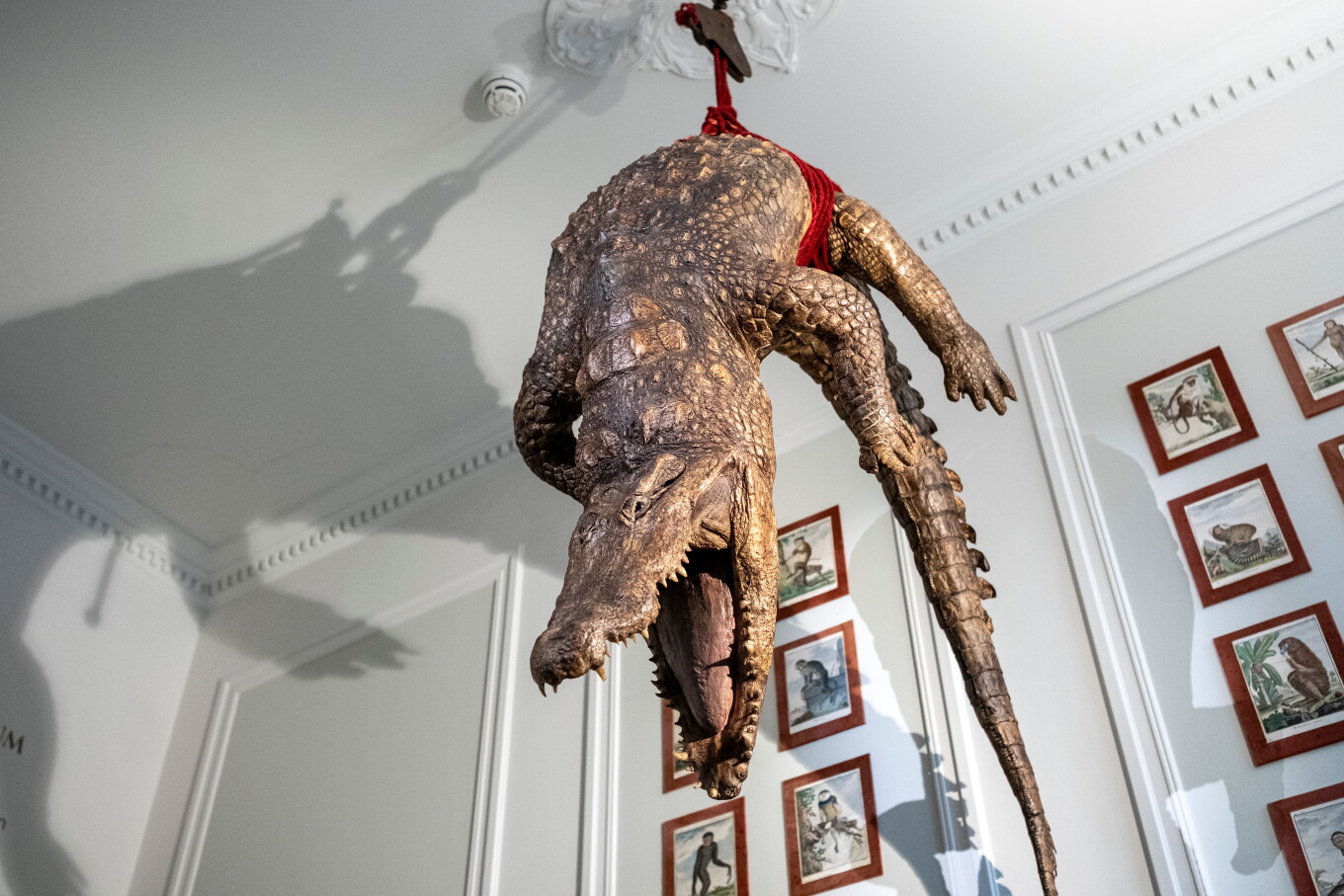
莫莉·奎尔 阿姆斯特丹 — 走进阿姆斯特丹新开业的“艺术动物园”博物馆,抬头仰望,一条长达12英尺(约3.7米)的鳄鱼正张着大嘴俯视着你,随时准备咬下一口。
MOLLY QUELL AMSTERDAM — Look up as you enter Amsterdam’s new Art Zoo museum, and a 12-foot crocodile stares down at you, mouth open, ready to chomp.
这只制作成标本的爬行动物是数百件展出的保存生物之一,它们与巧妙排列的骨骼堆、封存在药罐里的发光郁金香,以及一柜子长相怪异的鱼类标本共同陈列。
The taxidermic reptile is one of hundreds of preserved creatures on display, alongside artfully arranged piles of bones, illuminated tulips encased in apothecary jars and a cabinet of grotesque fish.
虽然这并非万圣节主题博物馆,但在这个阴森恐怖的季节里,展览应当会吸引任何寻求一些黑暗氛围的人。
While it’s not a Halloween-themed museum, the show should appeal to anybody looking for something a little dark this spooky season .
“有一点点恐怖,”住在荷兰首都的斯洛伐克人托马什·瓦什科在一个阴沉的十月天参观完博物馆后承认道。
“It was a little creepy,” admitted Tomáš Vaško, a Slovak living in the Dutch capital, after touring the museum on a dark October day.
“艺术动物园”是荷兰艺术家亚普·辛克和费里·范通伦的创作,他们从“奇珍异宝柜”汲取灵感——那是16和17世纪富有的欧洲人收藏的展示自然界物品的陈列柜。
Art Zoo is the creation of Dutch artists Jaap Sinke and Ferry van Tongeren, who draw inspiration from “wunderkammers,” or curiosity cabinets collected by wealthy Europeans in the 16th and 17th centuries to showcase objects from the natural world.
“主要的是我们喜欢用动物讲故事,”范通伦对美联社记者说。“我们喜欢增加戏剧性。我们赋予动物一种姿态,而传统标本制作师只是想模仿自然。”在他身后,一只猎豹瘫坐在壁龛里,在一只食火鸡的注视下。
“The main thing is that we like storytelling with the animals,” van Tongeren told The Associated Press. “We like to add drama. We add an attitude to the animals, where traditional taxidermists just want to mimic nature.”Behind him, a cheetah slouched in an alcove under the watchful eye of a cassowary.
在自然史博物馆里,动物的姿势摆得仿佛它们在野外被看到的样子。而在“艺术动物园”,一只日本巨型蜘蛛蟹将长达6英尺(约1.8米)的腿伸展在门楣上方,旁边是几乎顶到天花板的乳齿象腿骨。
In natural history museums, animals are posed as they could be seen in the wild. At the Art Zoo, a Japanese giant spider crab stretches its 6-foot legs above a doorway beside the leg bones of a mastodon that nearly reaches the ceiling.
这对搭档在2015年因鲨鱼浸制艺术家达米恩·赫斯特在伦敦一场艺术展上买下了他们的整个展览而声名鹊起。
The duo rose to fame in 2015 after shark-pickling artist Damien Hirst purchased their entire exhibition from a London art show.
与传统动物园不同,这里被关在笼子里的是人类参观者,而非动物。“艺术动物园”坐落在一座17世纪的运河边住宅内,其展厅被阴郁的黑色金属笼子包围。
Unlike at a traditional zoo, the human visitors are confined, not the animals. The display rooms in the 17th-century canal house where the Art Zoo is located are enclosed by brooding, black metal cages.
“我们非常喜欢把所有人关在笼子里、让所有动物自由自在的概念,”范通伦说。“这样一来,整栋建筑就变成了一件艺术品。”这批丰富多样的收藏中的动物,没有一只是从野外捕获的。
“We really like the concept of having all the people in a cage and then all the animals free,” van Tongeren says. “In that way, the whole building becomes one artwork.”None of the animals in the eclectic collection were taken from the wild.
“我们所有的动物都来自动物园,它们死于自然原因,”辛克说。不过,他承认文书工作可能颇具挑战性。这对搭档主要从欧洲获取标本,以确保他们了解这些动物的来历。
“All our animals come from zoos where they died of natural causes,” said Sinke. Still, he acknowledged that the paperwork can be challenging. The pair primarily obtained specimens from Europe to ensure they know the history of the animals.
辛克和范通赫伦实际上认为自己是一个艺术三人组,将博物学家查尔斯·达尔文视为他们作品的第三位贡献者。他们将博物馆的概念定位为达尔文式惊奇的回归。
Sinke and van Tongeren actually consider themselves an artistic trio, crediting naturalist Charles Darwin as the third contributor to their work. They pitched the concept of the museum as the return of Darwin’s wonder.
向这位进化论首个科学理论奠基人致敬,一面墙的展示柜里陈列着一系列侧身的达尔文半身像。辛克和范通赫伦认为,在一座曾经容纳圣经博物馆的建筑里纪念达尔文,其中包含着一种有趣的讽刺意味。
In a nod to the man who developed the first scientific theory of evolution, one wall display contains a series of Darwin busts, turned sideways. Sinke and van Tongeren see an amusing irony in honoring Darwin inside a building that once housed the Biblical Museum.
馆藏并非全是真实动物。在吊顶下悬挂的鳄鱼下方,有一面墙陈列着珍妮·哈尼弗,这是16世纪水手将鳐鱼尸体改造成的怪诞生物,他们把这些恐怖的野兽当作真正的海怪推销给轻信的收藏家。
Not everything in the collection is a real animal. Underneath the crocodile suspended from the ceiling is a wall of Jenny Hanivers, ray carcasses modified into grotesque creatures by 16th-century sailors who presented the macabre beasts as real sea monsters to gullible collectors.
这些扭曲的面孔似乎睁着圆溜溜的眼睛,注视着博物馆参观者从一个笼子般的房间走到另一个笼子般的房间。
Their misshapen faces appear to keep a beady eye on museum guests as they walk from caged room to caged room.