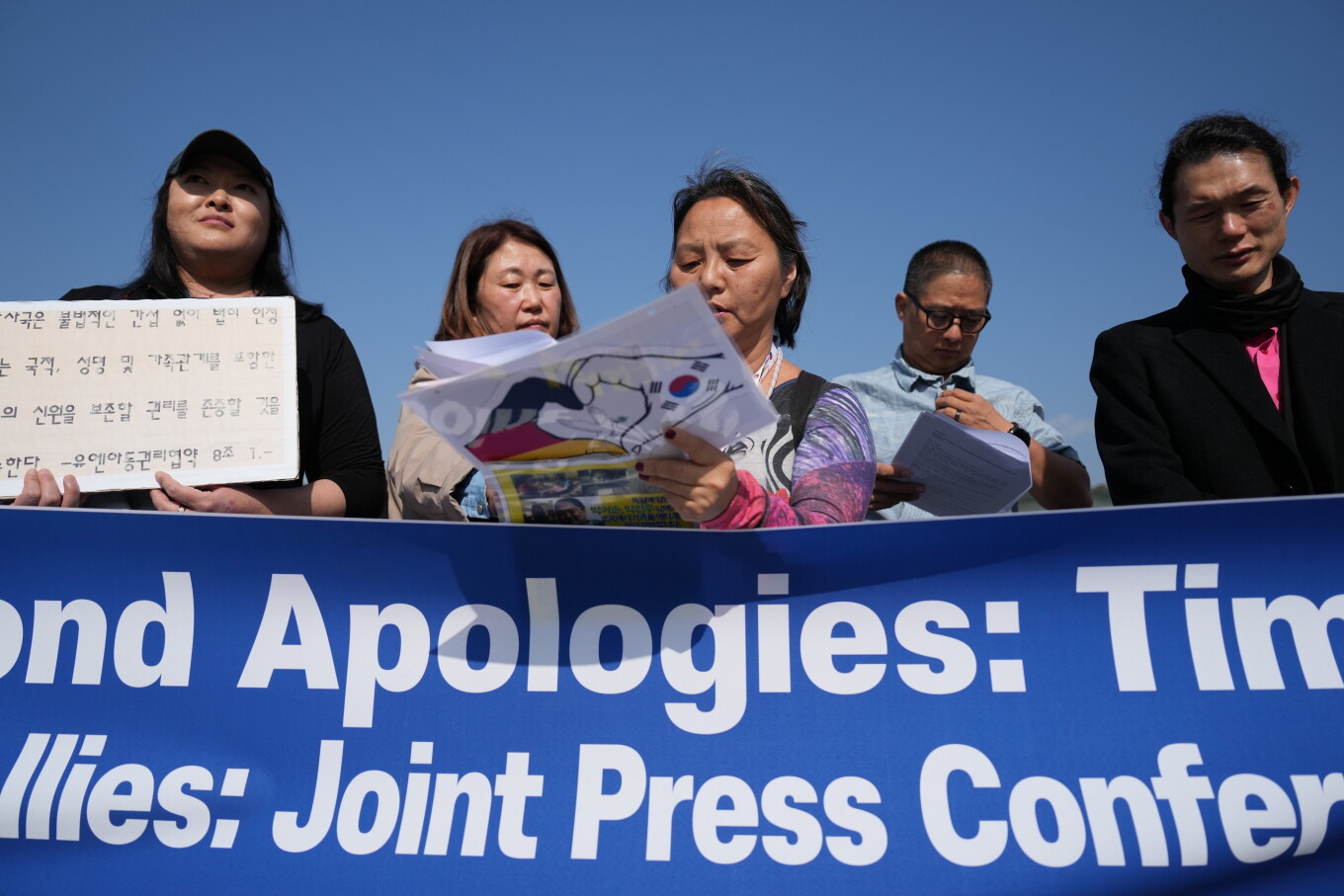
金同炯(KIM TONG-HYUNG)报道:周五,来自西方国家的韩国被收养者在首尔总统府外举行抗议,要求全面查阅其档案,并加大力度追寻亲生家庭。
KIM TONG-HYUNG South Korean adoptees from Western nations protested outside Seoul’s presidential office Friday, demanding full access to their records and better efforts to trace their biological families.
由于出生档案不准确或被篡改,这些寻亲努力往往受挫。与此同时,该国正权衡对其长期备受诟病的收养后政策进行全面改革。
Those efforts are often derailed by inaccurate or falsified files, as their birth nation weighs an overhaul of its long-maligned post-adoption policies.
来自欧洲和美国的九个被收养者组织以及总部设在韩国的人权倡导者共同签署了一份声明,呼吁首尔扩大DNA检测和配对服务,并放宽对行政和户籍档案的查阅权限,以改进寻亲工作。
In a statement co-signed by nine adoptee organizations from Europe and the United States and human rights advocates based in South Korea, the groups called on Seoul to expand DNA testing and matching services and broaden access to administrative and residential records to improve family searches.
他们还要求对韩国历史收养项目中存在的操纵收养档案、儿童来源以及错误划分亲子关系等玷污该项目的问题展开新的调查,并为受广泛欺诈和虐待影响的被收养者及亲属开辟更清晰的赔偿途径。
They also demanded new investigations into the manipulation of adoption records and child origins and wrongful child-parent separations that marred South Korea’s historic adoption program, along with clearer paths for reparations to adoptees and relatives affected by the widespread fraud and abuse.
此前,数百名韩国被收养者于上周在首尔举行了聚会,周五的抗议活动正值韩国总统李在明的自由派政府考虑对政府处理被收养者查阅收养档案和寻亲请求的方式进行重大变革之际。
The protest, which followed a gathering of hundreds of Korean adoptees in Seoul last week, comes as the liberal administration of President Lee Jae Myung considers major changes to the way the government handles adoptees’ requests for access to adoption records and birth-family searches.
该流程目前由卫生福利部下属的机构韩国儿童权利保障院负责监督。但官员们正考虑赋予隶属于外交部的海外韩国人厅更大的作用;该机构被认为更有利于简化对被收养者的服务,并与接收韩国儿童收养的西方国家进行协调,不过这些变革可能需要新的立法。
The process is currently overseen by the National Center for the Rights of the Child, an agency under the Health and Welfare Ministry. But officials are considering giving a larger role to the Overseas Korean Agency, which falls under the Foreign Ministry and is seen as better positioned to streamline services for adoptees and coordinate with Western countries that received Korean children for adoption, though the changes could require new legislation.
立法者还在辩论多项旨在改善被收养者亲生家庭寻亲工作的法案,其中包括放宽隐私限制,以便被收养者能够获取有关其亲生父母的信息,除非父母明确要求对信息予以保密。
Lawmakers are also debating multiple bills aimed at improving birth-family searches for adoptees, including by easing privacy restrictions so adoptees can obtain information about their birth parents unless the parents have explicitly requested that it remain confidential.
韩国真相与和解委员会于2025年得出结论,认为政府在推动一个充满欺诈和虐待、旨在削减福利开支的收养项目中负有责任,这一调查结果在很大程度上与美联社早先的报道一致。
South Korea’s Truth and Reconciliation Commission concluded in 2025 that the government bears responsibility for facilitating an adoption program rife with fraud and abuse, driven by efforts to reduce welfare costs, findings that broadly aligned with earlier reporting by The Associated Press.
根据该委员会的建议,李在明向被收养者及其家属道歉,他在一篇脸书贴文中表示,对他们的痛苦感到“心情沉重”,并敦促官员寻找更好的方法来支持他们寻找亲生家庭的努力。
Acting on a recommendation by the commission, Lee apologized to adoptees and their families, saying in a Facebook post that he felt “heavy-hearted” over their suffering and urging officials to find better ways to support their efforts to locate their birth families.
被收养者和活动人士在周五的抗议活动中表示,在李在明道歉一年后,官员们尚未采取有意义的行动,“真相查明、救济和权利恢复已刻不容缓”。1976年4岁时被收养到德国、自1991年以来一直在寻找亲生父母的基·苏恩·耶格(Kee Soon Jager)说:“他们应该做点什么来帮我们找到家人,因为时间不多了,我们的父母(可能已经)过世了。”
Adoptee and activist groups said during Friday’s protest that officials had yet to take meaningful action a year after Lee’s apology, and that “truth-findings, remedies, and the restoration of rights can no longer be delayed.”“They should do something to help us to find our families because time is running out and our parents (may have) passed away,” said Kee Soon Jager, who was adopted to Germany as a 4-year-old in 1976 and has been searching for her biological parents since 1991.
安格莉卡·林德格伦(Angelika Lindgren)于1974年被收养到瑞典,文件上被列为在街头发现的被弃儿童。她呼吁建立一个更大的DNA数据库以改进寻亲工作,因为收养文件往往不可靠。
Angelika Lindgren, who was adopted to Sweden in 1974 and listed in papers as an abandoned child found on the streets, called for the creation of a larger DNA database to improve family searches as adoption documents are often unreliable.
她说:“我理解放弃孩子的母亲和父亲的难处,我也知道这并不总是他们的选择。也许是……某个叔叔留下了婴儿,甚至可能父母根本不知情。”
“I understand it’s difficult for mothers and fathers who gave up their children and I know it wasn’t always their choice,” she said. “Maybe it was … an uncle who left the babies and maybe the parents didn’t even know.”
在20世纪70和80年代收养高峰期,数千名韩国儿童被错误地登记为弃儿,以便他们根据西方法律符合收养资格,尽管记录表明大多数人都有已知的亲属。
During the peak of adoptions in the 1970s and ’80s, thousands of South Korean children were falsely registered as abandoned to make them eligible for adoption under Western laws, even though records suggest most had known relatives.
私人收养机构向医院和孤儿院支付费用以获取新生儿和其他儿童,在某些情况下,当儿童死亡、病重无法出行或被亲生亲属认领时,他们会调换儿童的身份以维持收养程序的进行。西方国家的政府急于满足国内对可收养儿童的需求,忽视了普遍存在的欺诈迹象,有时甚至向首尔施压,要求源源不断地送出儿童。
Private adoption agencies paid hospitals and orphanages for newborns and other children, and, in some cases, switched children’s identities to keep adoptions on track when a child died, was too sick to travel or was reclaimed by birth relatives. Western governments, eager to meet domestic demand for adoptable children, overlooked widespread signs of fraud and sometimes pressured Seoul to keep children coming.
尽管韩国近年来一直在推行改革,包括加强政府和司法监督并宣布在2029年前结束海外收养,但官员们对于如何解决数十年来因不准确或被篡改的记录而引发的草率亲子分离问题,依然没有明确的计划。
While South Korea has pursued reforms in recent years, including strengthening government and judicial oversight and declaring to end foreign adoptions by 2029, officials still have no clear plans for addressing decades of inaccurate or falsified records that fueled careless child-parent separations.
根据卫生部记录,在2021年至2025年9月期间提交的1.13万份寻亲请求中,只有622起成功团聚。在4600多起案件中,官员未能找到亲生父母,也无法确定他们是否同意与被收养者建立联系。
According to Health Ministry records, only 622 of the 11,300 family search requests submitted by adoptees between 2021 and September 2025 resulted in reunions. In more than 4,600 cases, officials were unable to locate the birth parents or determine whether they had consented to be connected with the adoptees.
卫生部官员对立法者关于保证被收养者获取寻亲信息的呼吁(除非亲生父母明确反对)表达了保留意见,并警告这种做法可能会侵犯隐私权。
Health Ministry officials have voiced reservations about lawmakers’ calls to guarantee adoptees access to birth-family information unless their biological parents explicitly object, warning such an approach could infringe on privacy rights.