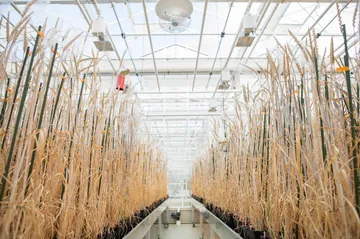
农业巨头拜耳正着手开发能够利用空气中氮元素的基因编辑谷物,在中东战争暴露了供应链脆弱性之后,此举有望减少对高昂化肥的需求。
AG is looking to develop gene-edited grains capable of tapping nitrogen from the air, potentially reducing the needfor costly fertilizers after the Middle East war has exposed the vulnerability of supplies.
这家德国制药与作物科学巨头已获得一项由加州大学戴维斯分校(基因研究的领先中心)开发的技术的商业许可。该方法涉及编辑谷物作物的DNA,使其根部能够与土壤中的细菌形成共作关系,将空气中的氮转化为植物能够使用的形式。
The German pharmaceutical and crop science giant has obtained a commercial license for a technology developed at University of California, Davis, a leading center for genetic research. The approach involves editing the DNA of grain crops so their roots can form relationships with soil bacteria that turn nitrogen from the air into a form the plants can use.
研究人员花费了数十年时间试图开发能够用更少合成化肥生长的谷物,合成化肥支撑了全球约一半的粮食生产,但也是温室气体排放的主要来源。随着与伊朗战争相关的供应中断导致化肥价格飙升,农民和粮食生产国面临着依赖一小部分供应商进口的风险,这项努力变得愈发紧迫。
Researchers have spent decades trying to develop grains that can grow with less synthetic fertilizer, which underpins roughly half of global food production but is also a major source of greenhouse-gas emissions. The effort has taken on added urgency as supply disruptions linked to the Iran war have sent fertilizer prices soaring, exposing farmers and food-producing nations to the risks of relying on imports from a relatively small group of suppliers.
拜耳公共事务与可持续发展负责人马蒂亚斯·贝宁格(Matthias Berninger)在接受采访时表示:“这是颠覆性的,因为我们能够释放那些通常依赖化肥的作物的潜力。这是我们领域的圣杯之一。所以这确实是一件大事。”与能够通过根部细菌固定空气中氮元素的大豆和其他豆类不同,构成全球近一半日常热量的三种作物——玉米、小麦和大米——都依赖合成氮肥。
“It’s game-changing because we are able to unlock the possibilities in crops that normally depend” on fertilizer, Bayer’s head of public affairs and sustainability Matthias Berninger said in an interview. “This is one of the holy grails in our field. So it is a really big deal.”Unlike soybeans and other legumes, which can fix nitrogen in the air via bacteria on their roots, the three crops that make up nearly half of global daily calories — corn, wheat and rice — are dependent on synthetic nitrogen fertilizer.
加州大学戴维斯分校是一家由诺贝尔奖得主詹妮弗·杜德纳(Jennifer Doudna)共同创立的研究机构的研究合作伙伴,杜德纳曾开创了CRISPR技术的前沿工作,这是一种允许科学家精确编辑DNA的突破性技术。
UC Davis is a research partner at an institute co-founded by Nobel Prize winner Jennifer Doudna, who has pioneered work in CRISPR, a breakthrough technology that allows scientists to precisely edit DNA.

贝宁格表示,拜耳认为应用该大学的固氮技术可以帮助减少温室气体排放和对化肥进口的依赖,尽管它可能在下一个十年之前都不会上市。这还可以帮助拜耳争夺价值850亿美元的尿素(一种氮肥)市场份额,他补充说,欧盟目前仍有近四分之一的此类进口来自俄罗斯。
Bayer argues that applying the university’s nitrogen fixation technology could help reduce greenhouse gas emissions and dependence on fertilizer imports, though it likely won’t come to market before the next decade. It could also help Bayer capture a slice of the $85 billion market for urea, a type of nitrogen fertilizer, Berninger said, adding that the European Union still gets nearly a quarter of such imports from Russia.
今年早些时候,欧盟议员投票赞成该集团关于基因编辑植物的框架,为培育更耐寒作物的立法扫清了最后障碍。
Earlier this year, EU lawmakers voted in favor of a framework for gene-edited plants in the bloc, clearing the final hurdle for legislation to enable the cultivation of hardier crops.
贝宁格说:“妙处还在于,欧盟的法规现在对基因编辑更加友好,这使我们能够为全世界赖以生存的三种作物引入一个平台,以减少对化肥的依赖。”他补充说,化肥是农民“迄今为止”最高的成本。
“The beauty is also with the European regulation now being much more welcoming for gene editing that this allows us to introduce a platform for three crops the world depends on to become less dependent on fertilizer,” Berninger said, adding that fertilizer is “by far” the highest cost for farmers.
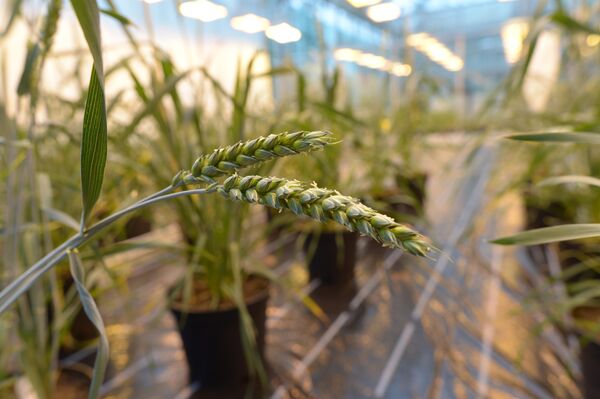
化肥使用的减少可能会让农民口袋里有更多的钱来购买拜耳的种子和作物保护产品。下一步是在温室之外的现实世界条件下测试这项技术。
Lower fertilizer use could leave more money in the pockets of farmers to spend on Bayer’s seeds and crop protection products. The next steps are to test the technology in real-world conditions outside the greenhouse.
本月早些时候,拜耳还与斯坦福大学衍生企业Switch Bioworks达成了合作关系,该公司正在解决问题的另一面:它不是改造植物,而是对其根部生存的微生物进行基因工程改造,以帮助作物吸收氮元素。
Earlier this month, Bayer also struck a partnership with Stanford spinout Switch Bioworks, which is tackling another side of the equation: instead of engineering the plant, it genetically engineers microbes living on its roots to help crops absorb nitrogen.
对于拜耳来说,这两项技术都是试图提高作物收益并降低化肥使用量多元化方法的一部分。
For Bayer, both technologies are part of a multi-faceted approach to try to boost crop returns and lower fertilizer use.
贝宁格说:“我们很清楚,这最终也可能无法按预期发挥作用,但这是一个如此巨大的机遇,以至于我们认为现在是加倍押注的时候了。”
“We are well aware that this also could ultimately turn out not to work as intended,” Berninger said, “but this is such a big opportunity that we believe it’s now time to double down.”