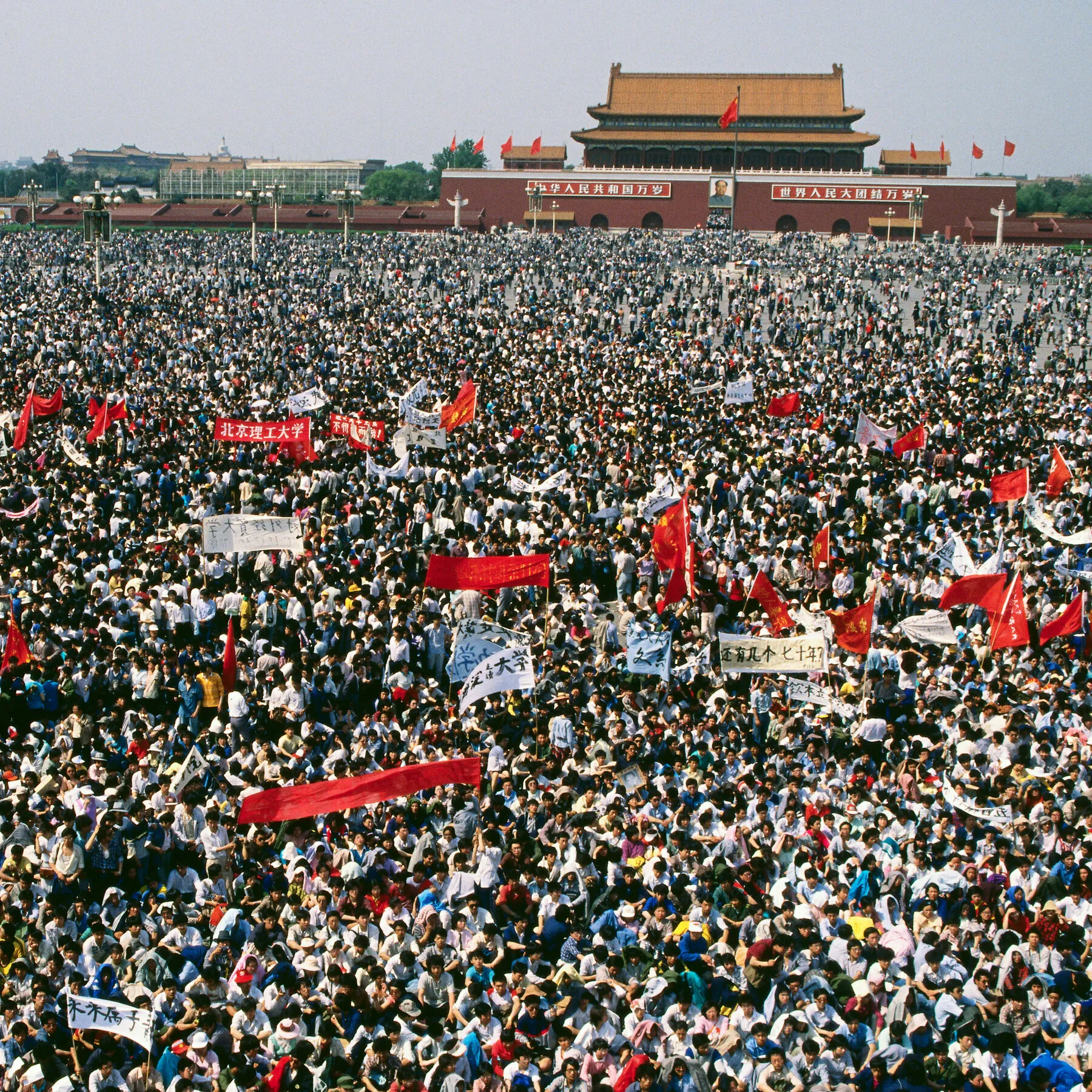
我报道了天安门广场大屠杀。它至今仍让我感到沉重。改变现代中国的那一天,也教会了我如何识别真正的勇气。
I Covered the Tiananmen Square Massacre. It Still Weighs on Me.
本文是纪念《纽约时报》驻现场目击新闻175周年系列文章的一部分。
The day that changed modern China also taught me how to recognize true courage.
当我骑着自行车冲向枪声和天安门广场,在迎面逃散的人群中躲闪穿行时,我一直在想:这真是一个疯狂的职业。
This story is part of a series marking 175 years of eyewitness journalism from The New York Times.
1989年春天的那几周里,全世界关注的焦点一直是:这场由学生主导、使中国陷入瘫痪的天安门示威,究竟会以民主革命告终,还是会以屠杀收场。6月3日那天晚上,北京那套我和妻子、同为《纽约时报》记者的伍洁芳合住的公寓里,电话开始响个不停。我们得到了答案:数万名军队士兵正强行开进北京市中心,碾杀成群的手无寸铁的抗议者和试图抵抗的旁观者。
As I pedaled my bicycle toward the gunfire and Tiananmen Square, dodging people in crowds fleeing in the opposite direction, I kept thinking: What a crazy occupation this is.
于是我跳上自行车,双腿疯狂蹬踏,绕过学生们设置的反坦克障碍,只为报道一支现代军队对自己的人民发动战争。
For weeks during the spring of 1989, the question preoccupying the world had been whether the student-led Tiananmen demonstrations paralyzing China would end with a democratic revolution or with massacres. That night, June 3, the phone began ringing in the apartment in Beijing I shared with my wife and fellow New York Times correspondent, Sheryl WuDunn. We had our answer: Tens of thousands of army troops were forcing their way into central Beijing, mowing down crowds of unarmed protesters and bystanders who tried to resist.
这大概是我报道过的最重要的新闻,而我至少把一个重大之处搞错了——我后面会说到——但我确实在军队之前赶到了天安门广场。我把自行车停在著名的毛主席画像附近,开始采访学生和工人人群中的一些人。
So I jumped on my bicycle, legs pumping madly, careening around tank traps students had set up, so I could report on a modern army waging war on its people.
尽管天已经黑了,广场仍被头顶的灯光照亮,也被抗议者点燃的两辆装甲运兵车发出的火光映亮。起初,一车车运来的士兵朝我们头顶上方开枪。随后他们压低瞄准,直接朝我们射击。
It was probably the most important story I’ve covered and I got at least one big thing wrong — I’ll get to that — but I did manage to reach Tiananmen Square before the troops. I parked my bicycle near the famous portrait of Chairman Mao and began interviewing people in the throng of students and workers.
枪声断断续续,每隔几分钟就响起一阵嘈杂刺耳的连发。有人倒下,我们就后撤,枪声会暂时沉寂,我们的后撤也会停下。
Although it was already dark, the square was lit by overhead lights and by the glow of two armored personnel carriers that protesters had set ablaze. At first, the troops, arriving by the truckload, fired over our heads. Then they lowered their aim and fired right at us.
我四处奔走,用中文采访,总是试图让我和子弹之间隔着一层抗议者。直到我意识到自己比周围几乎所有人都高,所以我身上宝贵的几英寸上部仍然暴露在外。我开始在与人交谈时弯下腰。
The gunfire was episodic, coming in cacophonous bursts every few minutes. People would fall, we would retreat, the guns would fall silent for a time and our retreat would halt.
“总罢工!”人群高喊。“总罢工!”一些人向部队投掷石块或燃烧瓶,但他们打不到士兵——接着又是一轮枪声,更多人倒下。
I was rushing around, interviewing people in Chinese, always trying to keep a layer of protesters between me and the bullets. Until I realized that I was taller than almost everyone around me, so that a valuable few upper inches of me were still exposed. I began stooping as I spoke to people.
一群抗议者征用了两辆公交车,希望能接近部队。每辆车上大约有十几个年轻人,手持铁棍或其他武器,打算用来攻击士兵。人群尖叫着为他们加油,但他们的勇气用错了地方。当抗议者驾驶公交车冲向部队时,士兵们开火了。公交车停了下来,其中一辆起火,转眼间,这些年轻人就从英雄变成了尸体。
“General strike!” the crowd shouted. “General strike!”Some people hurled rocks or Molotov cocktails toward the troops, but they couldn’t hit the soldiers — and then there would be another round of gunfire, and more would drop.
我发现自己身处一场大屠杀之中。随着每一轮枪声,我们在浸透鲜血的长安街上被逼退。我的自行车现在离部队很近,已经取不回来了,所以我跑到附近的一家医院清点尸体,然后回家。我忘了那天是周六晚上,对报社来说这意味着截稿时间提前。
Groups of protesters commandeered two buses in hopes of reaching the troops. About a dozen young people boarded each bus, holding iron bars or other weapons with which they intended to attack the soldiers. The crowd screamed encouragement, but their courage was misplaced. As the protesters drove the buses toward the troops, the soldiers opened fire. The buses came to a halt, one of them on fire, and in a moment, these young people transformed from heroes into corpses.
我没有按时回来,谢丽尔已经提交了她自己关于这场屠杀的报道,她越来越担心我被枪杀了。“担心没有用,”外文编辑约瑟夫·莱利维尔德在电话里不断对她说;他声音里的焦虑让她更加担心。他试图分散她的注意力,让她联系所有医院记录死亡人数——这个请求并没有让谢丽尔的心情好起来。
I found myself in the midst of a massacre. With each round of gunfire, we were pushed backward on the blood-soaked Avenue of Eternal Peace. My bicycle was now close to the troops and not recoverable, so I ran to a nearby hospital to count corpses, and then back home. I had forgotten that it was a Saturday evening, which for the paper meant early deadlines.
最后,我冲了进去,拥抱了谢丽尔,打电话到纽约让那里的编辑们放心我没事,然后用传真发回了我的报道——一次发几段,边写边发。我从未如此难过,因为我的署名和谢丽尔的署名一起出现在头版通栏大标题下。
When I didn’t return on time, Sheryl, who had filed her own story about the slaughter, was increasingly fearful that I had been shot. “There’s no point in worrying,” the foreign editor, Joseph Lelyveld, kept telling her on the phone; the anxiety in his voice made her worry even more. He tried to distract her by asking her to reach out to all the hospitals to document the death toll — a request that didn’t help Sheryl’s mood.
那天晚上,愧疚感折磨着我,这也引出了我报道这场危机的第一个重大错误。在流血事件前几周的示威期间,我曾不时居高临下地写道,抗议运动中的工人和农民谈论民主,却无法定义民主。我曾暗示,他们是出于对通货膨胀和腐败的愤怒,但不一定相信藏人应享有民主,也不完全认同他们如此热情洋溢地谈论的那种自由多元的社会。
Finally, I burst in, hugged Sheryl, called New York to reassure editors there that I was fine and then filed my story by telex — a few paragraphs at a time, as I wrote them. I had never been so sad to have my byline and Sheryl’s under a banner headline across the front page.
这种说法有一定道理,但那年六月的那个夜晚,我看到了工人和农民身上非凡的勇气。那天晚上我吓坏了——我的笔记本被恐惧的汗水浸得湿透,我连写字都困难——而所有人中最勇敢的,是那些来自农村、蹬三轮车的受教育程度不高的劳动者。每当枪声停歇,他们就会蹬着车冲进混乱中,抬走被打死或打伤的学生尸体,然后掉头奔向医院。他们或许无法定义民主,但他们愿意为之献出生命。
Guilt nagged at me that night, and this brings me to my first great mistake in covering the crisis. During the demonstrations in the weeks before the bloodshed, I had periodically written condescendingly that the workers and peasants in the protest movement talked about democracy but couldn’t define it. I had suggested that they were driven by anger at inflation and corruption but didn’t necessarily believe in democracy for Tibetans or fully embrace the kind of free and pluralistic society they spoke of so glowingly.
报道天安门事件时我学到的另一个惨痛教训是:受害者会说谎,或者更宽容地说,会记错。怀疑压迫者、相信受害者是人之常情,但在屠杀之后,有许多“目击者”的说法声称数千乃至数万名学生在天安门广场被屠杀;大量学生被广场上的机枪阵地射杀;或者许多人在坦克碾过里面有学生的帐篷时丧生。这些都不是真的。
There was something to this idea, but that night in June I had seen extraordinary courage from the workers and peasants. I was terrified that evening — my notebook was so damp with sweat from fear that I had trouble writing in it — and the bravest people of all were the poorly educated laborers from the countryside who drove bicycle rickshaws. Whenever there was a pause in the shooting, they would pedal their carts into the fray to pick up the bodies of students who had been killed or injured, then turn around and race to the hospitals. They might not have been able to define democracy but they were ready to die for it.
自那以后,我在职业生涯中多次看到,暴行实施者会用谎言掩盖自己的虐待行径,而受害者则会夸大自己遭受的伤害。这让我懂得,在核实受害者的陈述时,我们必须像审讯压迫者一样保持警惕。虽然许多关于天安门事件死亡人数的估计高达数千人,但我相当确定这些数字是错误的。谢丽尔和我付出了巨大努力,在医院和太平间培养消息来源以确定死亡人数,我们最接近的估算是:400至800人丧生,数千人受伤。
Another hard lesson I learned covering Tiananmen: Victims lie or, more charitably, misremember. It’s human nature to doubt oppressors and believe victims, but in the aftermath of the massacre there were many “eyewitness” accounts claiming that thousands or tens of thousands of students had been slaughtered in Tiananmen Square; that huge numbers of them had been shot from machine gun emplacements there; or that many were killed when tanks rolled over tents with students inside. None of this was true.
进入医院非常困难。士兵在入口处把我们赶走,医生如果与记者交谈就会受到威胁。尽管如此,中国公民甚至一些官员仍与我们合作,因为他们希望真相大白。一家医院里心怀不满的员工通过连接隔壁大楼的地下通道偷偷带我们溜进去。我们发现,连走廊里都挤满了中弹的伤者。
Since then, I’ve seen many times in my career that perpetrators of atrocities lie to cover up their abuses, and that victims respond with exaggerations of their own. This has taught me that we must be as vigilant in verifying accounts of victims as we are in grilling oppressors. While many estimates of the Tiananmen death toll are in the thousands, I’m reasonably sure these are wrong. Sheryl and I made great efforts to cultivate sources at hospitals and morgues to determine the toll, and our best guess is that between 400 and 800 people were killed and several thousand injured.
一位年轻的妻子在她昏迷的丈夫身旁哭泣。她的丈夫是一位拥有7项专利的发明家。尽管她警告过他,枪击开始时他还是出门去支持学生,她爱他、敬佩他的勇气。但她一边抽泣一边补充说,她恨他可能会抛下她和她4岁的女儿独自生活。
Accessing hospitals was difficult. Soldiers turned us away at entrances and doctors were threatened if they spoke to journalists. Chinese citizens and even some officials cooperated nonetheless, because they wanted the truth to come out. Disenchanted employees at one hospital sneaked us inside through a tunnel system from a neighboring building. We found that even the hallways were filled with shooting victims.
记者喜欢表现得坚强,但我当时已被击垮,身心俱疲。我们连日几乎没合过眼,有一次我们小睡时,军队用自动武器向我们的公寓大院开火。谢丽尔和我在北京四处奔走采访人们,我们害怕被枪击,但更糟糕的是看到我们一直在报道的那个充满希望、生机勃勃的中国演变成一个高压独裁统治的国家。我记得有一天我倒在自己床上,发现泪水顺着脸颊滑落。
One young wife was weeping beside the unconscious figure of her husband, an inventor with seven patents in his name. Despite her warnings, he had gone out when the shooting started, in order to support the students, and she loved and admired him for his courage. But, she added between sobs, she hated that he might leave her alone with their 4-year-old daughter.
中国政府重写了历史,将抗议者称为“暴徒”,称他们从事“暴乱”。官方媒体点名批判我,指责我散布谎言,写的“不是新闻报道而是小说”。第二天,我在一家空荡荡的川菜馆点午餐,服务员聚在角落里指着我窃窃私语。我担心他们认出了我,不知会不会在菜里下毒。随后几名女服务员走到我桌前。“你就是昨晚电视里提到的那个人吗?”其中一人问,“那个撒谎的记者?”
Journalists like to project toughness, but I was shattered, physically and morally exhausted. We went days with barely a wink of sleep, and once, when we did nap, the army fired on our apartment compound with automatic weapons. Moving around Beijing to interview people, Sheryl and I were afraid of being shot, but worse was to see the hopeful, vibrant China we had been covering morph into a crushing dictatorship. I remember collapsing on my bed one day and finding tears trickling down my cheeks.
“是,”我说道,正想解释,她打断了我。“别管了,”她咧嘴笑着说,“不用付账了,我们买单。我们这里全是‘暴徒’。”
The Chinese government rewrote history, calling the protesters “hoodlums” who had engaged in “rioting.”The state media singled me out, denouncing me for spreading lies and “writing not news reports but fiction.”The next day I ordered lunch at an empty Sichuan restaurant, where the staff gathered in a corner, pointing to me and whispering. I feared they had recognized me and I wondered if they might poison my food. Then several waitresses approached my table. “Are you the one they mentioned on television last night?” one asked. “The reporter who lies?”
随着政府开始大规模抓捕,我们的一位消息来源——一名中国学生——因我们无意间牵连而陷入麻烦。他自称“肖恩”(Shawn),是清华大学学生,曾协助我们报道抗议活动。如今他因与我们的联系接受审讯,却仍冒险与谢丽尔(Sheryl)秘密会面,向她通报高校镇压情况——谢丽尔是美籍华人,能像我无法做到的那样融入人群。他的勇气令人震撼,当他突然失踪时,我们为他提心吊胆。
“Yes,” I said, and I started to explain, but she cut me off. “Never mind,” she said, beaming. “There’s no need to pay your bill. We’ll take care of it. We’re all ‘hoodlums’ here.”As the government began mass arrests, one of our sources was a Chinese student whom we had inadvertently gotten into trouble. “Shawn,” as he called himself in English, was a student at Tsinghua University who had helped us cover the protests. Now he was being interrogated about his connection to us, yet he still dared to meet secretly with Sheryl — who is Chinese American and could melt into crowds in a way I could not — to update her on the crackdown at the universities. His courage was breathtaking, and we were frightened for him when he suddenly disappeared.
这一事件让我想起另一个至今仍反复萦绕心头的时刻。失踪一年多后,肖恩在北京重现,与我秘密会面,讲述了遭遇:他曾入狱,后越狱潜逃。如今他请求我帮助他逃离中国。
This incident brings me to another moment that I still turn over in my mind. More than a year after his disappearance, Shawn reappeared in Beijing, met with me in secret and explained what had happened: He had been imprisoned but had escaped and was on the run. Now he asked for my help in fleeing China.
身为外国记者的一条基本准则是遵守当地法律。你绝不能协助逃犯出境。然而眼前这位年轻人,因协助我们报道此事而坐牢受难。若我们不伸援手,他几乎必将再次落网。
One basic rule of being a foreign correspondent is that you obey local laws. You certainly don’t help an escaped felon leave the country. Yet here was a young man who had endured prison because he had helped us cover this story. If we didn’t assist him, he would almost certainly be caught.
该怎么办?我想咨询纽约的编辑,但这不可能,因为我的电话被窃听了。无论如何,没有编辑会建议帮助一名越狱囚犯。
What to do? I wanted to consult editors in New York, but that was impossible because my phones were tapped. In any case, no editor could recommend helping an escaped prisoner.
另一个担忧:我对肖恩的故事存有一个挥之不去的疑虑。他说他是在监狱农场干田间活时逃跑的,但我们从未听说过有人从中国监狱逃脱。我琢磨,这会不会是个圈套?当时的中国总理李鹏不喜欢我的报道,他的办公室正在寻找借口驱逐我。中国国家安全部门是否想诱捕我,以便当局能逮捕入狱我,并关闭《纽约时报》的分社?
Another concern: I harbored a nagging doubt about Shawn’s story. He said he had escaped while working in the fields of a prison farm, but we had never heard of anyone escaping from a Chinese prison. I wondered, Could this be a setup? The Chinese prime minister at the time, Li Peng, disliked my coverage, and his office was looking for an excuse to expel me. Was Chinese state security hoping to entrap me so that the authorities could arrest and imprison me and close The Times’s bureau?
我犹豫不决,但谢丽尔有更坚定的判断。她怀疑肖恩不会同意陷害我,并坚持认为,考虑到他冒的风险,我们有义务帮助他。于是我们确实提供了帮助,包括给钱资助他逃跑。
I wavered, but Sheryl had a firmer compass. She doubted that Shawn would agree to entrap me, and she insisted that, given the risks he had taken, we owed him our assistance. So we did help him, including providing money to finance his escape.
肖恩于1990年圣诞节溜进了香港,他估计那天边境上的英国警察会较少。那天晚上他给我打了电话,第二天我飞往香港,在人权观察组织的帮助下,我设法为他办到了去美国的签证。肖恩现在是美国公民。
Shawn was able to slip into Hong Kong on Christmas Day, 1990, when he figured there would be fewer British police officers along the border. He called me that night, and the next day I flew to Hong Kong, where, with the help of Human Rights Watch, I negotiated to get him a visa to the United States. Shawn is now a U.S. citizen.
一旦我离开中国、能自由通电话,我就向报社最高层编辑坦白了我的所作所为。令我惊讶的是,他们表示祝贺而非责备。一位退休的执行主编A·M·罗森索尔透露,三十年前他曾帮助偷运一名来自共产党统治下的波兰人去往西方。而《纽约时报》记者悉尼·尚伯格曾拼命(但未成功)为柬埔寨同事狄德·普兰伪造一本假护照,以救他免于红色高棉的屠杀。狄德·普兰最终靠自己逃了出来,并在《时报》新闻室担任备受喜爱的同事,时刻提醒着我们:除了职业义务,我们还有复杂的人道义务。
Once I was out of China and could speak freely on the phone, I confessed to the paper’s top editors what I had done. To my surprise, they were congratulatory rather than scolding. A retired executive editor, A.M. Rosenthal, confided that three decades earlier he had helped sneak someone from Communist Poland to the West. And a Times correspondent, Sydney Schanberg, had tried desperately (though unsuccessfully) to doctor a fake passport for a Cambodian colleague, Dith Pran, to save him from the Khmer Rouge slaughter. Dith Pran eventually made it out on his own and worked as a much-loved colleague in The Times’s newsroom, a constant reminder that we have complex human obligations as well as professional ones.
在我的职业生涯中,没有什么比帮助肖恩更不专业的事情了。但也很少有事情让我更自豪。
There’s nothing I’ve done in my career that was as unprofessional as helping Shawn. But there are also few things I’m prouder of.
尼古拉斯·克里斯托夫于2001年成为《纽约时报》评论版的专栏作家,曾两次获得普利策奖。他最近的一本书是回忆录《追逐希望:一名记者的一生》。
Nicholas Kristof became a columnist for The Times Opinion desk in 2001 and has won two Pulitzer Prizes. His most recent book is the memoir “Chasing Hope: A Reporter’s Life.”