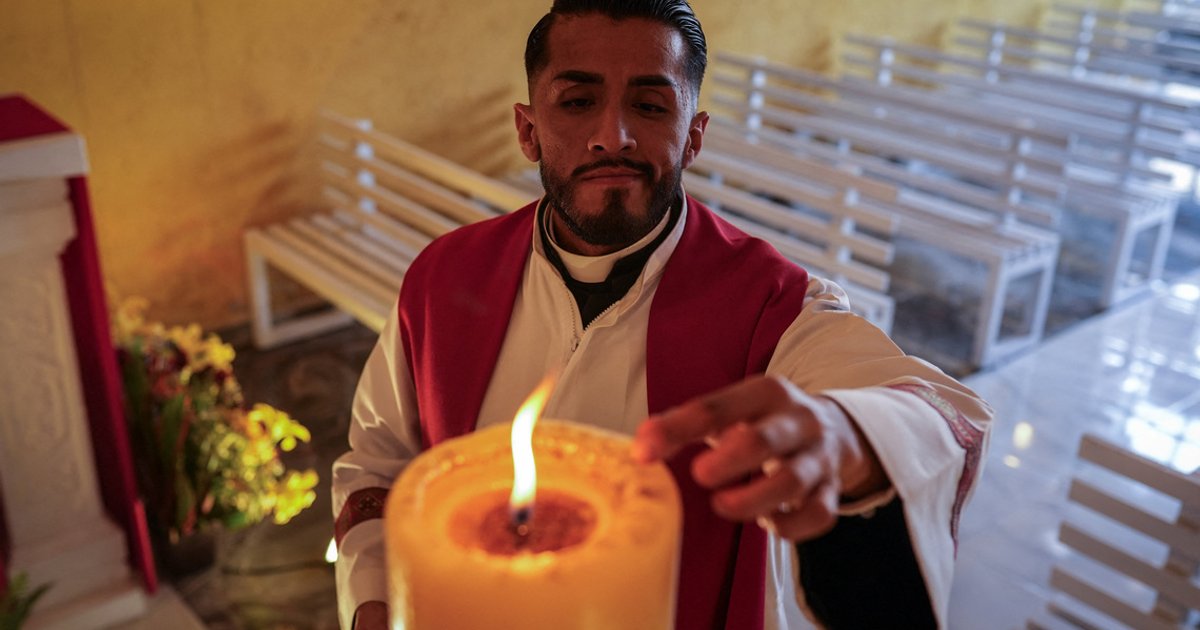
墨西哥城,10月30日电——2024年12月,当耶稣·罗梅罗神父(Rev. Jesús Romero)抵达墨西哥城达伊娜·洛艾萨(Dahina Loaiza)的葬礼现场时,其妹妹罗伯塔·洛艾萨(Roberta Loaiza)察觉到有些不对劲。
MEXICO CITY, Oct 30 - When Rev. Jesús Romero arrived at the funeral of Dahina Loaiza in Mexico City in December 2024, her sister Roberta Loaiza sensed something was off.
罗梅罗身戴红衣主教帽、脚穿菲拉格慕(Ferragamo)皮鞋,跳过天主教礼仪,直接向数十名吊唁者授予大赦,这是教会仅在濒临死亡等特殊情况下才保留的圣礼。
Wearing a cardinal’s cap and Ferragamo shoes, Romero skipped over the Catholic liturgy and granted general absolution to dozens of mourners, a rite the Church reserves for exceptional circumstances such as imminent danger of death.
“他说他在神职人员中职位很高,有权赦免所有人,”洛艾萨告诉路透社。
“He said he held a really high-ranking position as a priest and had the power to absolve everyone,” Loaiza told Reuters.
虔诚的天主教徒、家庭朋友埃莱娜·德阿科斯塔(Elena D'Acosta)曾在仪式中协助罗梅罗,她对此深感震惊,随即联系了墨西哥城总教区。
Elena D'Acosta, a devout Catholic and family friend who had assisted Romero during the ceremony, was so alarmed that she contacted the Archdiocese of Mexico City.
三个月后,萨尔瓦多·冈萨雷斯(Salvador González)主教发布新闻稿,警告称罗梅罗冒充神父,墨西哥没有任何教区有他的档案记录。
Three months later, Bishop Salvador González issued a press release warning that Romero was impersonating a priest and that no diocese in Mexico had any record of him.
这一发现让洛艾萨一家倍感痛苦,他们曾支付费用给墨西哥最大的殡葬服务商之一Gayosso,请罗梅罗主持仪式。“他们趁我们处于极度脆弱的时刻占了我们的便宜,”洛艾萨说。记者未能联系到罗梅罗置评。
The discovery was painful for the Loaizas, who had paid Gayosso, one of Mexico’s biggest funeral providers, for Romero to conduct the service. “They took advantage of us when we were in an incredibly vulnerable moment,” Loaiza said. Romero could not be reached for comment.
Gayosso商业经理古斯塔沃·托雷斯(Gustavo Torres)表示,公司没有核实神职人员身份的正式制度,直到路透社联系他们才知晓相关指控。公司已道歉,托雷斯称将展开调查。
Gustavo Torres, the commercial manager for Gayosso, said the company has no formal system for verifying clergy and was unaware of the allegations until approached by Reuters. The company apologized, and Torres said it would investigate.
为何冒充者屡禁不止 据路透社采访该国九个总教区的官员,墨西哥正面临越来越多未获授权的神职人员问题,他们提供葬礼弥撒、洗礼、首次领圣体、婚礼和主保圣人庆典等服务。
WHY IMPOSTORS ARE THRIVING Mexico is grappling with a growing number of unauthorized clergy, offering funeral Masses, baptisms, First Communions, weddings and patron-saint celebrations, according to Reuters interviews with officials in nine of the country’s archdioceses.
危害不仅限于金钱损失:天主教会不承认其所谓“假神父”施行的圣事,因此家庭可能不得不重新举行。
The damage goes beyond money: the Catholic Church does not recognize sacraments by what it calls “fake priests,” so families may have to repeat them.
根据梵蒂冈数据,墨西哥拥有超过1.2亿天主教徒,是仅次于巴西的世界第二大天主教国家。信仰渗透于日常生活与国家认同之中。
With more than 120 million Catholics, according to Vatican data, Mexico has the world’s second-largest Catholic population after Brazil. Faith permeates daily life and national identity.
拉丁美洲其他地区的教区也在发出警告,提醒民众注意冒充神职人员举行宗教仪式或募捐的骗子,此举正值教皇利奥下月即将访问乌拉圭、阿根廷和秘鲁之际。
Dioceses elsewhere in Latin America are also warning about impostors performing religious services or soliciting donations, ahead of Pope Leo's visit to Uruguay, Argentina and Peru next month.
教会当局表示,冒充神父的个案由来已久。但墨西哥七个教区称,自新冠疫情以来,此类诈骗案件激增,当时家庭四处寻找神父为病重亲属祈祷并主持葬礼仪式。
Church authorities say there have long been isolated cases of people posing as priests. But seven Mexican dioceses said the frauds have spread since the COVID-19 pandemic as families scrambled to find priests to pray for sick relatives and conduct funeral rites.
“冒充者大量出现,”墨西哥总教区(该国最大教区)的总务主教、即档案保管员玛丽亚·马格达莱娜·德·伊瓦罗拉说。她估计墨西哥有数百名假神父在活动。
“A lot of impostors started to appear,” said María Magdalena de Ibarrola, the chancellor, or record-keeper, of the Archdiocese of Mexico, the country’s largest. She estimates hundreds of fake priests are operating in Mexico.
研究人员和教会官员将此归咎于神父短缺,以及文化天主教与体制化教会之间鸿沟的扩大。
Researchers and church officials blame a shortage of priests and a widening gap between cultural Catholicism and the institutional church.
根据梵蒂冈数据,墨西哥有17,331名神父,平均每近7,000名天主教徒才有一名神父。这一比例是欧洲的三倍多,欧洲平均每1,882名天主教徒就有一名神父。
Mexico has 17,331 priests, according to Vatican data, or one for nearly 7,000 Catholics. That’s more than three times as many Catholics per priest as in Europe, which has one for every 1,882.
“唯身制及相关誓言已不再具有往日的声望,”墨西哥国立人类学与历史学院宗教专家埃利奥·马斯费雷尔说。许多年轻天主教徒主要将婚礼和洗礼视为家庭传统。
“Celibacy and related commitments simply no longer carry the prestige they once did,” said Elio Masferrer, a religion expert at Mexico’s National School of Anthropology and History. Many younger Catholics treat weddings and baptisms mainly as family traditions.
“如果可能,他们想要一个天主教仪式,但往往与仪式的实际内涵脱节,包括礼仪行为必须由受圣品神职人员主持这一要求,”墨西哥宗座大学家庭、生物伦理与社会研究中心主任吉列尔莫·古铁雷斯神父说。
“They want a Catholic ceremony if possible, but they’re often disconnected from what that actually entails, including the requirement that a liturgical act should be officiated by an ordained minister,” said Rev. Guillermo Gutiérrez, director of the Center for Family, Bioethics and Society Studies at the Pontifical University of Mexico.
社交媒体填补了这一空白。Facebook Marketplace(脸书市场)上充斥着“快速宗教服务”广告,极少提及教会不承认这些服务提供者。宗教证书售价30美元至100美元不等。
Social media has moved into that gap. Facebook Marketplace is full of ads for "express religious services" that rarely mention the Church does not recognize the providers. Religious certificates sell for $30 to $100.
路透社联系了墨西哥 Facebook Marketplace 上的五名卖家。他们都提供洗礼、首次圣体圣事和坚振圣事的“原版”证书,并称这些证书来自教区。
Reuters contacted five sellers on Facebook Marketplace in Mexico. All offered “original” certificates for baptisms, First Communions and Confirmations that they said came from parishes.
其中三个教区表示,他们不通过 Facebook Marketplace 提供文件。第四个教区根本不存在。第五名卖家声称与某教区有关联,但拒绝透露是哪个教区。
Three of the parishes said they don’t provide documents through Facebook Marketplace. A fourth parish doesn’t exist. The fifth seller claimed to be linked to a parish but wouldn’t identify it.
被路透社联系时,Meta 表示这些刊登违反了其政策,政策禁止买卖或交易真假文件。该公司称已删除这五条刊登,并禁用了路透社指出的那个 Facebook 群组,因为该群组违反了规定。Meta 未回应关于其是否采取更广泛措施的问题。“我是一名叛逆神父”德伊瓦罗拉(De Ibarrola,教区大法官)表示,假神父通常分为三类:被停职或逐出教会的神职人员;神学院退学者或其他熟悉天主教仪式的人;以及几乎没有或完全没有宗教训练、仅自称是神父的人。
When contacted by Reuters, Meta said the listings violated its policies, which prohibit the buying, selling or trading of real or fake documents. The company said it had removed the five listings and disabled the Facebook group identified by Reuters for breaching its rules. Meta did not respond to questions about whether it was taking any broader measures. ‘I'M A REBEL PRIEST’De Ibarrola, the chancellor, said fake priests tend to fall into three buckets: suspended or excommunicated clergy; seminary dropouts or others familiar with Catholic rituals; and those with little or no religious training who simply claim to be priests.
对教友而言,天主教会、冒名顶替的神父和分裂教会之间的界限可能很难分清。
For parishioners, the line between the Catholic Church, impostor riests and breakaway churches can be hard to see.
何塞·托马斯·谢拉(José Tomás Sierra),人称“切马神父”(Father Chema),说他 14 岁时在托卢卡的天主教神学院开始学习,因个人原因离开,多年后又返回。神学院称其记录显示,谢拉只读了一年,并未返回。
José Tomás Sierra, known as Father Chema, said he started his studies at the Catholic seminary in Toluca at 14, left due to personal reasons, and then returned years later. The seminary said its records show Sierra attended for one year and did not return.
谢拉称神学院是“糟糕的经历”,说他自行追求神职,于 2009 年在托卢卡郊区建起一座教堂——仁慈堂区(Parish of Mercy),并发展出一批会众。
Calling the seminary a "bad experience," Sierra said he pursued the priesthood on his own, building a church, the Parish of Mercy, on Toluca’s outskirts in 2009 and growing a congregation.
托卢卡总教区大法官乔纳斯·哈梅·佩德拉萨(Jonás Jaime Pedraza)表示,教会记录显示,谢拉曾于 2010 年申请加入仁慈会(Order of Mercy)。佩德拉萨说,一年后,总教区开始接到关于一名神父在圣布埃纳文图拉镇(San Buenaventura)举行弥撒的举报,并提醒当地教友,谢拉与天主教会无关联。
Jonás Jaime Pedraza, chancellor of the Archdiocese of Toluca, said church records show Sierra sought to join the Order of Mercy in 2010. A year later, Pedraza said, the archdiocese began receiving reports about a priest celebrating Mass in the town of San Buenaventura and alerted local parishioners that Sierra was not affiliated with the Catholic Church.
谢拉说,他于2019年成为巴西天主教使徒教会的司铎,该教会不承认教皇的权威,并允许神职人员结婚。
In 2019, Sierra said he became a priest in the Brazilian Catholic Apostolic Church, which does not recognize the pope’s authority and allows clergy to marry.
谢拉留着修剪整齐的胡须,眉毛经过纹绣,还爱说脏话,作为神父,他的形象颇为另类。“我是个叛逆的神父,我非常叛逆。我喜欢打破规则,”他说。
With a neatly trimmed beard, tattooed eyebrows and a penchant for profanity, Sierra cuts an unconventional figure for a priest. “I’m a rebel priest, I’m very rebellious. I like breaking rules,” he said.
帕洛玛·佩尼亚的女儿于2025年8月在谢拉位于托卢卡的教堂里接受了初领圣体。
Sierra’s church in Toluca is where Paloma Peña’s daughter received her First Communion in August 2025.
佩尼亚是两个孩子的母亲,她从邻居那里听说了一位宗教讲师加布里埃拉·卡拉斯科,此人可以在六个月内为孩子做好领圣体的准备。托卢卡总教区通常要求三年的准备时间。
Peña, a mother of two, had heard from a neighbor about a religious instructor, Gabriela Carrasco, who could prepare children for communion in six months. The Archdiocese of Toluca typically requires three years.
卡拉斯科告诉各个家庭,需支付200美元,用于课程以及由神父主持圣事。她没有回答有关仪式的问题。
Carrasco told families to pay $200 for the course and for a priest to administer the sacraments. She did not answer questions about the ceremony.
佩尼亚说,初领圣体当天,那位神父自称是蒙席,并为大约40名儿童施行了圣事。
When the day for the First Communion arrived, the priest introduced himself as a monsignor and gave sacraments to around 40 children, Peña said.
证书上的日期是错的。但佩尼亚说,直到今年5月,她才了解到这起欺诈的严重程度——当时墨西哥城的神父曼努埃尔·桑切斯·帕迪利亚牧师说,他的堂区在不知情的情况下被列在了文件上。据路透社查阅的文件显示,证书上还有一位已于2020年去世的神父的签名。
The certificate had the wrong date. But Peña said she did not learn of the extent of the fraud until May when a priest from Mexico City, Rev. Manuel Sánchez Padilla, said his parish had been listed on the document without his knowledge. The certificate also bore the signature of a priest who had died in 2020, according to documents reviewed by Reuters.
谢拉承认存在欺骗行为,但否认自己参与其中。他说他把自己的教堂借给了巴西使徒教会的一位同事,并将责任归咎于那位宗教讲师。
Sierra acknowledged the deception but denied involvement. He said he had lent his church to a colleague from the Brazilian Apostolic Church and blamed the religious instructor.
在桑切斯看来,这起案件属于一种更普遍的现象。他说,自2025年接管堂区以来,他已发现了一系列以曾在该堂区服务的神父名义签发的假证书。
For Sánchez, the case was part of a wider pattern. Since he took over his parish in 2025, he said he has uncovered a string of fake certificates issued in the name of priests who previously served there.
他的堂区现在使用压凸印章,并将记录数字化追溯至20世纪80年代。
His parish now uses embossed seals and has digitized records back to the 1980s.
即便如此,今年7月他还是收到了一份伪造的结婚证书,上面的签名来自一位名字与他极为相似的神父——曼努埃尔·桑切斯·塔皮亚神父——并且来自他自己的堂区。
Even so, in July he received a forged marriage certificate with a signature from a priest whose name closely resembled his own — Father Manuel Sánchez Tapia — and from his own parish.
桑切斯认为,这些欺骗行为源于将信仰视为一种形式。“这实际上关乎努力践行自己的信仰,”他说,“这相当具有挑战性,不是吗?”路透社
For Sánchez, the deceptions arise from treating faith as a formality. "It’s really about seeking to live out one’s faith," he said. "Which is quite a challenge, isn't it?" REUTERS