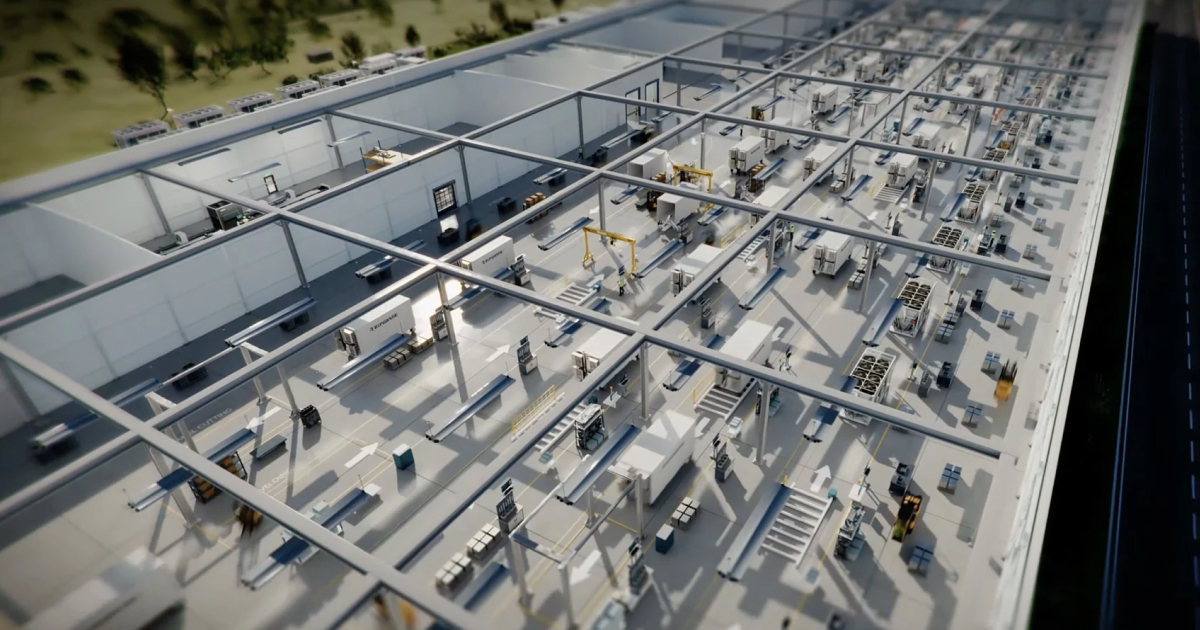
AI基础设施公司Runware再次成为新闻焦点,而就在几个月前,该公司刚刚发布了Sonic Inference Pod——一种在工厂内建造、运抵客户时即可安装的模块化数据中心。如今,该公司有了更大的计划。它向TechCrunch表示,希望建造一座像生产汽车一样在流水线上组装这些pod的工厂。
AI infrastructure company Runware is making news again, just months after unveiling the Sonic Inference Pod, a modular data center built in a factory and shipped to customers ready to install. Now the company has bigger plans. It told TechCrunch it wants to build a factory that assembles these pods on a production line, as if they were cars.
这一想法并不完全新颖。Crusoe和施耐德电气等公司也在销售预制pod,但Runware表示,它可以更快地交付其pod。
The idea isn’t entirely new. Companies like Crusoe and Schneider Electric also sell prefabricated pods, but Runware says it can ship its pods faster.
Runware联合创始人兼首席执行官弗拉维乌·法杜莱斯库向TechCrunch表示,公司计划到2028年将其位于罗马尼亚的工厂产能扩大到每天30兆瓦的数据中心容量,即每月近1吉瓦。这是相当大的产能:按此速度,Runware一年的产量大约相当于美国今年预计新增的数据中心电力总量,约为10吉瓦。但这也反映出整个行业正在推动更快速、更高效地部署数据中心。
Flaviu Fadulescu, co-founder and CEO of Runware, told TechCrunch that the company plans to scale production at its Romania-based factory to 30 megawatts of data center capacity per day by 2028, or nearly 1 gigawatt per month. That’s a whole lot of capacity: at that pace, Runware would produce roughly as much in a year as the entire U.S. was expected to add in data center power this year, about 10 gigawatts. But it also reflects an industry-wide push to deploy data centers faster more efficiently.
例如,英伟达今年早些时候发布了Vera Rubin AI工厂和DSX POD。两者同样旨在让企业更快速、更轻松地建造自己的AI数据中心。不过,与Runware的不同之处在于,该公司表示它实际上已经建成了一座工厂,而不仅仅是设计了让别人建造工厂的基础设施。
Nvidia announced, for example, the Vera Rubin AI factories and the DSX POD earlier this year. Both are also meant to make it faster and easier for companies to build their own AI data centers. The difference with Runware, though, is that it says it has actually built a factory rather than just designed the infrastructure that would let others build one.
法杜莱斯库表示,Runware将从明年开始逐步提高产量,并且公司已经拥有两座工厂——一座已用于建造pod数年,另一座于今年早些时候开始建设。第二座工厂预计将在几个月内完工,并于明年年初投产。
Fadulescu said Runware will gradually increase production starting next year and that it already has two factories — one it has used for a few years to build the pods, and a second it started building earlier this year. The second is expected to be finished within months and go online early next year.
Runware 将在流水线上制造模块化数据中心。客户可自行提供场地进行组装,也可由 Runware 代为寻找。Fadulescu 表示,Runware 目标是在 48 小时内让机舱上线运行。该时间涵盖安装和设置时间,不包括制造时间。公司称,一台机舱过去需要三周制造,随着产能爬坡,未来将缩短至一天。若部件故障,Runware 将提供备件。客户亦可向 Runware 租用算力,或自带 GPU 并按月支付机舱及运维费用。电力和网络费用另行计算,他补充道。
Runware will manufacture the modular data centers on an assembly line. Customers can provide their own site to assemble them, or Runware can find one for them. Fadulescu said Runware aims to bring the pods online within 48 hours. That time covers installation and set-up time, not build time. A pod once took three weeks to build but it will soon take one day as it ramps up production, says the company. Runway will provide spare parts if components fail. Customers can also rent compute from Runware or supply their own GPUs and pay a monthly fee for the pods and operations. Power and internet are charged separately, he said.
他表示,机舱还可按客户偏好定制。机舱采用标准化设计,但可按客户需求及最新 GPU 芯片进行配置。芯片下单后交付周期较长,这对 Runware 有利。“我们的机舱交付时间也短于当前 GPU 交货周期,使我们有时间根据所订购的硬件调整基础设施,”他说。“针对新一代 GPU,我们的内部硬件团队可自行设计、制造和测试组件,从而实现快速适配。”
The pods can also be customized to customer preferences, he said. The pods have a standard design, but can be configured to meet customer requirements and the latest GPU chips. Chips can take a long time to arrive after they’re ordered, which works in Runware’s favor. “Our pod delivery times are also shorter than current GPU lead times, giving us time to adapt the infrastructure to the hardware being ordered,” he said. “For new GPU generations, our in-house hardware team can design, build, and test components itself, allowing us to adapt quickly.”
目前这些均为计划 —— 执行才是考验。工厂需要大量人员、库存、供应链物流和资金。关于重塑制造的警示案例不胜枚举,其中电动汽车初创公司 Arrival 曾估值超 130 亿美元,却难以像传统工厂那样具成本效益地大规模生产电动汽车。Runware 迄今已融资超 6000 万美元,称计划进行 B 轮融资,但目前正利用去年 12 月融得的 5000 万美元 A 轮资金完成工厂建设并投入运营。
Right now, these are all plans — execution is the test. The factory will need a lot of people, inventory, supply chain logistics, and money. There are cautionary tales about reinventing manufacturing, notably the electric vehicle startup Arrival, once valued at over $13 billion, which struggled to mass-produce electric vehicles cost-effectively compared with traditional plants. Runware, which has raised more than $60 million to date, said it plans to raise a Series B, but for now it is finishing and launching the factory with the $50 million Series A it raised last December.
“我们的成本结构非常不同,”法杜列斯库说,并解释了Runware如何设法避免Arrival的命运。“我们确实有人力和材料成本,”他继续说道。“但相对于部署AI算力的价值,我们的工厂人员成本是划算的。”他还表示,自行设计系统并采购广泛可得、价格实惠的部件有助于压低成本。“我们从汽车行业引进了一位经验非常丰富的工厂经理,与我们的硬件主管并肩工作,帮助我们把这个执行环节做好。”采购零部件也可能是个挑战。
“Our cost structure is very different,” Fadulescu said, explaining how Runware seeks to avoid Arrival’s fate. “We do have headcount and materials cost,” he continued. “But our factory staff is cost-effective relative to the value of deploying compute for AI.”He also said that designing its own systems and buying widely available, affordable parts helps keep costs low. “We’ve brought in a highly experienced plant manager from the automotive industry to work alongside our chief of hardware and help us get that execution right.”Sourcing components could also be a challenge.
尽管Runware表示,它使用标准部件设计和制造自己的冷却及其他舱体系统,但泵和风扇等一些部件来自德国,而且它在网络方面仍依赖英伟达。尽管如此,Runware声称,自一个月前开始向外部客户提供其Sonic舱体以来,已获得10亿美元的有承诺意向,“相当于超过20兆瓦,我们目前正在努力交付,”法杜列斯库说。
Though Runware says it designs and builds its own cooling and other pod systems with standard components, some parts, such as pumps and fans, come from Germany, and it still depends on Nvidia for networking. Still, Runware claims it has received $1 billion in committed interest for its Sonic pods since it began offering them to outside customers a month ago, “representing over 20 megawatts, which we’re now working to deliver,” Fadulescu said.
美国及海外的数据中心因能耗巨大以及这对电网和其他资源造成的影响而受到批评。在被追问时,法杜列斯库表示,他公司的舱体只需要电力和互联网连接。它们将使用闭环液冷系统,配合风冷散热器来释放热量,因此实际上不需要接水。“我们正与电力供应商合作,推进一个总容量397兆瓦的选址管道,并有可能扩展到1.2吉瓦,”他说,指的是其计划选址清单,并补充说,该公司正在比亚马逊、微软和谷歌等超大规模企业所用场地小得多的地点部署其模块化数据中心。
Data centers in the U.S. and abroad have come under fire for how much energy they consume and how that affects the grid and other resources. When pressed, Fadulescu said his company’s pods only need power and an internet connection. They’ll use a closed-loop liquid cooling system with air-cooled radiators to release heat, so they don’t really need a water connection. “We’re working with power providers on a site pipeline covering 397 megawatts, with potential to expand to 1.2 gigawatts,” he said, referring to its list of planned sites and adding that the company is deploying its modular data centers on sites that are much smaller than those used by hyperscalers like Amazon, Microsoft, and Google.
他继续说道,这些场地通常已经具备供电条件,因此不会进一步加重电网负担,也不会干扰社区。他还表示,这些机舱“在华氏86度(约30摄氏度)以下的温度下完全静音运行。我们尽可能使用可再生能源。”“我们正在积极扩大能源供应商和场地网络。我们的目标是让可再生能源成为主要能源来源。”接下来,Runware将于明年初投产新工厂,随后拓展至美国及全球其他地区。Fadulescu表示,模块化系统是未来,很快将成为“大规模AI部署的标准”。
The sites, he continued, typically already have power, so they shouldn’t further strain the grid or disrupt the community. The pods also run “completely silent up to temperatures of 86 degrees Fahrenheit. We use energy from renewable sources whenever possible,” he continued. “We are actively working on expanding our network of energy providers and sites. We’re aiming to have renewables as our main energy source.”Next, Runware will bring its new factory online early next year, then expand to the U.S. and other regions worldwide. Modular systems are the future and will soon become “the standard for large AI deployment,” Fadulescu said.
他补充道:“客户应当能够从一开始就围绕工厂预制的机舱来规划超大规模数据中心,并让其在几个月内投入运行,而不是几年。”
“Customers should be able to plan a hyperscale data center around factory-built pods from the beginning and have it working in months instead of years,” he added.