一条交易监控预警落在一个加密账户上,而在币安全球政策团队最新论文勾勒的工作流中,无需任何分析师先行接手。一个 AI 智能体调取客户画像,另一个将关联钱包送入区块链分析工具,顺着资金从法币入金渠道跨越数条链流向最终流出至另一平台的节点;第三个智能体核查交易对手是否涉及制裁风险;一个案件管理智能体再将各项发现串成时间轴,并给出是否升级处理的建议。等到人工调查员打开案卷时,软件已完成大部分基础工作,并自行挑选工具、决定步骤顺序。
A transaction-monitoring alert lands on a crypto account, and in the workflow Binance Global Policy sketches in its newest paper, no analyst has to pick it up first. One AI agent pulls the customer profile. Another runs the linked wallets through blockchain analytics, following the money from a fiat on-ramp across several chains to the point where it leaves for another platform. A third checks the counterparties for sanctions exposure, and a case-management agent stitches the findings into a chronology that ends with a recommendation on whether to escalate. By the time a human investigator opens the file, software has done most of the legwork, picking its own tools and deciding the order of its own steps.
调查员面临一类全新的提问:是哪个智能体判定某个钱包“干净”?它被授权直接做出该判定,还只是被允许提出建议?若建议事后证明错误,由谁负责?作为金融犯罪合规基石的客户尽职调查,原本旨在识别自然人,根本无处记录上述任何信息。
The investigator now has a new kind of question to ask. Which agent decided that a particular wallet was clean? Was it allowed to make that call, or only to suggest it? If the recommendation turns out to be wrong, who answers for it? Customer due diligence, the bedrock of financial crime compliance, was built to identify people, and it has nowhere to record any of this.
2026 年 10 月 1 日,币安全球政策团队发布《了解你的智能体:为智能体金融构建合规层》,作者为全球政策负责人 Steven McWhirter 与全球政策经理 Diego Montes Serralde,币安 MEASAT 区域合规负责人 Tanveer Kalooji 以专家身份参与贡献。该文承接团队于 2026 年 9 月 10 日发布的《智能体时代的金融架构》,后者梳理了 AI 智能体、代币化资产与稳定币如何汇聚成一个软件可自主采取经济行动的金融体系。
On October 1, 2026, Binance Global Policy published Know Your Agent: Building the Compliance Layer for Agentic Finance, written by Steven McWhirter, Global Head of Policy, and Diego Montes Serralde, Global Policy Manager, with expert contribution from Tanveer Kalooji, Regional Head of Compliance MEASAT at Binance. It builds on the team's September 10, 2026 paper, The Financial Architecture of the Agentic Era, which mapped how AI agents, tokenized assets and stablecoins are coming together into a financial system where software can take economic action.
新论文提出一个简明观点:了解你的客户(KYC)义务依然必要,但一旦软件能够自主行动,仅靠 KYC 已不再充分。
The new paper makes a simple argument. Know Your Customer obligations remain necessary, but once software can act on its own, they are no longer sufficient.
其答案是“了解你的代理”(Know Your Agent,简称KYA),这是一个五层问责框架,旨在与KYC并行运作。当软件开始行动时,合规始终与其所保护的体系一同演进。随着支付加速、市场走向数字化和全球化,合规团队逐步引入了自动化筛查、交易监控、区块链分析和机器学习。币安认为,代理式人工智能是这一进程的下一步,而它所指出的区别归根结底在于主动性。
Its answer is Know Your Agent, or KYA, a five-layer accountability framework designed to sit alongside KYC. When software starts to actCompliance has always grown up alongside the system it protects. As payments sped up and markets went digital and global, compliance teams took on automated screening, transaction monitoring, blockchain analytics and machine learning. Binance sees agentic AI as the next step in that progression, and the difference it draws comes down to initiative.
规则引擎只做被告知的事情,生成式人工智能应用只在收到提示时作出回答。而代理则被赋予一个目标,自行规划路径,从多个系统中提取信息,选择使用哪些工具,比较不同的行动方案,并在情况变化时调整其做法。这种能力很少存在于单一模型之中。一个代理式系统通常将一个或多个模型与工具、记忆、编排、外部数据和一组权限连接起来。
A rules engine does what it was told, and a generative AI application answers when prompted. An agent is handed an objective and works out the route itself, pulling information from several systems, choosing which tools to use, comparing courses of action and changing its approach when circumstances shift. That capability rarely lives in a single model. An agentic system usually wires one or more models to tools, memory, orchestration, outside data and a set of permissions.
这些系统构成一个谱系,从为人起草建议供其批准的助手,一直到凭借自身权限执行任务或发起行动的代理。世界经济论坛呼吁建立一种治理方式,权衡代理的角色、自主性、权限、可预测性和运行环境,而英国数字监管合作论坛则将这一刻描述为从“人工智能作为工具”向“人工智能作为行动者”的转变。币安得出的实际结论是:一个系统的保障措施应当与其实际能够做的事情相匹配,无论它被称为什么。
These systems sit along a spectrum, from assistants that draft recommendations for a person to approve through to agents that carry out tasks or initiate actions on their own authority. The World Economic Forum has called for governance that weighs an agent’s role, autonomy, authority, predictability and operating context, and the United Kingdom’s Digital Regulation Cooperation Forum describes the moment as a move from AI as a tool to AI as an actor. Binance draws the practical conclusion that a system’s safeguards ought to match what it can actually do, whatever it happens to be called.
对合规团队的好处。该文件对代理能为合规做的事情公开表达了热情,而加密调查说明了其中的原因。一旦触发警报,调查代理可以梳理资金从法币进入数字资产的流动,追踪钱包在跨链和交易对手之间的活动,识别资金流出的位置,调取佐证记录,并起草案件叙述。
The upside for compliance teamsThe paper is openly enthusiastic about what agents can do for compliance, and crypto investigations show why. Once an alert is raised, an investigative agent could map funds as they move from fiat into digital assets, trace wallet activity across chains and counterparties, identify where the money leaves, retrieve supporting records, and draft the case narrative.
第二个智能体随后可以以怀疑者的眼光审阅该叙述,将结论与证据进行核对,并标记出任何矛盾之处或缺乏支持的内容。金融行动特别工作组(FATF)2026年的工作提出了类似观点。它指出,人工智能、机器学习和大数据分析可以加强区块链分析,同时强调这些工具在结合传统调查技术和经验丰富的人工决策时效果最佳。
A second agent could then read that narrative with a sceptic’s eye, test the conclusion against the evidence, and mark anything contradictory or unsupported. The Financial Action Task Force’s 2026 work makes a similar point. It notes that artificial intelligence, machine learning and big-data analytics could strengthen blockchain analytics, while stressing that those tools work best alongside conventional investigative techniques and experienced human decision-making.
这一模式贯穿合规职能的其余环节。在客户准入阶段,智能体可以梳理企业登记册和受益所有权信息,以发现缺口和不一致之处。在制裁筛查中,它可以超越简单的姓名匹配,考察所有权、控制权和间接风险敞口,随后按置信度和紧迫性对生成的案例进行排序。它可以判断负面媒体报道是否真正涉及该客户,并将新立法、指导文件和执法决定与公司自身的控制措施进行对照。
The same pattern runs through the rest of the compliance function. At onboarding, an agent could work through corporate registries and beneficial ownership information to spot gaps and inconsistencies. In sanctions screening, it could look past simple name matches to ownership, control and indirect exposure, then rank the resulting cases by confidence and urgency. It could judge whether an adverse-media hit genuinely refers to the customer, and map new legislation, guidance, and enforcement decisions against a firm’s own controls.
将这些串联起来的是智能体连接通常分散在不同系统中的信息的能力,从而让人类专家将时间花在需要判断力的案件上。如果每一个数据源、工具调用、中间发现和审批都作为一个证据记录的一部分被保存下来,调查也将更易于审计。具有实际后果的决策,例如提交可疑活动报告或终止客户关系,仍由负责人做出。
What joins these together is the agent’s ability to connect information that usually sits in separate systems, so that human experts spend their time on the cases that need judgment. If every data source, tool call, intermediate finding and approval is kept as part of one evidentiary record, the investigation also becomes easier to audit. Decisions with real consequences, such as filing a suspicious activity report or ending a customer relationship, stay with accountable people.
币安坦承,这些收益伴随着条件。智能体可能会产生幻觉或依赖薄弱来源,而调查人员可能过于轻易地听从看似复杂的建议。基于过往决策开发的模型可能继承早期的偏见,而连接外部工具的智能体可能面临提示词注入或数据泄露的风险。
Binance is candid that these gains come with conditions. Agents can hallucinate or lean on weak sources, and investigators can defer too readily to a recommendation that looks sophisticated. Models developed on past decisions can inherit earlier biases, and agents connected to outside tools can be exposed to prompt injection or data leakage.
该文件给出的答案是“受控委托”:智能体负责分析、排序和推荐,而关键性结果则必须通过确定性防护措施、有据可查的审批流程,以及人类或组织层面的问责机制。“了解你的智能体”这一问题从未被提出过KYC(了解你的客户)告诉机构客户是谁,这一问题依然至关重要。机构可以确切知道账户背后站着谁,却仍然无法判断某条具体指令的来源。
The paper’s answer is controlled delegation: agents analyse, prioritise, and recommend, while consequential outcomes pass through deterministic safeguards, documented approvals, and human or organisational accountability. The question KYC was never askedKYC tells an institution who the customer is, and that question stays essential. An institution can know exactly who stands behind an account, though, and still be unable to say where a particular instruction came from.
该指令可能来自客户本人,也可能来自客户授权的智能体、被攻陷的智能体,或者是已超出授权范围的子智能体。连接到同一系统的两个智能体,其风险等级也可能截然不同。其中一个可能仅被授权读取数据,而另一个却能变更客户的风险分类、关闭警报或发起转账。
It might have come from that customer, from an agent the customer authorised, from a compromised agent, or from a sub-agent that has drifted beyond its mandate. Two agents connected to the same system can also carry very different risk levels. One may be cleared only to read data, while another can change a customer’s risk classification, close an alert or initiate a transfer.
填补这一空白,意味着要知晓是哪个智能体在行动、由谁开发部署、代表谁在工作。同时也意味着要知晓其授权的边界。这包括它能触及哪些数据和系统、只能推荐还是能执行、能否将工作转交给其他智能体、适用哪些财务、时间或地域限制,以及其权限如何被暂停。币安指出的风险在于“无法归因的行动”,即无法追溯到在已知授权下行事的可识别行为主体。
Filling that gap means knowing which agent acted, who developed and deployed it, and on whose behalf it was working. It also means knowing the edges of its mandate. That includes the data and systems it could reach, whether it could execute or only recommend, whether it could pass work to other agents, what financial, temporal or geographic limits applied, and how its permissions could be suspended. The risk Binance singles out is unattributable action, an outcome that cannot be traced to an identifiable actor working under a known authority.
传统的访问控制在此仅能解决部分问题,因为它们主要决定账户能否进入系统并执行既定功能。KYA(了解你的智能体)还必须捕捉智能体与其委托人的关系、授权目的、其转授权利,以及对后续结果负责的主体。文件引用了OpenID基金会(OpenID Foundation)的观察:智能体的行为往往与人类用户难以区分。
Conventional access controls only go part of the way here, since they mostly decide whether an account may enter a system and perform a defined function. KYA also has to capture the agent’s relationship to its principal, the purpose of its mandate, its right to delegate and the party accountable for what follows. The paper cites the OpenID Foundation’s observation that agents often behave in ways indistinguishable from human users.
报告还指出,现有的授权模式可能难以应对异步活动、递归式委托以及同时代表多个用户行事的智能体。币安全球政策负责人史蒂文·麦克沃特直白地阐述了这一立场:“我们的金融犯罪合规体系在很大程度上是围绕‘了解你的客户’建立起来的。但在智能体世界里,这已经不够了。当软件能够调查、决策并转移资金时,我们必须能够有把握地说明:是哪个智能体在行动、依据谁的授权、以及谁仍然承担责任。‘了解你的智能体’并不是要赋予软件法律人格,而是要在自主性不断扩大的同时维护问责制。自主性绝不应超越我们对其进行验证、约束以及在必要时撤销的能力。”
It also notes that existing authorisation models may have difficulty with asynchronous activity, recursive delegation and agents acting for several users at once. Steven McWhirter, Global Policy Lead at Binance, put the case plainly: “We’ve built much of financial crime compliance around knowing the customer. But in an agentic world, that is no longer enough. When software can investigate, decide and move money, we need to be able to say with confidence which agent acted, on whose authority, and who remains accountable. Know Your Agent isn’t about giving software legal personality; it’s about preserving accountability as autonomy scales. Autonomy should never outrun our ability to verify, bound and, where necessary, revoke it.”
了解你的智能体的五个层次币安将KYA定义为对在金融服务内部行事或与之交互的AI智能体进行识别、认证、授权和持续治理的过程。其目标是实现运营层面的问责,而法律责任仍由软件背后的人和公司承担,这与金融行动特别工作组2026年关于去中心化金融的工作所采用的技术中立方针一致。
The five layers of Know Your AgentBinance defines KYA as the process of identifying, authenticating, authorising and continuously governing an AI agent that acts within, or interacts with, a financial service. The aim is operational accountability, and legal responsibility stays with the people and companies behind the software, in line with the technology-neutral approach in FATF’s 2026 work on decentralised finance.
该框架首先为任何由智能体介导的活动中的各方命名。智能体是执行任务的软件实例,委托方则是它所代表的人或实体。提供方或部署方负责构建、配置或提供该智能体。依赖机构——无论是银行、虚拟资产服务提供商还是支付公司——则是允许其进入的一方。有时一个组织会同时扮演其中多个角色,例如银行部署自己的内部反洗钱智能体。有时这些角色则分散开来,例如客户授权来自第三方科技公司的智能体代表其与多家金融机构打交道。无论哪种情况,智能体始终与最终承担责任的一方绑定。
The framework starts by naming the parties in any agent-mediated activity. The agent is the software instance doing the task, and the principal is the person or entity it acts for. The provider or deployer builds, configures or offers it. The relying institution, whether a bank, a virtual asset service provider or a payment firm, is the one letting it in. Sometimes one organisation plays several of these roles, as when a bank deploys its own internal AML agent. Sometimes they are spread out, as when a customer authorises an agent from a third-party technology company to deal with several financial institutions on their behalf. Either way, the agent stays tied to whoever is ultimately accountable.
回到调查人员的案卷,这五个层次读起来就像是那份案卷必须回答的问题。
Go back to the investigator’s file, and the five layers start to read like the questions that file has to answer.
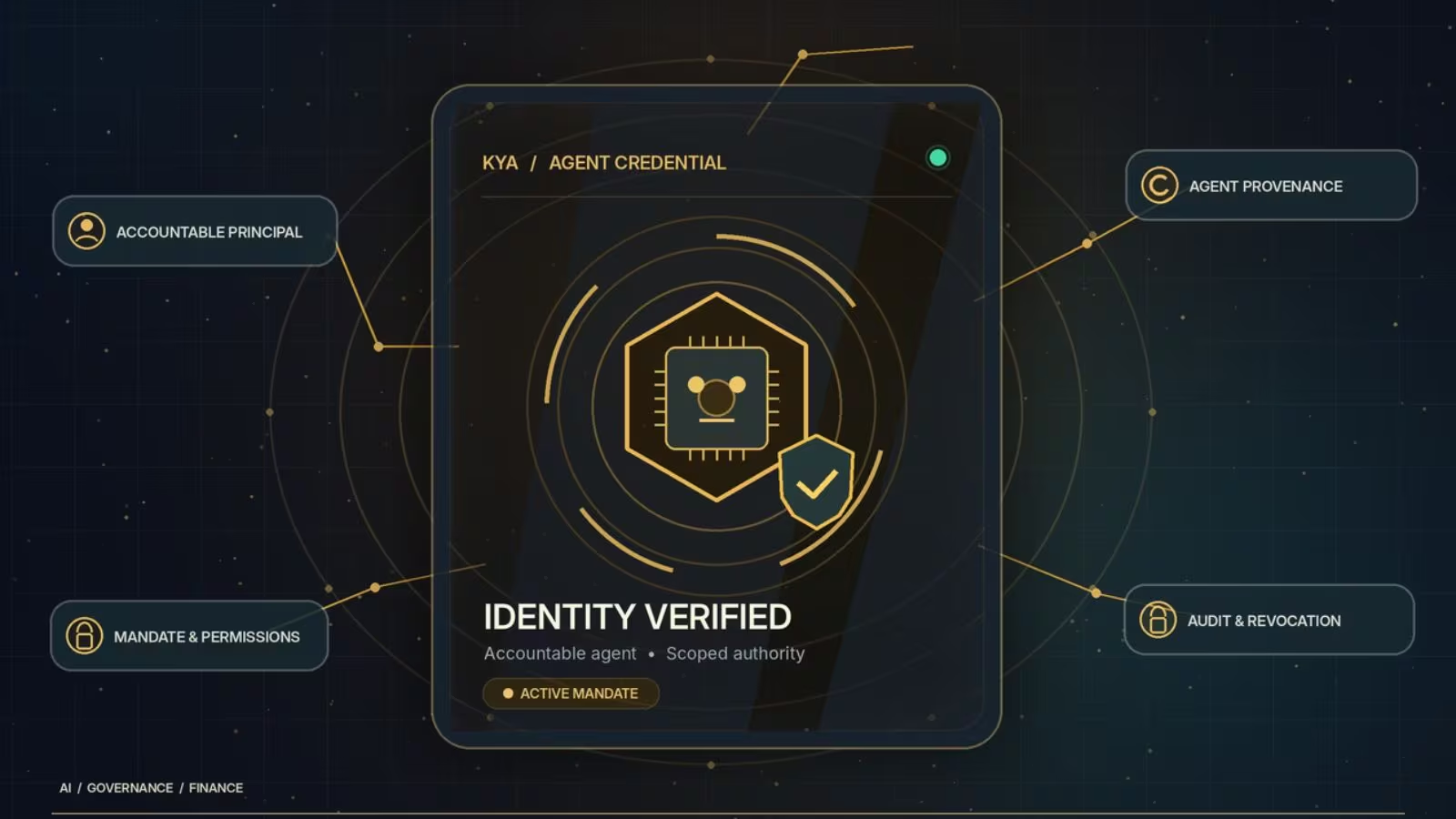
第一层,代理身份与来源,为每个材料代理赋予独立的身份,并与其提供方、部署方、负责法律实体、模型版本及凭证相链接。调查人员随后可以看见某个特定且经授权的“钱包追踪代理”完成了工作,而今天的系统可能只会显示使用了有效的账户。
The first layer, agent identity and provenance, gives every material agent its own identity, linked to its provider, deployer, responsible legal entity, model version and credentials. The investigator can then see that a specific, authorised wallet-tracing agent did the work, whereas a system today might show only that a valid account was used.
第二层将代理与可问责的主体相连,即它所服务的个人或组织。技术提供方和受监管的金融机构可以通过合同划分责任,但引入代理并不会削弱受监管机构自身的反洗钱/反恐融资义务。
The second layer links the agent to an accountable principal, the individual or organisation it serves. Technology providers and regulated firms can divide responsibilities between them by contract, but bringing in an agent does nothing to dilute the regulated institution’s own AML/CFT obligations.
第三层,授权与权限,明确规定了代理可以使用的哪些行动、数据和工具,以及用于何种目的,遵循最小权限原则。当涉及个人信息时,目的限制和数据最小化原则已内嵌其中。该层还将分析或建议的能力与执行权限分开。在本例中,代理追踪钱包可以被授权提出升级建议,而无需拥有关闭警报的权力。
The third layer, mandate and permissions, sets out exactly which actions, data and tools an agent may use and for what purpose, on the principle of least privilege. Where personal information is involved, purpose limitation and data minimisation are built in. This layer also separates the ability to analyse or recommend from the authority to execute. The agent tracing wallets in this example could be cleared to recommend escalation without ever holding the power to close the alert itself.
第四层,委托与监控,跟踪工作在传递过程中如何展开。案件进行到中途时,案件管理代理可能会将单一交易对手的制裁核查任务委托给子代理。该子代理携带机构可以向上追溯其凭证,其任务范围很窄:将名称与名单比对并报告结果,在最初由父代理赋予的范围内完成。假设它试图打开客户的支付历史记录——而这从未包含在该任务简报之内——该尝试会在机构的监控系统中暴露出来,任何代理被篡改的迹象也会同样暴露。
The fourth layer, delegation and monitoring, follows the work as it gets passed along. Midway through the case, the case-management agent might hand the sanctions check on a single counterparty to a sub-agent. That sub-agent carries credentials the institution can trace back up the chain, and its brief is narrow: run the name against the lists and report what it finds, within the limits its parent agent was given in the first place. Suppose it tried to open the customer’s payment history, which was never part of that brief. The attempt would surface in the institution’s monitoring, as would any sign that the agent had been tampered with.
对于被授权发起支付的代理,这种监控延伸到它们生成的每一笔交易。第五层是撤销与可审计性,允许机构在任何时候暂停某个代理、收窄其权限或增加人工审批环节。每一项实质性操作都保持可追溯,可追溯到代理本身、其委托人、当时生效的授权、其使用的工具和数据、任何人工干预以及最终结果。当代理试图做某件重要的事情时,这些层次会汇聚在一起。
For agents cleared to initiate payments, that monitoring extends to every transaction they generate. The fifth layer, revocation and auditability, lets an institution suspend an agent, narrow its permissions or add a human approval step at any point. Every material action stays traceable to the agent, its principal, the authority in force, the tools and data it used, any human intervention and the outcome. These layers come together at the moment an agent tries to do something that matters.
币安呼吁在操作时进行验证,即在执行前进行一项检查。该检查确认代理的凭证仍然有效、该操作属于其当前授权范围之内,并且没有任何审批、风险或撤销条件构成阻碍。在这项检查背后,是一份最低限度的KYA记录,涵盖代理的身份、其委托人以及部署它的主体。该记录还包含其权限的范围和期限、任何转授权、其当前状态以及其被允许运营的地点。
Binance calls for point-of-action verification, a check just before execution. It confirms that the agent’s credentials are still valid, that the action falls inside its current mandate, and that no approval, risk or revocation condition stands in the way. Behind that check sits a minimum KYA record covering the agent’s identity, its principal and the party that deployed it. The record also holds the scope and duration of its authority, any right to delegate, its current status and where it is allowed to operate.
该记录随代理贯穿整个交互过程,并在事后仍可供审查。它支持归属认定,但并不意味着代理承担了其所服务对象的监管身份。有边界的自主性在实践中回到反洗钱工作流程,各组成部分是这样衔接的。每个专门代理在开启案件之前,其身份、授权和权限都会经过验证。它们的发现会被汇总,并在任何人接受建议之前受到独立质疑。
It travels with the agent through the interaction and remains available for review afterwards. It supports attribution without suggesting the agent takes on the regulatory status of the person it serves. Bounded autonomy in practiceBack in the AML workflow, this is how the pieces fit. Each specialised agent has its identity, mandate and permissions verified before it opens the case. Their findings are pulled together and independently challenged before anyone accepts a recommendation.
随后,有重大后果的结果会经过代理无法覆盖的固定、基于规则的控制,以及人工审批。该流程会记录所考虑的证据、涉及的代理和模型、重要的工具调用、任何人工参与以及最终决定。分工是明确的:代理负责分析和建议,控制措施强制执行必须执行的事项,而在事关重大时由承担责任的人做出决定。
Consequential outcomes then pass through fixed, rules-based controls the agent cannot override, along with human approval. The process keeps a record of the evidence considered, the agents and models involved, the material tool calls, any human involvement and the final decision. The division of labour is clear: agents analyse and recommend, controls enforce what is mandatory, and accountable people decide when the stakes are significant.
币安称之为“有限自主”。监管机构也在得出类似的结论。2026年7月,新加坡金融管理局公布了“运行时代理式金融保障框架”(SAFR),该框架在其BuildFin.ai倡议下与行业参与者共同开发。SAFR的核心是为金融服务中的人工智能代理提供实时保障,包括受策略约束的执行、行动前验证、可审计性和互操作性。它对代理拟议行动在执行前进行检查和记录的关注,与KYA方法高度一致。
Binance calls this bounded autonomy. Regulators are arriving at a similar place. In July 2026, the Monetary Authority of Singapore announced its Safeguards for Agentic Finance at Runtime framework, or SAFR, developed with industry participants under its BuildFin.ai initiative. SAFR centres on real-time safeguards for AI agents in financial services, including policy-bound execution, validation before action, auditability and interoperability. Its attention on checking and recording an agent’s proposed actions before they run lines up closely with the KYA approach.
当代理能够付款时一旦代理能够转移资金,风险会再次上升。国际货币基金组织描述了一种从“点击支付”向“决定支付”转变的可能。在这种模式下,软件会比较各种选项,判断购买条件是否已满足,并在授权范围内发起支付。2026年6月,英格兰银行的莎拉·布里登描述了代理式人工智能如何推动支付和商业脱离推荐模式——在推荐模式中,人们仍然完成交易。
When agents can payThe stakes rise again once agents can move money. The International Monetary Fund describes a possible shift from “click-to-pay” to “decide-to-pay.”In that world, software compares options, decides the conditions for a purchase have been met, and initiates payment under delegated authority. In June 2026, Sarah Breeden of the Bank of England described agentic AI moving payments and commerce away from a recommendation mode, in which people still complete the transaction.
方向是走向由代理自动化完成最后一步的系统。她提出了实际问题:用户如何安全地给予代理同意,以及当交易出现错误或欺诈时,争议和责任应如何运作。她还问到,随着人工智能公司、商家和支付系统各自构建自己的代理交互协议,当局如何避免碎片化。英国《金融服务人工智能采用计划》最为明确。它将代理式支付列为自主金融系统的近期用例。
The direction is toward systems in which agents automate the final step. She raised practical questions about how users securely give agents their consent and how disputes and liability should work when a transaction is erroneous or fraudulent. She also asked how authorities can avoid fragmentation as AI firms, merchants and payment systems each build their own agent-interaction protocols. The United Kingdom’s Financial Services AI Adoption Plan is the most explicit. It names agentic payments as a near-term use case for autonomous financial systems.
它建议建立一个基于法律和责任标准、了解你的代理协议以及可互操作的机器对机器身份验证的信任框架。对币安而言,这使KYA远远超出任何单一公司的合规手册,成为代理式金融所需的共享信任基础设施的一部分。该文件明确指出了其背后的工程张力。
It recommends a trust framework built on legal and liability standards, Know Your Agent protocols and interoperable machine-to-machine authentication. For Binance, that places KYA well beyond any single firm’s compliance manual, as part of the shared trust infrastructure agentic finance will need. The paper is explicit about the engineering tension underneath.
AI系统具有概率性和自适应性,而支付基础设施则依赖于可预测性、法律确定性和确定性执行。币安提出的模型通过三个层级将二者分开。在第一层,智能体做它最擅长的事:解读用户的目标、权衡各种备选方案,并组装出一笔拟议交易。该提议随后进入确定性的监管层,由该层核查智能体的身份、授权、支出限额、交易对手限制和审批要求,任何未通过核查的内容都会被拒绝或上报。
AI systems are probabilistic and adaptive, while payment rails depend on predictability, legal certainty and deterministic execution. Binance’s proposed model separates the two across three layers. In the first, the agent does what it does best: interpreting the user’s objective, weighing alternatives, and assembling a proposed transaction. That proposal then meets a deterministic regulation layer that checks the agent’s identity, mandate, spending limits, counterparty restrictions and approval requirements, and anything that fails is rejected or escalated.
只有获得授权的交易才会进入第三层,即在相关支付或区块链基础设施上完成结算,并在那里成为最终结果。智能体可以判断一笔付款在商业上是否合理,但关于该付款是否获得授权的规则并不由它掌控。加密货币本身适合将这一机制直接嵌入底层基础设施。可编程钱包可以将智能体限制在特定资产、经批准的地址、交易规模或时间窗口之内。
Only an authorised transaction reaches the third layer, settlement on the relevant payment or blockchain infrastructure, where it becomes final. An agent can decide a payment makes commercial sense, while the rules on whether it's authorised stay out of its hands. Crypto lends itself to building this directly into the plumbing. A programmable wallet could restrict an agent to certain assets, approved addresses, transaction sizes or time windows.
它还可在风险指标或阈值被触发的瞬间要求人工审批。在处理智能体发起的交易之前,虚拟资产服务提供商(VASP)或支付服务提供商应当能够确认智能体的身份和状态、其背后的委托主体,以及该交易是否符合其被授予的权限。无论指令来自个人还是获得授权的智能体,所有现行义务都继续适用。这涵盖制裁筛查、《旅行规则》、钱包风险评估,以及对风险较高的跨链或DeFi活动加强管控。
It could also call for human approval the moment a risk indicator or threshold is triggered. Before processing an agent-initiated transaction, a VASP or payment provider should be able to confirm the agent’s identity and status, the principal behind it and whether the transaction fits its delegated authority. Every existing obligation keeps applying whether the instruction comes from a person or an authorised agent. That covers sanctions screening, the Travel Rule, wallet-risk assessment and enhanced controls for higher-risk cross-chain or DeFi activity.
KYA(了解你的智能体)建立在这一切之上,并不取代其中任何一项。该框架在设计上也注重相称性。仅获取信息的智能体所需的管控,要轻于会推荐交易的智能体。而能够实际转移价值的智能体,则需要所有类型中最严格的身份、监控和审批要求。
KYA sits on top of all of it and replaces none of it. The framework is also proportionate by design. An agent that only fetches information needs lighter controls than one that recommends transactions. An agent that can actually move value needs the strongest identity, monitoring and approval requirements of all.
代理人在明确授权的范围内有空间开展工作,而随着其影响客户、合规结果或资金流动的能力增强,保障措施也会随之收紧。下一阶段反洗钱架构的三种视角币安最后通过三个互补的视角来描述未来的反洗钱工作。了解你的客户(KYC)确定个人或法律实体的身份及其所承载的风险。了解你的交易(KYT)关注价值如何流动、活动为何发生,以及是否符合预期行为。
Agents get room to work within clearly authorised limits, and the safeguards tighten as their ability to affect customers, compliance outcomes or the movement of money grows. Three lenses for the next AML architectureBinance closes by describing future anti-money laundering through three complementary lenses. Know Your Customer establishes who an individual or legal entity is and what risk they carry. Know Your Transaction looks at how value moves, why the activity is happening and whether it fits expected behaviour.
了解你的代理人(KYA)识别所涉及的软件行为主体、其运作所依据的授权、其权限的边界,以及仍对其负责的个人或实体。接下来的许多事情取决于第三种视角的可移植性。币安设想将KYA记录的部分内容以机器可读、并在适当情况下以可加密验证的形式表达。这将使代理人的身份、委托人、授权、限制和状态在其接触的每一家机构和支付网络中都能以相同方式接受核查。
Know Your Agent identifies the software actor involved, the authority it operates under, the limits of its permissions and the person or entity that remains accountable for it. Much of what comes next depends on how portable that third lens becomes. Binance envisions elements of the KYA record expressed in machine-readable and, where appropriate, cryptographically verifiable form. That would let an agent’s identity, principal, mandate, limits and status be checked the same way at every institution and payment network it touches.
随着监管机构和行业努力制定代理人身份、验证和机器对机器认证的共同标准,有朝一日代理人可以将其凭证从一家机构带到另一家机构,其授权在每一步都得到确认。币安认为,随着代理人获得更大的影响决策和转移价值的权力,治理应当跟随这一权力延伸到何处,而完整论文阐述了行业可以如何构建它。
As regulators and industry work toward shared standards for agent identity, verification and machine-to-machine authentication, an agent could one day carry its credentials from one institution to the next, its authority confirmed at every step. As agents gain more power to influence decisions and move value, Binance argues that governance ought to follow that authority wherever it goes, and the full paper sets out how the industry might build it.