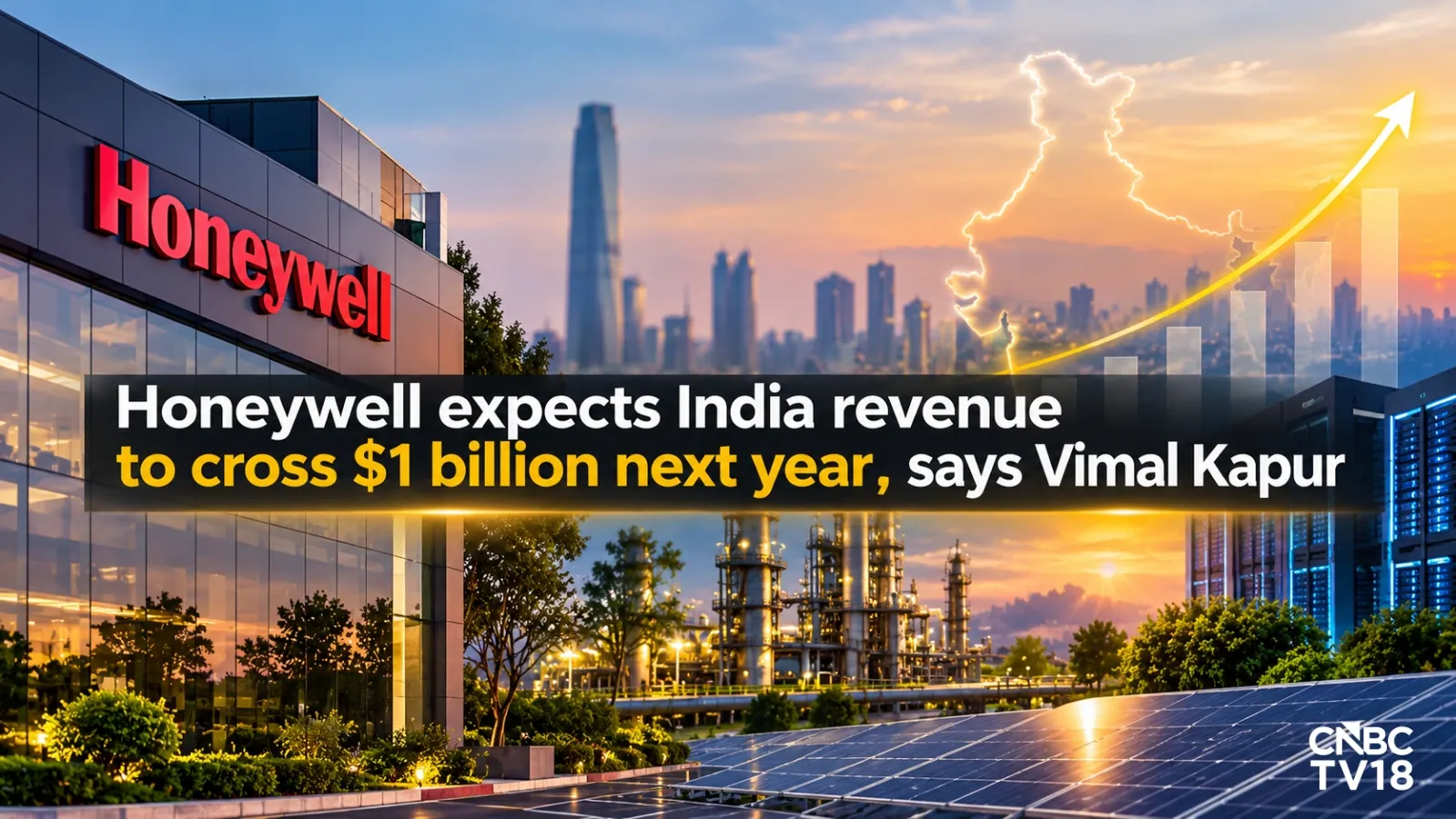
霍尼韦尔科技公司董事长兼首席执行官维马尔·卡普尔表示,公司的产品组合与印度的增长重点高度契合,包括能源安全、先进制造、半导体、太阳能、数据中心和人工智能。霍尼韦尔科技公司预计其在印度的收入将在2027年或不久后达到10亿美元,董事长兼首席执行官维马尔·卡普尔表示,公司看不出其在印度的业务不应继续以15%的典型速度增长的理由。
Chairman and CEO Vimal Kapur says the company's portfolio is well aligned with India's growth priorities, including energy security, advanced manufacturing, semiconductors, solar, data centres and AI Honeywell Technologies expects its revenue in India to reach $1 billion in 2027 or shortly after, with Chairman and CEO Vimal Kapur saying the company sees no reason why its business in the country should not continue growing at its typical rate of 15%.
卡普尔在接受CNBC-TV18采访时表示:“取决于我们是增长15%还是20%,我们可能明年或不久后就会达到这一里程碑。”他指的是10亿美元收入目标。
“Depending on whether we grow 15% or 20%, we may hit it next year or shortly after,” Kapur said in an interview with CNBC-TV18, referring to the $1 billion revenue milestone.
卡普尔表示,霍尼韦尔的产品组合处于有利位置,可受益于印度的经济重点,包括能源安全、先进制造和基础设施建设。他提到电池制造、半导体、太阳能电池板、数据中心和人工智能(AI)方面的机遇是增长的关键驱动力。
Kapur said Honeywell's portfolio is well positioned to benefit from India's economic priorities, including energy security, advanced manufacturing and infrastructure development. He cited opportunities in battery manufacturing, semiconductors, solar panels, data centres and artificial intelligence (AI) as key drivers of growth.
他说:“印度的经济驱动因素非常适合霍尼韦尔的产品组合。”并补充说,公司在能源基础设施和自动化方面的能力也与印度的需求相契合。
“India's economic drivers are very suitable for Honeywell's portfolio,” he said, adding that the company's capabilities in energy infrastructure and automation also align with the country's requirements.
这一收入目标的提出正值霍尼韦尔在2027年作为独立自动化公司迈入首个完整财年之际,此前该公司已分拆其航空航天业务。卡普尔表示,公司预计明年全球收入将略超200亿美元,并希望以此为基础打造一个新的霍尼韦尔科技公司。印度增长由能源、制造和基础设施驱动卡普尔表示,印度对能源基础设施和能源安全日益增长的需求为霍尼韦尔创造了机遇,此外机场、地铁等基础设施投资需要自动化技术,也带来了机会。
The revenue target comes as Honeywell moves into its first full year as a standalone automation company in 2027, following the separation of its aerospace business. Kapur said the company expects global revenue of a little over $20 billion next year and wants to build a new Honeywell Technologies from this base. India growth driven by energy, manufacturing and infrastructure Kapur said India's growing need for energy infrastructure and energy security creates opportunities for Honeywell, alongside investments in airports, metro rail and other infrastructure that require automation.
他说:“增长需要建设更多能源基础设施并确保能源安全。我们在这一领域拥有大量能力。”
“Growth requires building more energy infrastructure and ensuring energy security. We have a lot of capabilities in that area,” he said.
他还指出了数据中心和人工智能领域涌现的机遇,表示这些领域非常契合霍尼韦尔的能力。
He also pointed to the opportunities emerging from data centres and AI, saying these sectors were well suited to Honeywell's capabilities.
该公司在印度已深耕约90年,并于20世纪90年代中期在该国设立了全球能力中心(GCC)。卡普尔表示,该中心现有数千名员工,为霍尼韦尔的全球业务从事工程、产品开发和解决方案开发工作。
The company has had a presence in India for around 90 years and established a Global Capability Centre (GCC) in the country in the mid-1990s. Kapur said the centre now has thousands of employees working across engineering, product development and solutions development for Honeywell's global operations.
他表示,公司的印度战略正日益超越服务本地需求的范畴,转向从印度采购零部件和分总成,以供应其全球制造业务。
He said the company's India strategy is increasingly moving beyond serving domestic demand to sourcing components and sub-assemblies from the country for its global manufacturing operations.
霍尼韦尔目前在印度拥有五家制造工厂,主要服务本地市场,出口规模仍相对有限。公司现在正寻求深化本地供应商基础,并增加从印度的采购量。
Honeywell currently has five manufacturing facilities in India to serve the domestic market, with exports still relatively limited. The company is now looking to deepen its local supplier base and increase sourcing from India.
卡普尔表示,公司已派遣供应商开发工程师,与本地供应商在产品规格、质量和检验要求等方面开展合作。他预计,未来几年从印度的采购将变得更有分量。
Kapur said the company has deployed supplier development engineers to work with local suppliers on product specifications, quality and inspection requirements. He expects sourcing from India to become more meaningful over the next few years.
他说:“如果每家公司都这么做,世界上就会有数百个霍尼韦尔,这对该国来说将是一个相当大的机遇。”他指的是全球企业有潜力从印度采购更大份额的所需物资。
“If every company does that, there are hundreds of Honeywells in the world, and it makes it a pretty big proposition for the country,” he said, referring to the potential for global companies to source a larger share of their requirements from India.
独立自动化业务瞄准增长 卡普尔将霍尼韦尔的重组描述为一项长期举措,旨在未来15至20年创造价值。他表示,航空航天业务需要在供应产能上进行大量投资,以满足长周期的需求;而自动化业务则需要新的产品、能力和软件。他表示,分拆使各业务能够追求不同的战略和投资重心。
Standalone automation business targets growth Kapur described Honeywell's restructuring as a long-term exercise aimed at creating value over the next 15 to 20 years. He said aerospace requires significant investment in supply capacity to meet a long cycle of demand, while automation needs new offerings, capabilities and software. The separation allows the businesses to pursue different strategies and investment priorities, he said.
对于霍尼韦尔的自动化业务,卡普尔表示,更聚焦的战略也简化了内部决策流程。
For Honeywell's automation business, Kapur said greater focus has also simplified internal decision-making.
“作为少数将职责范围缩减一半的首席执行官之一,”他说,“一旦成为一家专注型公司,就像我们现在这样,你的目标就会更加明确。”他表示,公司的商业模式建立在打造装机量基础之上,随后通过服务和软件为客户提供支持。
“I'm one of the few CEOs who has made his job half as big,” he said. “Once you are a focused company, as we are today, you're more purposeful.”He said the company's business model is built around creating an installed base and then serving customers through services and software.
卡普尔表示,霍尼韦尔在全球范围内度过了强劲的第三季度,短周期业务表现良好,积压订单达190亿美元。公司还上调了第四季度业绩指引。“只要现状保持不变,我们对2027年感到乐观,”他说。
Kapur said Honeywell had a strong third quarter globally, with short-cycle businesses performing well and a backlog of $19 billion. The company has also raised its fourth-quarter guidance. “We feel good about 2027, as long as things remain the way they are,” he said.