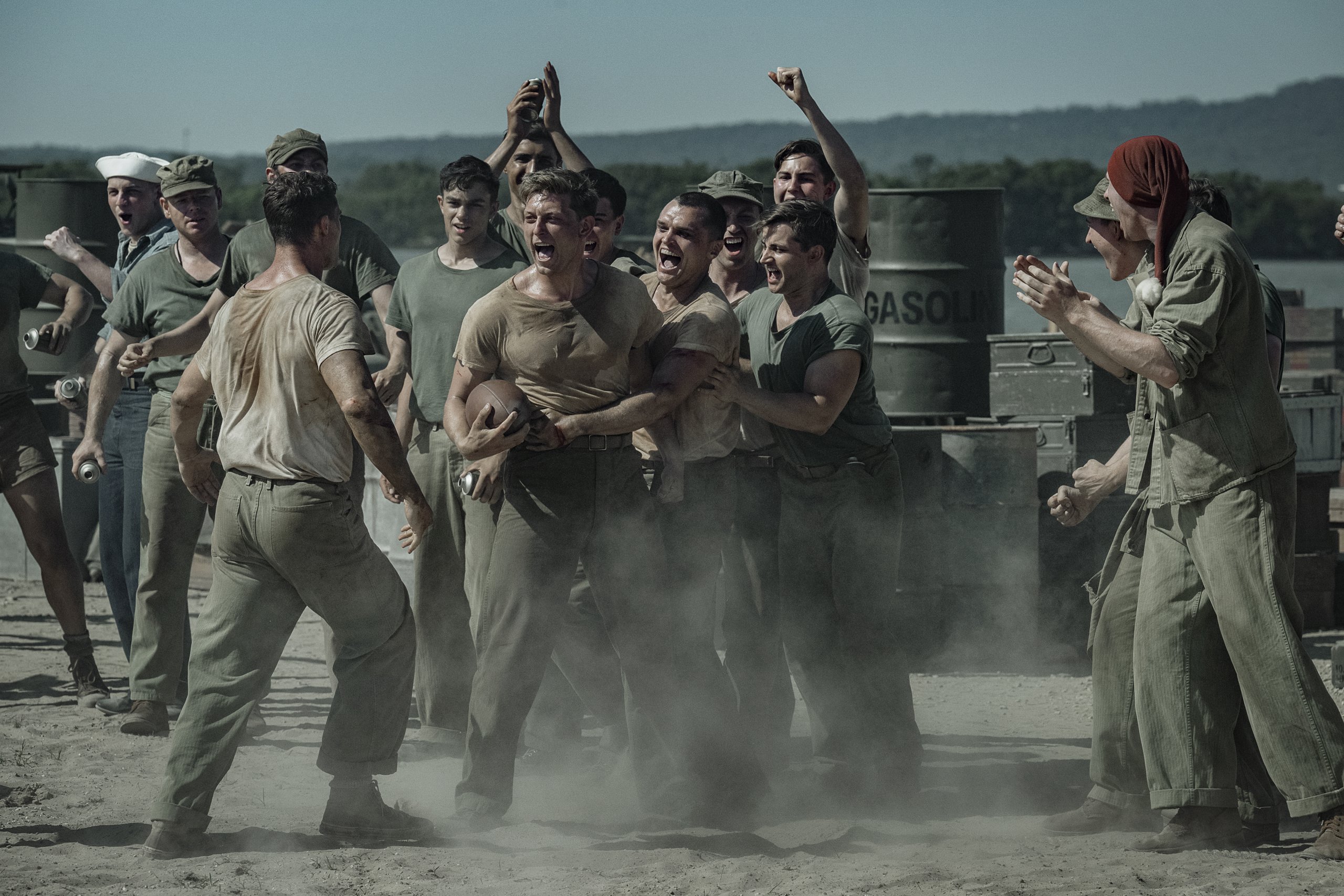
1944年圣诞夜,瓜达尔卡纳尔岛一个湿热难耐的下午,海军陆战队第6师的两个团在由夯实的泥土和破碎的珊瑚铺成的橄榄球场上相遇。他们来此是为了解决一个在喝啤酒时争论不休的问题:哪一方的球队更强?这座岛屿曾见证了太平洋战争中美军的首次重大攻势,如今已沉寂了近两年,成了一处由帐篷和补给站组成的集结地,士兵们在这里训练、等待,并拍打着一种昆虫——军队广播网正是以这种昆虫命名的。
In the wet heat of a Guadalcanal afternoon on Christmas Eve 1944, two regiments of the 6th Marine Division met on a football field of packed earth and broken coral. They had come to settle a question argued over beer: Which of them had the better team? The island where the Pacific War’s first major American offensive was fought had been quiet for nearly two years, a staging ground of tents and supply depots where men trained and waited and swatted at the insects that gave the island’s Armed Forces Radio network its name.
这场比赛办得相当隆重:有印刷的节目单、编号的T恤、陆战队员们亲手搭建的球门柱,还有一位播音员,他的解说通过“蚊子网络”传向太平洋上的舰船和岛屿上的官兵。至少1500名陆战队员列队站在球场边,有些人还为比赛结果下了注。两队均未得分。三个月后,该师启航前往冲绳——这座岛屿就在日本的家门口,当天上场的65人中,有15人后来在那里阵亡。
The game was a serious to-do: There were printed programs, numbered T-shirts, goalposts the Marines built themselves, and an announcer whose call went out over the Mosquito Network to men on ships and islands across the Pacific. At least 1,500 Marines lined the field, some with money on the outcome. Neither team scored. Three months later, the division sailed for Okinawa, an island on Japan’s doorstep, where 15 of the 65 men who played that day were killed.
这场比赛正是彼得·博格执导的《蚊子碗》核心处那段短暂的喘息。影片将于10月30日在部分影院上映,11月25日登陆Netflix。该片由博格执导,他与马克·L·史密斯共同撰写剧本,改编自普利策奖得主、记者巴兹·比辛格的书,讲述了其中四名球员的故事:从那些似乎人生最美好的时光仍在前方的周六下午,到数周根本无法让他们为接下来的一切做好准备的训练,再到二战中最惨烈的战役之一。
That game is the short reprieve at the heart of Peter Berg’s The Mosquito Bowl, in select theaters Oct. 30 and arriving Nov. 25 on Netflix. Directed by Berg, who wrote the screenplay with Mark L. Smith, the film adapts Pulitzer Prize-winning journalist Buzz Bissinger’s book and follows four of those players from the Saturday afternoons when the best of their lives still seemed to lie ahead, through weeks of training that could not prepare them for what came next, to one of the bloodiest battles of World War II.
尼古拉斯·加利齐纳饰演约翰·麦克劳里,汤姆·弗朗西斯饰演戴夫·施赖纳,比尔·斯卡斯加德饰演鲍勃·鲍曼,雷·尼科尔森饰演托尼·布特科维奇。这四人中有三人后来死在冲绳。第四人活到了90岁。
Nicholas Galitzine plays John McLaughry, alongside Tom Francis as Dave Schreiner, Bill Skarsgård as Bob Bauman, and Ray Nicholson as Tony Butkovich. Three of those men would die on Okinawa. The fourth would live to 90.
体育场让位于新兵训练营,新兵训练营让位于塔拉瓦环礁,塔拉瓦又让位于通往冲绳的漫漫长途,在那里,熟悉的胜利概念变成了一场没有哨声、没有计时器、唯有生存作为奖杯的较量。一旦剥去了盛大的仪仗,影片追寻的正是那一刻的觉醒:自以为被派去取胜的年轻人,领悟到自己真正被派去做的事。
The stadiums give way to boot camp, boot camp to the reef at Tarawa, Tarawa to the long crossing toward Okinawa, where the familiar idea of victory becomes a contest with no whistle, no clock, and survival as the only trophy. What the film is after, once the pageantry is stripped away, is that moment of recognition: young men who thought they had been sent to win learning what they have really been sent to do.
伯格拍过关于橄榄球的电影(还有一部大热剧集),也拍过关于战争的电影。在这里,同一群年轻人必须两者兼顾。“他们到了那里,很快就发现那不是场游戏,”伯格对《时代》周刊说。“他们其实并不具备资格,但他们会竭尽全力。悲剧在于那份天真的消逝。”
Berg has made films (and a massively popular TV show) about football and films about war. Here the same young men must do both. “They got out there and very quickly found that it wasn’t a game,” Berg tells TIME. “They weren’t really qualified for it, but they were going to do their very best. The tragedy is the death of that innocence.”
穿上军装前的生活 1941年12月7日日本偷袭珍珠港后,这四名男子共有的,是一种假设。他们的国家遭到了袭击,像他们这样的年轻人理应奔赴战场。
The lives before the uniforms What the four men shared, after Japan attacked Pearl Harbor on Dec. 7, 1941, was an assumption. Their country had been attacked, and young men like them were expected to go to war.
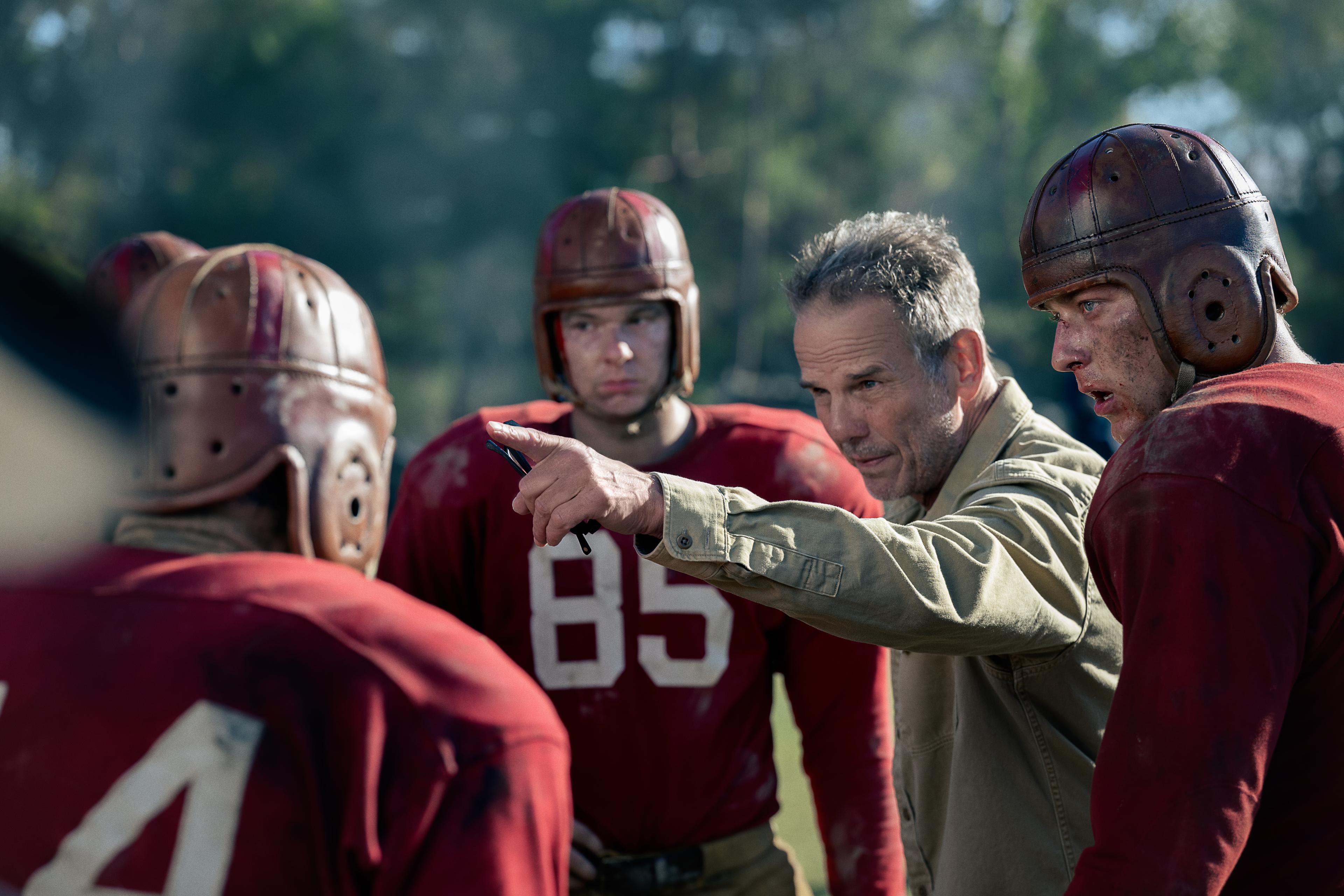
施赖纳来自威斯康星州兰开斯特,在威斯康星大学效力期间两度入选全美最佳阵容;1942年他当选十大联盟最有价值球员,并被底特律雄狮队选中。他留下的信件现藏于威斯康星历史学会,展现了这位明星运动员更私密的一面。他与奥黛特·亨德里克森订婚,持续不断地给未婚妻和父母写信,并对自己苛刻至极。“紧密交织,”比辛格形容这个人。
Schreiner, from Lancaster, Wisconsin, had twice been named an All-American in his career with the University of Wisconsin; in 1942 he was named the Big Ten’s most valuable player, and the Detroit Lions drafted him. The letters he left behind, now at the Wisconsin Historical Society, show a more private side of the star athlete. He was engaged to Odette Hendrickson, wrote to her and to his parents constantly and judged himself without mercy. “Tightly, tightly woven,” Bissinger says of the man.
弗朗西斯在他身上发现了一种关怀与脆弱,渗透在一切之中,还有一颗永不安宁的心。“他什么都想得太多,但只要有兄弟找到他、状态不太对劲,他马上就能找到办法说:‘我罩着你。’”这位演员说。
Francis found in him a care and a vulnerability that colored everything, and a mind that would not rest. “He overthinks everything, but then as soon as one of his brothers comes to him and isn’t quite there, he just can find a way to be like, ‘I’ve got you,’” the actor says.
施莱纳有选择的余地。“戴夫本可以凭借他的身份脱身,”比辛格说。“他本可以轻松地在国内某个基地当一名体育教官,但他说:‘不,我得去。我的朋友们都去了。我只是坐在这儿无所事事,我受不了那样。’” 让施莱纳保持轻松心态的是他的队友鲍勃·鲍曼,一名来自伊利诺伊州哈维的截锋。鲍曼年幼时父亲去世,他在撑起这个家的过程中长大。
Schreiner had options. “Dave could have gotten out of it because of who he was,” Bissinger says. “He could have easily been a phys ed instructor somewhere at one of the bases in the United States, and he said, ‘No, I got to go. My friends are going. I’m just sitting around doing nothing, and I can’t live with that.’”The man who kept Schreiner loose was his teammate Bob Bauman, a tackle from Harvey, Ill. Bauman’s father died when he was a boy, and he grew up holding his family together.
“鲍勃更豁达乐观,”比辛格说。当施莱纳变得紧绷时,鲍曼的建议正如作者所描绘的,归结为一句话:“戴夫,别想太多,戴夫。” 两人相隔几个月先后入伍,并被分在同一个连队服役。
“Bob was more happy-go-lucky,” Bissinger says. When Schreiner tightened up, Bauman’s advice, as the author renders it, came down to a single line: “Dave, don’t overthink, Dave.”The two enlisted within months of each other and would serve in the same company.
但科维奇是克罗地亚移民的儿子,父母定居在伊利诺伊州中部的一个煤矿小镇。他在伊利诺伊大学打了两个赛季,随后被海军陆战队送往普渡大学,1943年在七场比赛中冲刺获得833码。球队保持不败,但海军陆战队在赛季结束前把他召走,他在更衣室里因不得不离开而哭泣。克利夫兰公羊队在1944年把他选为首轮新秀,他还与一位9岁的球迷保持笔友往来。尼科尔森说:“他真的处在很高的水平上,”评价但科维奇作为足球明星的身材,“但与此同时,他是个妈妈的孩子。”
Butkovich was the son of Croatian immigrants who settled in a coal town in central Illinois. He played two seasons at Illinois before the Marines sent him to Purdue, where he rushed for 833 yards in seven games in 1943. The team went undefeated, but the Marines called him away before the season ended, and he cried in the locker room over having to go. The Cleveland Rams made him a first-round pick in 1944, and he kept up a pen-pal correspondence with a 9-year-old fan. “He was really on this high level,” says Nicholson of Butkovich’s stature as a football star. “But at the same time, he was a mama’s boy.”
四人中年龄最大的麦克劳里是唯一已经离开大学的。他的父亲塔斯·麦克劳里在布朗大学执教,约翰在1939年担任父亲球队的队长,随后为纽约巨人队效力一个赛季。他还会绘画。“稳重、扎实,几乎是个文艺复兴式的人,”比辛格说。加里津对麦克劳里的智慧和艺术感受都很吸引。他和伯格讨论麦克劳里“把事物理性化的能力,以及在他目睹的创伤和残酷暴力面前,这种能力如何消散”,演员回忆道。
The oldest of the four, McLaughry was the only one already out of college. His father, Tuss McLaughry, coached at Brown, and John captained his father’s team in 1939 before playing a season for the New York Giants. He also painted. “Steady, solid, almost a Renaissance man,” Bissinger says. Galitzine was drawn to both McLaughry’s intellect and his artistic sensibility. He and Berg discussed McLaughry’s “ability to intellectualize things and how that kind of dissipates, given the trauma and the grotesque violence that he sees,” the actor recalls.
留下的更多是一种比政治更直接的责任感。“你的忠诚并不一定是对国家,或是对把你送上战场的人,而是对与你并肩作战的战友,”加里津说。
What remains is a sense of duty more immediate than politics. “The loyalty you have really is not even to your nation necessarily, or to the men who send you to war, but it’s to your brothers who are in the foxhole next to you,” Galitzine says.
到1944年秋季,战争已把四人全部送到瓜达尔卡纳尔。虽然影片中他们同属一个团,但实际上,施赖纳、鲍曼和麦克劳里是第4海军陆战队的军官,而但科维奇则在第29团——圣诞前夜所在的另一个团服役。
By the autumn of 1944, the war had brought all four to Guadalcanal. Though the film has them all in the same regiment, in reality, Schreiner, Bauman, and McLaughry were officers in the 4th Marines, and Butkovich served in the 29th, the other regiment on the field that Christmas Eve.
他们为自己而打的比赛 比辛格最初是偶然得知“蚊子碗”的,那是在为另一本书做资料时偶然看到的一处顺带提及。“这在我听来荒唐至极,完全难以想象,”他说。一份比赛节目单留存了下来,上面有两队的名册,随后他得知,名册上的人除了一人之外,其余都已离世。这些名字背后的人生,是从他们的家人保存下来的东西中浮现出来的:信件、成绩单、童年时画的画。
The game they made for themselves Bissinger first learned of the Mosquito Bowl by chance, through a passing mention he found while working on another book. “It sounded ludicrous to me and totally unimaginable,” he says. A program survived, with both teams’ rosters, and then he learned that all but one of the men on them had since died. The lives behind those names emerged from what their families had kept: letters, report cards, pictures drawn in childhood.
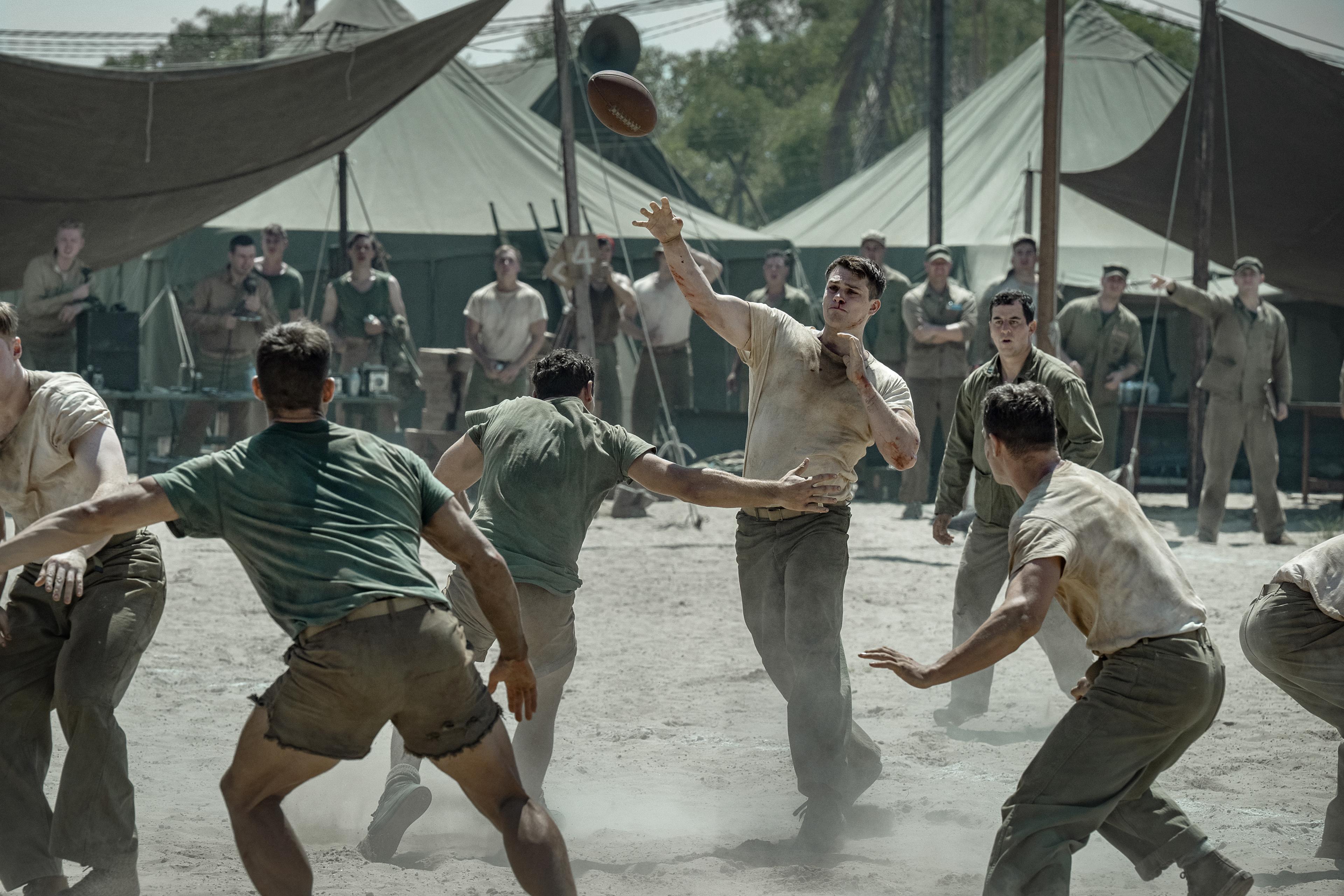
这场比赛源于一场争论。第29团的昔日大学球员坚信自己能打败第4团的昔日大学球员。双方阵容中共有三位全美最佳球员、七位前队长,以及近20名曾被NFL球队选中或后来进入联盟打球的球员。到了12月,各团已经操练了数月,操练早已变得枯燥乏味;比辛格说,士兵们开始烦躁不安,而烦躁不安的人“会露出那种千码凝视”。
The game stemmed from an argument. The former college players in the 29th were sure they could beat the former college players in the 4th. The rosters held three All-Americans, seven former captains, and close to 20 men who had been drafted by NFL teams or would go on to play in the league. By December, the regiments had drilled for months, and the drilling had gone stale; men were getting antsy, Bissinger says, and antsy men “get this thousand-yard stare.”
该师指挥官勒缪尔·谢泼德少将在寻找提振士气的方法。“士气低落时,海军陆战队员就会忧心忡忡,”比辛格在还原这位将军的思路时解释道,“他们会满脑子想着死亡,我们需要一些消遣。”谢泼德批准了这场比赛,海军陆战队员们努力让它办得像模像样。“这关乎快乐,”比辛格说,“关乎做一件他们热爱的事,而对其中许多人来说,这将是他们此生做的最后一件事——一件他们热爱的事。”
The division’s commander, Major General Lemuel Shepherd, was looking for a way to lift their spirits. “When morale flags, Marines get worried,” Bissinger explains, reconstructing the general’s reasoning. “They preoccupy themselves with death, and we need some diversion.”Shepherd approved the game, and the Marines worked hard to make it resemble the real thing. “This was about joy,” Bissinger says. “It was about doing something that they loved, that for many of them would be the last thing they would ever do that they loved.”
这场比赛本身几乎没有留下什么痕迹:日期、印刷的节目单、几张照片,以及0比0的最终比分。球员们穿着T恤和剪短的工装裤。没有人长久遵守原定的触身式橄榄球规则,泥土中的珊瑚划破了皮肉。蚊湾碗的意义不在于场上发生了什么,而在于它竟然发生了——那个下午,战争暂停了,这些人得以重新成为他们从小被培养要成为的样子。
Little of the game itself survives: the date, the printed program, a few photographs, and a final score of 0-0. The men wore T-shirts and cut-off dungarees. Nobody stuck to the intended mode of touch football for long, and the coral in the dirt drew blood. What matters about the Mosquito Bowl is not anything that happened on the field but that it happened at all, an afternoon in which the war paused and these men got to be what they had been raised to be.
“橄榄球本身从来都不重要。我认为关键不在于谁得了多少分、哪里有什么擒抱、谁冲球推进了多少码,”伯格说,“它一定给了他们一个机会,在这场坠入地狱的过程中停下来,走出地狱,重获自由,重拾青春,只是打一场球。这正是巴斯这本书吸引我的地方,也是我们试图重现的东西。”
“The football of it all never really mattered. I think it wasn’t about who scored what, what tackle here, who had this many rushing yards,” Berg says. “It must have given them an opportunity in the middle of this descent into hell to stop, to get out of hell, to be free again, to be young again, and just play a game. That’s what kind of hooked me on Buzz’s book, and that’s what we tried to recreate.”
在影片中,这场比赛呈现为一段喘息,既美丽又痛苦:他们重新得到的一切,恰恰是战争将要夺走的一切。
In the film, the game plays as a respite, beautiful and painful at once: everything they get back is exactly what the war will take.
大部分比赛录像都已遗失,但伯格并不为此烦恼。“我甚至不知道我们电影里那场比赛的比分是多少。我真的不知道,”他说。“你问我谁赢了。我不知道。是平局吗?我想是吧。他们玩得开心吗?开心。”不会再有重赛了。1945年3月15日,该师从瓜达尔卡纳尔岛启航,途经海军在乌利西的锚地,前往冲绳。
Most of the plays are lost, and Berg is untroubled by it. “I don’t even know what the score of the game is in our movie. I truly don’t know,” he says. “You ask me who won. I don’t know. Was it a tie? I think so. Did they have fun? Yes.”There would be no rematch. On March 15, 1945, the division sailed from Guadalcanal, by way of the Navy anchorage at Ulithi, for Okinawa.
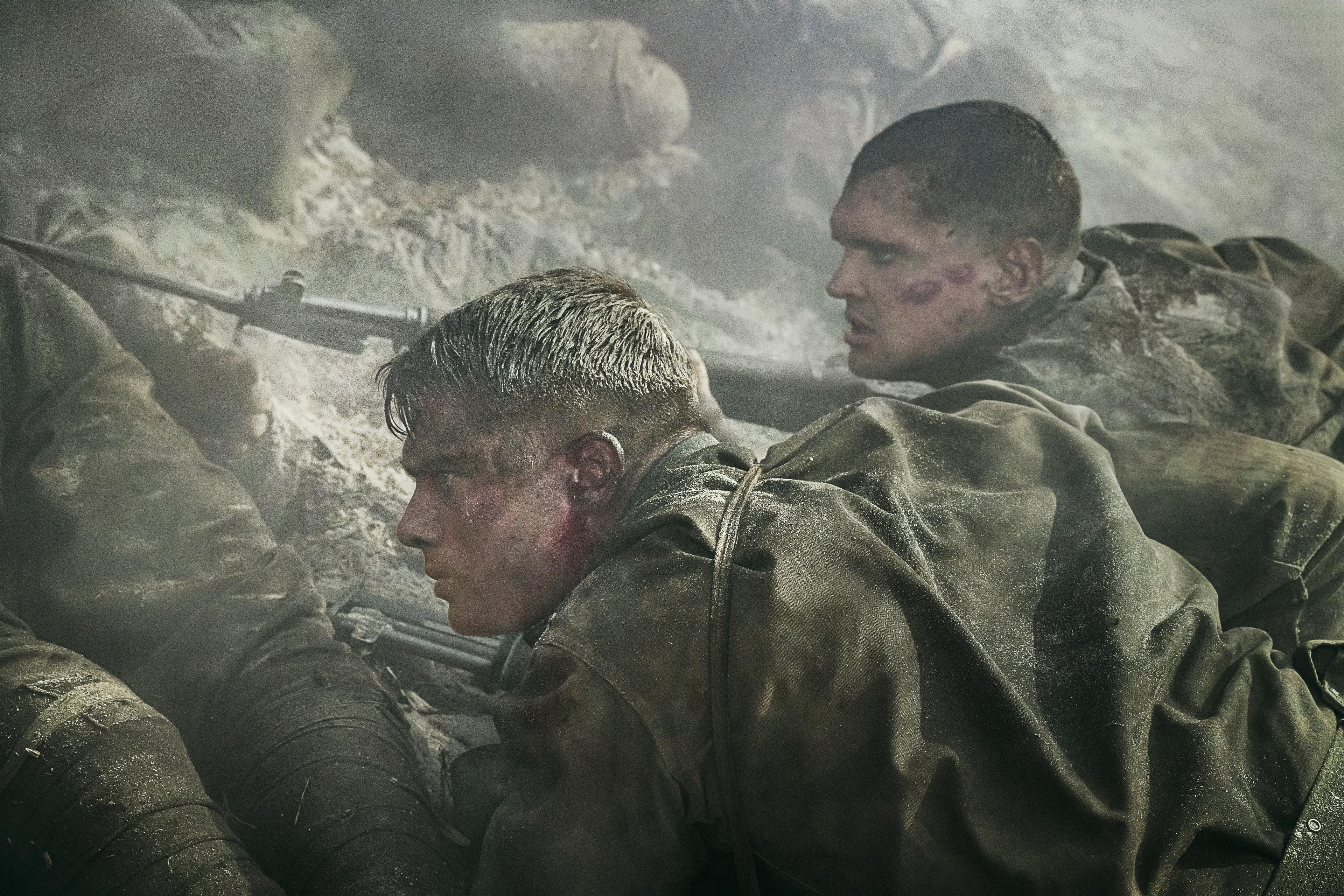
冲绳所付出的代价 1945年4月1日早晨,复活节星期日,美军在日本本土以南350英里的冲绳西侧海滩登陆,这是太平洋战争中规模最大的一次登陆行动。守军没有在海滩迎击他们;他们已掘壕据守于该岛南三分之一的山脊和石灰岩洞穴中,等待美军到来。海军陆战队第6师向北横扫,三周内肃清了该岛北部地区,随后掉头向南推进。
What Okinawa took On the morning of April 1, 1945, Easter Sunday, the Americans came ashore on the western beaches of Okinawa, 350 miles south of mainland Japan, in the largest landing of the Pacific War. The defenders did not meet them at the beaches; they had dug into the ridges and limestone caves of the island’s southern third and waited. The 6th Marine Division swept north, cleared the island’s northern reaches in three weeks, then turned around and marched south.
5月下旬雨季到来,一连数日不停。道路被冲毁,补给靠人力背负前送,伤员也以同样的方式后送。梯田式的山丘上遍布洞穴和家族墓穴,日军将其改造成了射击阵地,因此推进几百码就可能需要整整一天,用炸药和火焰封堵洞口。平民躲藏在士兵作战的同一批洞穴里,许多人也死在其中。到6月下旬,超过1.2万名美军阵亡或失踪,受伤人数接近其三倍。
The rains came in late May, and for days they did not stop. The roads dissolved, supplies went forward on men’s backs, and the wounded came back the same way. The terraced hills were cut with caves and family tombs the Japanese had turned into firing positions, so that an advance of a few hundred yards could last an entire day of sealing holes with dynamite and flame. Civilians hid in the same caves the soldiers fought from, and many died in them too. By late June, more than 12,000 Americans were dead or missing and nearly three times as many wounded.
日本守军奉命不得投降,大多也未投降。冲绳人则是无人能够准确统计的群体;平民死亡人数的估计从约9.4万到超过14万不等。该岛南端的“和平基石”碑上刻有超过24万个名字,包括各方的军人和平民,而且名字仍在不断增加。
The Japanese defenders, told not to surrender, mostly did not. The Okinawans are the ones no one can count; estimates of the civilian dead run from about 94,000 to more than 140,000. The Cornerstone of Peace at the island’s southern tip carries more than 240,000 names, soldiers and civilians from every side, and names are still being added.
最惨烈的战斗发生在海军陆战队员称为“糖面包山”的一座山丘上。这座山丘只有约50英尺高,但它横亘在师部与岛上首府那霸之间,日军火炮从三个方向覆盖了这座山。它一次又一次易手,在海军陆战队员于5月18日最终守住它之前的10天里,该师有2600多人阵亡或受伤。山丘陷落的三天前,前圣母大学队长乔治·墨菲正率领第29海军陆战队的一个排在山坡上作战。墨菲曾在之前的平安夜参加过“蚊子碗”比赛。
The worst of it came at a hill the Marines called Sugar Loaf. It stood only some 50 feet high, but it sat between the division and Naha, the island’s capital, and Japanese guns covered it from three directions. It changed hands again and again, and in the 10 days before the Marines finally held it, on May 18, more than 2,600 men from the division were killed or wounded. Three days before the hill fell, George Murphy, the former captain of Notre Dame, who had played in the Mosquito Bowl the previous Christmas Eve, was leading a platoon of the 29th Marines on its slopes.
按照比辛格的叙述,墨菲奉命再次发起进攻,他提出了抗议。“我们的手榴弹不够,”他说。他愿意为国而战,但这是一项送死的任务。“上尉说,‘我他妈不管。你必须上去,’”比辛格说。陆军的官方战史记载略有不同。在那个版本中,是墨菲请求后撤,而他的上尉拒绝了:无论代价如何,这座山丘都必须守住。墨菲还是带着他的人穿过迫击炮的硝烟撤了下来。
As Bissinger tells it, Murphy was ordered to make another assault and protested. “We don’t have enough hand grenades,” he said. He would fight for his country, but this was a death assignment. “The captain said, ‘I don’t give a sh-t. You got to go up there,’” Bissinger says. The Army’s official history of the campaign tells it slightly differently. In that version, it was Murphy who asked to fall back and his captain who refused: the hill was to be held, whatever the cost. Murphy brought his men down anyway, through the mortar smoke.
途中他停下来救助一名伤员,一枚弹片在那里夺去了他的生命。他那个排的60人中只剩下11人。比辛格拒绝淡化书中的战斗描写,他直白地说:“战争无关荣耀。战争无关英雄主义。战争关乎死亡。”那时布特科维奇已经死去一个月了。他于4月18日阵亡,当时该师正在推进穿越该岛北部。他在冲绳待了不到三周。他24岁,是四人中第一个死去的。
He stopped for one of the wounded on the way, and a fragment killed him there. Only 11 of his platoon’s 60 men were left. Bissinger, who refused to soften the book’s combat, puts it plainly: “War is not about glory. War is not about heroism. War is about death.”Butkovich had been dead for a month by then. He was killed on April 18, during the division’s push through the north of the island. He had been on Okinawa less than three weeks. He was 24, the first of the four to die.
鲍曼和施莱纳仍然搭档在一起。6月4日上午,第4海军陆战队从海上登陆那霸西南方向的奥罗库半岛。鲍曼曾于4月负伤,后返回前线。6月6日,他的连长率领侦察小队前出,A连的指挥权落到了鲍曼手中。他没能指挥多久:附近高地上的日军机枪开火,鲍曼阵亡。同属A连的排长施莱纳还能再活两周。
Bauman and Schreiner were still paired up. On the morning of June 4, the 4th Marines landed from the sea on the Oroku Peninsula, southwest of Naha. Bauman had been wounded in April and returned to the front. On June 6, his captain went forward with a scouting party, and Company A of the 4th Marines was Bauman’s to lead. He did not lead it long: a Japanese machine gun on the high ground nearby opened fire, and Bauman was killed. Schreiner, a platoon leader in the same company, had two more weeks to live.
关于施莱纳最后一次巡逻的经过,目前没有公认的定论。到6月20日,日军防线已崩溃至冲绳岛南端,海军陆战队正在清剿那里最后的抵抗据点。施莱纳在巡逻中受重伤。威斯康星球队的编年史家特里·弗莱收集的说法不一:有的说是手榴弹碎片,有的说是狙击手,还有的说是日军假装投降后突然开火。次日,即6月21日,随着战斗接近尾声,他伤重不治。
There is no agreed-upon account of Schreiner’s final patrol. By June 20, the Japanese defense had collapsed into the island’s southern tip, and the Marines were clearing the last pockets of resistance there. Schreiner was mortally wounded on patrol. Accounts collected by Terry Frei, a chronicler of Schreiner’s Wisconsin team, differ on how: some cite grenade fragments, others a sniper or Japanese soldiers who appeared to surrender before opening fire. He died the following day, June 21, as the battle was drawing to a close.
不到两个月后,日本宣布投降。那天,麦克劳里的自行火炮排正在支援施莱纳所在的营,他当时被告知是狙击手击中了朋友,后来又听说子弹卡在了脊椎里。
Japan announced its surrender less than two months later. McLaughry, whose platoon of self-propelled guns was supporting Schreiner’s battalion that day, was told at the time that a sniper had shot his friend, and later heard that the bullet had lodged in his spine.
麦克劳里打完了所有战役并活了下来。他回家与妻子团聚,抚养三个孩子成人,先后在三所大学领导橄榄球项目,最后一所是布朗大学,并坚持绘画创作,但战争始终伴随他余生。
McLaughry fought through all of it and lived. He came home to his wife, raised three children, led the football programs at three colleges, the last of them Brown, and kept painting, but the war stayed with him.
比辛格从未见过这四个人中的任何一个,尽管他的父亲曾作为第4海军陆战团的步枪手在冲绳作战,却从未谈起过那段经历。“你能让从未见过、也永远不会见到的家伙们‘活’起来吗?”他问道。他坦诚地说明了自己选择这四人来讲述这个故事的原因:“我挑选他们是因为关于他们的资料最容易获取。”麦克劳林一家保存了一切,甚至包括约翰4岁时写的信。
Bringing the men back Bissinger never met any of the four, though his father, a rifleman in the 4th Marines, fought on Okinawa and never talked about it. “Can you make guys come alive you’ve never met, and never will meet?” he says. He is candid about how he chose them to tell this story: “I picked those people because they had the most readily accessible material.”The McLaughrys kept everything, down to letters John wrote at 4.
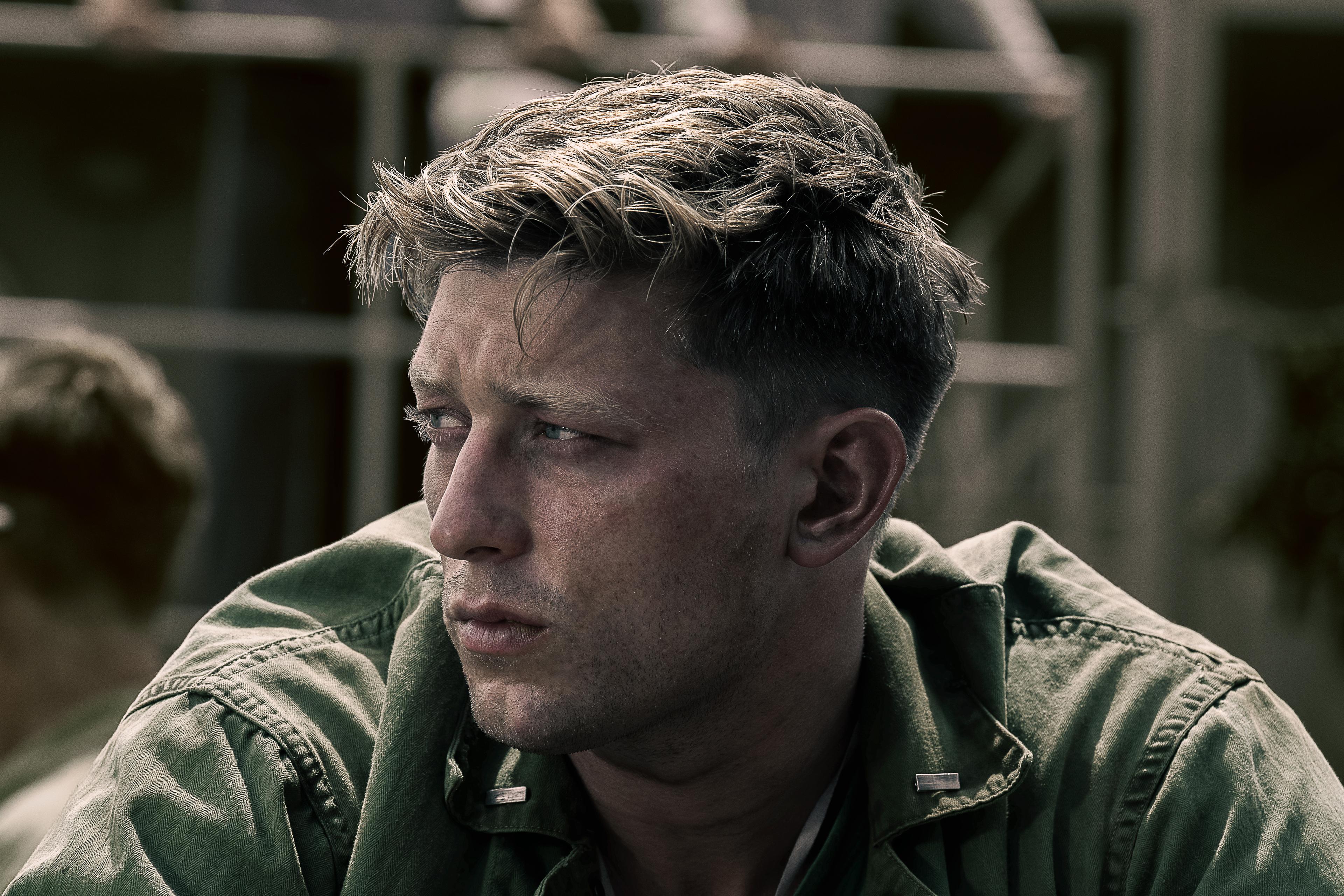
施莱纳有一个侄女。布托维奇有一个表亲,在比辛格写作时仍健在。“托尼几乎没有留下什么资料,所以我尽可能搜集了所有能找到的材料,”他说。“但我感觉他必须入选,特别是因为他是这些橄榄球运动员中最出色的一个。”他们的故事只能延伸至他们的家庭和战争所允许的范围。
Schreiner had a niece. Butkovich had a cousin, still living when Bissinger was writing. “Tony had really nothing, so I compiled as much as I could,” he says. “But I felt he had to be in there, particularly since he was the best of the football players.”Their stories reach only as far as their families, and the war, allowed.
这本书通过家族关系搬上了银幕。伯格和比辛格是表亲,《蚊子碗》是伯格改编的比辛格的第二本书,第一本是《永恒的周五夜》。书中跟随一大群海军陆战队员经历了多场战役;两小时的电影无法容纳如此庞大的阵容,伯格将自己的删减方案提交给了原作者。“我向巴兹展示了我的大纲。我说,如果我这样处理,你会怎么想?”他回忆道。
The book found its way to the screen through family. Berg and Bissinger are cousins, and The Mosquito Bowl is the second of Bissinger’s books Berg has adapted, after Friday Night Lights. The book follows a wide cast of Marines through several battles; a two-hour film could not, and Berg took his cuts to its author. “I presented my kind of outline to Buzz. I’m like, how would you feel if I did this?” he recalls.
“他想了想,说:‘去拍吧。’”电影在某些地方采取了戏剧化处理,包括施莱纳和布托维奇之间的恩怨,以及塔拉瓦战役——1943年11月那场血腥的太平洋环礁登陆战,这四人中无人参与其中;被困在礁石上遭受炮火袭击的海军陆战队员,是伯格脑海中电影必须包含的第一个画面。“有些地方皮特不得不创造自己的叙事,这势必会偏离原著。但这不困扰我,因为核心精神还在,”比辛格说。
“He thought about it, and he said, ‘Do it.’”The film takes dramatic license in places, including a grudge between Schreiner and Butkovich and a battle at Tarawa, the bloody November 1943 assault on a Pacific atoll, where none of the four fought; Marines stranded on a reef under fire was the first image Berg knew the film had to contain. “There were some areas in which Pete had to create his own narrative, and that was going to veer from the book. But that doesn’t bother me, because the essence was there,” Bissinger says.
伯格也通过实地走访找到了自己的切入点。他陪同驻扎在那里的海军陆战队员走遍了冲绳的战场,满载而归,准备动笔创作。
Berg found his own way in on the ground. He walked Okinawa’s battlefields with Marines stationed there, and came away ready to write.
在片场,伯格放弃了一些导演通常保留的控制权。“我喜欢不完全掌控,让某些东西从中生长出来,”他说。在澳大利亚拍摄时,这意味着一位导演不断注意到没人检查过的地形。加里齐内说,野生动物处理人员会先清理地面,然后演员才躺进去,因为当地的蛇可能致命。伯格会越过已清理的区域,望向某处未经检查的悬崖,然后宣布演员们应该爬上去。
On set, Berg gave up some of the control a director usually keeps. “I like not being in complete control and allowing something to grow out of that,” he says. Filming in Australia, that meant a director who kept noticing terrain no one had checked. Wildlife handlers cleared the ground before the actors lay in it, Galitzine says, because the local snakes could kill. Berg would look past the cleared area to some unvetted cliff and announce that the actors should climb it.
“我们就照做了,”加里齐内说。在澳大利亚的灌木丛中爬行,让四位演员感觉他们像是在一起冒险。“从很多方面来说,这确实是一次关于信任的历练。”伯格从未拍过像礁石登陆这样的场面。制作团队先把特技演员、然后是演员、再然后是摄影师放进澳大利亚汹涌的海浪中。“那种海浪能淹死人,”伯格说。“他们管那叫‘洗衣机’。你就在‘洗衣机’里。想想看,你一边被枪射击,一边还要做这件事。”
“We just did it,” Galitzine says. Crawling through the Australian bush made the four actors feel as though they were on an adventure together. “It really was an exercise in trust, in a lot of ways.”Berg had never shot anything like the reef landing. The production put stuntmen, then actors, then camera operators into heavy Australian surf. “You can drown in that surf,” Berg says. “They call that ‘washing machine.’ You’re in the ‘washing machine.’ Think about doing that while you’re being shot at.”
在别处,海岸附近的一处采砂场代替了首里城下方的战场——首里城是岛上防御核心的日军指挥所。美术指导菲利普·艾维在那里散落烧焦的书本、破碎的盘子和衣物,那是日常生活的残骸。最终完成的电影既亲密又宏大,镜头近得足以看见恐惧,又从地面切换到行星本身,将士兵们的苦难置于一个大到无法尽收眼底的尺度之中。
Elsewhere, a sand quarry near the coast stood in for the battlefield below Shuri Castle, the Japanese command post at the heart of the island’s defenses. Production designer Philip Ivey scattered scorched books, broken dishes, and clothing across it, the wreckage of ordinary life. The resulting film is intimate and enormous at once, the camera close enough to see fear, with cutaways from the ground to the planet itself that set the men’s suffering inside a scale too large to take in.
在剪辑室里,问题变成了电影需要多少橄榄球场面。早期版本在比赛上花费了大量时间。成片却从麦克劳里战后的经历入手,随后才回溯到这些人打橄榄球的岁月。“橄榄球是为了服务一个目的,那就是展示这些人当时过得多好。他们正处于人生的高光时刻,”伯格说。“所以我觉得我们只需要足够讲清这个故事的橄榄球镜头,然后就该推进剧情了。”
In the editing room, the question became how much football the film needed. Early versions spent considerably more time on the game. The finished film instead begins with McLaughry after his experience in combat, before going back to the men’s football years. “The football is there to serve a purpose, and that’s to illustrate that these men were living it up. They were at a good spot in their lives,” Berg says. “So I felt like we needed just enough football to tell that story, and then move on.”
演员们训练的内容远比最终入片的多。开拍前,他们花了数周进行训练,既是橄榄球训练,也是海军陆战队新兵训练,每位演员都在特定位置上经过反复演练,使剧组能最大限度减少替身的使用。
The actors trained for much more than made the final cut. Before cameras rolled, they spent weeks in training that was part football practice, part Marine boot camp, each actor drilled at a position, enabling the production to make limited use of stunt doubles.
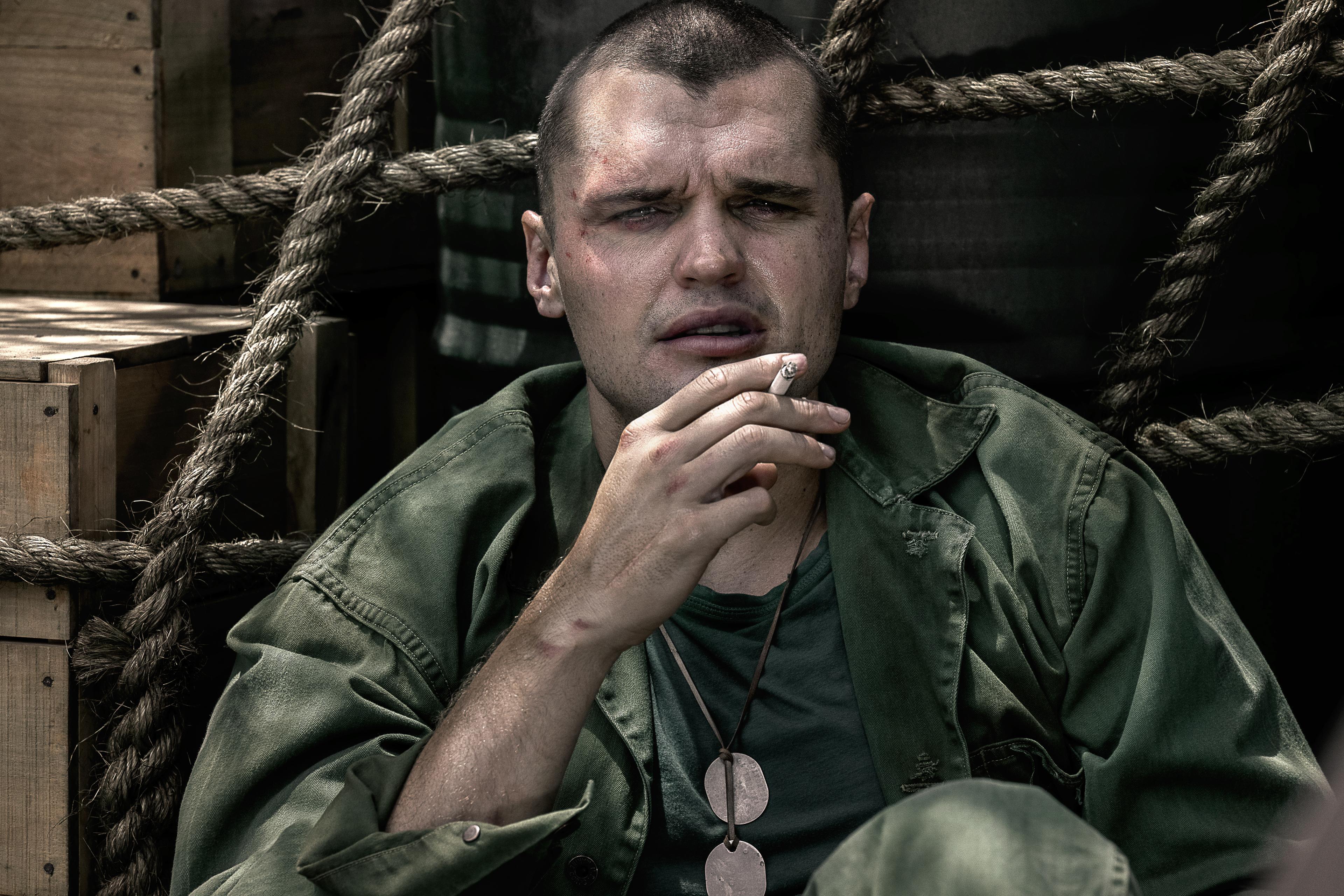
四个演员,四个男人。四位演员各自去寻找自己所扮演的那个人,每个人都在不同的地方找到了他。弗朗西斯是在一个玩笑中找到的。《蚊子碗》是他的第一部电影,拍摄初期,他带着舞台剧演员的疑问去找斯卡斯加德:我该看哪里,我该做什么,我该怎么让这一切发生?斯卡斯加德的回答是:“你想太多了,施赖纳。”
Four actors, four men Each of the four actors went looking for the man he was playing, and each found him somewhere different. Francis found his in a joke. The Mosquito Bowl was his first film, and early in the shoot he went to Skarsgård with a stage actor’s questions: Where do I look, what do I do, how do I make it all happen? Skarsgård’s answer was, “You’re overthinking, Schreiner.”
弗朗西斯从中听出了那个角色。“我当时就想,就是这个人,”他回忆道。斯卡斯加德依靠的是把鲍曼和施赖纳与其他人区分开来的那个事实。他们在威斯康星大学并肩打球,相隔几个月先后加入海军陆战队,并一起走上战场。“汤姆随时可以来找我、依靠我,我也随时可以去找他、依靠他,既是作为演员,也是作为我们的角色,”斯卡斯加德说。
Francis heard the character in it. “I was like, this is the man,” he recalls. Skarsgård leaned on the one fact that set Bauman and Schreiner apart from the others. They played beside each other at Wisconsin, joined the Marines a few months apart, and went to war together. “Tom can always come to me and lean on me, and I could always come to lean on him, both as actors, but also as our characters,” Skarsgård says.
“他们之间的相处方式是,鲍勃能把戴夫拉出来。”尼科尔森是在信件中找到的。他读到的布特科维奇是一个自信真实、而温柔藏于其下的表演者。“一旦他们经历了这一切,那个版本的托尼·布特科维奇就永远消失了,”他说。尼科尔森寄给伯格的一封五页手写信——导演称这是他收到过的“最美”的信之一——让他看到了自己选角时所寻找的那种热情。
“The way that they worked was that Bob could pull Dave out.”Nicholson found his in letters. He read Butkovich as a performer whose confidence was real and whose tenderness ran underneath it. “Once they go through this experience, that version of Tony Butkovich is forever gone,” he says. A five-page handwritten letter Nicholson sent Berg, one the director calls among the “most beautiful” he has ever received, showed him the passion he was casting for.
与此同时,布特科维奇写给一位年轻粉丝的信,给了这位演员一条走进这个人的途径。尼科尔森自己也写了信,写给自己的父亲、演员杰克·尼科尔森——父亲在战争期间大概正是那个男孩的年纪。“你怎么成为别人的英雄?”他问道。“那是什么感觉?”珀杜还寄给他布特科维奇持球的修复影像。碰巧的是,影像送达那天正是布特科维奇的忌日,尼科尔森关着灯独自观看,感觉两人仿佛以某种方式相遇了。
Butkovich’s letters to a young fan, meanwhile, gave the actor a way into the man. Nicholson wrote letters of his own to his father, actor Jack Nicholson, who would have been about that boy’s age during the war. “How do you be someone’s hero?” he asks. “What is that like?”Purdue also sent him restored film of Butkovich with the ball. By chance it came on the anniversary of Butkovich’s death, and Nicholson watched it by himself with the lights off, feeling as if the two of them had somehow met.
斯卡斯加德亲自前往了事发地。在备戏期间,他与海军陆战队向导在冲绳度过了三天,最后请求向导带他去鲍曼中弹的地方。那里现在属于那霸市,是一个有游乐场和便利店的居民区。“我就站在他断气的地方,”斯卡斯加德回忆道,形容当时感受到的“巨大的责任感”。他被自己的人生与鲍曼之间那种意想不到的联系深深震撼。“我是一名瑞典演员,在这件事发生80年后,我正在思考这个男人,我与这个男人产生了联系,我对他感到无比感激。”
Skarsgård went to the place itself. While researching the role, he spent three days on Okinawa with Marine guides, and at the end he asked them to take him to where Bauman was shot. It is in Naha now, a residential neighborhood with a playground and a convenience store. “I’m standing where he took his last breath,” Skarsgård recalls, describing the “immense amount of responsibility” he felt. He was struck by the unlikely connection between his own life and Bauman’s. “Here I am, a Swedish actor, 80 years after this happened, and I’m thinking about this man, and I’m connected with this man, and I feel just so much gratitude towards him.”
加尔金背负的是不同的重量——幸存者的重量,而这在拍摄接近尾声时变得更加清晰。剧组在一艘船上拍摄了尼科尔森、弗朗西斯和斯卡斯加德的最后一场戏,拍完后他们杀青了,但他没有,因为麦克劳里的故事还在继续。“整部电影大半时间都有一种潜在的恐惧感,还有愧疚感,”他说。他与那三位演员共事了几个月,“明知他们将不得不以一种我不必经历的方式告别。”
Galitzine carried a different weight, the survivor’s, and it came into sharper focus toward the end of filming. The production shot the last scene for Nicholson, Francis, and Skarsgård on a boat, and when it was done, they wrapped and he did not, because McLaughry’s story continued. “There was just this underlying sense of dread, for a lot of the movie, and guilt,” he says. He had spent months alongside the three actors, “knowing that they were going to have to say goodbye in a way that I didn’t.”
留下来的生命 在《蚊子碗》后期,有一个伯格编写的场景,施赖纳在一处幽静的海滩上与麦克劳里谈论生儿育女,以及一个男人可能留下什么。“身处我这辈子去过的最美丽的地方之一,却要去思考戴夫正在经历的那种心理历程,这简直像是一种出离体体验,”弗朗西斯说。加尔金饰演的麦克劳里开始崩溃,他说在这个场景里,施赖纳帮助“将他们这么做的理由凝聚成型”,而弗朗西斯的演绎给了他“某种超越混乱与残暴的东西”。
The lives that remained Late in The Mosquito Bowl, in a scene Berg wrote, Schreiner talks with McLaughry on a secluded beach about having children and what a man might leave behind. “The contrast of being in one of the most beautiful places I’ve ever been, and then thinking about Dave going through that thought process, it was almost like an out-of-body experience,” Francis says. Galitzine, playing a version of McLaughry beginning to unravel, says that in the scene Schreiner helps “crystallize the reason why they’re doing what they’re doing,” and that Francis’s portrayal gave him “something larger than the chaos and the brutality.”

施赖纳从未有过那些孩子。比辛格墙上挂着他的一张照片,每当他望向那张照片,他会伸手去抓一个他承认可能不太恰当的词:浪费。
Schreiner never had those children. Bissinger keeps a photograph of him on his wall, and when he looks at it, he reaches for a word he acknowledges is probably not the right one: waste.
“这本来是一个真正应该好好过下去的人生,”他说,“他本该有孩子,本该结婚,本该有一份事业,本该有欢笑,本该有荣耀,本该有失望。我们人生中拥有的一切,他永远都不会得到了。”
“Here was a life that really should have been lived,” he says. “He should have had kids. He should have been married. He should have had a career. He should have had laughter. He should have had glory. He should have had disappointment. All the things that we have in life, and he’s never going to get that.”
影片用一句警示和一组数字为这四个人的生命定下框架:开篇引用的是赫伯特·胡佛的那句话,讲的是老人宣布战争、年轻人必须去打;结尾落在伤亡数字上——全球7500万人死亡。伯格希望观众离场时把这两者都带走。“那并不算太久远,”他说,“我们今天生活在一个非常暴力的星球上,我真的希望这种事永远不再发生。我不认为一部电影能改变这一点。但每个人都应承担起个人的责任,去思考我们怎样才能让人们不必互相残杀。如果我们能做到,那就去做吧。”
The film frames the four men’s lives with a warning and a number: the Herbert Hoover line it opens on, about old men declaring wars the young must fight, and the loss it closes on, 75 million dead worldwide. Berg wants the audience to leave carrying both. “That wasn’t that long ago,” he says. “We live in a very violent planet today, and I really hope that never happens again. I don’t think a movie can change that. But taking a personal responsibility for each and every human being to think about how we can prevent people from having to go kill each other. If we can, let’s do it.”
与这样的死亡人数相比,四个人似乎微不足道。然而,通过这场战争被夺去的三条生命和它永远改变的那一条生命,战争的巨大规模开始显现出来。关于死者,仍留有痕迹:施赖纳的书信、鲍曼的快照,以及布特科维奇带球奔跑的修复影像。这场战争为这些人留下的记录,比普通人生所能留下的更为完整——假如他们只是被允许不受打扰地继续活下去的话。假如施赖纳回了家,他的笔迹也许永远不会离开兰开斯特。
Against that death toll, four men may seem like nothing. Yet the enormity of the war begins to through the three lives it cut short and the one it forever changed. Of the dead, traces remain: Schreiner’s letters, Bauman’s snapshots, and restored footage of Butkovich running with the ball. The war left a fuller record of these men than ordinary lives would have, had they simply been allowed to go on living them uninterrupted. Had Schreiner come home, his handwriting might never have left Lancaster.
在那场比赛为数不多的照片里,身穿T恤的年轻人站在临时球场上,丛林在他们身后划出一道深色的线。1944年圣诞节的这一个下午,什么也没有决定。没有人输。
In the few photographs of the game, young men in T-shirts stand on the makeshift field, the jungle a dark line behind them. For one afternoon on Christmas Eve 1944, nothing was decided. Nobody lost.
麦克劳里随着岁月苍老,活过了他朋友从未拥有的那些年华。随后,在1993年,冲绳战役近半个世纪后,他写下了自己对施赖纳中弹那一天的所有记忆——一个七十多岁的老人,记录下一位年轻军官所见、所闻、所被告知的一切。他所知的许多事情都是二手传来的,他怀疑已成定论的版本。但他依然回到那些记忆中,因为他是那四个人中唯一还能这样做的人,因为在某片珊瑚礁平原上,在平淡的午后阳光下,随着球在空中飞行,另外三个人依然是23岁,在那借来的瞬间里,永远都会是。
McLaughry grew old with the years his friend never had. Then, in 1993, nearly half a century after Okinawa, he wrote out what he could remember of the day Schreiner was hit, a man in his seventies setting down what a young officer had seen, heard, and been told. Much of what he knew had reached him secondhand, and he doubted the version that had settled into the record. He returned to it all the same, because he was the last of the four men who could, and because somewhere on a field of coral in the flat afternoon light, with the ball sailing through the air, the other three were still 23, and in that borrowed moment, always would be.