Laya 一词描述的是一种自然节奏,几个世纪以来,它让喜马拉雅山脉的人们在季风与干旱中生存下来。从山峰冰川到有人居住的中山丘陵,再到山麓地带,社区都将自己的日历与水的脉动同步调整。
The word Laya describes the natural rhythm that has carried the people of the Himalayas through monsoons and drought for centuries. Across the peaks and glaciers, the populated mid-hills and the foothills, communities have harmonized their calendars to the pulsing of water.
在年降雨集中在短短四个月的地区,这些巧夺天工的工程师将屋顶雨水通过手工制作的竹管引入砾石坑,以补给地下水井,并在每年的节日里维护这些设施。他们通过发掘古老的地下中世纪石质水龙头网络来适应气候,用于饮水、洗涤和沐浴。
Where annual rain falls in just four months, these master engineers funnel rooftop rainwater through handmade bamboo piping into gravel pits to recharge underground wells, maintaining them at the annual festivals. They adapt to the climate by unearthing ancient subterranean medieval stone spout networks for drinking, washing, and bathing.
但印地语中还有一个源自梵语的词叫 Pralaya,像喜马拉雅神话一样通过口述传统流传下来。它的意思是不再存在的地方逐渐融化消失。
But there’s another Sanskrit word used in Hindi called Pralaya, passed down through oral tradition like Himalayan myth. It means the melting away of places that no longer exist.
“尼泊尔最近的洪水就是一场 pralaya,”水文气象学家、环境科学家、尼泊尔水资源保护基金会(NWCF)主席、南亚气象协会执行委员会成员 Ngamindra Dahal 说。“我们从未见过这样的事情。”喜马拉雅山民并非由于自身过错,而是与自然失去了同步。随着地球两极以外最大的冰域因前所未有的快速全球变暖而融化,横跨兴都库什和喜马拉雅山脉八个国家的高山和中山村庄已进入一个极端的新世界:水资源既极度匮乏又极度过剩。
“Recent flooding in Nepal was a pralaya,” says hydrometeorologist and environmental scientist Ngamindra Dahal, chairperson of the Nepal Water Conservation Foundation (NWCF) and executive board member of the South Asian Meteorological Association. “We’ve never witnessed anything like it.”Himalayans have fallen out of sync with nature at no fault of their own. As earth’s largest swath of ice outside the poles thaws from the unprecedented rapid global warming, high- and mid-mountain villages across eight countries of the Hindu Kush and Himalayan mountain regions have entered a new world of extremes: too little and too much water.
喜马拉雅山脉的冰川质量流失速度比十年前快 65%。到 2050 年,其影响将波及 12 条主要下游河流流域的 20 亿亚洲人。预计到 2100 年,80% 的冰川质量将消失。然而,危险的暴雨洪水和水资源短缺的现实,眼下已切切实实地显现出来。
The Himalayas are losing glacier mass 65% faster than a decade ago. The impacts will be felt by 2 billion Asians across 12 major downstream river basins by 2050. And by 2100, it’s projected that 80% of glacier mass will be lost. The reality of dangerous cloudburst floods and water scarcity is, however, already being felt.
8月26日,尼泊尔靠近西藏边境处发生冰川崩塌,引发一场5500万吨、时速93英里的冰岩雪崩,造成超过1400人死亡,另有数千人仍下落不明。与此同时,尼泊尔政府将对四座巨大的冰川湖进行排水,以降低再次发生灾难性洪水的风险。
On Aug. 26, a 55 million-ton, 93-m.p.h. ice-rock avalanche triggered by a glacier collapse in Nepal near the Tibet border killed more than 1,400 people, with thousands more still missing. Meanwhile, the Nepali government will drain four massive glacial lakes to reduce the danger of yet another catastrophic flood.
这个脆弱、历史上排放量低的国家向高排放国家提出了赔偿请求——这些损失在一定程度上是这场气候灾害造成的——但一直在等待对方回应。10月22日,尼泊尔成为首个获批从联合国损失与损害基金获得临时赔付的国家,获得了超过2160万美元,用于灾难性洪水后的恢复工作。与此同时,随着地球最基本自然资源的不确定性日益加深,喜马拉雅山区的居民仍在继续探索自己的解决方案来拯救家园:恢复古老的供水系统、建造人工冰川、发现隐藏的洪水风险。
The vulnerable, historically low-polluting country has been waiting for a response to its request for compensation from high-emitting nations for the damage created in part by this climate disaster. And on Oct. 22, Nepal became the first country approved for a provisional payout from the U.N.’s Loss and Damage Fund, securing over $21.6 million for recovery from the catastrophic floods. Meanwhile, with deepening uncertainty about the planet’s most basic natural resource, Himalayan people forge on charting their own solutions to save their homes by reviving ancient water systems, building artificial glaciers, and uncovering hidden flood risks.
“喜马拉雅山常被称为亚洲水塔,但如果这个比喻让山脉听起来像一座稳定的水库,那就危险地过于被动了。”达哈尔说,“‘拉雅到普拉莱亚’的概念所阐明的是,喜马拉雅山是一个有生命的动态系统——而气候变化正在压缩地质时间。过去跨越几代人才能发生的事,如今可能在一代人的时间内就会发生。”重振生命线几个世纪以来,常年泉(当地语称“莫尔”)一直主宰着喜马拉雅山区社区的生活方式。
“The Himalaya is often described as Asia's water tower, but that metaphor is dangerously passive if it makes the mountains sound like a stable reservoir. What the laya-to-pralaya concept clarifies is that the Himalaya is a living, dynamic system—and that climate change is compressing geological time,” says Dahal. “What once happened across generations may now happen within one.”Reviving Lifelines For centuries, perennial springs, or mool, have dictated how Himalayan communities live their lives.
但这种备受信赖的关系正在瓦解。尽管如此,顽强的尼泊尔社区正通过重新启用历史基础设施,适应冰雪消融、季风降雨变幻莫测的环境变化。
But that trusted relationship is breaking down. Still, resilient Nepali communities are adapting to the shifting environment of melting snow and ice and unpredictable monsoon rain by reclaiming historic infrastructure.
为应对通常由气候变化扰乱降雨规律所导致的水资源短缺,他们正在修复一套古老的地下陶土管道网络。这些管道将水引向下沉式石制出水口,其中一些早在6世纪就已开凿。这些被称为“希提”或“达拉”的供水系统与吸收季风雨的池塘相连,补充地下水位,使出水口在旱季持续流水。在加德满都谷地等地,当地政府正在积极修复并重新规划这一庞大的古泉网络。该网络最初由李查维王朝和马拉王朝设计建造,如今正受到气候变化和快速城市化的威胁。
To combat water shortages often from erratic rainfall shifts disrupted by climate change, they’re reviving an ancient network of underground terracotta canals that channel water to sunken stone spouts, some chiseled as early as the 6th century. Known as hiti or dhara, these water systems connect to ponds that absorb monsoon rain, recharging the groundwater table to keep spouts flowing during dry season. In places like the Kathmandu Valley, local governments are actively restoring and rerouting this massive ancient spring network, originally engineered by the Licchavi and Malla dynasties and now threatened by climate change and rapid urbanization.
通过NWCF以及保护山区环境与文化的政府间组织——国际山地综合发展中心,达哈尔正在清点较近期干涸的泉眼,以测定水资源可用性的新基线,从而补给水源。
Through the NWCF and an intergovernmental organization protecting mountain environments and cultures called the International Center for Integrated Mountain Development, Dahal is replenishing water supplies by taking inventory of more recent drying springs to gauge a new baseline of water availability.
“一个社区的景观中可能有充足的水,但缺乏投资将其引入家庭,”达哈尔说。“反之,一个社区可能到处都有水龙头,但水源却日益不可靠。”
"A community may have adequate water in its landscape but lack the investment to bring it to households,” says Dahal. “Conversely, a community may have taps everywhere but an increasingly unreliable source.”
他正在教导当地社区,如何根据地下水流动的变化,复兴并重新引导他们正在干涸的生命水源,方法是追踪季节性流速、水质和地理海拔。一旦绘制出新的水流模式,达哈尔就会帮助社区设计本地化的水资源共享协议和储水设施,并调整家庭雨水收集系统——这是一种与尼泊尔政府适应计划相一致的草根水治理模式。“水管坏了,你修水管;水箱塌了,你重建水箱,”达哈尔说。“但当泉眼本身停止流淌时,修缮基础设施毫无用处。”
He’s teaching local communities how to revive and reroute their drying life sources based on changing water movement underground, by tracking seasonal flow rates, water quality, and geographic elevations. Once new water patterns are mapped, Dahal helps communities design localized water-sharing agreements and storage, and adapt household rainwater harvesting systems—in a grass-roots water governance model aligned with the Nepal government adaptation plan. “When a pipe breaks, you repair the pipe; when a tank collapses, you rebuild the tank,” says Dahal. “But when the spring itself stops flowing, repairing the infrastructure solves nothing.”
风险上升 在尼泊尔的利米山谷,家庭正面临另一种不确定性。扎西·拉卓回忆起自己13岁时,在加德满都的一所寄宿学校读书,接到了来自偏远高山村庄的电话。电话那头,母亲只是说:“你最好努力读书,因为我们这儿已经没东西吃了。”一场雪崩袭击了她那拥有1000年历史的祖传山谷——就在两年前,一场大规模冰湖溃决洪水(GLOF),即融化冰湖中的水突然猛烈释放,刚刚发生过——并夺走了数百头牦牛的性命,那是她游牧放牧家庭世代的生计。这违背了利米山谷土著村民关于信任山神的一切认知。
Risk Up in Nepal’s Limi Valley, families are confronting a different kind of uncertainty. Tashi Lhazom recalls being 13, studying at a Kathmandu boarding school, when she received a phone call from her remote high-alpine village. On the other line her mother simply said, “You better study hard because you have nothing to eat here anymore.”An avalanche had struck her 1,000 year-old ancestral valley—just two years after a massive glacial lake outburst flood (GLOF), a sudden violent release of water from a melting glacial lake—and had taken with hundreds of the yaks that were her nomadic herding family’s generational livelihood. This went against everything Limi Valley indigenous villagers had known about trusting the mountain Gods.
“我族人认为是他们贪婪惹怒了众神。那是他们的文化合理化解释,”现年26岁的拉卓解释道。当村民们以为又是一场灾难性的冰湖溃决洪水于2025年5月冲毁了利米山谷的桥梁和一座水电站时,拉卓已准备好采取行动。
“My people believed the Gods were angry with them for being greedy. That was their cultural rationalization,” explains Lhazom, now 26. When what villagers assumed was another catastrophic GLOF washed away bridges and a hydropower plant in the Limi Valley in May 2025, Lhazom was ready to do something about it.
“我不能让社区为并非其责任的事情自责,因为我知道是那些排放温室气体的人要承担部分责任,”Lhazom 说。她是来自 Limi 山谷最早获得大学学位的人之一,如今是尼泊尔一批 Z 世代抗击气候破坏的活动家中的一员。
“I couldn’t let the community blame itself for something it was not responsible when I knew it was those emitting greenhouse gases who were partially to blame,” says Lhazom, one of the first from Limi Valley to earn a college degree and now an activist among a wave of Gen Zs fighting climate destruction in Nepal.
她找到气候科学家和政客,敦促他们调查洪水成因,直到一支实地考察队终于同意前来。在 Lhazom 带领他们绕过被淹封闭的道路前往当地水源后,他们向上游徒步,抵达海拔 17000 英尺(约 5182 米)的冰川地带,揭开了真相:这并非一次冰湖溃决洪水(GLOF)。
She tracked down climate scientists and politicians, urging them to investigate the cause of the flood, until a field team finally agreed to come. After Lhazom directed them around closed flooded roads to local water sources, they trekked upstream, reaching glacial terrain at 17,000 ft. to learn the truth: It wasn’t a GLOF this time.
相反,解冻的永久冻土——这种充当胶水将山岩粘结在一起的冰体——在毫无预警的情况下,排干了被困的小型“热喀斯特”湖泊,释放出巨量地下水顺坡而下。基于他们的调查,2025 年 Limi 山谷洪水被重新归类为尼泊尔有记录以来首次热喀斯特湖溃决洪水。
Instead, thawing permafrost—the ice that acts as glue to bind mountain rock—was without warning, draining trapped small “thermokarst” lakes, releasing massive volumes of underground water down the slope. As a result of their investigation, that 2025 Limi Valley flood was reclassified as Nepal’s first-ever recorded thermokarst lake flood.
在与证实洪水机制的科学家分享无人机影像、照片和卫星图像后,Lhazom 成为 2025 年 9 月发表在《Communications Earth and Environment》期刊上的一篇评论论文的合著者,向世界警示这一被忽视的风险。
After sharing drone footage, photos, and satellite images with the scientists who proved the flood mechanism, Lhazom became co-author of a September 2025 comment paper in the Communications Earth and Environment Journal alerting the world to this overlooked risk.
这促使一篇 2026 年 7 月的科学论文确认并警告:由于气候变化,热喀斯特湖溃决洪水风险增加——不仅在喜马拉雅山脉,还遍及秘鲁、中国及其他高山环境。由此,一个新定义的危险灾害类别——小型高山湖溃决(SALOs)应运而生。
It led to an acknowledgement and warning in a July 2026 scientific paper about the increased risk of thermokarst lake floods due to climate change—not just in the Himalayas, but across Peru, China, and other high-alpine mountain environments. And from it, a newly defined dangerous hazard category, called Small Alpine Lake Outbursts (SALOs), emerged.
“Limi 算幸运,知道自己身处险境,但喜马拉雅山脉还有数百个‘Limi 山谷’。仍有村庄所在的山脉未被研究,他们不知道自己是否生活在危险之中,”Lhazom 说。她 2024 年记录 Limi 山谷洪水的纪录片《No Monastery No Village》曾在班夫放映。
“Limi is fortunate enough to know they are in danger, but there are hundreds of ‘Limi Valleys’ across the Himalaya. There are still villages whose mountains have not been studied. They don't know if they are living in danger or not,” says Lhazom, whose 2024 film documenting the Limi Valley flooding, No Monastery No Village, was screened at Banff.
但对拉卓姆来说,最重要的是,她成功说服了利米山谷的原住民,洪水并非他们的过错。自从终于让他们“上了地图”以来,拉卓姆一直在努力争取政府资金,将剩余家庭安置到附近安全的祖传土地上。
But most importantly to Lhazom, she was able to convince her Indigenous people of the Limi Valley that the flooding was not their fault. Since finally putting them on the map, Lhazom has been working to help secure government funds to resettle the remaining families away from danger on nearby ancestral land.
随着尼泊尔政客在今年洪水后争相改革灾害搬迁的法律框架,拉卓姆正深入高山,向受灾者提供救援。目前有3.3万人因被禁止在永久动荡的高风险山坡上重建家园,而需要永久性安置。
As Nepal’s politicians scramble after this year’s floods to reform the legal framework for disaster relocation, Lhazom is traveling high in the mountains to deliver relief for the victims among 33,000 now in need of permanent resettlement after being banned from rebuilding their homes along the permanently destabilized high-risk mountainside.
拉卓姆说:“我们熟知的冰冻水库正在融化,这意味着洪水可能在极短时间内冲垮整个村庄。我们的水源正变得越来越稀少、稀薄,这是一个严重的担忧。但对这些山区人民来说,最令人心碎的是,他们知道永远无法回家。”
“The frozen water banks we know are melting, and that means flooding that can sweep an entire village away within a fraction of a second. Our water sources are getting thinner and fewer and that is a grave concern,” says Lhazom. “But what’s most heartbreaking for these mountain people is knowing they can never go home.”
世代居住的家庭别无选择,只能接受他们古老原住民聚落被抹去的命运。“大山不仅仅是土地。它是我们的身份,我们的历史。我们崇拜的水神启发了我们的民歌和原住民智慧,污染水源意味着你在不敬水神,”拉卓姆说。“要说服人们搬到更安全的地方将是一个挑战,但我不希望他们身处可能致命的地方。”
Generational families have no choice but to accept the erasure of their ancient Indigenous settlements. “The mountain is more than land. It is our identity, our history. The water spirits we worship inspired our folk songs and Indigenous wisdom, and polluting means you are being disrespectful to the water spirits,” says Lhazom. “It’ll be a challenge to convince the people to live in safer places, but I don't want them to be in a place that could kill them.”
在拉卓姆家西北方向,印度拉达克地区,人们正在尝试建设人工冰川。那里海拔11500英尺(约3505米),坐落在喜马拉雅山北部最高峰的阴影下,寒风呼啸,气温可降至零下40度。当地居民依赖单一水源:融化的冰川冰,而如今这些冰川覆盖着从首府列城运送适应高原气候的探险游客的车辆排出的烟尘。
Growing Artificial Glaciers Northwest of Lhazom’s home, in Ladakh, India, where –40°winds whip through a remote desert on an 11,500-ft. shelf in the shadow of the Himalaya’s highest northern peaks, the people rely on a single water source: melting glacial ice, now covered in soot from vehicles carrying adventure tourists acclimating in its capital of Leh.
该地区那些令人心醉神迷却又极度干旱、依赖冰川供水的聚落,可能成为下一个喜马拉雅“鬼村”——加入因冰川枯竭、水资源短缺、干旱和不可预测的季风而被废弃的2000个村庄的行列,这些村庄分布在印度的斯皮提和北阿坎德邦,以及尼泊尔的上穆斯唐等地。
The region’s unbearably beautiful and dry glacial-dependent settlements could become the next Himalayan ghost villages—joining the 2,000 already abandoned from drying glaciers, water scarcity, drought, and unpredictable monsoons in places like Spiti and the Uttarakhand, India, and the Upper Mustang of Nepal.
但在这座“第三极”,气候活动家兼机械工程师索南·旺楚克正将现代技术与传统知识相融合。2015年,受祖先将“母冰川”搬进山洞制造“子冰川”故事的启发——这基于“印度冰人”早期的工作——旺楚克开发出了科学方法,复活了移植冰川的古老文化习俗。他在拉达克培育出新冰,扭转了水资源短缺的局面。
But here in the “Third Pole,” climate activist and mechanical engineer Sonam Wangchuk is blending modern technology with his traditional knowledge. In 2015, inspired by stories of his ancestors moving “parent” glaciers into a cave to make “baby” glaciers—based on the early work of “the Iceman of India”—Wangchuk developed the science to revive the ancient cultural practice of grafting glaciers. He grew new ice to reverse water scarcity in Ladakh.
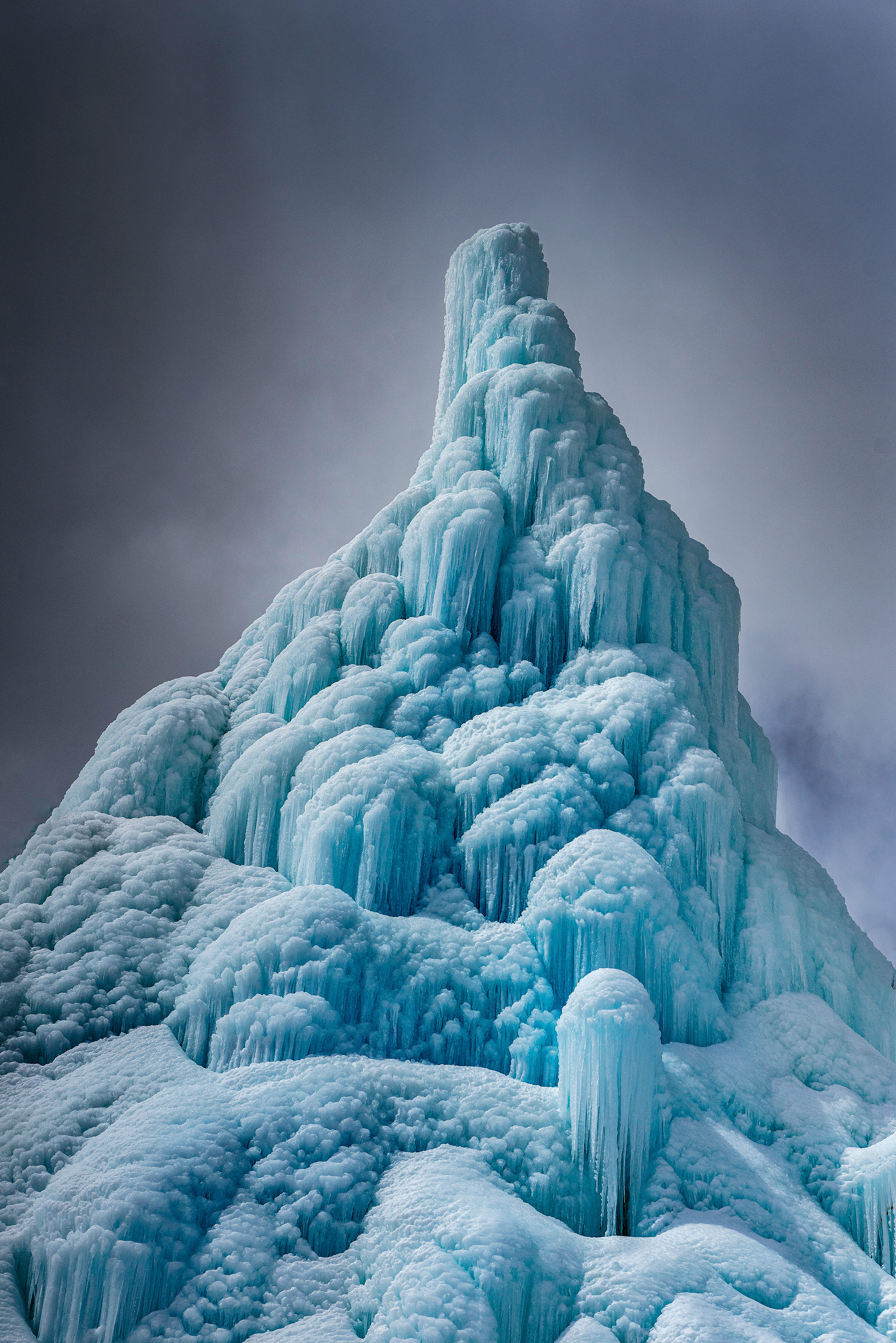
他铺设了一条长达一英里的管道,从冰川泉眼引水顺陡坡而下;在底部阴影处,水流直冲天际,在隆冬时节冻结成冰。一个月内,冰体生长成一座多层高的圆锥形人工冰川喷泉,他因其形似神圣的佛教圆顶佛塔而将其命名为“冰塔”。他的发明没有让水白白流失山下,而是保存了关键水源,使其多维持一个月直到6月——正是农民春耕最需要水的时候。
He ran a mile a mile-long pipe from a glacier spring down a steep slope; at the bottom in the shade the water shot straight into the air and, in the dead of winter, froze. Over a month, the ice grew into a multistory conical artificial glacier fountain he called an ice stupa after the sacred Buddhist dome-shaped shrines. Rather than wasting down the mountain, his invention preserves a critical water supply for an extra month through June when farmers need it most for planting.
旺楚克的贮冰法声名远扬,他在面临水资源短缺的众多喜马拉雅村庄建起了冰塔,甚至让拉达克被废弃的库伦村的村民得以返乡。
Word of Wangchuk’s ice storage traveled, and he built ice stupas in numerous Himalayan villages facing water scarcity, even allowing a community from Ladakh’s abandoned village of Kulum to return home.
然而,这一优雅方案暗藏致命缺陷:给冰塔供水的管道会冻结。但在与长期同事苏里亚·巴拉斯布拉马尼安合作下——后者在瑞士获得冰库行为学博士学位——旺楚克去年通过自动化技术让冰塔重获新生。通过集成太阳能供电、计算机控制的传感器网络和电动阀门,可远程关闭水流以防管道结冰,确保80%的来水泉水被冻结贮存。
Beneath this elegant solution lurked a critical flaw. The pipes feeding the stupas were freezing. But working with longtime colleague Surya Balasubramanian, who earned his PhD in Switzerland in ice reservoir behavior, Wangchuk last year brought the ice stupas back to life through automation. By integrating solar-powered, computer-controlled sensor networks and motorized valves, the water flow could be turned off remotely to prevent the pipes from icing, ensuring 80% of the incoming spring water is frozen and stored.
巴拉苏布拉马尼亚说:“我们创新了一种方法,要么用喷泉喷水,要么利用由天气和管道传感器控制的阀门排空管道中的水。”他于2023年独立发起了“冰雪英亩”项目,以扩大冰佛塔的规模。
“We innovated a method to either spray water from fountains or drain the pipes using valves controlled by weather and pipeline sensors,” says Balasubramania, who in 2023 independently launched Acres of Ice to scale the ice stupas.
如今,他们在拉达克、尼泊尔、蒙古、吉尔吉斯斯坦、智利和巴基斯坦建造或支持建造了160座冰佛塔,每座最高可达12层楼,能储存320万加仑的水。
Today, they’ve built or supported 160 ice stupas across Ladakh, Nepal, Mongolia, Kyrgyzstan, Chile, and Pakistan, each standing up to 12 stories and capable of storing 3.2 million gallons.
但对旺楚克来说,这场战斗可能永远不会结束,因为他知道自己的适应策略只是暂时的,无法比冰川更持久。他现在正在测试一种新的应用:从危险的冰川湖中取水来供给他的冰佛塔,以帮助防止湖泊崩塌并向山下释放巨大的冰湖溃决洪水波,同时利用天然制冷让湖泊重新冻结。
But the fight may never be over for Wangchuk, who knows the temporary nature of his adaptation strategy won’t outlive the glaciers. He is now testing a new application: sourcing water for his stupa from a dangerous glacial lake to help prevent it from collapsing and sending a massive GLOF wave down the mountain—and using natural refrigeration to refreeze the lakes.
随着气候引发的冰川崩塌威胁日益加剧、季风不断增强、干旱期持续延长,兴都库什-喜马拉雅地区正接近临界点。随着全球气温上升,几个世纪以来已经学会适应恶劣条件的人们,对自己祖居地的不稳定几乎无能为力。尽管如此,他们仍寄望于自然,通过简单的创新让每一滴水都发挥作用。问题是:这足够吗?
With the growing threat of climate-induced glacier collapse, intensifying monsoons, and prolonged dry spells, the Hindu Kush-Himalaya region is nearing a tipping point. As global temperatures rise, the people who have learned to adapt to harsh conditions for centuries have little control over the destabilization of their ancestral homes. Still, they look to nature for a way forward through simple innovation to make every drop of water count. The question is: Will it be enough?
旺楚克说:“目前几乎没有什么办法来防范喜马拉雅山脆弱地区的冰川,因此这些社区要承受痛苦,为世界其他地方的行为付出代价。”他还说:“尼泊尔最近的雪崩是对世界其他地方的警钟,提醒我们要在这个星球上改正我们的行为方式。”
“There’s very little that can be done at this point to protect against glaciers in vulnerable places in the Himalayas, so these communities suffer and pay the price for what the rest of the world does,” says Wangchuk. “The recent avalanche in Nepal is an alarm bell for the rest of the world to mend our ways on this planet.”